
Karteikarten
Last WYNTK
Karten in diesem Stapel (100)
- 1AmendmentA change made to an official document like the Constitution
- 2AssimilateTo join or become part of a certain group
- 3BiasFavoring towards a certain side or thing
- 4BicameralThe government is in two separate parts and has different houses to make up the legislative branch
- 5BlockadeTo stop critical supplies from entering a port or harbor. Most commonly done with ships.
- 6BoomtownA town that quickly grows in population or economy because of more people moving there. Often caused by the finding of valuable resources in the nearby area.
- 7CapitalismAn economic system with private ownership of businesses and investments, emphasis on the consumers. Used in the U.S. economy.
- 8Captains of IndustryA person who gets rich off of their business skills. Also a person who gives back their wealth and is charitable. They are liked by people.
- 9Checks and BalancesEach branch of the government keeps an eye on one another to make sure their actions are Constitutional and follow the law. Also to make sure that no branch has too much power.
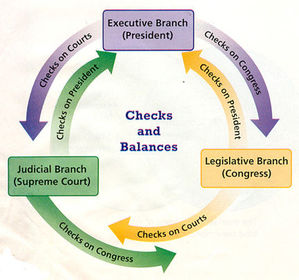
- 10CongressThe legislative branch of the U.S. Made up of the Senate and House of Representatives. Responsible for introducing and voting on laws.
- 11Due Process of LawEvery citizen has the right to fair legal treatment no matter what, and that process shall not change from person to person.
- 12EconomicsHow goods and services are distributed and measured. Involves money and capital.
- 13EmancipatedTo be freed from slavery
- 14EnfranchiseTo grant voting rights to a person or group of people
- 15EnumeratedTo mention specifically or separately, sometimes in a list
- 16FederalismThere are three levels to the government. The National or Federal, the State, and the Local governments. They all have different levels of responsibility and do different jobs, as well as all having varying levels of power.
- 17Forty-NinersPeople, mostly men, who went West to California to look for gold during the 1849 gold rush.
- 18Free EnterpriseBusinesses can be privately owned and operated, and there is competition for buyers between those businesses in their industry. Also government restriction is at a minimum.
- 19Habeas CorpusPeople who have been arrested have the right to fair and speedy trials, as well as other parts of due process of the law. It was suspended for a period of time during the Civil War by President Abraham Lincoln.
- 20IndustryA certain product or service provided by companies or people. Many businesses providing the same product or service make up that industry. Usually a part of an economy.
- 21JudicialRefers to courts or court systems. In the U.S. the Judicial Branch interprets the laws of the country, and is made up of the Supreme Court.
- 22Ku Klux KlanA terrorist organization in the U.S. that started after the Civil War in the South. They terrorized blacks during Reconstruction and were attempting to restore white supremacy in the South.
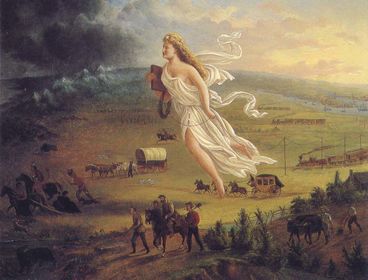
- 23Manifest DestinyAn American idea that God wanted America to expand Westward all the way to the Pacific Ocean.
- 24MartyrA person who willingly dies in favor of their cause or what they believe in.
- 25MonopolyWhen one person or company owns every part of a certain industry or controls that industry with no competition.
- 26NomadicPeople or tribes of people who move around to find food and supplies and have no permanent settlements.
- 27OverrideWhen a decision is denied or overruled by someone, usually happens with bills or acts being passed.
- 28Popular SovereigntyThe people give the government its power by electing the officials they want.
- 29RatifyTo approve or put into action
- 30RadicalExtreme for the time or place, outgoing
- 31RepublicanismPeople vote for who they want to represent them in the government. That person represents all of the people who voted for them.
- 32Robber BaronA person who stops at nothing to get rich. They are cruel and ruthless. They have bad working conditions, low wages, and long hours. People do not like them, and they don't give back their wealth.
- 33RuralThe country, involves country ways of life and how they do things, farming
- 34Seperation of PowersEach branch of government has their own jobs to do to help the country run. All of their jobs are interconnected though, and each branch is needed to be successful.
- 35Social DarwinismSurvival of the fittest in the human and business world. Only the strong businesses and business people survive and the weak ones are crushed and weeded out. Also means that the rich will stay rich and the poor will stay poor because they are weaker and have more trouble surviving.
- 36SuffrageThe right to vote
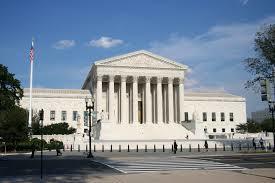
- 37Supreme CourtThe highest court in the U.S. Makes up the judicial system. Interprets the Constitution and the laws of the U.S.
- 38TariffA tax put onto a certain item often to try and restrict purchases of that item by raising the price. Mostly put on imported/exported items.
- 39Taxation without RepresentationThe colonists were angry that they were being heavily taxed on certain items without being represented in the British Parliament. They used this slogan to express their opinions to the British authorities.
- 40Trade UnionA group of workers who comes together to demand things from their employers like fairer wages, better working conditions, and shorter working hours and weeks.
- 41UrbanThe city, includes the city way of life
- 42VetoTo deny or say no to
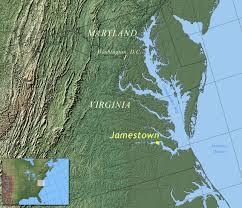
- 43JamestownFirst European settlement in the new world. In the current state of Virginia. Settled by the English in 1607. Survived on tobacco and flourished after the arrival of slaves in 1620.
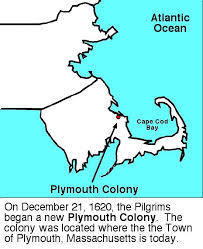
- 44PlymouthThe second English settlement in North America. 102 people came for religious freedom on the Mayflower in 1620. The land was bad for farming and they were often hungry and had to deal with diseases.
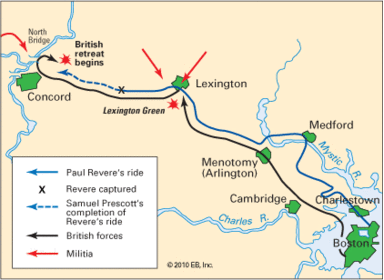
- 45Lexington and ConcordThe British were marching toward Concord to get weapons. The local militias then cut them off at Lexington. The first shots of the American Revolution were fired at Lexington, which set off the Revolutionary War. First shot was known as the Shot Heard 'round the World.
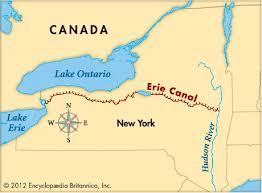
- 46Erie CanalA man made waterway that connects Albany, NY on the Hudson River to Buffalo, NY at Lake Erie. It provided a faster way to transport things by water, and transformed New York as cities popped up along the canal.
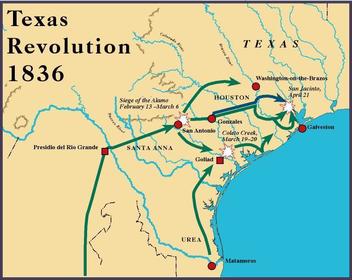
- 47The AlamoA battle in current day San Antonio during the Texas Revolution. It lasted 13 days. Every Texan at the Alamo was killed which inspired other Texans to fight against the Mexicans. This lead to the later defeat of the Mexicans and Texas gaining independence.
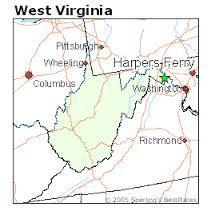
- 48Harper's FerryThe federal armory John Brown and some of his followers tried to raid to lead a slave rebellion in the nearby area. Raid failed and John Brown was captured and executed a few days later.
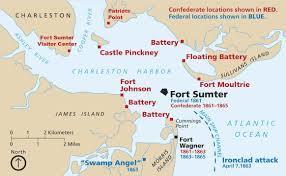
- 49Fort SumterIn South Carolina, April 12-13, 1861. Fort was occupied by the Union at the time. Site where the first shots of the Civil War were fired. No casualties until when the Union were leaving, 2 died then. War officially began with this skirmish.
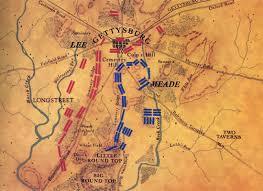
- 50GettysburgA three day battle at Gettysburg, PA during the Civil War. One of the bloodiest battles of the Civil War. Happened in the middle of the summer. Won by the Union, which boosted their morale and probably helped them to win the war later.
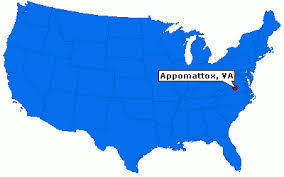
- 51Appomattox CourthouseLocated in Virginia. Site where Robert E. Lee surrendered to Ulysses S. Grant to effectively end the Civil War. This caused the war to be over and more surrenders all over the South.
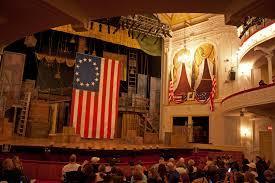
- 52Ford's TheaterLocated in Washington D.C. it was site where President Lincoln was assassinated by John Wilkes Booth. Booth shot the President in the head, then jumped off of the balcony and ran away. This killing was part of a bigger plan to kill the vice president and secretary of state also.
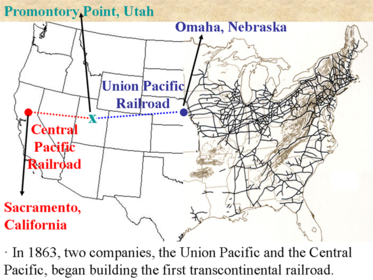
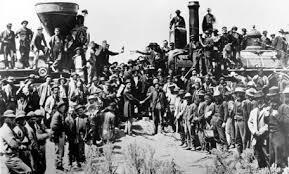
- 53Promontory Point, UtahThe spot where the last railroad spike was hammered in that joined the Union and Central Pacific Railroads to make the Transcontinental Railroad.
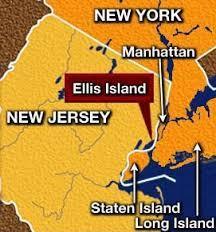
- 54Ellis Island and Angel IslandEllis Island is in New York and was where many European immigrants stopped on their way to America. Angel Island is in San Francisco and was where many Chinese immigrants stopped on their way to America. Both islands were used as immigration stations. They were used to check immigrants for diseases, interrogation of immigrants, and to make sure everyone had the correct papers. After clearing the islands people were free to go and live in America.
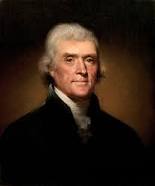
- 55Thomas JeffersonHe was the 3rd President of the United States. Main author of the Declaration of Independence and important founding father. Got the U.S. the Louisiana Purchase and crafted the Corp of Discovery expedition through it.
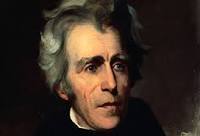
- 56Andrew JacksonHe was the 7th President of the United States. Authorized the Indian Removal Act. Famous for kicking the five "civilized tribes" off of their lands. He forced most of them to Oklahoma via the Trail of Tears. Many died along this road, creating a hatred for him. Is currently on the $20 bill.
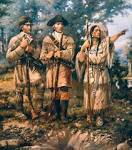
- 57SacagaweaA native american woman who helped Lewis and Clark on their expedition to the Pacific. Served as a guide, helped find food, and helped translate and negotiate with other indian tribes. Completed whole expedition with her kid on her back.
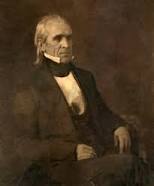
- 58James K. PolkThe 11th President of the United States. Was the President who got the U.S. the most land during the Manifest Destiny period. Helped get the Oregon Territory, Texas, and most of the Southwest and California.
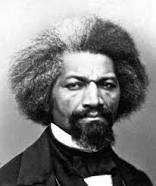
- 59Frederick DouglassHe was a slave in Maryland who escaped to the north. Once in the north he became an abolitionist and published abolitionist newspapers. At one time mentored by William Lloyd Garrison.
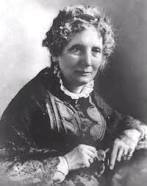
- 60Harriet Beecher StoweShe was an abolitionist and well known author. Book Uncle Tom's Cabin told firsthand accounts of slavery. It opened Northerners eyes to the horrors of slavery for the first time.
- 61John BrownA violent abolitionist during Bleeding Kansas and the years leading to the Civil War. Thought that violence was the only way to end slavery. Led a raid on a federal armory at Harper's Ferry. Raid unsuccessful and Brown was executed days later.

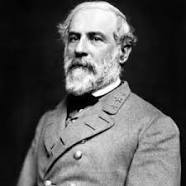
- 62Robert E. LeeWas a general in the Civil War for the South. Led the Army of Northern Virginia throughout the war. His surrender at Appomattox Courthouse effectively ended the Civil War.
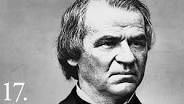
- 63Andrew JohnsonHe was the 17th President of the United States. Became President after Lincoln was assassinated and was the President during the first part of Reconstruction. Famous for being biased towards the South in Reconstruction and his impeachment while in office.
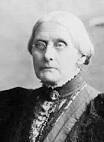
- 64Susan B. AnthonyAn important player in the woman's equality and voting movements. She was also strongly opposed to slavery. Arrested for trying to vote in her hometown.
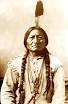
- 65Sitting BullOne of the five major indian chiefs who strongly resisted the U.S. government during westward expansion. Was important in the Battle of Little Bighorn. Killed as a part of the Wounded Knee Massacre. Killed because he was feared to be a part of the Ghost Dance movement.
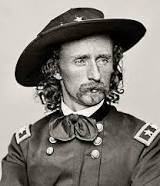
- 66George CusterAn army officer and cavalry commander, most important during the Indian Wars. Was famous for Custer's Last Stand, or the Battle of Little Bighorn. Battle is where he and all his men were killed by the Native Americans. Loss overshadowed any prior achievements.
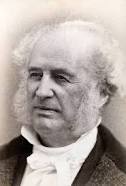
- 67Cornelius VanderbiltAn American businessman who achieved billionaire status during the Gilded Age. Made his wealth by monopolizing the railroad/transportation industry. Gave a lot of his money back. Was the founder of Vanderbilt University, whose mascot is Cornelius Vanderbilt's nickname, the Commodores.
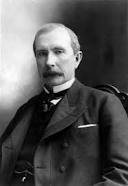
- 68John RockefellerAnother American businessman who achieved a billionaire status during the Gilded Age. Made most of his money off of the oil industry. He found a new, better way to refine oil, which made him rich. He ended up buying out most other oil companies of the time and created a monopoly. Was very charitable, and gave a lot of his money back to education, medicine, and helped found 2 universities.
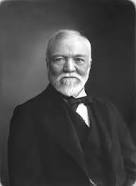
- 69Andrew CarnegieA businessman who was a billionaire in the Gilded Age. Made a fortune off of the steel industry. Found a quicker, cheaper way to manufacture steel, which made him rich. Gave almost 90% of his money away. Gave it towards the founding of libraries in multiple countries, and the founding of Carnegie Mellon University.
- 70Declaration of IndependenceIt is a document created at the Continental Congress in Philadelphia in 1776. This declared the United States independent from Great Britain, and explained why they were breaking away from them. It was authored by Thomas Jefferson and signed by 56 men on July 4, 1776.
- 71Revolutionary WarAlso known as the American Revolution. It was fought between the British and its former colonies known as the United States. It was fought mostly in North America between 1775 and 1783. Was fought because the colonists were angry at the British for a series of heavy taxes put on them, along with other enraging things. The United States won the war, and with the victory won independence from Great Britain. Throughout the war the U.S. was helped by France and Spain.
- 72Articles of ConfederationThis document was the first constitution of the U.S. ratified in 1781. This constitution failed because it gave too much power to the states, and not enough power to the federal government. It was later replaced by the current Constitution.
- 73Great CompromiseAlso known as the Connecticut Compromise. Agreement reached in 1787. Made up of the Virginia and New Jersey Plans. Both plans combined made the Great Compromise. Compromise made it that each state had 2 representatives in the Senate (New Jersey Plan) and the representatives in the House of Representatives were based off of that states population (Virginia Plan).
- 74Passing of the ConstitutionThe U.S. Constitution was passed in 1788. It was first created in 1787. It is the supreme law over the U.S. It was created to replace the weaker Articles of Confederation, which was the first Constitution. The new Constitution gave more power to the federal government and added a Bill of Rights.
- 75Adding the Bill of RightsThe Bill of Rights was passed in 1791, and was apart of the new Constitution of the United States. It was proposed by the anti-federalists because they were concerned that there was no part of the Constitution that stated the individual rights of the citizens. Bill of Rights originally had 10 amendments.
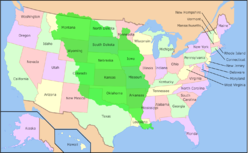
- 76Louisiana PurchaseA huge chunk of land purchased by Thomas Jefferson in 1803 from France. Was a great deal at 4 cents per acre. Doubled the size of the U.S. and makes up part of 15 current U.S. states. Corp of Discovery expedition led through it by Lewis and Clark. Expedition was to find a waterway to the Pacific, discover new animals and plants, and to make friends with the Native Americans.
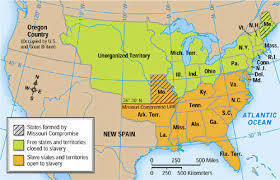
- 77Missouri CompromiseWas a compromise reached between the pro and anti slavery parties in 1820. Compromise stated that slavery was banned in the Louisiana Territory north of the 36' 30' parallel. It also stated that Missouri could be a slave state, despite being inside of the 36' 30' parallel. The compromise was created by Henry Clay.
- 78Indian Removal ActsAlso known as the Trail of Tears. Acts passed by Andrew Jackson. Act moved all Indian tribes in the southeast to lands west of the Mississippi River. Majority of them went to Oklahoma. Most tribes travelled along the Trail of Tears. Many tribes moving west took the trail. Many Indians died while going along the trail, hence the name Trail of Tears. Five major tribes that were moved were the Cherokee, the Chickasaw, the Choctaw, the Seminole, and the Creek.
- 79Mexican-American WarA war between Mexico and the U.S. started by President James K. Polk. The Alamo occurred during this war. The U.S. won when Mexico signed the Treaty of Guadalupe Hidalgo. The treaty ended the war and gave the U.S. California, Arizona, New Mexico, and Texas.
- 80California Gold RushBegan in 1848 when gold was discovered in California. News of gold brought many people to California looking to strike rich. These people who came for the gold rush were called 49ers, because many came in 1849, just for the gold rush. Many people got rich off of the gold rush, but not because of the gold. They were there at the right time, and had products that the miners needed.
- 81Homestead ActActs signed in 1862 by Abraham Lincoln. they land grants of 160 acres to people for a small cost. If you were 21, or the leader of a family you could get the land. If you stayed and farmed the land for 5 years, then you owned it after those years. Many people moved west because of these acts.
- 82Industrial RevolutionThe time in American history when the country was moving from a rural, agricultural society to a more urban, industrious society. Because of inventions that made manufacturing goods quicker, easier, and cheaper, many people moved to the city to get jobs at the factories that made these things. Also people had better access to goods because more could be made, and because of better transportation it was easier to ship the goods all over, making them more available to many people.
- 83Underground RailroadIt was a series of trails and safe houses that helped runaway slaves reach free states or Canada. Many abolitionists and sympathizers helped out with the "railroad" also. One of the most famous conductors on the Underground Railroad was former slave Harriet Tubman. She is credited with helping hundreds, even thousands of slaves escape from slavery.
- 84Seneca Falls ConventionWas held on July 19 and 20 in 1848 in Seneca Falls, NY. Was the first women's rights convention ever. Some of the major players in women's rights at the time were here, including Elizabeth Cady Stanton and Lucretia Mott. After this many more women's rights conventions followed.
- 85Compromise of 1850An agreement reached in 1850 between the pro and anti slavery groups. The compromise banned the slave trade in Washington D.C., admitted California as a free state despite the previous Missouri Compromises rules, and let the new Utah and New Mexico Territories decide on whether they would be free or slave states by popular sovereignty. The compromise was drafted by Henry Clay.
- 86Kansas-Nebraska ActThis act was passed in 1854. This act formed the territories of Kansas and Nebraska. It also allowed the new settlers of the territories to decide on whether they would be free or slave states by popular sovereignty. This resulted in the start of Bleeding Kansas and more violence. The act also repealed the earlier Missouri Compromise.
- 87Dred Scott vs SandfordThis was a court case in 1857 between a slave and his owners. Dred Scott (slave) was taken by his owners to a free state and he was trying to get his freedom in court. But the judges decided that not only was he a slave, but that he and every other african american weren't citizens. Also african americans didn't have the right to sue because they weren't citizens and that Congress couldn't control slavery in new U.S. territories. This court case made some monumental decisions as far as slavery went in the United States at the time.
- 88Fugitive Slave ActAn act passed in 1850 by Congress that was a part of a higher agreement between pro and anti slavery groups. The act required that all runaway slaves muster be returned to their masters immediately. All officials and citizens in the free states had to follow this law as well. It also punished people who didn't follow this law by fining them heftily.
- 89Bleeding KansasA period of violence between pro and anti slavery forces along the Kansas and Missouri border. Because of the earlier Kansas-Nebraska Act, people were coming to Kansas to try and sway the votes on slavery toward their side. This caused tempers to boil over and violence spread throughout the Kansas Territory. Some important acts of violence include William Quantrill's Raid on Lawrence, and a massacre at Pottawatomie led by John Brown. This led up to the outbreak of the Civil War.
- 90Civil WarA war between the United States of America and the Confederate States of America. The war was fought mostly over slavery, but was also fought over some underlying issues as well. 11 seceded states made up the South, and most of the battles were fought in the South. The Union won the war when General Lee surrendered at Appomattox Courthouse in Virginia. This caused the eventual end of slavery, and forced the Southern states to reunited with the Union.
- 91Emancipation ProclamationWas a document created and put into order by Abraham Lincoln on January 1, 1863. This document freed all slaves in the South instantly. But they were only free when they left the South totally. This was not a law but a presidential order. As soon as the proclamation was issued 3 million slaves were proclaimed free.
- 92Civil War Draft RiotsThese were riots in New York City from July 13-16 in 1863. They were rioting because they were angry that the rich could buy their way out of going to the war, while the poor people had no choice but to go. Most of the rioters were a part of the working class, as they couldn't afford to pay the fee to get out of going to war.
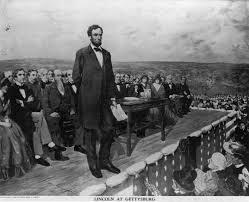
- 93Gettysburg AddressWas a speech given by Abraham Lincoln after the Battle of Gettysburg, on the actual site. He gave the speech to honor the soldiers that died during the battle, and to dedicate the site the Soldier's National Cemetery. In the speech he also said that the people should not let the soldiers who fought there die in vein, and that those people had to continue fighting the battle that the soldiers were fighting. It was a very inspirational speech, and it boosted the spirits of the North greatly.
- 94ReconstructionWas the time period after the Civil Was when the U.S. was rebuilding and trying to bring the South back. Andrew Johnson was the President at the start of it because of Lincoln's assassination. The Civil War amendments were passed during this time to help the african americans in the U.S out. Also the South was being readmitted into the Union. The KKK was started during the time period. Overall Reconstruction was unsuccessful because it didn't make african americans equal citizens, and they were still being treated poorly.
- 95Civil War AmendmentsThe Civil War amendments were the 13th, 14th, and 15th amendments passed between 1865 and 1870. They were passed to help the african americans become equal citizens, and to try and force people to treat them with equality. The first one abolished slavery in the U.S. forever. The second gave african americans full U.S. citizenship. The last one gave african americans the right to vote. Each one helped out the freed african americans in some way,
- 96Completion of Transcontinental RailroadThe Transcontinental Railroad was completed on May 10, 1869. The last spike was driven in at Promontory Point, Utah. It connected the Central Pacific and Union railroads. This was the first ever transcontinental railroad. The railroad made shipping goods to the west much quicker, cheaper, and easier.
- 97Indian WarsThey were conflicts between Indian tribes and the U.S. government towards the end of the 1800's. Five major chiefs openly resisted the requests of the government. They were Sitting Bull, Chief Joseph, Red Cloud, Crazy Horse, and Geronimo. They all fought back against the government until they were all finally wiped out. Most of the conflicts were because the Indians did not want to assimilate to white culture, or because the didn't want to move onto reservations.
- 98Gilded AgeThe time in America history when there was rapid growth in the American economy. Certain industries were becoming very big, which generated more and more money. Some businessmen were able to achieve billionaire status by monopolizing a certain industry. Despite what the age was called, a very small percent of Americans were actually very wealthy.
- 99Populist PartyA political party formed during the Gilded Age. Party was made to represent the common people, mostly farmers, against the rich people and the politicians who supported them. This gave the farmers a bigger, better say in the government. It helped them get represented equally, and combated the corruption in the government made by the rich people.
- 100Plessy vs FergusonA Supreme Court case in 1896. This case had a huge impact on America. The outcome of the case stated that racial segregation in public places was okay, as long as the motto "separate but equal" was upheld. Because of this, segregation in the U.S. was upheld for a long time.