
Karteikarten
Business As-Level_3.4 Decision making to improve operational performance
Karten in diesem Stapel (53)
- 13.4.1 Setting operational objectivesContent;
- The value of setting operational objectives
- External and internal influences on operational objectives and decisions - 2Operational objectivesAllow a business to concentrate on what they consider to be important to make them as efficient as possible or to give them a competitive advantage.
- 3External Influences on operational objectives- Market factors; growing or declining
- Competitors actions and performances
- Economic factors
- Political factors - 4Internal Influences on operational objectives- Corporate objectives
- Finance
- Human resources
-The nature of the product/service - 5What could the operational objectives be?- Costs
- Quality
- Speed of response and flexibility
- Dependability
- Environmental objectives
- Added value; USP - 63.4.2 Analysing operational performanceContent;
- interpretation of operations data
- Calculation of operations data
- The use of data in operational decision making and planning
- - 7How do you know if the business is efficient?By calculating Labour productivity, Unit costs and Capacity Utilisation.
- 8Labour ProductivityThe volume of output that is obtain from each employee.
Output per Period
------------------------------------
No. of employees in that period - 9What does Labour Intensive mean?When labour costs outweigh capital costs in a business
- 10Unit CostsThe cost of producing one unit of output
Total costs (£)
--------------------------------
Units of output - 11Capacity UtilizationThe percentage of a firm's total possible production level that is being reached
Actual Output
------------------------------------------------- x 100
Capacity Output - 12What causes Spare Capacity?- New competitors
- Fall in demand
- Unsuccessful marketing
- Seasonal demand
- Over-investment in fixed assets
- A merger or takeover leading to duplication of resources - 13Advantages of Spare Capacity- More time for maintenance and repair
- Improvements can be made
- Less pressure on employees
- Can cope with sudden changes in demand especially in a fast moving industry - 14Disadvantages of Spare Capacity- Higher proportion of fixed cots per unit
- Higher unit costs lead to lower profit, therefore lower sales volume
- Negative image being successful
- With less work employees become bored or demoralised - 153.4.3 Making operational decisions to improve performance increase efficiency and productivityContent
- The importance of capacity
- The importance of efficiency and labour productivity
- How to increase efficiency and labour productivity
- The benefits and difficulties of lean production
- Difficulties increasing efficiency and labour productivity
- How to choose the optimal mix of resources
- How to utilise capacity efficiently
- How to use technology to improve operational efficiency - 16Importance of capacityMangers need to decide on the correct scale of production for the organisation. Too low and they will not be able to meet their demand for their products; get it too high and they will waste money with idle resources.
- 17Importance of Labour ProductivityIf a business has an increase in labour productivity then this means that the output will be increases but using the same amount of employees. This means a lower unit and labour cost.
This then allows the firm to change a lower price to gain competitive advantage or get higher profit margins - 18How do you increase capacity and capacity utilisation- Invest in capital machinery
- Invest in employees through training
- Hire more employees
- Change production practices to be more efficient - 19How to increase labour productivity- Recruiting suitably skilled and trained employees
- Training to improve skills and attitudes of existing employees
- Using appropriate remuneration and non-financial benefits to improve motivation
- Improving working practices
- Improved technology and capital and more modern equipment - 20Factors influencing resource mix- The type of operations process and the operations strategy
- Relative price of the resources
- Availability of resources
- Nature of the product or process
- Ethics - 21Factors influencing becoming more capital intensive- Raising finance
- Changeover
- Innovation - 22How to maintain or improve labour intensive business- Attracting the right employees/people
- Keeping the right people
- Managing people's knowledge - 23What types of technology could be used?- Robotics
- Automation
- Controlling
- Stock control
- Communication
- Design - 24Advantages of using technology- Reducing costs
- More efficient
- Improving quality
- Reduce waste
- Increasing productivity
- Other benefits
- Financial monitoring
- New and better products and services
- Better working conditions - 25Disadvantages of using technology- Maintenance and upgrades can be expensive
- Security issues
- Loss of communication
- Could be a distraction within the work environment - 26Aims of Lean Production- Zero delay
- Zero stocks
- Zero mistakes
- Zero waiting
- Zero accidents - 27Techniques in Lean production- Time-based management
- Cell production
- Just-In-Time production
- Benchmarking - QUALITY
- Kaizen - QUALITY - 28Time- based managementIf a business is able to produce a product in a shorter time than rivals then more sales could results.
For example Domino's aims to deliver pizza within 30 minutes - 29Cell productionOrganising production around teams instead of a production line. The production lien is divided into a series of different stages which are undertaken by teams or 'Cells'
- 30Advantages of Cell production- Motivating; have more control over their work
- Share skills and experience within cells
- Influences quality; responsible for their cells work - 31Disadvantages of Cell Production- Output may be lower than a 'flow' production system
- Different cells might produce work at different speeds. Can lead to tension.
- The business may have to invest heavily in new machinery and equipment as each cell may require the same capital items. - 32Just-In-Time ProductionProducing products to order, which involves reducing the stock holding of a business to make it more efficient. Reducing stock means significant reduces in unit costs.
- 33Advantages of J.I.T- Reduced stock holding
- Smaller warehouses
- Less staff needed to manage and control stock
- Improved relationships with suppliers
- Less risk as stock will not perish or go out of date. - 34Disadvantages of J.I.T- Production line could stop completely leaving staff and machinery idle
- Reliability of suppliers; Could be problems with quality or delivery of items
- Reliability of raw materials; Could be problems with quality or availability
- Reduced options for responding to customer demands - 353.4.4 Making operational decisions to improve performance; improving qualityContent;
- The importance of quality
- Methods of improving quality
- The advantages and disadvantages of improving quality
- The consequences of poor quality - 36QualityA measure of excellence which is free from defects or significant variations. A product or service whose features consistently allow it to satisfy customers.
- 37Intangible aspects of QualityThing that are not physical, and are associated with another object
For Example;
Image and brand, Reputation, Exclusiveness - 38Tangible aspects of QualityThe physical elements of quality
For example;
Appearance, Reliability, Durability, Functions, Repair and Maintenance - 39Quality controlA system that uses inspections to check the quality of work at stages of the manufacturing process.
- 40Pros of Quality control- Stop faulty goods from reaching customers
- Spot common problems - 41Cons of Quality control- Doesn't encourage team responsibility
- Expensive to operate
- Responsibility rests with inspectors
- Reduce motivation - 42Quality AssuranceA system that improves quality by arranging every process to get products right first time.
- 43Pros of quality assurance- Workers take responsibility
- Motivates Workforce
- Reduces costs
- Greater consistency of quality
- Responsibility is spread throughout the workforce - 44Cons of quality assurance- Needs a change in the culture of the organisation
- Can take time to embed the system
- Increases costs in the short term - 45KAIZENA policy of implementing small, incremental changes in order to achieve better quality and greater efficiency.
- 463..4.5 Making operational decisions to improve performance; managing inventory and supply chains.Content
-ways and value of improving flexibility, speed of response and dependability
- How to manage supply to match demand and value in doing so
- Influences on the amount of inventory held
- Influences on the choice of suppliers
- How to manage the supply chain effectively and efficiently and the value of this
- The value of outsourcing - 47What would you consider when choosing a supplier?- Cost
- Payment terms
- Quality
- Capacity
- Reliability
- Frequency of supply
- Flexibility - 48What might cause fluctuating sales levels?- Health/product publicity
- Trends
- Income levels
- Reputation and Brand image
- Marketing
- Price elasticity
- Competition
- Weather
- Legislation
- Interest rates - 49Subcontracting/OutsourcingWhen a business asks another business to make all, or a part of its product.
- 50Pros of Outsourcing- React to changes in demand quickly
- Specialization can be brought in more efficiently than doing it themselves
- Business can concentrate on their 'core business'
- Easier to achieve non-standard orders as not disruption to product line - 51Cons of Outsourcing- No direst control over quality of the products; reliability problems
- Too much can cause damage to operation base
- Producers have to make a profit so profit margins may be effected
- Parents and methods of production may have to be shared with subcontractor - 52What influences the amount stock that is being held?- Demand
- Type of business
- Nature of product
- Price of final product
- Cash flow
- Available space to store stock
- Flexibility of the supplier
- Bulk purchasing
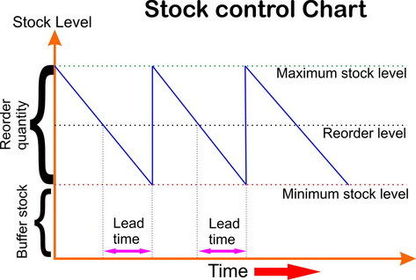
- Production methods - 53What is a stock control chart?It shows lead times, re-order levels, buffer level, maximum stock level, re-order quantities
Informationen
- Beschreibung
- AS - Level AS-Level Business Studies Karteikarten am Business As-Level_3.4 Decision making to improve operational performance, erstellt von Hollie Ferris am 29/03/2016.
- Erstellt von
- Hollie Ferris
- Aufrufe
- 30
- Bewertung