
Karteikarten
Sc13L03 The pectoral girdle and shoulder joints

Karten in diesem Stapel (128)
- 1What (2) bones make up the pectoral or shoulder girdle?anterior clavicle and posterior scapula
(L: key, shoulder) - 2What separates the shoulder girdles from each other anteriorly?the sternum
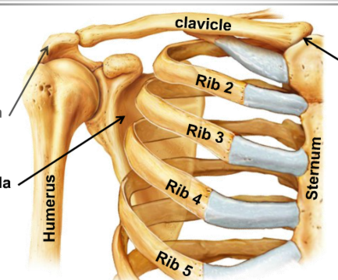
- 3What separates the shoulder girdles of either side posteriorly?Nothing, there is a gap and they do not articulate with e/o or the spinal column
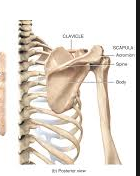
- 4What is the only connection b/w the upper limb and axial skeleton?pectoral/ shoulder girdle
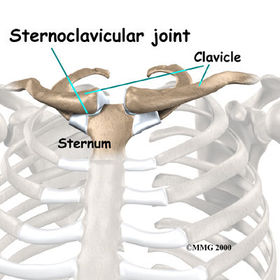
- 5What does the medial end of the clavicle articulate with?the manubrium of the sternum
- 6What is the joint b/w the clavicle and the sternum?sternoclavicular joint
- 7Posteriorly, the anterior surface of the scapula, along with its associated musculature, forms a connection with what?the posterior aspects of the upper ribs
- 8What is the false joint between the scapula and ribs called?'scapulo-thoracic' joint
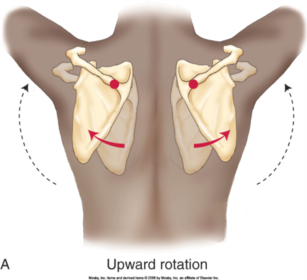
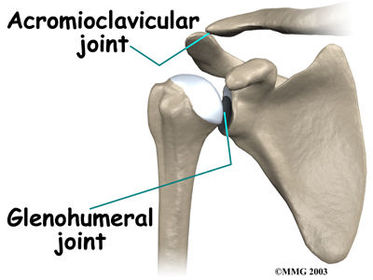
- 9What is the joint called at the articulation b/w the clavicle and scapula?acromioclavicular joint
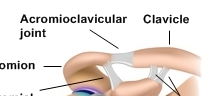
- 10What is the function of pectoral girdle?to brace the upper limb away from the trunk
- 11What is the function of the scapula?give a large surface area for muscular attachments
- 12In what genetic condition are some people born without a clavicle and are thus able to bring the upper limb across the front of the chest?Cleidocranial dysostosis (or dysplasia)
cleido = L. key
dystotis = L. bad bone development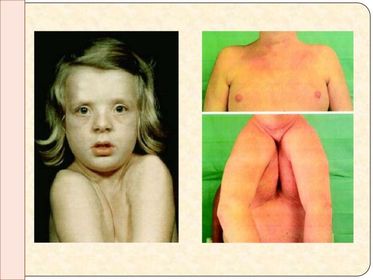
- 13What is the inheritance pattern of cleidocranial dysotosis?autosomal dominant
- 14What other bone is also affected in cleidocranial dysotosis?cranium
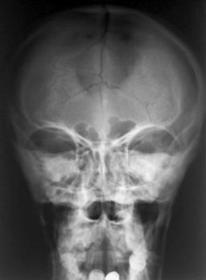
- 15What is the function of the clavicle?to act as a brace
- 16Describe the articular surface of the medial end of the clavicle:expanded to form a large, oval facet
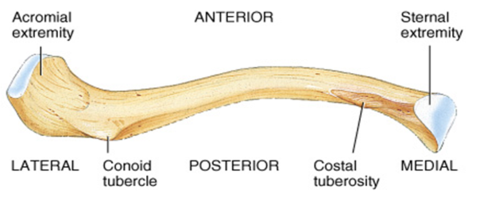
- 17Describe the articular surface of the lateral end of the clavicle:flattened in the horizontal plane, with a small posterolateral facet which articulates with the acromion process of the scapula
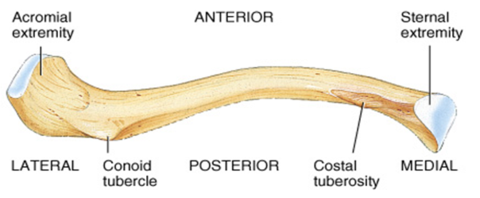
- 18What makes the scapula the most frequently fractured bone in the body?It serves to transmit forces from the upper limb to the axial skeleton
- 19Describe the concave/ convex points of the scapula:medial 2/3: convex towards the front
lateral third: concave towards the front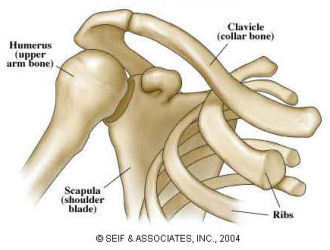
- 20What are (7) unique features of the clavicle:(1) subcutaneous throughout
(2) only horizontal long bone
(3) first bone to ossify
(4) only long bone to ossify in membrane
(5) occasionally pierced by the middle supraclavicular nerve
(6) no medullary cavity
(7) only long bon to ossify from 2 primary centres - 21How are most clavicular fractures caused? (2)fall or direct trauma
- 22What makes are clavicular fractures potentially dangerous?The fractured ends present a hazard to the vessels at the root of the neck (thoracic inlet)
- 23What kind of bone is the scapula?flat bone
- 24Where, in relation to the ribs, is the scapula found?2nd - 7th rib
- 25How many margins does the scapula have?
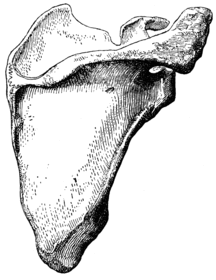
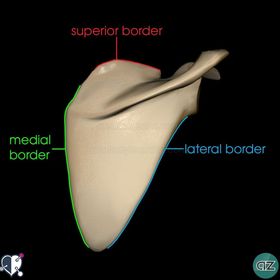
- 26How many angles does the scapula have? Where are they found?3: inferior, superior and lateral
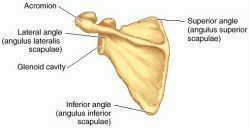
- 27Identify (anterior view)subscapular fossa
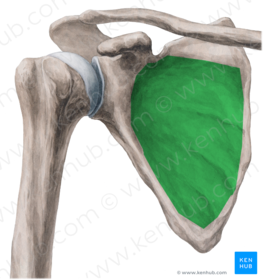
- 28What do the medial ridges of the anterior surface of the scapula serve as attachments for?tendinous origins of the subscapularis muscle
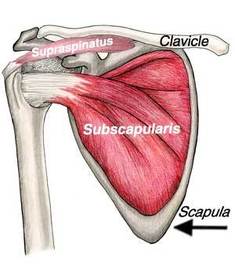
- 29What attachments does the lateral, anterior surface of the subscapular fossa serve as attachments for?fibrous attachment of subscapularis muscle
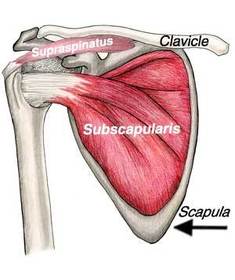
- 30Identifysupraspinous fossa
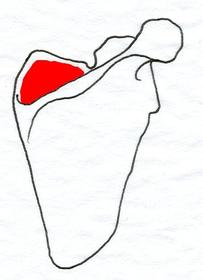
- 31Identifyinfraspinous fossa
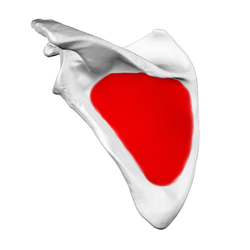
- 32Identifyspine of the scapula
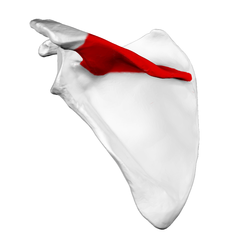
- 33The spine of the scapula projects shelf-like and posteriorly, angling upwards from the medial border to end in a free lateral process called what?the acromion
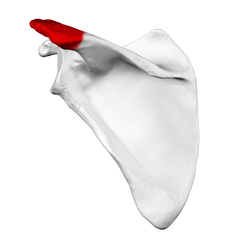
- 34What does the acromion articulate with?the clavicle
- 35What does the medial 2/3 of the supraspinous process serve as an attachment for?supraspinatus msucle
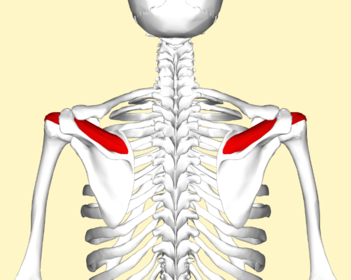
- 36The supero-lateral angle of the scapula forms a cavity/fossa with what part of what other bone? What is the cavity/fossa called?head of the humerus
glenoid fossa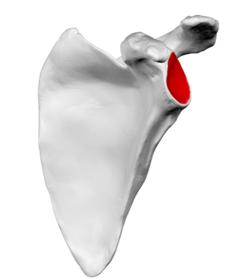
- 37What process arises from the superior margin of the scapula, projecting antero-laterally over the glenoid fossa?coracoid process
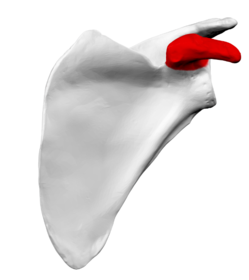
- 38What is found medial to the base of the coracoid process?suprascapular notch
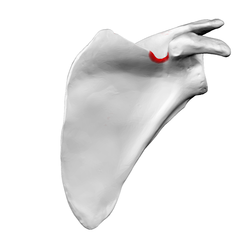
- 39What does the proximal end form of the humerus form an articular surface with and what is the joint called?shoulder joint
glenohumeral joint - 40What is the articular part of the humerus called?the head
- 41What is unique about this bone?It has (2) heads:
surgical and anatomical - 42Labelanatomical neck of the humerus
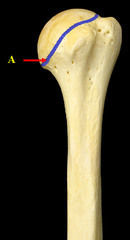
- 43Labelsurgical neck of the humerus
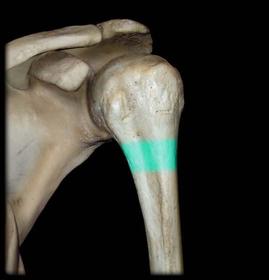
- 44What (3) features are found b/w the (2) necks of the humerus?
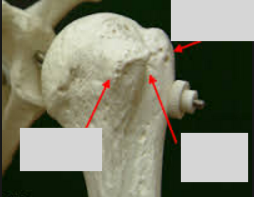
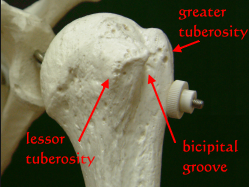
- 45Why is the bicipital (inter-tubercular) groove called as such?b/c the long head of the biceps brachii sits in the groove, having just passed over the head and anatomical neck
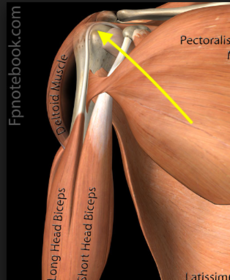
- 46How many facets does the greater tuberosity have? What are the muscle attachments?3 for the attachment of three separates muscles from the scapula
supraspinatus, infraspinatus and teres minor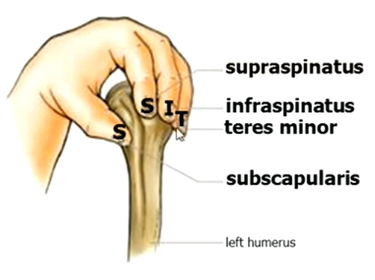
- 47How many facets does the the lesser the tuberosity have? Where do the muscle attachments originate?1, from the scapular muscle (subscapularis)
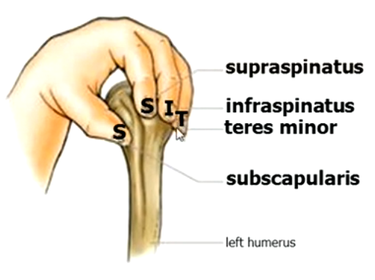
- 48Identify What is the muscle attachment?Deltoid tuberosity
tendon of the deltoid muscle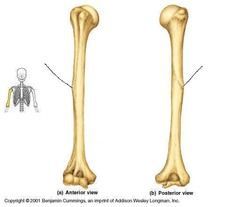
- 49Identify What structures are found here?Spiral groove
Nerve (radial) and artery (profunda brachii)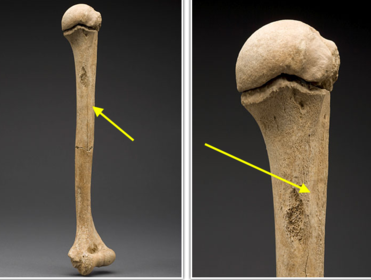
- 50Identify this joint and describe its movementSternoclavicular joint
b/w the clavicle and sternum, the only shoulder to articulate with the axial skeleton
very mobile, allowing movement of the shoulder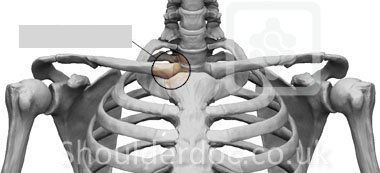
- 51Identify this joint and describe its movementAcromioclavicular joint b/w the clavicle and scapula
Less mobile, only permits small gliding and rotation movements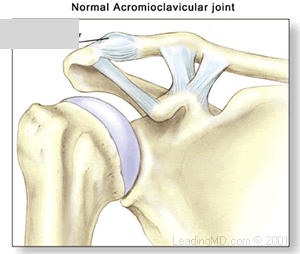
- 52Identify this "joint" and describe its movementScapulo-thoracic joint
b/w the scapula and the rib-cage
Movements here allow the upper limb to be moved around the trunk, and increase our range of hand positioning in space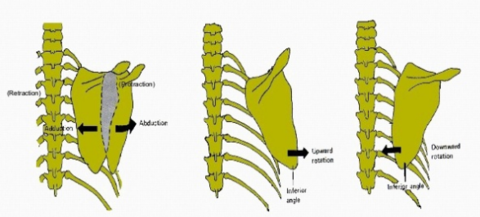
- 53Identify this joint and describe its movementb/w the head of the humerus and glenoid cavity of scapula
allows most movement of the shoulder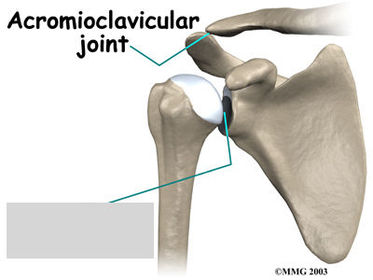
- 54What kind of joint is the sternoclavicular joint?synovial joint
- 55What divides the sternoclavicular joint in two?an articular disc
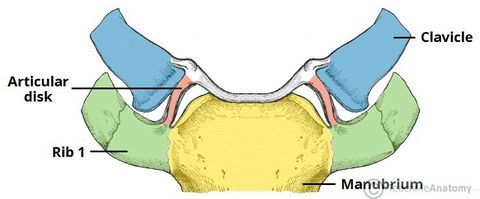
- 56What are the (2) main components of the sternoclavicular joint?the concave indention of the sternum and the sternal end of the clavicle
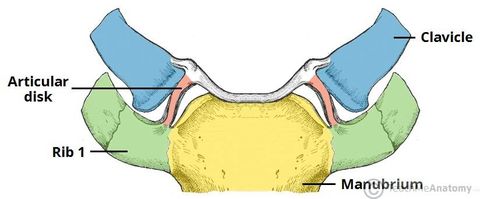
- 57How is the incongruity of the sternoclavicular joint (specifically the articular facets) adjusteda cartilage-like fibrous tissue
- 58Describe the capsule found at the sternoclavicular jointslack and thick
- 59What helps strengthen the sternoclavicular capsule?anterior and posterior sternoclavicular ligaments
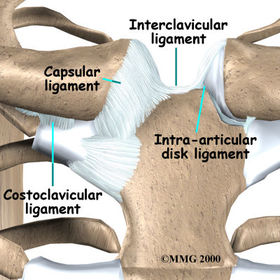
- 60Identify and define its purposeThe interclavicular ligament
Connects the R. and L. clavicles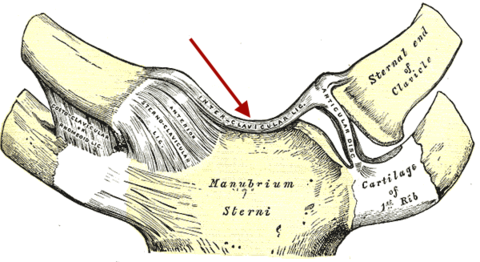
- 61Identify and define its purposeSternoclavicular ligament
helps strengthen the sternoclavicular capsule
Extends b/w the 1st rib and clavicle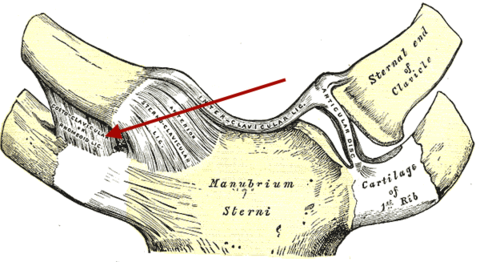
- 62What kind of joint is the sternoclavicular joint?ball and socket joint
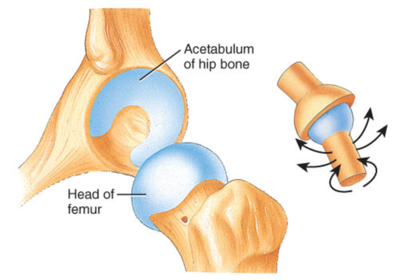
- 63How many degrees of freedom does the sternoclavicular joint have?3
- 64The sternoclavicular joint is capable of movements in superior-inferior (up and down) plane up to __° and in the anterior-posterior (front and back) plane up to __°60, 20
- 65What is the danger of posterior sternoclavicular dislocations?Whilst rare, the clavicle may compress of lacerate a lung, a great vessels, the trachea or oesophagus
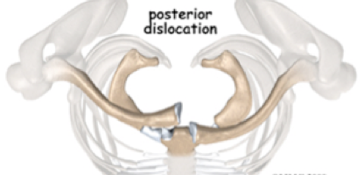
- 66What is the most common cause of posterior sternoclavicular dislocations?MVA, sports or a fall, with a force to the shoulder
usually via an externally, laterally placed blow along the axis of the clavicle - 67In which direction does the clavicle move is a posterior dislocation?anteriorly/ superiorly due to the attachment of its ligament
- 68Define ligament and define its purposeAcromioclavicular ligament
helps strengthen the capsule at the acriomioclavicular joint (ACJ)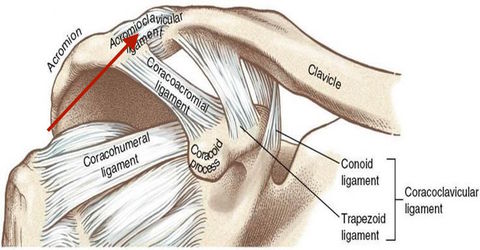
- 69Define ligament and labelCoracoacromial ligament
along with the tendon of the long head of biceps protects the top of the joint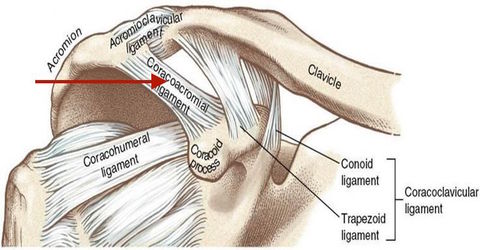
- 70How can the coracoacromial ligament be divided further?Antero-lateral: trapezoid ligament
Postero-medial: conoid ligament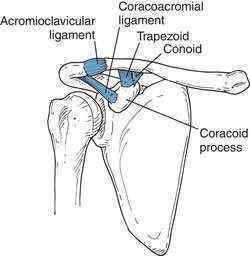
- 71Is there a disc at the acromioclavicular joint?Yes, but it can be absent as the capsule here is very lax but small
- 72What kind of joint is the acromioclavicular joint?synovial gliding joint
- 73What kind of joint is the glenohumeral joint?Ball-and-socket
- 74As the shoulder (glenohumeral) joint lacks strong ligaments, how is action maintained?by enveloping muscle making it a "muscle-dependent" joint
- 75How is the synovial membrane of the capsule of the glenohumeral joint attached?via the glenoid lip
- 76What structure evaginates and surrounds the synovial membrane of the glenohumeral joint like a tubular sheath?The long head of biceps brachii tendon
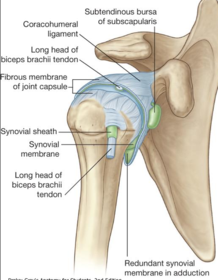
- 77Identify this structure When it it found?axillary recess
when the articular capsule is slack and when the arm hangs down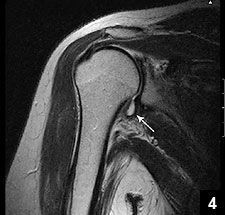
- 78What (4) structures support the upper part of the glenohumeral capsule?mainly the coracohumeral ligament
also (3) weak glenohumeral ligaments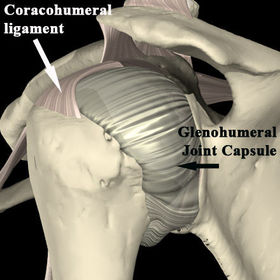
- 79Define and know the importance of this structureglenoid labrum
it serves to the deepen the glenohumeral socket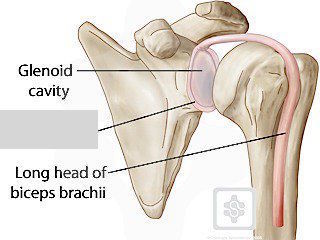
- 80What are synovial bursae and where are they found in the shoulder?a fluid-filled sac or sac-like cavity, especially one countering friction at a joint
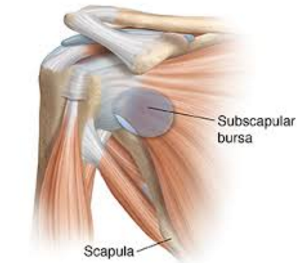
acromial process (subacromial bursae), deltoid and subscapular bursae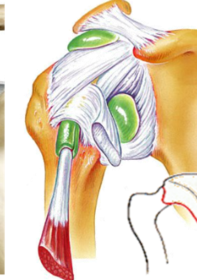
- 81Which is the only bursae in direct communication with the joint cavity?subscapular bursae
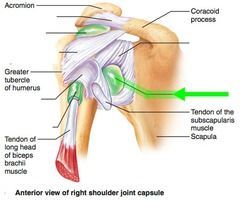
- 82What does the capsule of the glenohumeral joint attach to?proximally to the glenoid labrum and laterally to the anatomical neck of the humerus
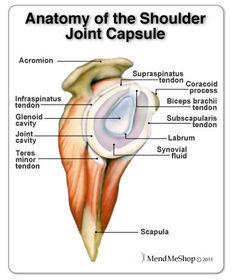
- 83Why does the capsule at the glenohumeral joint need to be week? esp. when?to permit free movement esp. at the inferior aspect of the joint where the capsule is tightened upon full abduction of the joint
- 84What structure(s) thicken the superior and anterior parts of the capsule?the glenohumeral ligaments
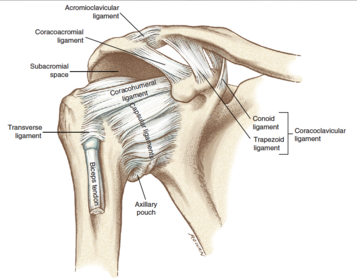
- 85There is a gap b/w the glenohumeral ligaments anteriorly, where the synovium membrane is able to escape from the confines of the capsule to form what?the subscapularis bursa
- 86What tendon arises from inside the joint (from the supragenoid tubercle), making it intra-capsular?the long head of biceps brachii
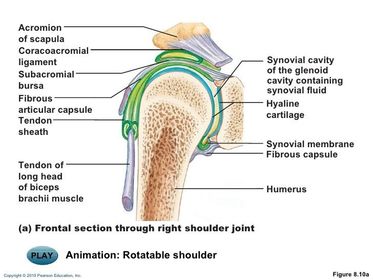
- 87Is the long head of biceps brachii intra-synovial too?No, it sites outside the synovial lining of the joint, making it extra-synovial
- 88What is the long head of biceps brachii surrounded by to help protect it as the joint moves?a sheath of synovium
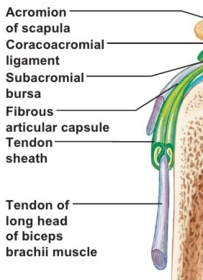
- 89What structure emerges from the synovial sheath into the biciptial groove, outside the joint, making it exposed and prone to inflammation (teno-synovitis)?the synovial sheath
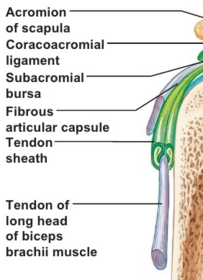
- 90What structures provide vertical stability to the humeral head?the glenohumeral capsule and the coracohumeral ligament
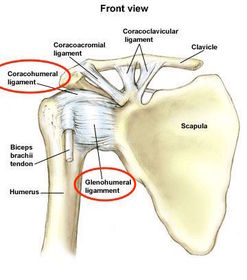
- 91What structures provide anterior stability to the humeral head?the anterior capsulo-ligamentous complex (but the contribution is limited)
- 92What ligaments are simply thickenings of the capsule?the superior, middle and inferior glenohumeral ligaments
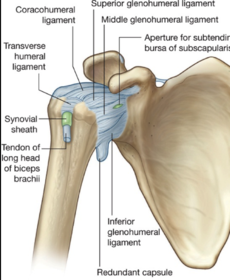
- 93What kind of structure is found b/w the superior and middle glenohumeral ligaments?a foramen
- 94What does the small foramen b/w the superior and middle glenohumeral ligaments allow?a bursa to protrude anteriorly
- 95What does the bursa b/w the superior and middle glenohumeral ligaments allow?movements if the tendon is in front of the joint (subscapularis tendon)
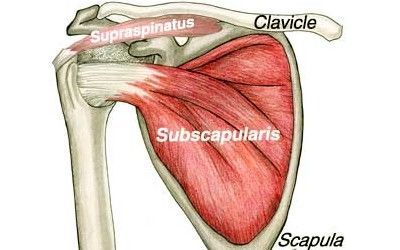
- 96Which of the glenohumeral ligaments is the largest and strongest of the three?the inferior glenohumeral ligament
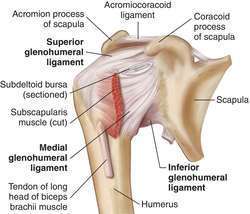
- 97Where is the inferior glenohumeral ligament found? What function does it provide?b/w the subscapularis and teres minor tendons
it reinforces the inferior glenohumeral capsule - 98What is the significance of the inferior glenohumeral ligament?beyond 90 degrees abduction, the subcapularis tendon no longer provides anterior (forward) stability of the humeral head, so the anterior stability must be provided by the axillary pouch of the inferior glenohumeral ligament
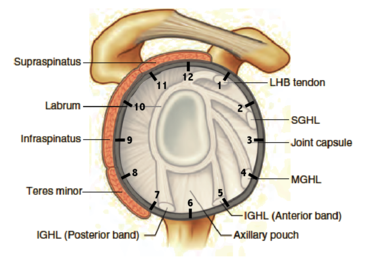
- 99Define and labeltransverse humeral ligament
passes b/w the humeral tubercles, attaching superior to the epiphyseal line
It converts the intertubercular groove into a canal into a canal and acts as a retinaculum for the long tendon of the biceps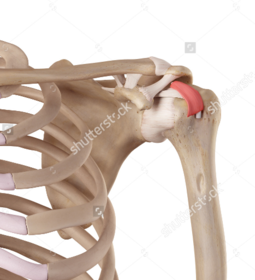
- 100Where is the glenohumeral joint weakest?inferiorly
- 101Which scan is the test of choice for diagnosing soft tissue injuries and is often used for assessing ongoing pain which fails to respond to traditional treatment options such as rest, physiotherapy and medicationMRI
- 102What imaging types are excellent for detecting bone injuries?x-ray and CT
- 103What imaging is best for diagnosing soft tissue injuries such as tears of the rotators cuff or inflammation?MRI
- 104—
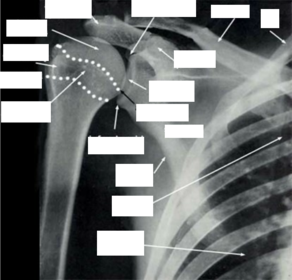
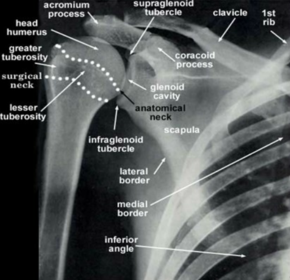
- 105What kind of abnormality is shown?y view
anterior shoulder dislocation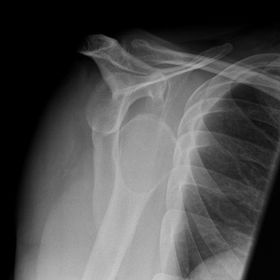
- 106What kind of abnormality is shown?y view
posterior shoulder dislocation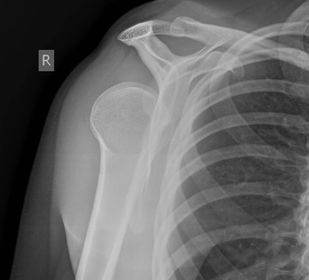
- 107What kind of abnormality is shown?Glenoid labrum tear
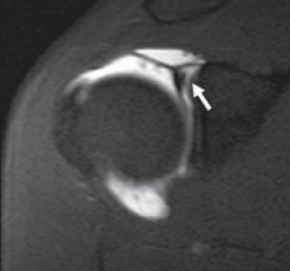
- 108What kind of abnormality is shown?SLAP lesion
Superior labrum from anterior to posterior
lesion/ tear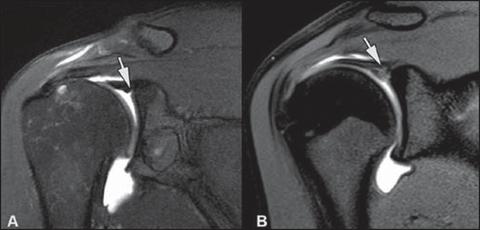
- 109Label and defineA Bankart lesion
Injury of the anterior (inferior) glenoid labrum of the shoulder due to anterior shoulder dislocation. When this happens, a pocket at the front of the glenoid forms that allows the humeral head to dislocate into it.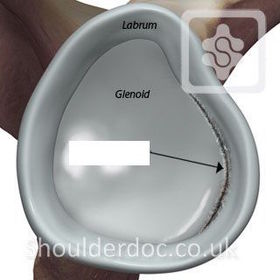
- 110Shoulder dislocations are brought on by a force applied when the limb is in a position of _______ and _______ rotation, e.g. trying to protect yourself in a fall from a weight when your hands are in front of your head.abduction, external
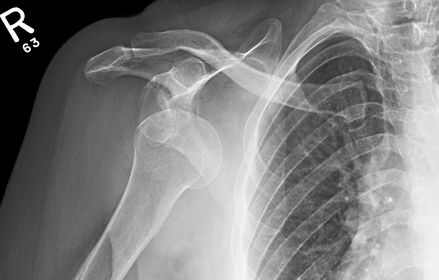
- 111The shoulder joint is weakest ______, and hence is more easily diplaced in this directioninferiorly
- 112The most common form of dislocation is called ______, and the limb is placed ____-______anterior,
antero-inferiorly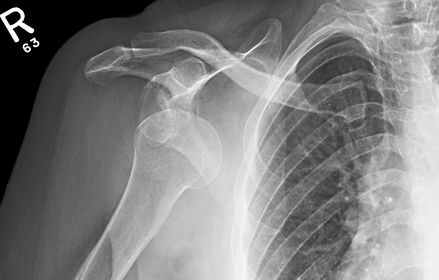
- 113Anterior dislocations stresses the _____ capsule, and the _____ part of the glenoid labrum. If the glenoid labrum is torn, it is referred to as a _______ _____.anterior, anterior, Bankart lesion
- 114Shoulder joint deformity, an abnormally long arm, humeral head position in the axilla and pain and dysfunction are symptoms of what?a shoulder dislocation
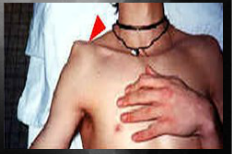
- 115What is the most physically obvious sign of shoulder dislocation?The normal rounded contour of the shoulder is lost
the greater tubercle is usually the most palpable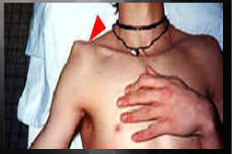
- 116What structures become palpable in a shoulder dislocation?the acromion
- 117Movements of the dislocated shoulder are limited and painful, and hence the limb remains in a partially ____ and ____ rotated position This is because the ____ rotators of the joint (________,______) are stretched and also maintained in this positionabducted, laterally
lateral (infraspinatous and teres minor)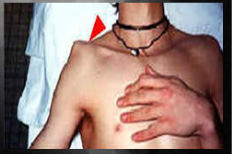
- 118Most posterior dislocations are caused by what?a direct blow to the front of shoulder, or the violent twisting of the upper arm twisting (e.g. via direct trauma or an epileptic attack)
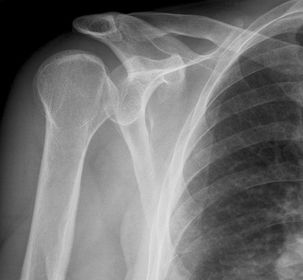
- 119A shoulder can be partially dislocated (in the head of the upper arm is partially out of the shoulder socket) or completely dislocated (the head of the upper arm is completely out of the socket. A partial dislocation is know as:subluxation
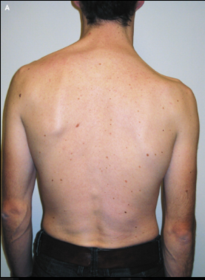
- 120a dislocation can result in fracture of the ______humerus
NB: nerve damage, damage to an artery or muscle is also possible - 121What term is used to describe a loss of range of motion in the shoulder?Frozen shoulder or "Adhesive Capsulitis"
- 122What are the characteristics of a frozen shoulder?inflammation, associated pain, limited movement of the glenohumeral joint
- 123Frozen shoulder is most common in what age range?40-60
- 124How many people in the UK are affected by frozen shoulder annually?1 million
- 125What is the ratio of frozen shoulder female:male?2:I
for unknown reasons - 126What are the four main types of shoulder stiffness? What is the most common of the four?Idiopathic, Diabetic, Post-traumatic and Post--surgical
Idiopathic is the most common - 127What is the leading hypothesis as to why people with endocrine problems such as diabetics are more prone to shoulder stiffness?It is not entirely understood, but the main hypothesis suggests that it is linked to increased vascularity of the capsule
- 128What is shown in the image and how does it relate to stiff shoulder?Synovitis
Typically seen in stiff or frozen shoulder. Can be accompanied with scarring and adhesions that limit motion. Possible both inside and outside the joint.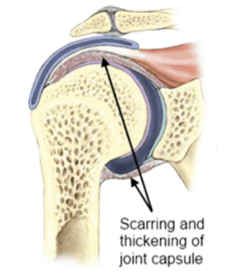
Informationen
- Beschreibung
- Medicine Y2 (Scenario 13 | Shoulder, axilla and arm) Karteikarten am Sc13L03 The pectoral girdle and shoulder joints, erstellt von Emma Allde am 20/09/2016.
- Erstellt von
- Emma Allde
- Aufrufe
- 922
- Bewertung