
Karteikarten
Human Ancestors
Karten in diesem Stapel (12)
- 1Environment• As the environment gradually changes over thousands and millions of years, natural selection means that characteristics of organisms gradually change to suit the environment (survival of the fittest).
• Hominins are different organisms as they have developed a complex culture. This culture includes tool making, hunting techniques, food preparation, art, using language, diet and interaction with other cultures.
• Just like how characteristics have changed within the Hominins species, so have the cultures of tool making, obtaining food, and increase of language.
• Scientists suggest early hominins lived in an environment where it was considered woodlands or a forest environment. (early hominins were ape like so they used their arms and feet to move about in the forest) - 2Effects of environment on early Hominin evolution• Temperatures began to fall and forest areas diminished in size, leaving patches of forest separated by increasingly open grasslands.
• Many arboreal animals would not be able to survive.
• However, some of the features that help apes live in trees also allow for limited bipedalism on the ground.
• As the forests thinned and trees got farther apart, there were more open spaces.
• In this situation, natural selection may have favoured apes that were better at bipedal walking due to the limited trees.
Those apes then evolved into the early hominins.
• As African forests were replaced by grasslands, food supplies became more limited.
• At this time about 2.5 million years ago, the Australopithecines were evolving from the earliest of the Hominins. - 3Effects of environment on early Hominin evolution Advantages of Erect Posture• Natural selection favoured individuals with a more erect stance who were able to move bipedally across the expanding grasslands.
• The advantages of erect stance and the bipedal locomotion that evolved later are:
→ An increased range of vision for detecting prey and predators at a greater distance.
→ Increased size in stature for deterring of predators (If you are closer to the ground you are less threatening then someone who may be 6 foot tall etc)
→ Hands are free for carrying food and perhaps for tool use.
→ Hominins have a higher reach when picking fruit from trees.
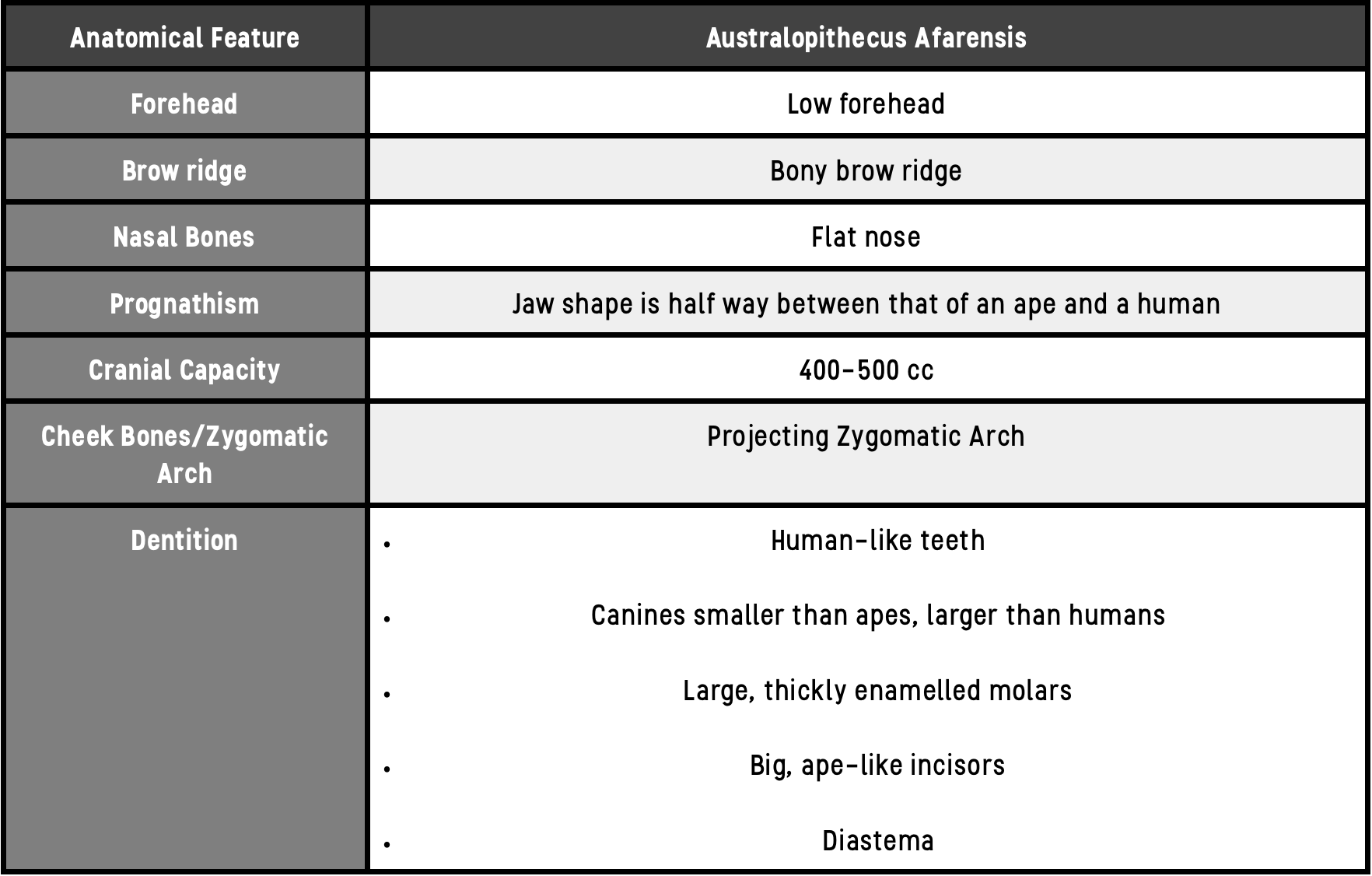
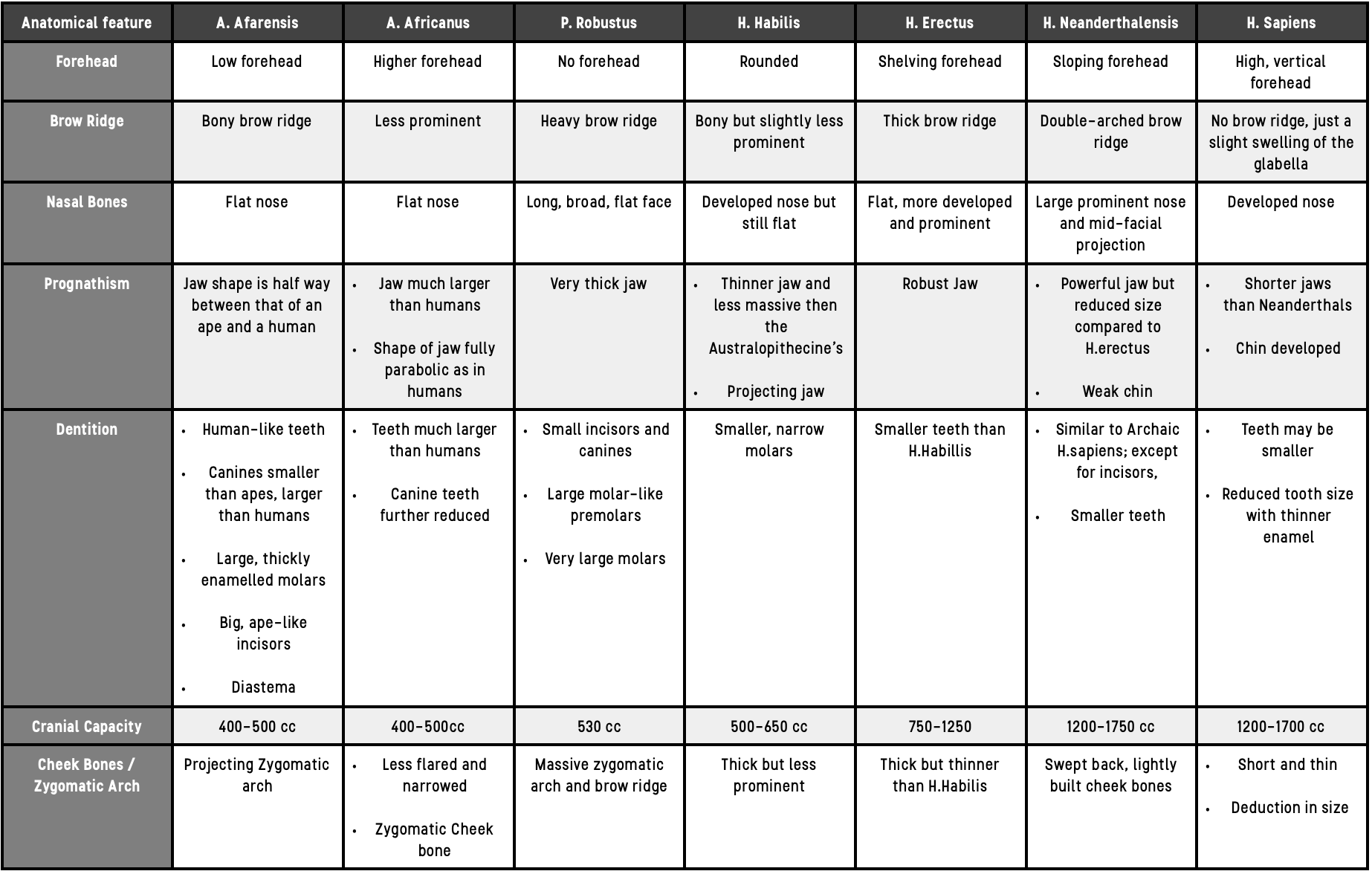
→ When humans stand vertically, the sun would strike a smaller fraction of the body, helping to avoid overheating. and since the upper body is above the ground there is move air to circulate to help cool the body/skin. - 4Anatomical Features Australopithecus Afarensis
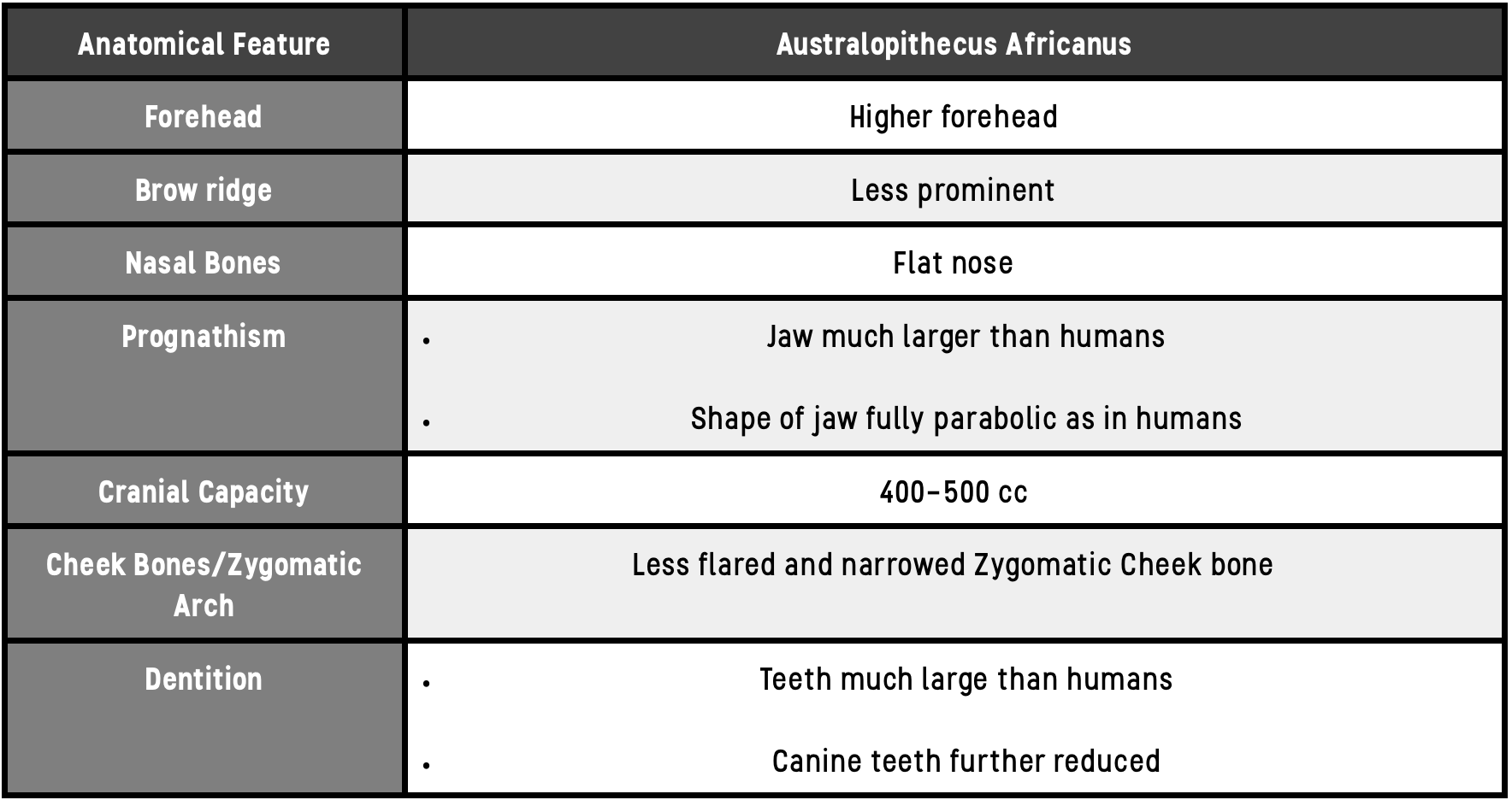
- 5Anatomical Features Australopithecus Africanus
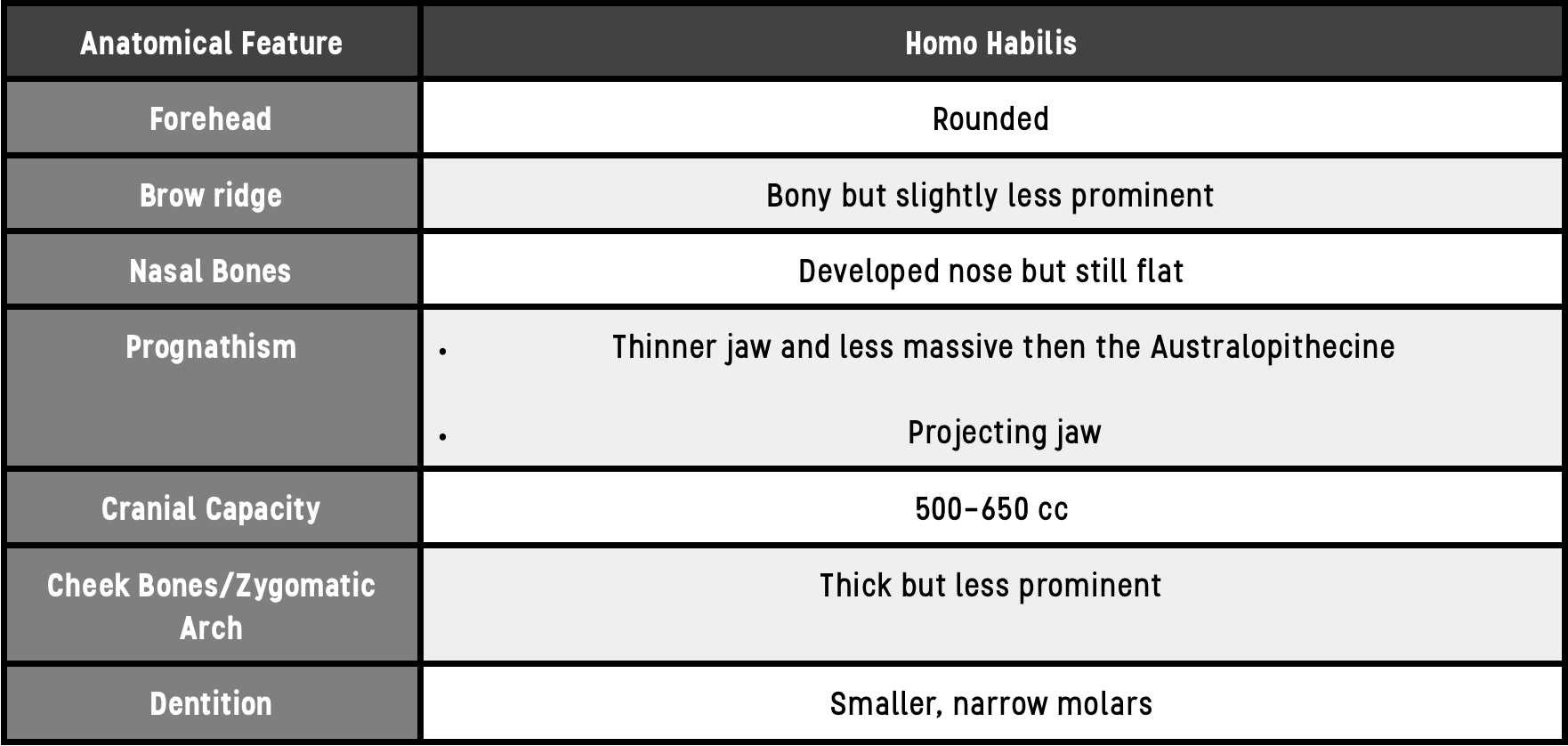
- 6Anatomical Features Homo Habilis
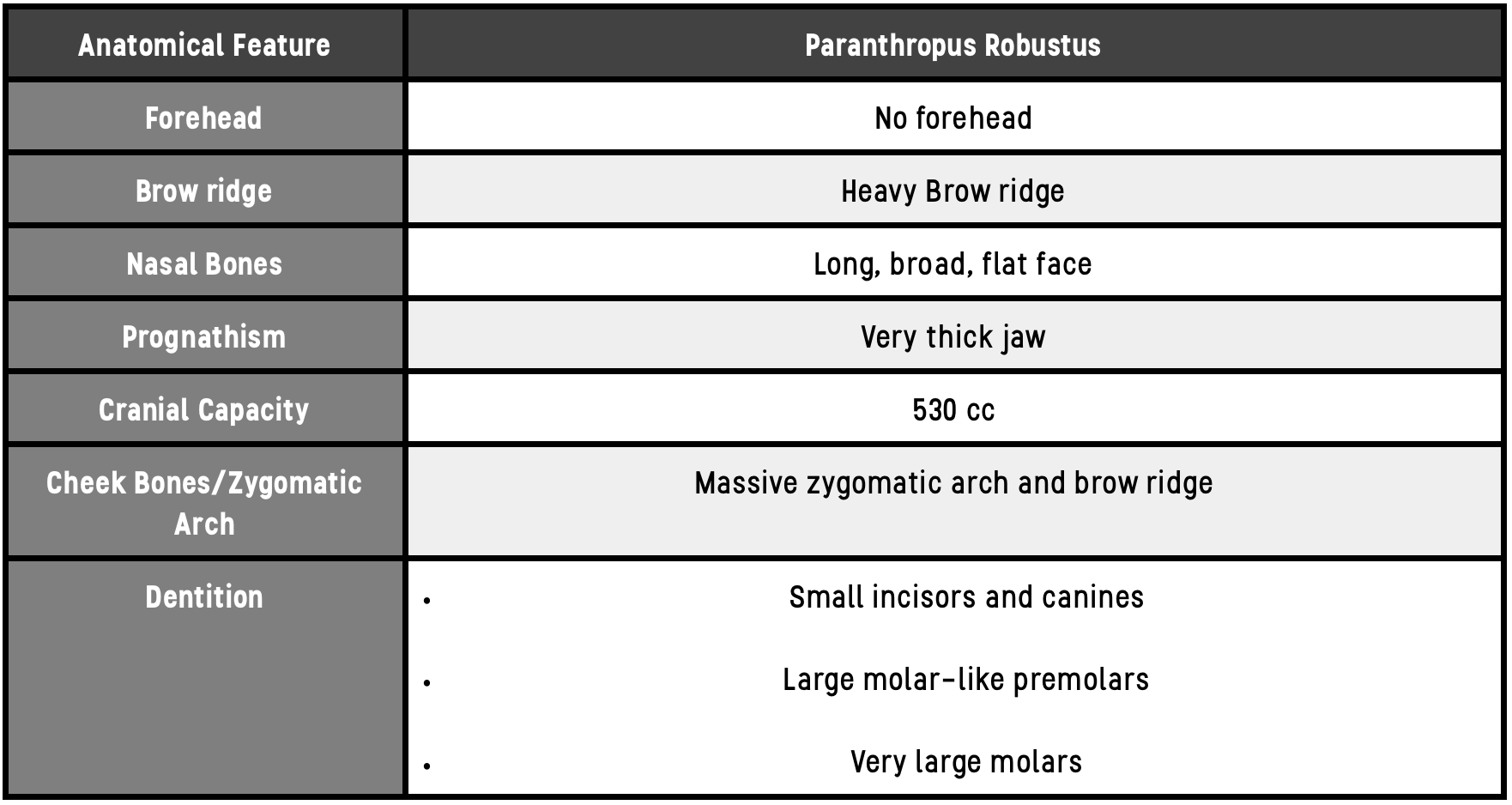
- 7Anatomical Features Paranthropus Robustus
- 8Anatomical Features Homo Erectus
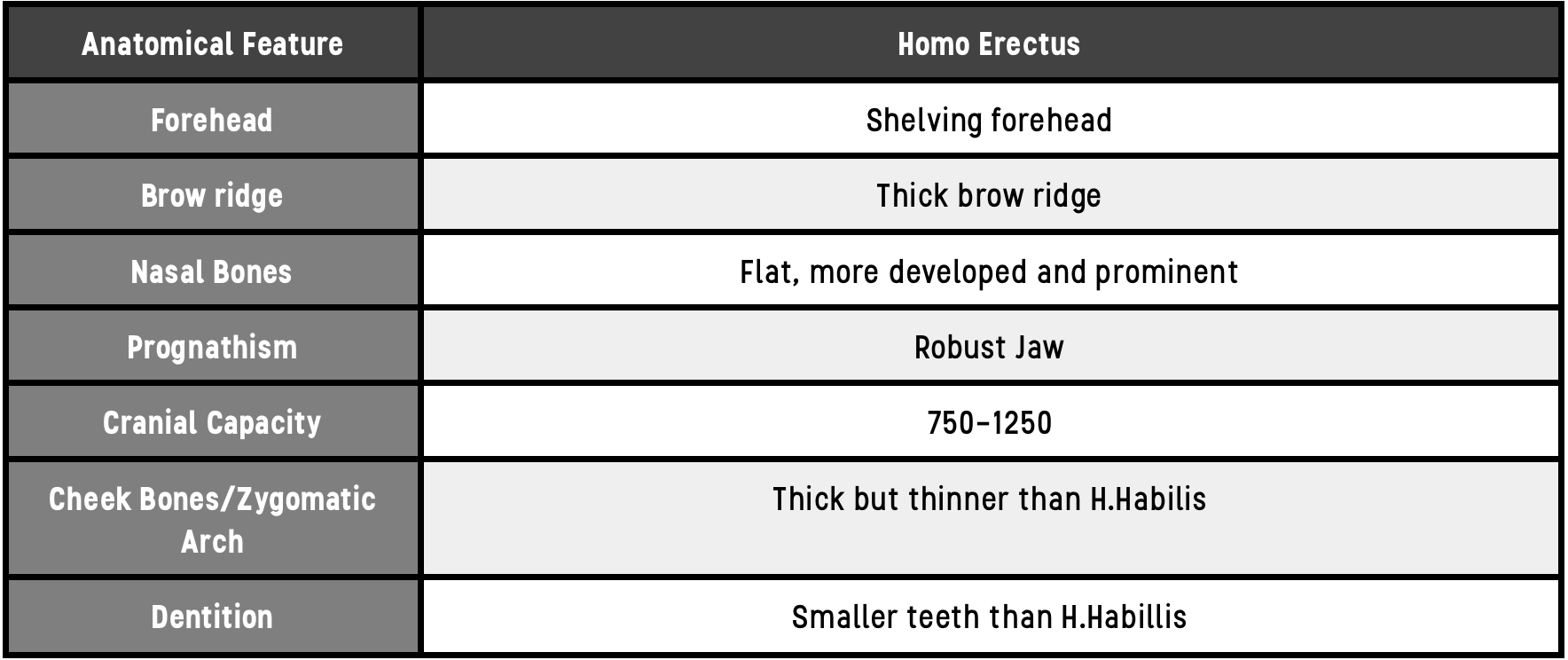
- 9Anatomical Features Homo Neanderthalensis
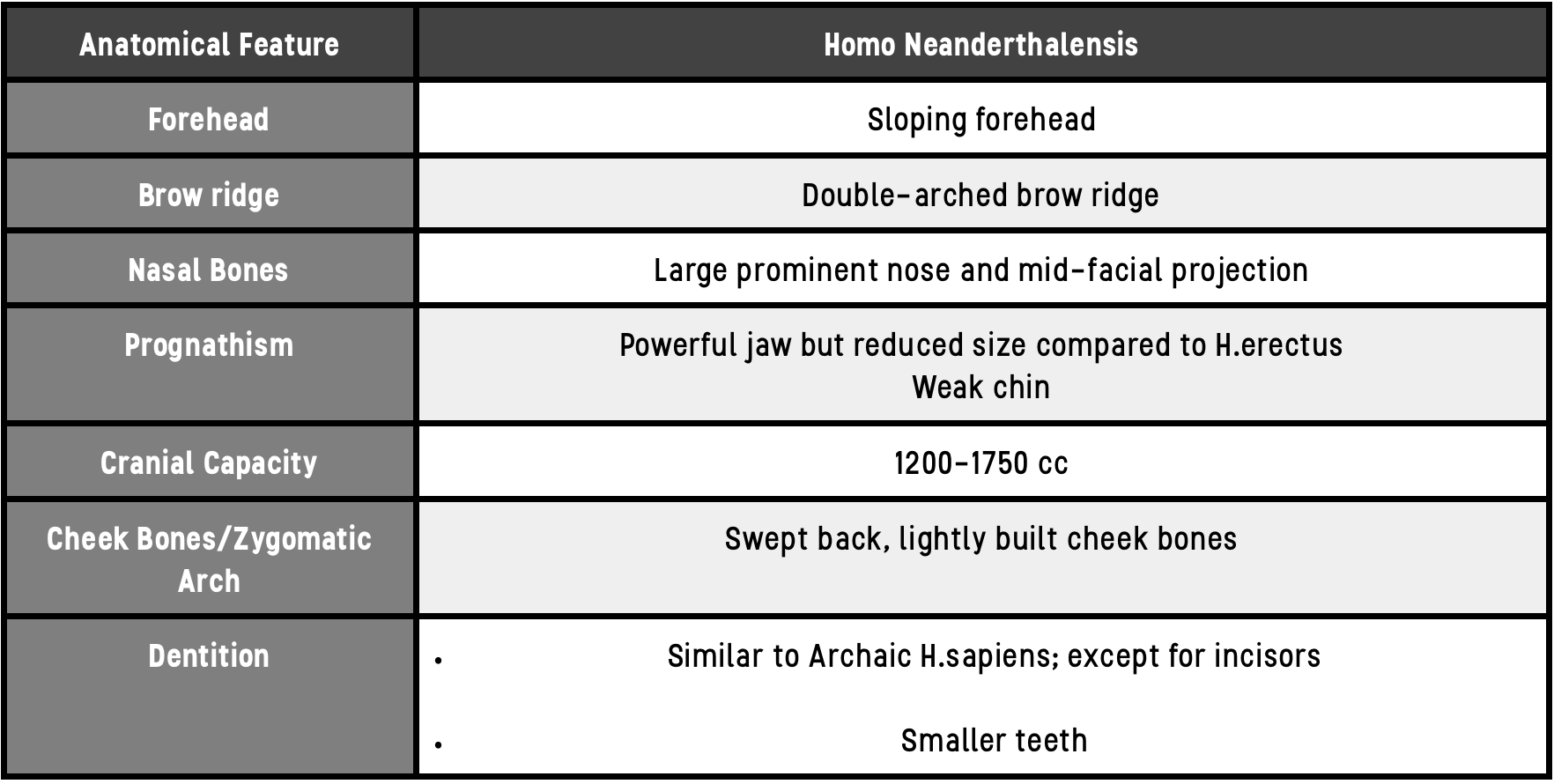
- 10Anatomical Features Homo Sapiens
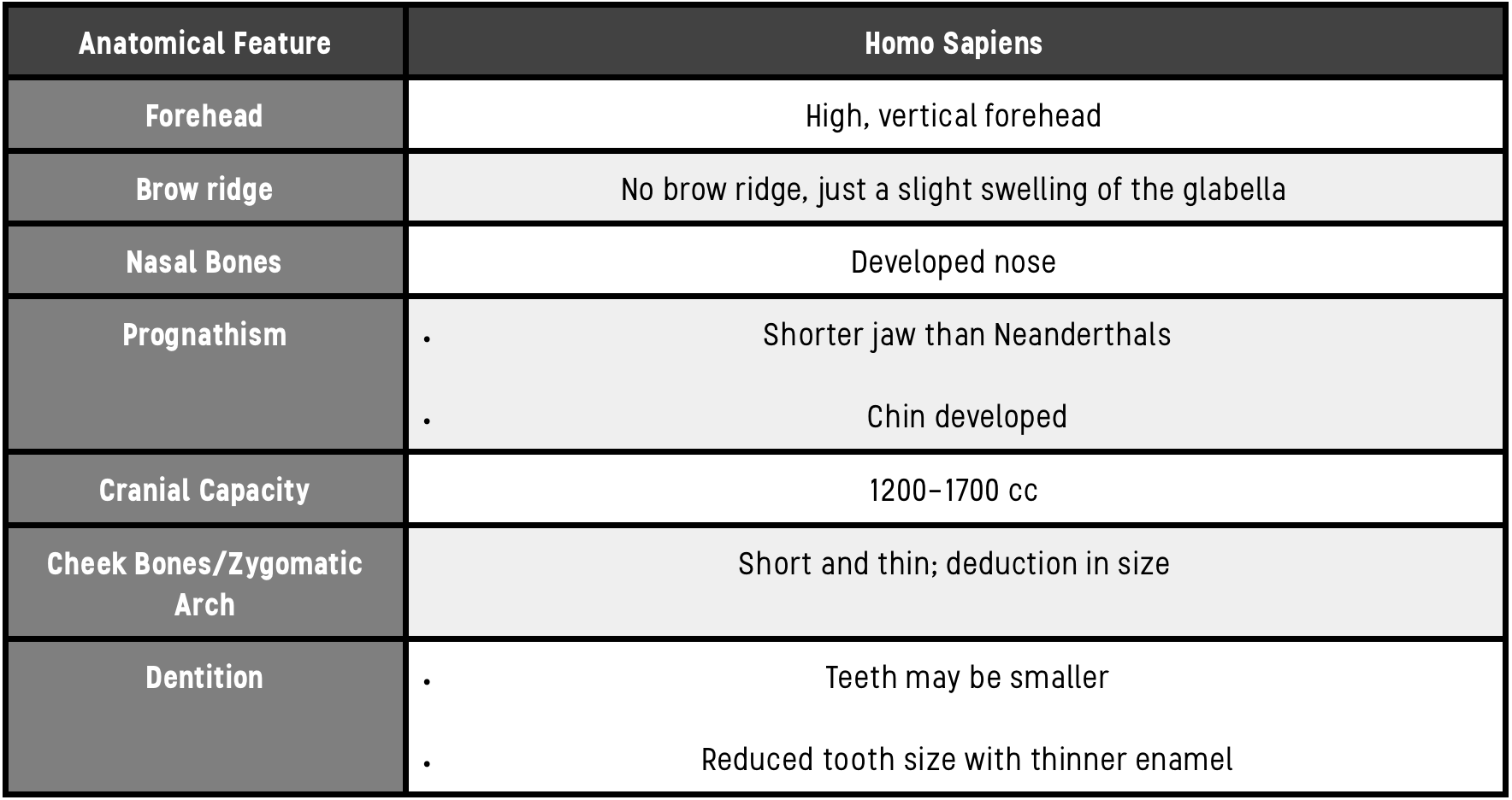
- 11Comparision table of primitive and modern anatomical features
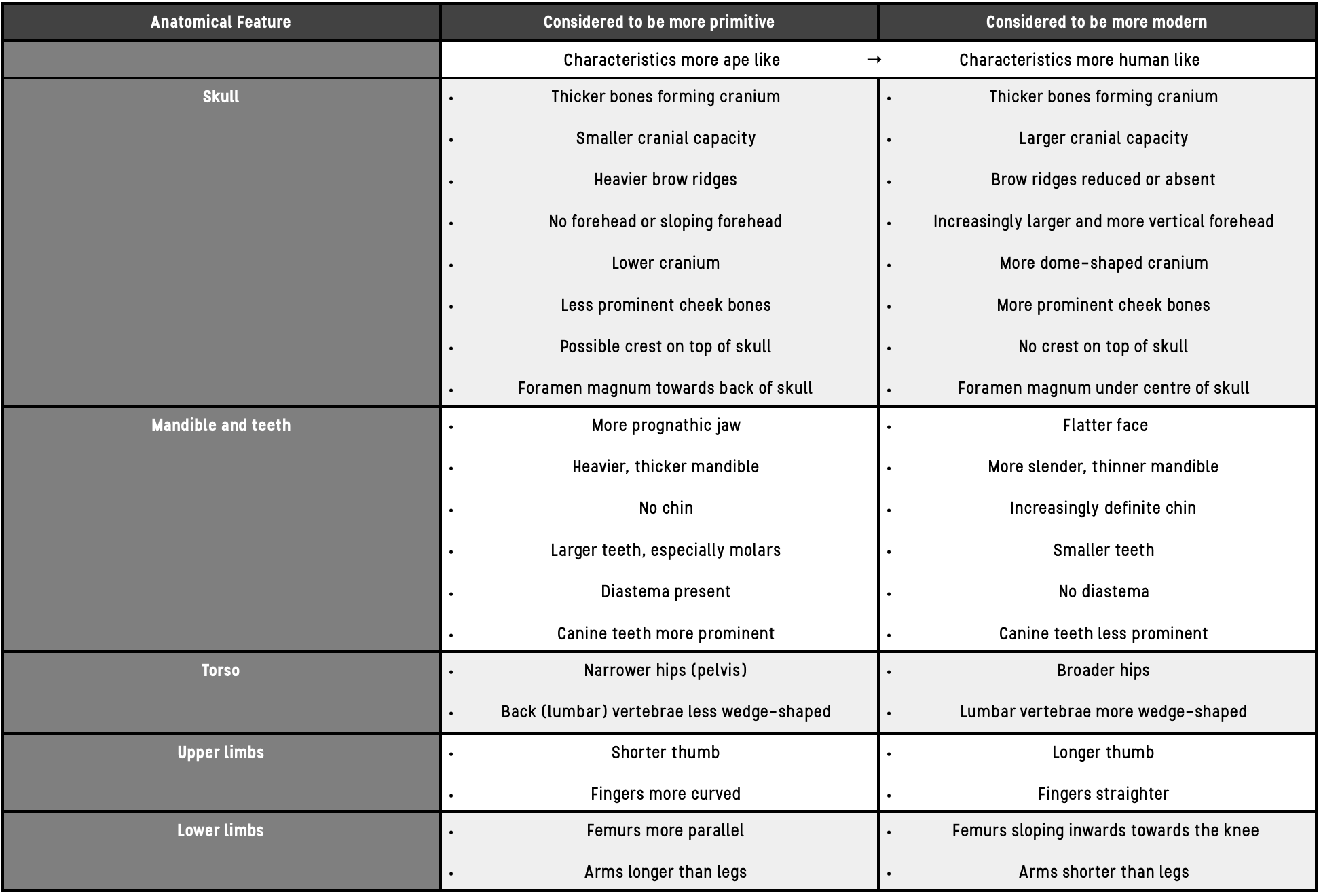
- 12Comparison table of Anatomical trends in Hominin evolution
Informationen
- Beschreibung
- Year 12 ATAR Human Biology (Chapter 19 • Human Ancestors •) Karteikarten am Human Ancestors , erstellt von Lewis Johnson am 17/08/2017.
- Erstellt von
- Lewis Johnson
- Aufrufe
- 16
- Bewertung