Flussdiagramm
OBSERVATION AND RESEARCH IN THE CLASSROOM CONTEXT

Inhalt des Flussdiagramms
OBSERVATION AND RESEARCH IN THE CLASSROOM CONTEXT
THE NATURE AND SCOPE OF RESEARCH
APPROACHES TO RESEARCH
CLASSROOM OBSERVATION
What is research?
The Scope of Classroom Research
First ELT Research Studies
Considers
Has
Includes
An activity which
critically evaluate
some problem
Practical research:
Practical utilisation of
theoretical and applied
research it is based on
the premises of these
researchs
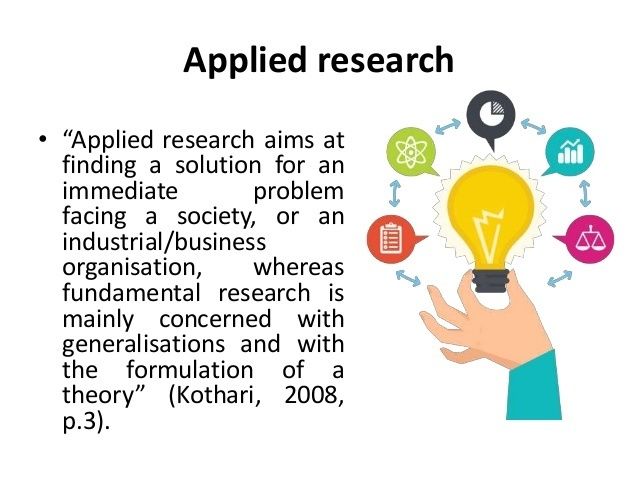
Applied research:
Applies the theoretical
models provided by basic
research to different fields
of study
Basic or
theoretical research:
Aims to construct
abstract theoretical
models which explain
SLT and SLL
In order to:
- Get a result
with methods
objectively
- Solve problems,
verify the application
of theories
- Enlighten both,
researcher and
any interested
reader
Undertaking
structured investigation
which hopefully
results in greater
understanding of the
chosen interest area
It is
Research is carried out:
Research types
It is
Centred in the classroom.
Classroom research becomes
and important tool for
examining the relations
between variables that
continually interact
Key topics for classroom research (Van Lier 1988)
Take into consideration
The connection between input received by students and the output they produce is often characterised as a "black box" reflecting the idea that what actually goes on in this process is dark and unknown
Cognitive styles
Efficiency of evaluation techniques
The use of learning strategies
Role of interaction between the teacher and students
The nature and development of the students interlanguage
Systematic research:
New and traditional methods of language teaching were compared by Agard and Dunkel in 1948
A radical change took place in the sixties and research began to influence policy issues and the method debate in second language education
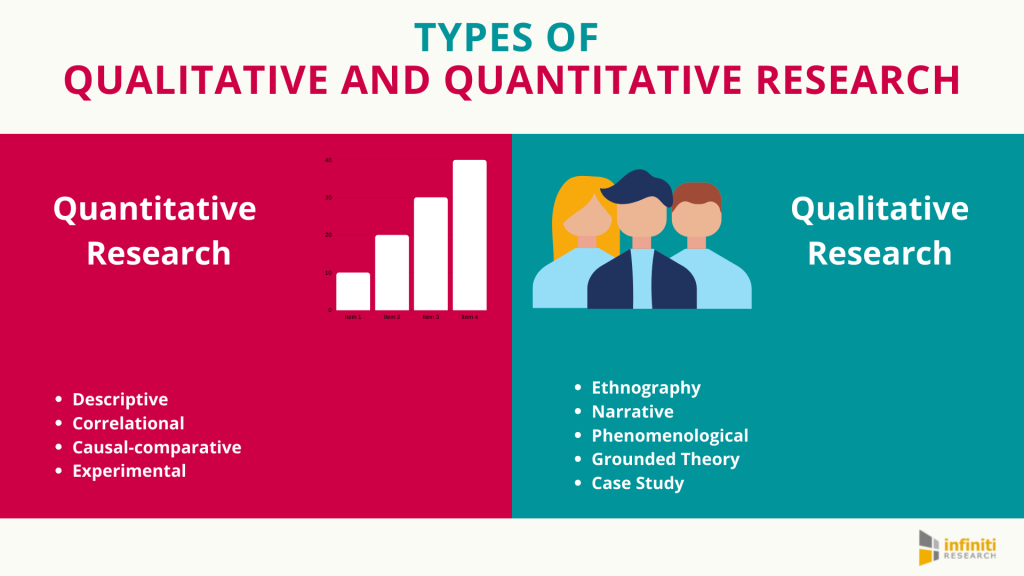
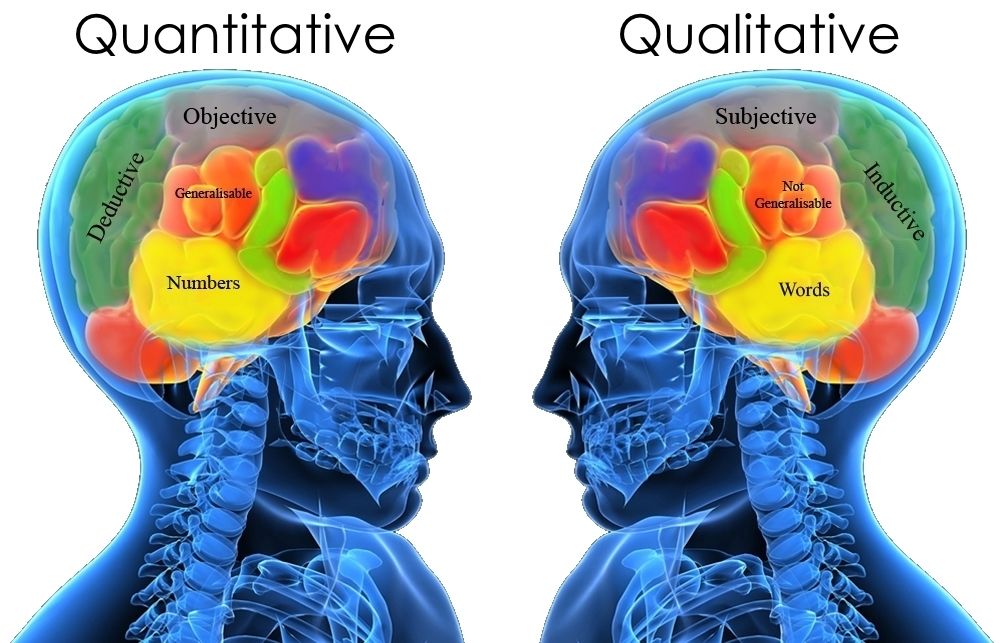
Quantitative Vs Qualitative Approaches
Individual Vs Collaborative Research
Questioning The Scientific Research Paradigm
Experimental Approaches
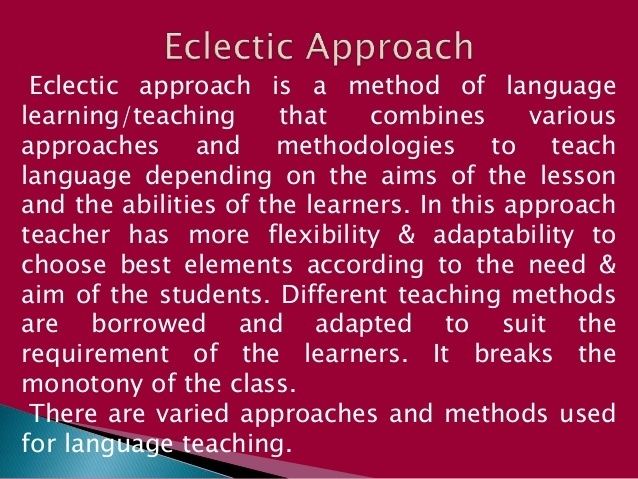
Eclectic Approaches
Low inference categories include things that can be counted or coded without the observer having to infer very much
High inference categories, demand that the observer makes a judgement that goes well beyond what is immediately visible
Researchers distinguish between
Combines
Experimental and naturalistic measures
Ideally experimental and interpretative research should be convergent rather than parallel or divergent lines of enquire (Van Lier 1988)
There are some stages
(Seliger and Shohamy 1989)
- Formulating the general question or the problem which will be solved
- Feasibility of the research work we aim to carry out to solve the problem
- Deciding on the objectives that will be achieved
- Formulating the research plan and hypothesis to be tested
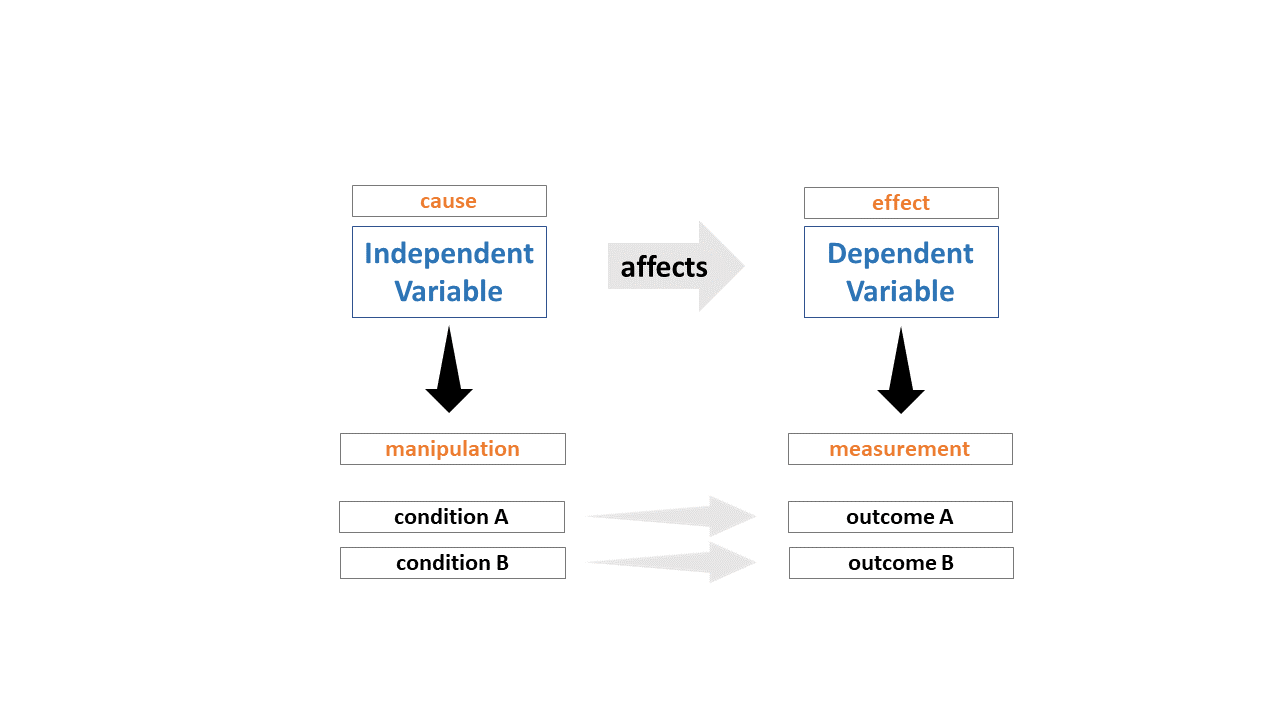
In synthetic or analytic-deductive research, planning requires the careful development of a plan in which those factors to be controled or manipulated are identified
Research which focuses on variables makes predictions and tests hypothesis is primarily of the deductive type
The dependent variable is the means by which any changes are measured. The independent variable is the factor the researcher manipulates in order to see what effect the changes introduced will have
Heuristic (exploratory) research, approaches the research context from a different perspective, avoiding, preconceptions with the aim of generating hypothesis but not of testing them, using qualitative methods.
Because
Scientific research has failed to answer some of the most pressing questions in language teaching.
It seems to promise solutions to very complex professional dilemmas, but rarely manages to deliver the goods.
Another weakness that is apparent in a scientific research paradigm is that of its lack of grounding in specific classroom practice.
(Ellis 1990) points to two reasons for the growing scepticism with the conventional rational research paradigm: Firstly, the relationship between teaching and learning is extremely complex. It is not linear.
Innovation in the classroom can never be just a question of implementing a recommendation derived from research. It is a process of negotiations, involving the teacher´s overall educational ideology, the learner´s expectations and preferences and local constraints that determine what is feasible.
There is no single pedagogical solution which is applicable to all classrooms (Ellis 1990)
Involve
Individual: only the researcher him/herself whether a professional non-practising researcher or a practising classroom teacher
Collaborative: It will involve a collaboration between the researcher and the teacher whose classroom is observed, while within the naturalistic paradigm, it will involve the teacher collaborating with peers
Advantages: These approaches tend to be more flexible, less professionally risky and mores easily implemented than others (Wallace 1998)
Advantages: With the right kind of co-operation, collaboration can do much to sustain motivation, save time by the allocation of different tasks as appropriate and generate richer input from the combined talents and insights of those involved
A Systematic Approach
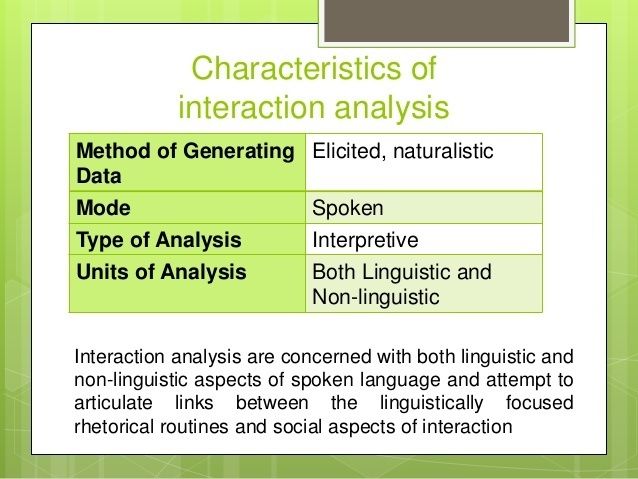
Interaction Analysis
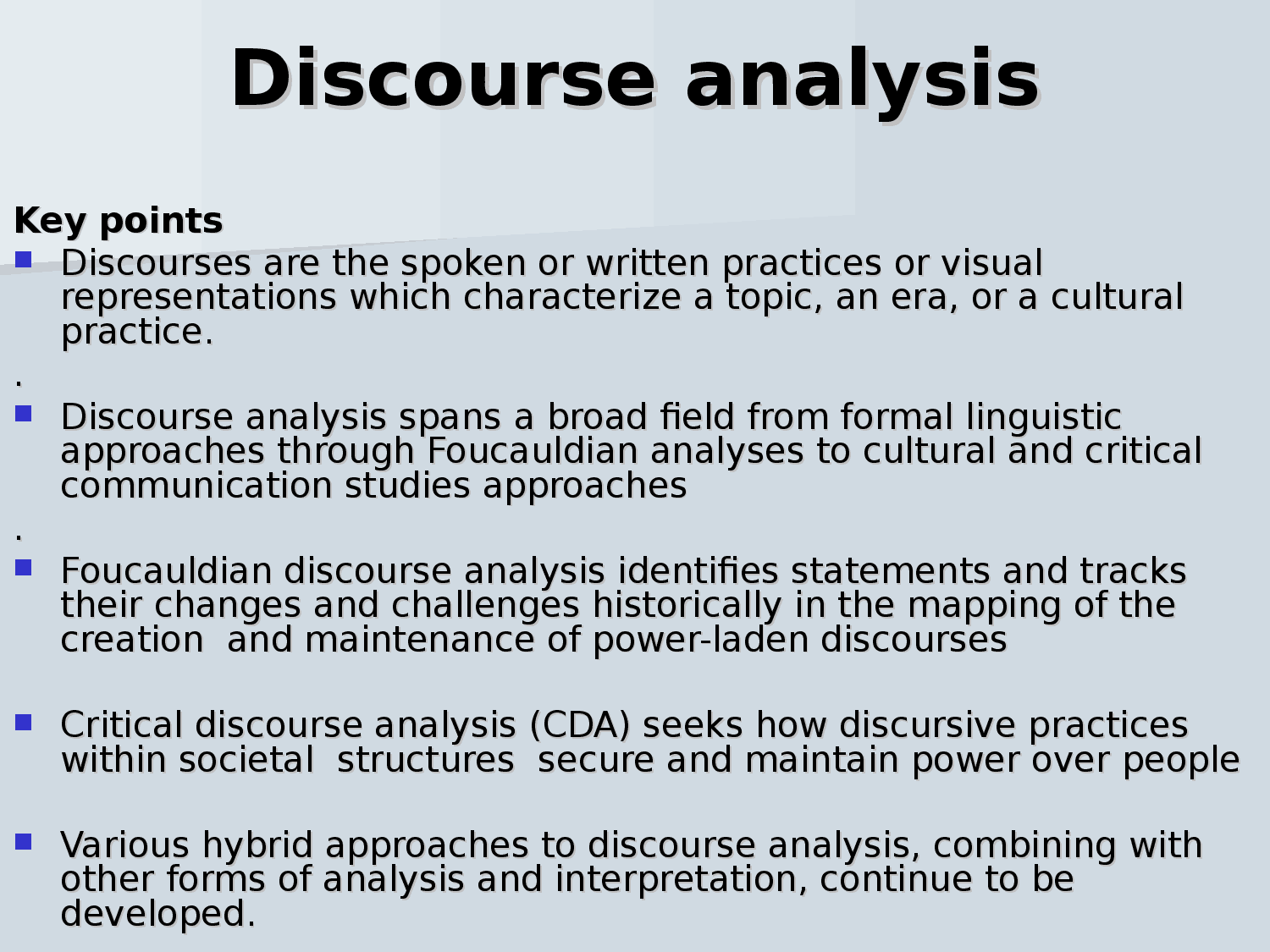
Discourse Analysis
Ethnography
Takes into account
Classroom observation has been used with different purposes:
- To compare teaching methods
- To study the most efficient classroom techniques
-To evaluate teachers and materials
Observation is seen as an important tool for studying what actually happens inside the classroom in a systematic way
Researchers explore the procedures and techniques of ethnography as a viable approach to classroom research
(Van Lier 1988) considers ethnographic techniques the most suitable for studying classroom events
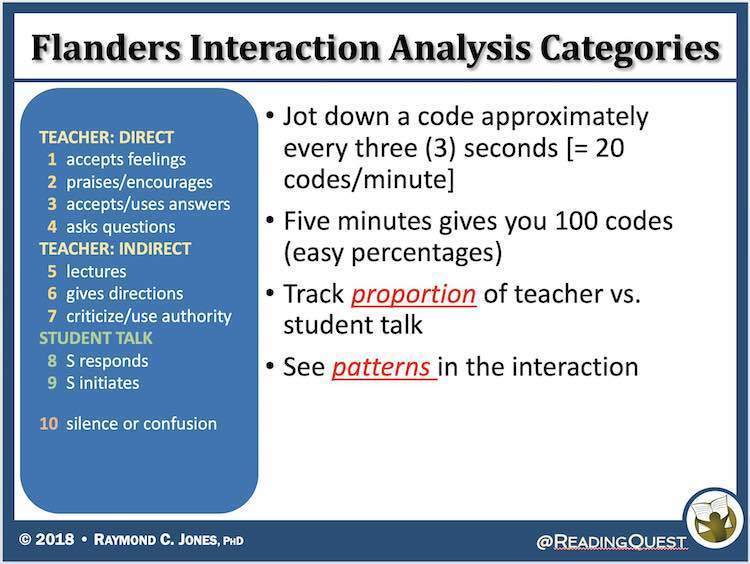
(Flanders 1970) Developed a list of categories of teacher and learner behaviour associated with successful teaching and this taxonomy is called FIAC (Flanders´Interaction Analysis Categories)
FIAC is used as follows: To codify the behaviour used during teaching unit the observer marks the different categories
(Fanselow 1977)
Made another important contribution with his FOCUS (Foci for Observing Communication Used in Settings)
(Moskowitz 1976) Called her taxonomy FLINT (Foreign Language Interaction) The most widely used modification of Flander´s model.
Moskowitz´s taxonomy was used as a research tool and as a feedback instrument in teacher training
It was also and observation schedule developed for language teacher training, but it is applicable for classroom research
Fanselow´s model does not have separate categories for teachers and learners
5 characteristics of communication in settings
Who communicates?
What is the pedagogical purpose of communication?
What mediums are used to communicate?
How are the mediums used to communicate areas of content?
What areas of content are communicated?
The emergence of discourse analysis studies as a field of linguistic enquiry led to classroom research models based on the analysis of classroom discourse.
COLT system proposed by (AllenFrolich and Spada 1985)
The COLT model (Communicative Orientation of Language Teaching) was developed to distinguish communicative language teaching classrooms from those which were more form-focused
The pedagogical move consists of various structures, which are realised by acts having a special discourse function
(Craig Chaudron 1988)
Divides discourse into two main types:
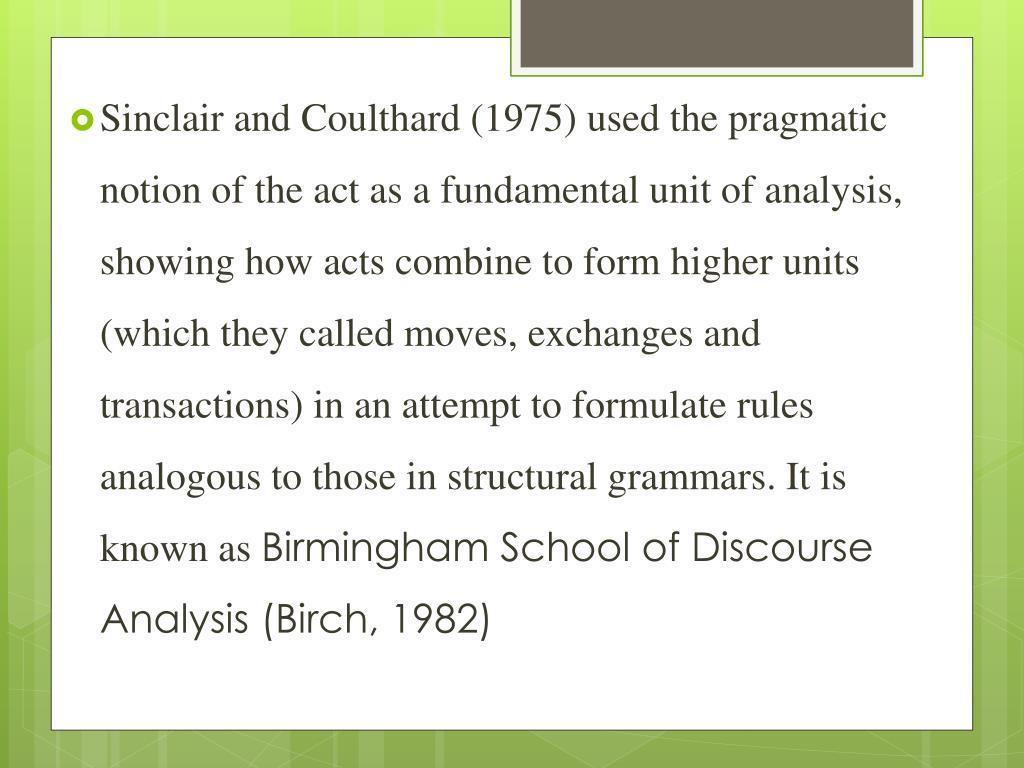
(Sinclair and Coulthard 1975)
Their model discourse is comprised of five levels:
-lesson- transaction-exchange- move - act
Structural Units:
Utterance - Turn - T-Unit- Communication unit - Fragment
Functional Units:
Repetition - Expansion
Clarification request
Comprehension check
Confirmation check
Repair - Model
Has its roots in anthropology and sociology
(Nunan) Ethnography involves the study of the culture/characteristics of a group in real world rather than laboratory settings. The researcher makes no attempt to isolate or manipulate the phenomena under investigation.
( Mehan 1979) Constitutive ethnography characteristics:
(Erickson and Shultz´s Stages 1981)
are considered to be useful
2 key ideas:
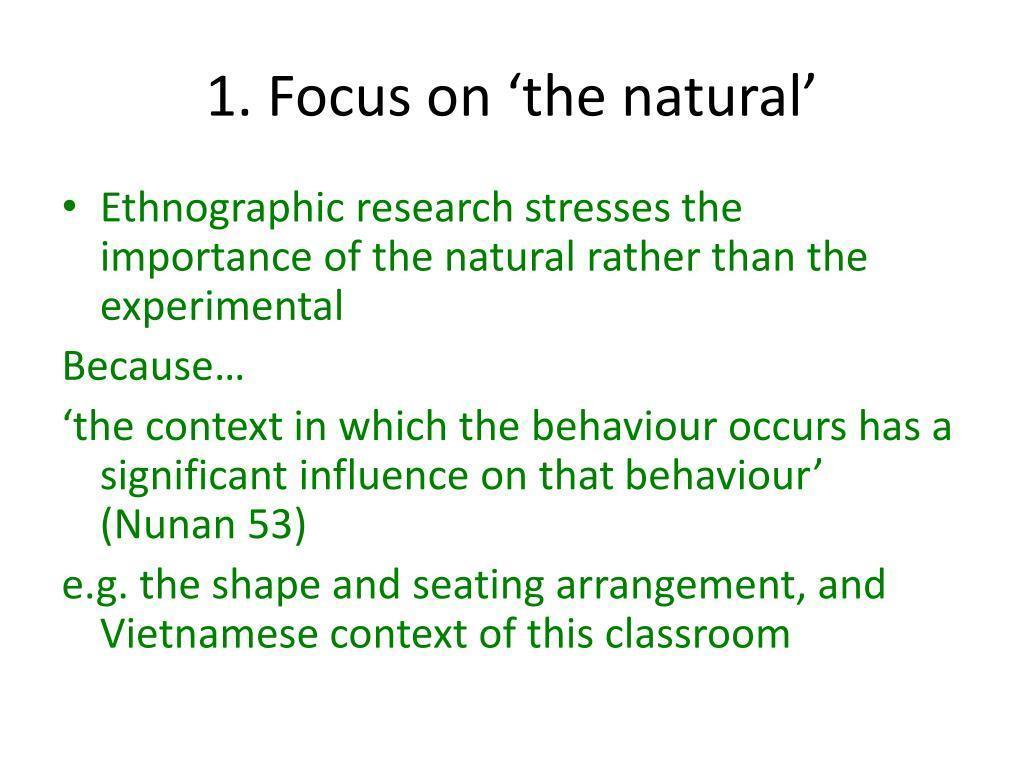
Context is seen to have an important influence on behaviour. Research needs to always be carried out in a natural context.
The subjective perceptions and belief systems of both, researchers and subjects need to be taken into account in any research
Retrievability of the data
Comprehensive data treatment
Convergence between researcher´s and participant´s perspectives
Interactional level of analysis
Stage 1:
Global viewing
Stage 2:
Choice of specific occasions of interest for more detailed analysis
Stage 3:
Specification of differences in the transitions or junctures
Stage 4:
Detailed description of the participation structures between junctures
Stage 5:
Construction of a model showing the principles of social organization
Stage 6:
Establishing the generalizability of the structures analysed