
Mindmap
A 20 year old women with an ulcer
Inhalt der Mindmap
A 20 year old women with an ulcer
Skin
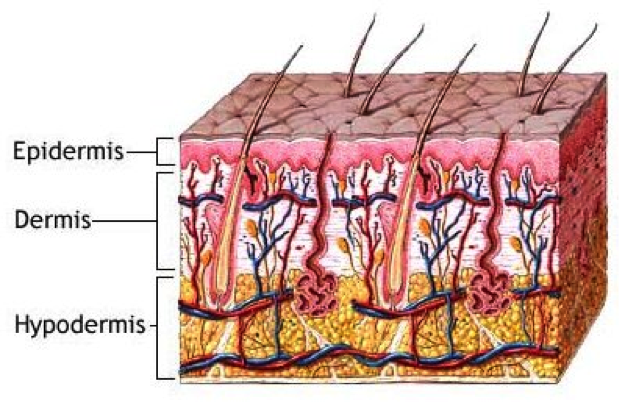
- Three major regions
- Epidermis
- Outermost superficial region
- Stratified squamous epithelium
- 4 distinct cell types
- Keratinocytes
- Melanocytes
- Merkel cells
- Langerhans’ cells
- 5 Layers/strata
- Basale or germinativum
- Spinosum
- Granulosum
- Lucidum (thick skin)
- Corneum
- Lucidum (thick skin)
- Granulosum
- Spinosum
- Basale or germinativum
- Dermis (Corium)
- Cell types
- Fibroblasts
- Macrophages
- Mast cells
- Middle region
- 2 layers
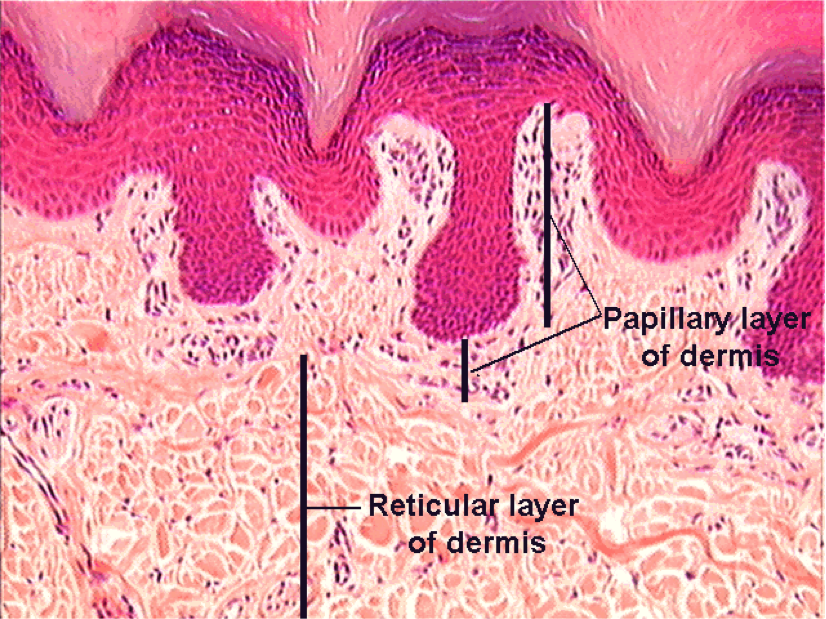
- Papillary
- Areolar connective tissue + Collagen + Elastic fibers
- Superior surface
- Peg like projections (Dermal papillae)
- Capillary loops
- Tactile corpuscles
- Free nerve endings
- Peg like projections (Dermal papillae)
- Reticular
- Collagen + Elastin fibers
- Papillary
- Cell types
- Hypodermis (superficial fascia/tissue)
- Deepest region
- Adipose & Areolar connective tissue
- Epidermis
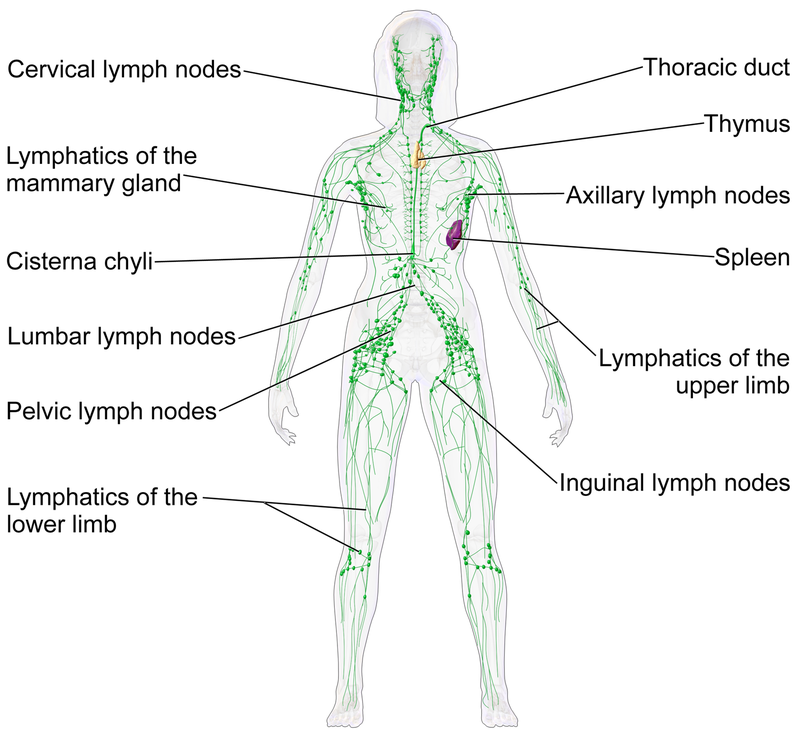
- Lymph drainage
- Part of the vascular system
- Important part of the immune system
- Large network of lymphatic vessels
- Carry a clear fluid (lymph)
- To the heart
- Carry a clear fluid (lymph)
- Lesions
- Non-Infectious lesions
- Contact dermatitis
- Allergic
- Irritant
- Acne
- Drug Rashes
- Poison Ivy/Poison Oak
- Toxic Epidermal Necrolysis
- Eczema
- Urticaria
- Actinic keratosis
- Rosacea
- Psoriasis
- Vitiligo
- Melasma
- Skin cancer
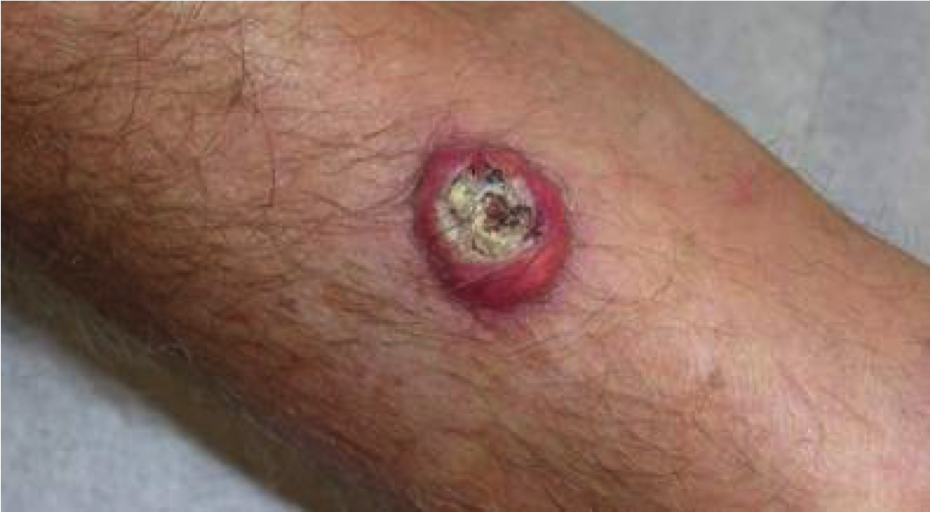
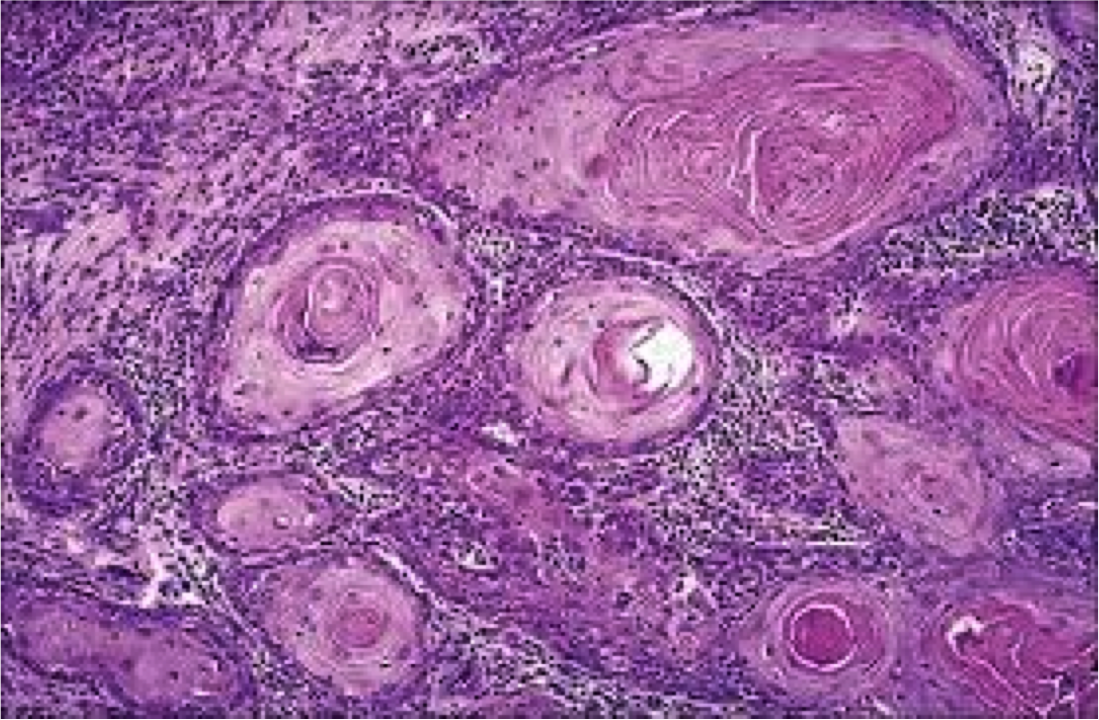
- Squamous cell carcinoma
- Squamous atypia extending through basement membrane
- Squamous eddies “keratin pearls”, cell nests
- Most common tumor on sun-exposed skin in older people
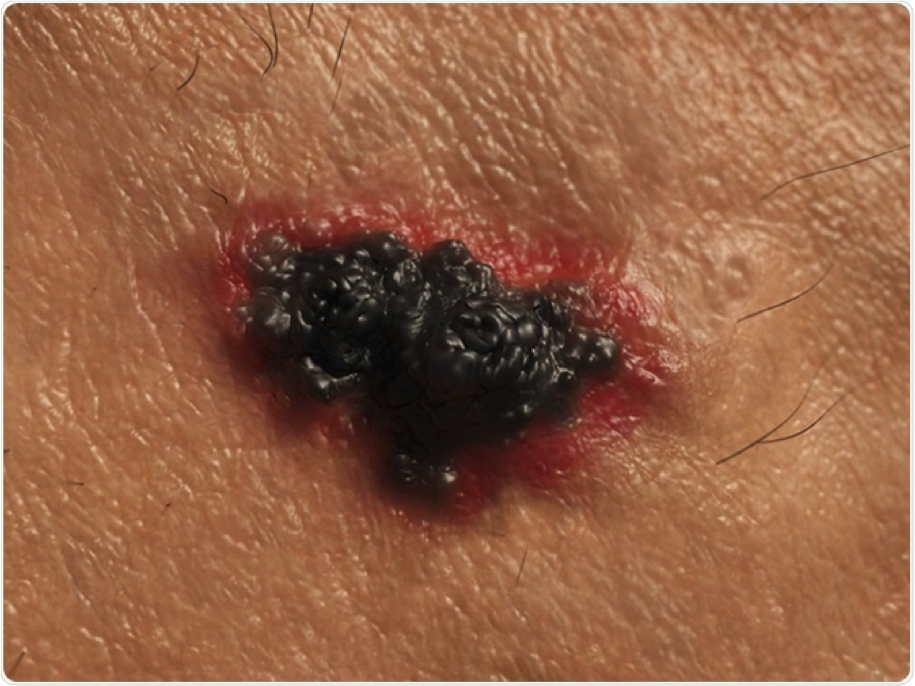
- Malignant melanoma
- Asymmetry
- Border irregularity
- Color change
- Diameter >6mm
- Eelevation
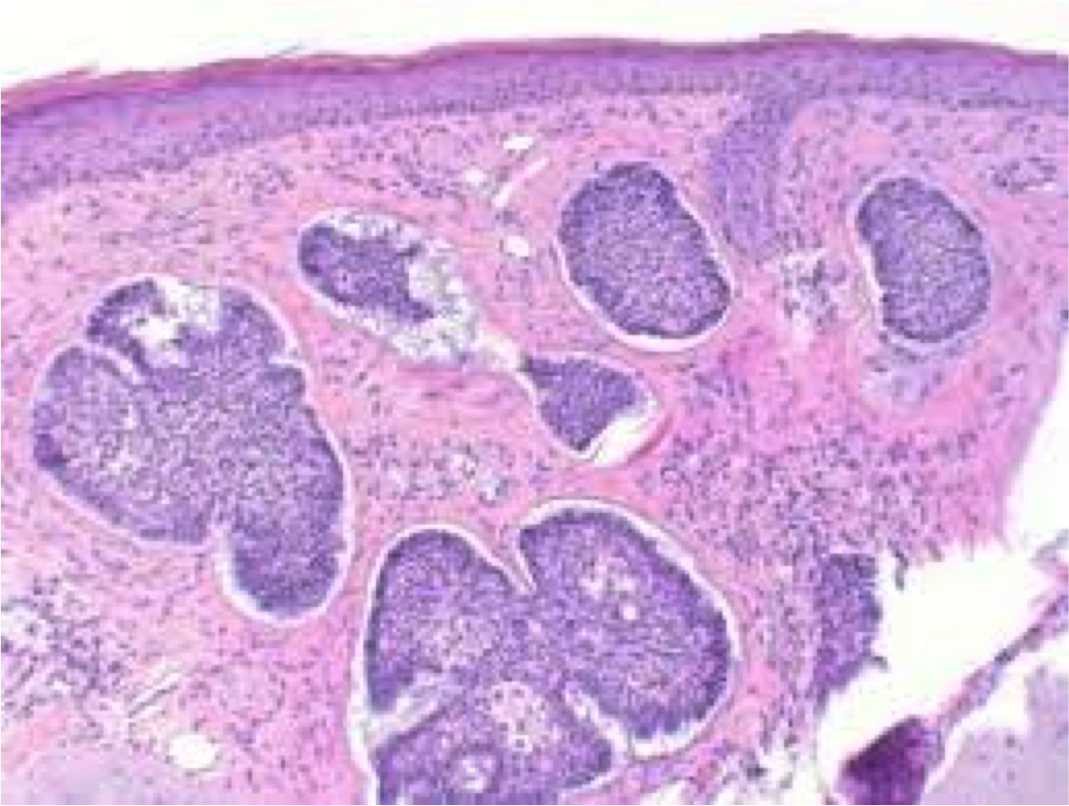
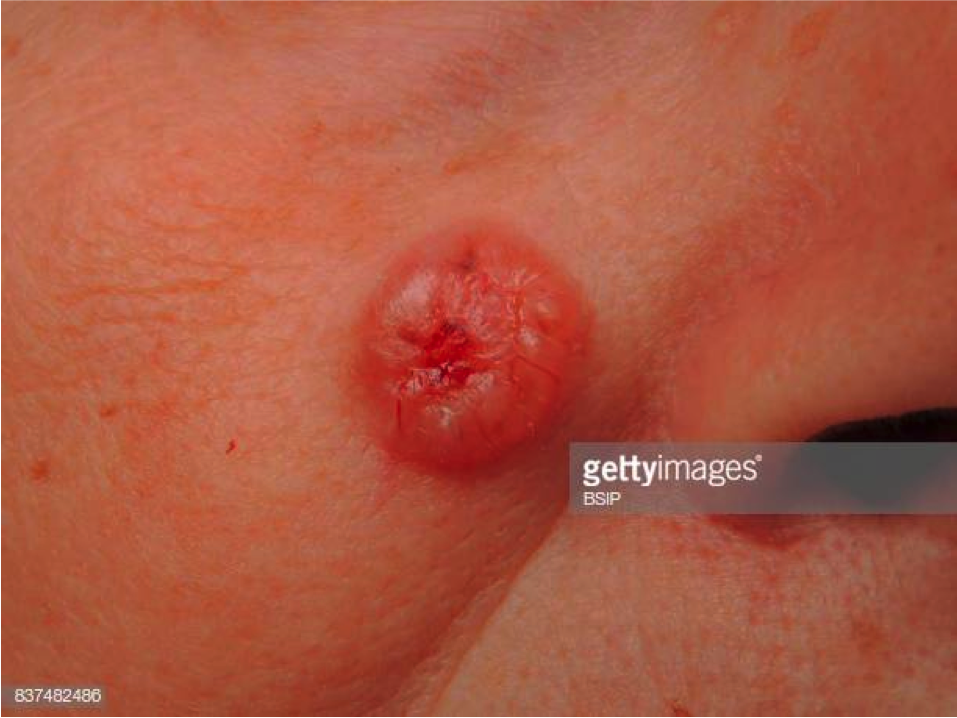
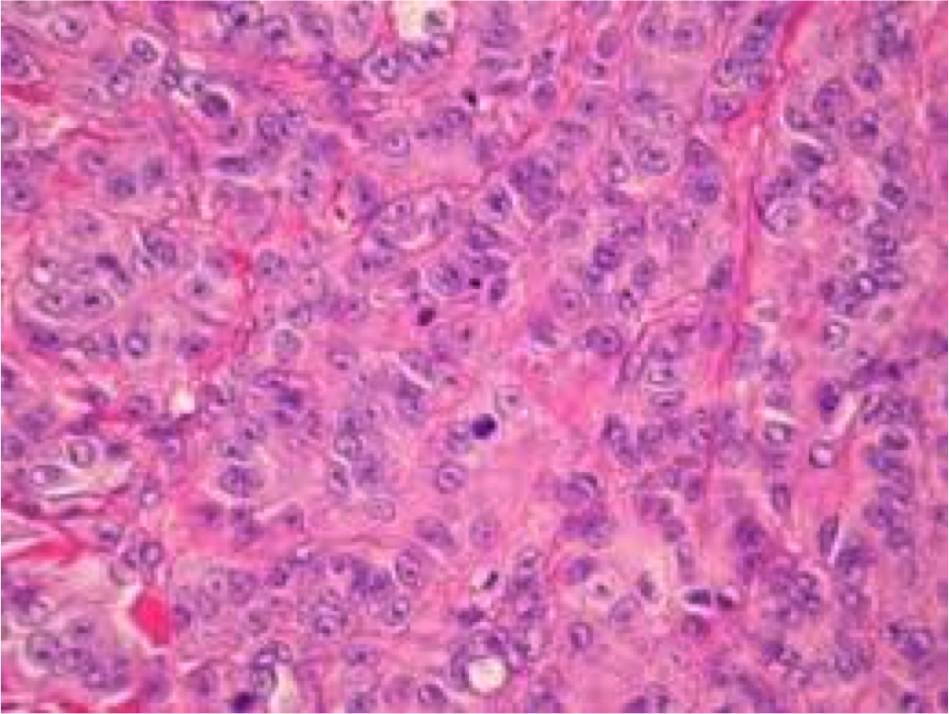
- Basal cell carcinoma
- Cords and islands of basaloid cells
- Hyperchromatic nuclei
- Peripheral palisading
- Mucinous stroma
- Clefting between tumor and stroma
- Slow growing and rarely metastasize
- Sun-exposed skin (Face, Fair skin,Forty)
- Squamous cell carcinoma
- Unresponsive to Antiseptic
- Contact dermatitis
- Infectious lesions
- Bacterial
- Impetigo
- Boils
- Leprosy
- Cellulitis
- Viral
- Shingles
- Chickenpox
- Molluscum contagiosum
- Warts
- Measles
- Fungal
- Athlete’s foot
- Ringworm
- Nail fungus
- Oral thrush
- Diaper rash
- Parasitic
- Lice
- Scabies
- Bacterial
- Ulcers
- Produced by
- Necrosis of cells
- Shedding of necrotic and inflammatory tissue
- Causes
- Traumatic
- Mechanical
- Physical (Electrical and radiation)
- Vascular Insufficiency
- Arterial / Venous
- Neoplastic Conditions
- Metabolic Diseases
- Infective
- Syphilis
- Leishmaniasis
- Vector borne zoonotic disease
- Sandfly
- Lutzomyia (New World)
- Phlebotomus (Old World)
- Sandfly
- Types
- Cutaneous
- Skin at the site of a sandfly bite
- Leishmania tropica (Delhi or Baghdad boil)
- Afghanistan / Iran / Saudi Arabia / Syria / Brazil / Peru
- Clinical Presentation
- Localized skin lesions can heal spontaneously or become chronic lesions with disfiguring scars
- Leishmania tropica (Delhi or Baghdad boil)
- Skin at the site of a sandfly bite
- Visceral (Kala-azar)
- Liver / Spleen / Bone marrow
- Bangladesh / Brazil / India / Sudan
- Liver / Spleen / Bone marrow
- Mucocutaneous ((Espundia)
- Mucous membranes of the mouth and nose "very rare" (Brazieliens)
- Bolivia / Brazil / Peru
- Clinical Presentation
- Ulcerative lesions and destruction of the mucosa
- Mucous membranes of the mouth and nose "very rare" (Brazieliens)
- Cutaneous
- Caused by
- Obligate intracellular parasite
- Invade reticuloendothelial cells
- Two forms
- Amastigote
- In humans
- Promastogotes
- Amastigote
- Obligate intracellular parasite
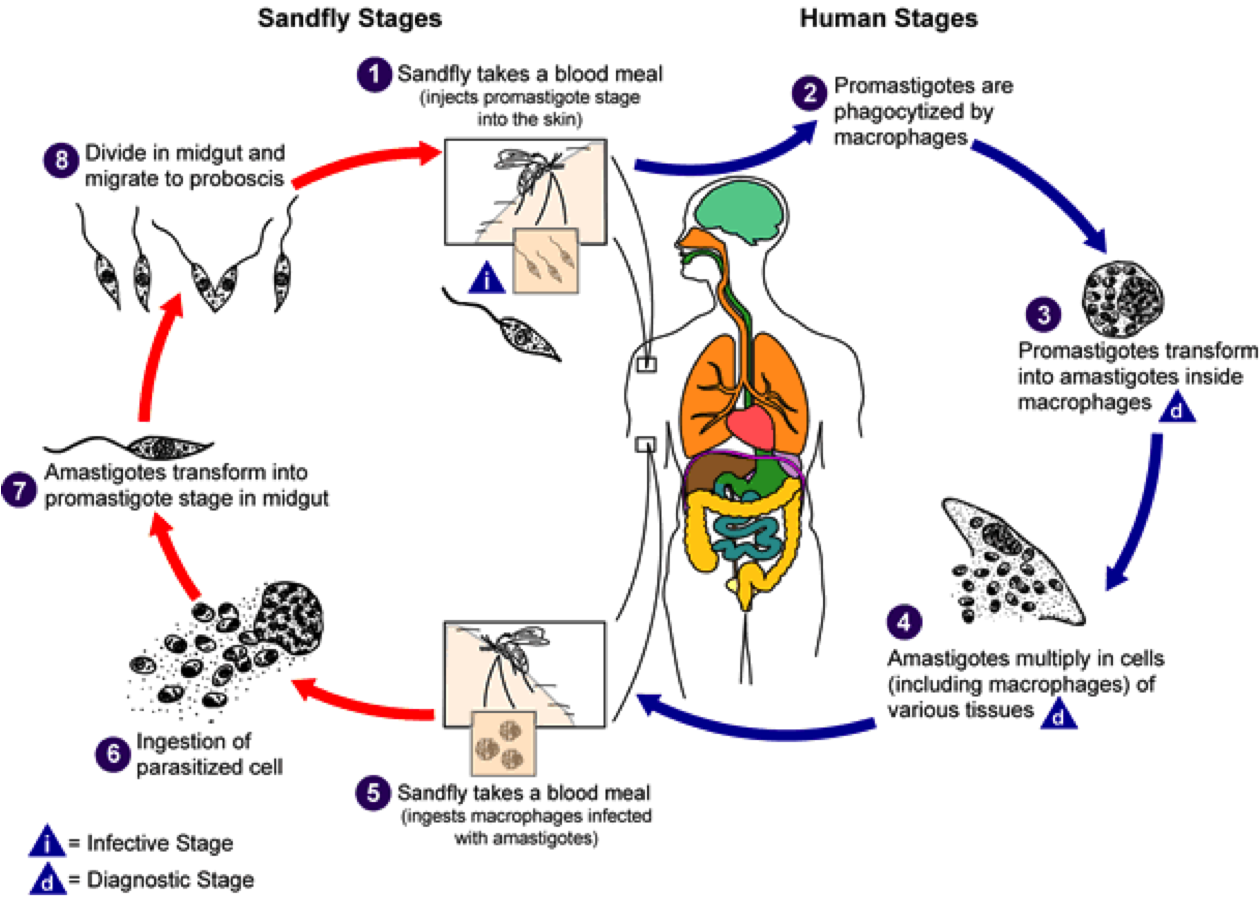
- Life cycle
- Pathogenesis
- Due to an immune reaction to the organism
- Cell mediated immunity
- Leukopenia / Monocytosis / Lymphocytosis / Anemia / Thrombocytopenia
- IgM and IgG levels are extremely elevated (Not protective)
- Cell mediated immunity
- Due to an immune reaction to the organism
- Epidemiology
- 350 million people in the world are at risk
- 12 million people are infected
- 1.6 million people get infected every year
- In 88 tropical, subtropical and temperate countries
- Laboratory diagnosis
- Clinical specimens
- Splenic aspirate
- Bone marrow aspirate
- Lymph node aspirate
- Dermal scrapings
- Liver aspirate
- Microscopy (Giemsa-stained smear)
- Culture (Novy-McNeal-Nicolle)
- Molecular techniques (PCR)
- Serologic testing: (IFA) / (ELISAs)
- Biopsy
- Direct agglutination test (DAT)
- rK39 immunochromatographic test (rK39 RDT
- Clinical specimens
- Treatment
- Pentavalent antimonials
- Sodium stibogluconate & Meglumine antimoniate
- Parenterally
- Adverse effects
- Pain at the injection site
- Pancreatitis
- Elevated liver enzyme
- Arthralgias
- Myalgia
- GI upset
- Cardiac arrhythmias
- Mechanism of action
- Inhibition of glycolysis in the parasite at the phosphofructokinase reaction
- Cutaneous and visceral leishmaniasis
- Sodium stibogluconate & Meglumine antimoniate
- Miltefosine
- Orally
- Visceral Leishmaniasis
- Mechanism of action
- Interfere with phospholipids in parasitic cell membrane > Apoptosis
- Adverse effects
- Nausea & vomiting
- Amphotericin B
- Paromomycin
- Mechanism of action
- Irreversible inhibitor of protein synthesis / Bind to 30S ribosomal subunit
- Parenterally
- Adverse effects
- GI distress & diarrhea
- Aminoglycoside antibiotic
- Mechanism of action
- Pentavalent antimonials
- Complications
- Cutaneous
- Bleeding
- Other infections
- Disfigurement
- Visceral
- Fatal
- Effects on
- Internal organs & immune system
- Effects on
- Fatal
- Cutaneous
- Prognosis
- Cure rates > High with the proper medicine
- Death in 2 years > Complications (Other infections)
- Vector borne zoonotic disease
- Inflammation
- Cardinal Signs
- Calor (Heat)
- Rubor (Redness)
- Tumor (Swelling)
- Dolor (Pain)
- Functio laesa (Loss of function)
- Due to
- Vascular changes
- Leukocyte recruitment and activation
- Cardinal Signs
- Traumatic
- Produced by
- Itching
- Dry skin
- Leads to
- Scratch marks
- Bleeding
- Scars
- Infections
- Non-Infectious lesions
- Role of skin in nonspecific Immunity
- Keratinized layer
- Barrier for microorganisms
- Sweat and sebaceous secretions
- Bacteriostatic substances (Lactic acid)
- pH (3-5)
- Inhibits bacterial growth
- Lipids in sebum
- Dermcidin in sweat
- Toxic to bacteria
- Keratinized layer
- Wound healing
- Regeneration
- Replacement of damaged tissue with native
- Repair
- Replacement of damaged tissue with fibrous scar
- Regeneration
- Three major regions
Bilder und Dateien der Mindmap
Informationen
- Beschreibung
- Mindmap am A 20 year old women with an ulcer, erstellt von Moza Almualla am 17/02/2019.
- Erstellt von
- Moza Almualla · Feb 2019
- Aktualisiert
- 17 Feb 2019
- Aufrufe
- 36
- Bewertung