
Mindmap
Inductive Learning & Teaching
Inhalt der Mindmap
Inductive Learning & Teaching
- Concept Map Based On... http://www4.ncsu.edu/unity/lockers/users/f/felder/public/Papers/InductiveTeaching.pdf
Foundations
- Constructivism
- Epistomology: "Reality" and "Truth" are Co-Constructed and Re-Constructed
- http://youtu.be/PK2NILj3BrU
- Proponents: Kant, Vico, Dewy, Bruner
- Epistomology: "Reality" and "Truth" are Co-Constructed and Re-Constructed
- Cognition Research
- Proponents: Bransford et al.
- http://www.colorado.edu/MCDB/LearningBiology/readings/How-people-learn.pdf
- Findings: "All new learning involves transfer of information based on previous learning"
- Design learning environments with Prior Knowledge in mind.
- Uncover misconceptions
- Diagnostic Teaching
- 1. Discover what Students think about problems
- 2. Identify & Discuss/Explore Misconceptions
- 3. Provide situations to re-test ideas in relation to misconceptions
- 2. Identify & Discuss/Explore Misconceptions
- 1. Discover what Students think about problems
- Diagnostic Teaching
- Uncover misconceptions
- Design learning environments with Prior Knowledge in mind.
- Motivation = Percieved Usefulness
- Transfer of Knowledege = Similarity of Environments
- Developing Metacognitive Skills = Greater Transfer of Learning
- Proponents: Bransford et al.
- Intellectual Development Research
- Perry: Schema of Intellectual and Ethical Development
- http://www.jmu.edu/geology/evolutionarysystems/protected/handouts/willperry2.pdf
- Learning: Student Approaches
- 1. Surface
- "I will soak up my professors knowledge like a sponge."
- 2. Deep
- "How is this connected to other things I know!?"
- "Can other novel problems or issues be addressed?"
- Promote
- Background Knowledge or Context
- Teaching Methods
- Active Engagement
- See "Methods"
- Assessments
- Emphasis on Conceptual Understanding
- 3. Strategic
- "What do I need to get an A?"
- 1. Surface
- Perry: Schema of Intellectual and Ethical Development
- Constructivism
Assessment & Evaluation
- Outcome Variables
- Implementaiton
- Instructor Experience
- Student Experience
- Student Intellectual Development
- See Perry Schema
- Good for Some Outcomes, Not Others
- Problem Based Learning
- Factual Knowledge VS Critical Thinking
- Problem Based Learning
- Sorting Out Nested Method Effect
- Experiential Learning, Constructivism etc
- Inductive VS Deductive Study Difficult!
- Outcome Variables
Methods
- Inquiry Learning
- Key Components
- Questions to be Answered
- Problems to be Solved
- Observations to be Explained
- Outcomes
- Formulate Good Questions
- Identify, Collect, & Analyze Evidence
- Present Results Systematically
- Analyze & interpret Results
- Formulate & Evaluate Conclusions
- "Umbrella" Catagory
- Other Methods Do these too
- Types
- Structured
- Questions & Outline to Solving
- Guided
- Problem Only
- Open
- Identify, Problem, Methode, & Solution
- Conformation*
- http://www.stem.neu.edu/wp-content/uploads/2013/02/The-Many-Levels-of-Inquiry-NSTA-article.pdf
- Questions, Outline, Solution
- POGIL
- Process-Oriented-Guided-Inquiry-Learning
- Student Get: Instructional Models (information/Data) & Guided Questions
- Instructor: Facilitator
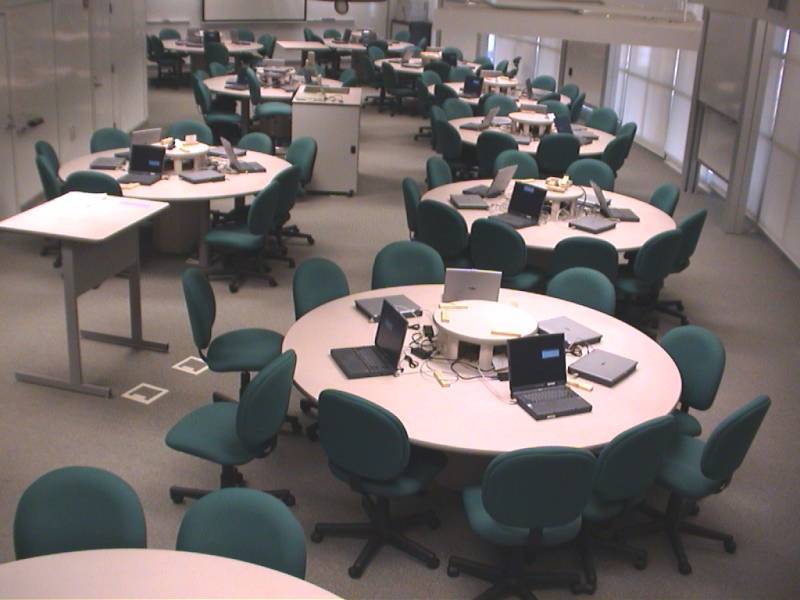
- Example: NC State
- SCALE UP
- http://www.ncsu.edu/per/scaleup.html
- Student Centered Activities for Large Enrollment Programs
- SCALE UP
- Process-Oriented-Guided-Inquiry-Learning
- Structured
- 81% More Effective Than Traditional - Shymansky et al.:
- Best Used: Concrete Concepts
- Key Components
- Problem Based Learning
- Project Based Learning
- Case Based Teaching
- Discovery Learning
- Just-In-Time Teaching
- Inquiry Learning
Getting Started
Learning Cycle Based Instruction
- Sequenced Activityes
- Thinking & Problem Solving
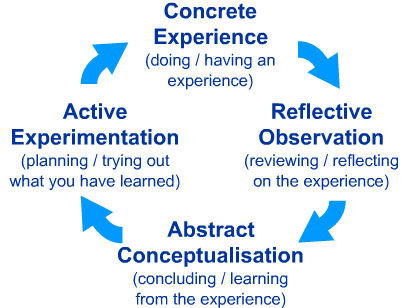
- Kolbs Experimental Lerning Cycle
- Example: STAR Legacy Module
- http://iris.peabody.vanderbilt.edu/module/rti01-overview/
- 1. Students Presented with Challenge
- 2. Students formulate initial thoughts
- 3. Perspectives & Resources Provided
- 4. Assessment Activities
- 5. Expert Models and Solutions Provided
- 4. Assessment Activities
- 3. Perspectives & Resources Provided
- 2. Students formulate initial thoughts
- Experiential Learning
- Learning Style Continuum
- Example: STAR Legacy Module
- Sequenced Activityes
Bilder und Dateien der Mindmap
Informationen
- Beschreibung
- An overview of inductive teaching methods, philosophy, and research. Also referred to as Inquiry guided learning.
- Erstellt von
- Johnny Woods
- Aufrufe
- 194
- Tags
- Bewertung