
Mindmap
UNIT 2: COLOUR
Inhalt der Mindmap
UNIT 2: COLOUR
Colour forms part of the real world, nature and objects.
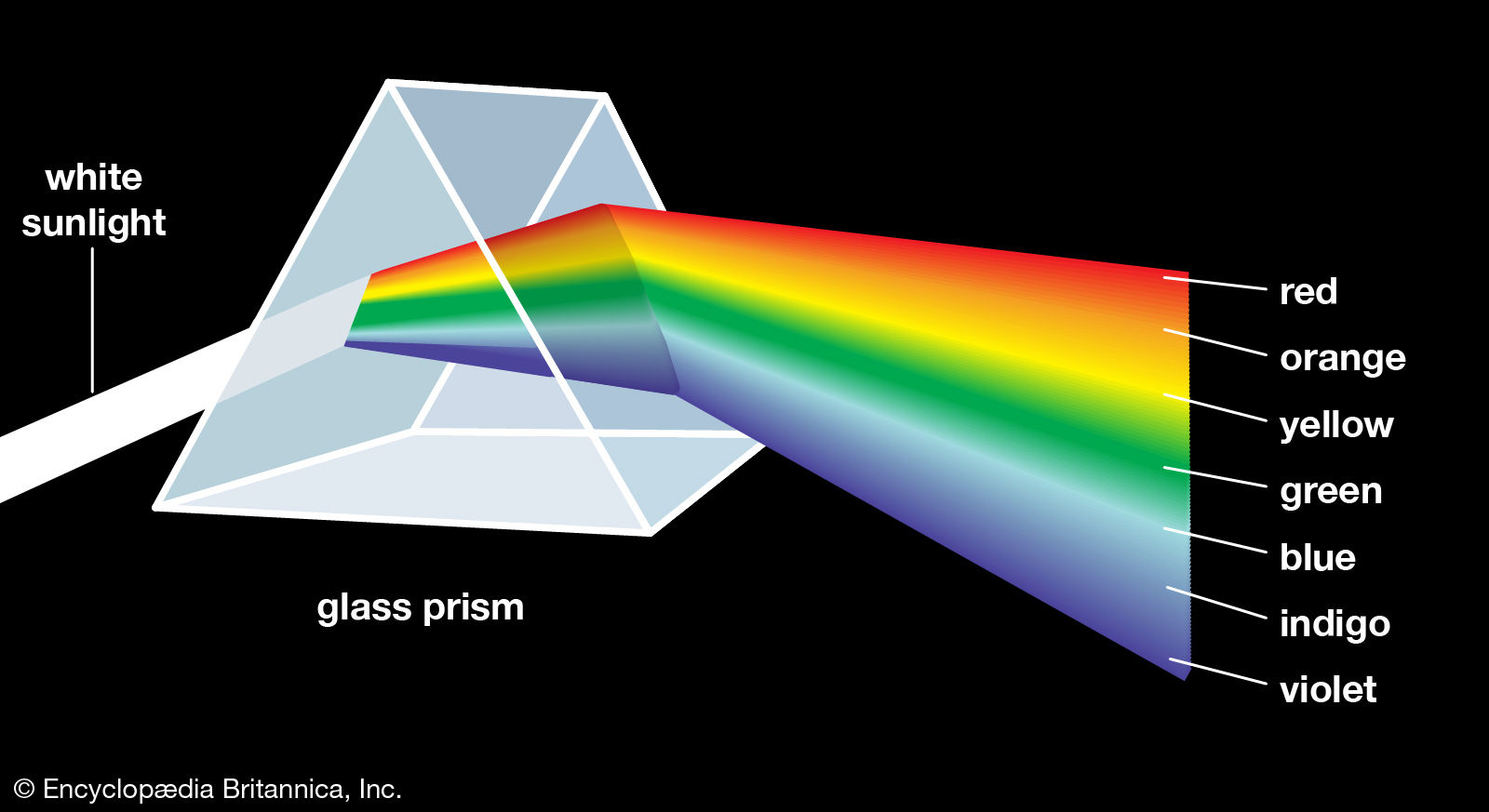
Newton prism
ADDITIVE BLEND OR COLOURED LIGHTS:
- PRIMARY COLOURS
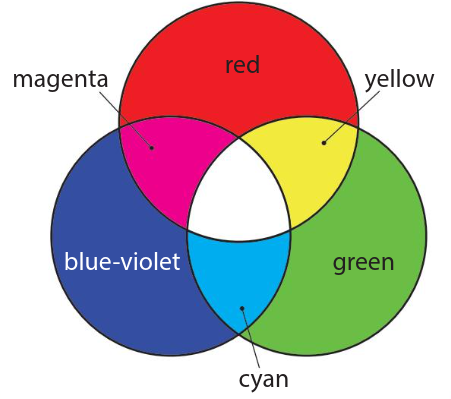
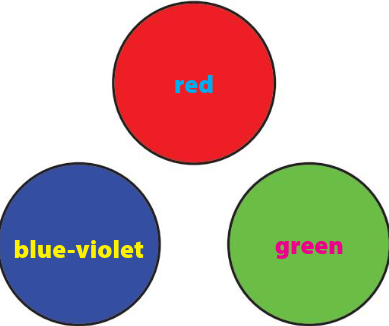
- Three colours are fundamental or primary (blue-violet, green and red).
- SECUNDARY COLOURS
- Yellow, cyan and magenta are secondary colours.
- Red + green = yellow
- Green + blue-violet = cyan
- Red + blue-violet = magenta
- Yellow, cyan and magenta are secondary colours.
- COMPLEMENTARY COLOURS
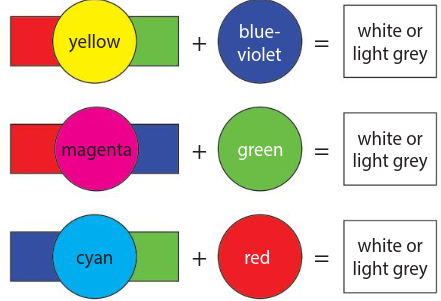
- The complementary colours of light produce a practically white or very bright grey colour when blended together.
- • Yellow is the complementary colour of blue-violet. • Magenta is the complementary colour of green. •Cyan is the complementary colour of red.
- PRIMARY COLOURS
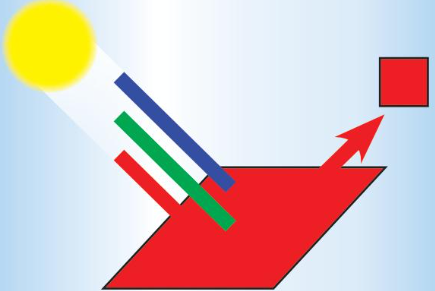
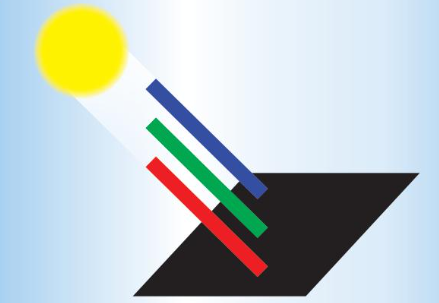
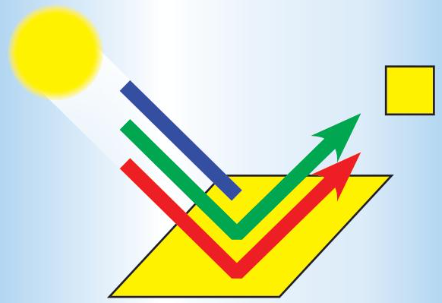
COLOUR PERCEPTION
- White, this is because it receives all the basic colours of the spectrum and sends them back reflected.
- Black, this is because it receives all the basic colours of the spectrumand does not reflect any.
- Yellow, this is because it receives all the basic colours of the spectrum, absorbs the colour blue and reflects the colours green and red.
- Red, this is because it receives all the basic colours of the spectrum, absorbs the colours blue and green and only reflects the colour red.
SUBTRACTIVE BLEND OR COLOURED PIGMENTS
- Coloured pigments, or subtractive colours, absorb or take away the light's energy.
- Primary colours
- magenta
- cyan
- yellow
- cyan
- magenta
- Secondary colours
- They are formed by mixing two primary colours together.
- • Cyan + magenta = blue-violet • Magenta + yellow = red •Yellow + cyan = green
- They are formed by mixing two primary colours together.
- Complementary colours
- When blended, produce the colour black.
- • Blue-violet is the complementary colour of yellow. • Green is the complementary colour of magenta. •Red is the complementary colour of cyan.
- When blended, produce the colour black.
QUALITIES OR PROPERTIES OF COLOUR
- TONE
- The tone is the specific name or attribute given to a colour that makes it distinct.
- Other terms used to refer to value are brightness, luminance or shine.
- VALUE
- The value of a colour depends on how much light it gives off. It refers to the amount of white or black colour in its composition.
- Other terms used to refer to value are brightness, luminance or shine.
- SATURATION
- Saturation is the property that indicates colour purity.
- TONE
THE COLOUR WHEEL
- The colour wheel is the most widely recognised arrangement to reflect different colours visually and observe the interrelation among them.
- Prymary + secondary = tertiary
- Yellow + red =orange. / Yellow + green = green-yellow. / Magenta + red = crimson. / Cyan + blue-violet = indigo. / Magenta + blue-violet = purple. / Cyan+ green = green-blue.
COOL AND WARM COLOUR PALETTES
- Colour palettes are groups of colours that have a relationship between each other.
- Cool palettes
- Blues, purples and greens.
- They convey a sense of repose, amplitude and distance.
- Blues, purples and greens.
- Warm palettes
- Red, orange and yellow.
- They produce excitement and a sense of closeness.
- Red, orange and yellow.
CREATING COLOUR MIXTURES
- Colour harmony
- A harmony is a combination of colours that produces attractive and balanced colour effects.
- Colour contrast
- Contrast is produced when the colours in a composition don't have anything in common.
- Contrast between complementary colours.
- Contrast between cool and warm colours.
- Contrast is produced when the colours in a composition don't have anything in common.
- Colour harmony
COLOUR CLASSIFICATION SYSTEMS
- Hickethier's system
- Is based on a figure standing on a vertex that contains the colour black at the opposite end is white and the rest of the vertices, we have the three basic colours.
- Ostwald system
- Recognises four primary and four secondary colours and differentiates between 24 tones for all of them.
- Hickethier's system
The symbolic colour forms part of a code. It changes from being a general element into a fact or phenomenon.
SIGNIFICANCE OF COLOURS
- White
- Absolute, unity and innocence.
- Black
- Evil, mystery or making an error.
- Yellow
- Envy, rage and cowardliness.
- Red
- Extroverted personality, ambitious, materialistic temperament.
- Green
- Intelligent, social people and kindness.
- Blue
- Intangible depth, tranquility and cold.
- Violet
- Virtue, lucidity and reflection.
- White
Bilder und Dateien der Mindmap

Informationen
- Beschreibung
- Mindmap am UNIT 2: COLOUR, erstellt von ALEXIA PEREZ PASTOR am 13/11/2020.
- Erstellt von
- ALEXIA PEREZ PASTOR
- Aufrufe
- 1
- Bewertung