
Mindmap
Neuroleptics/ Antipsychotics
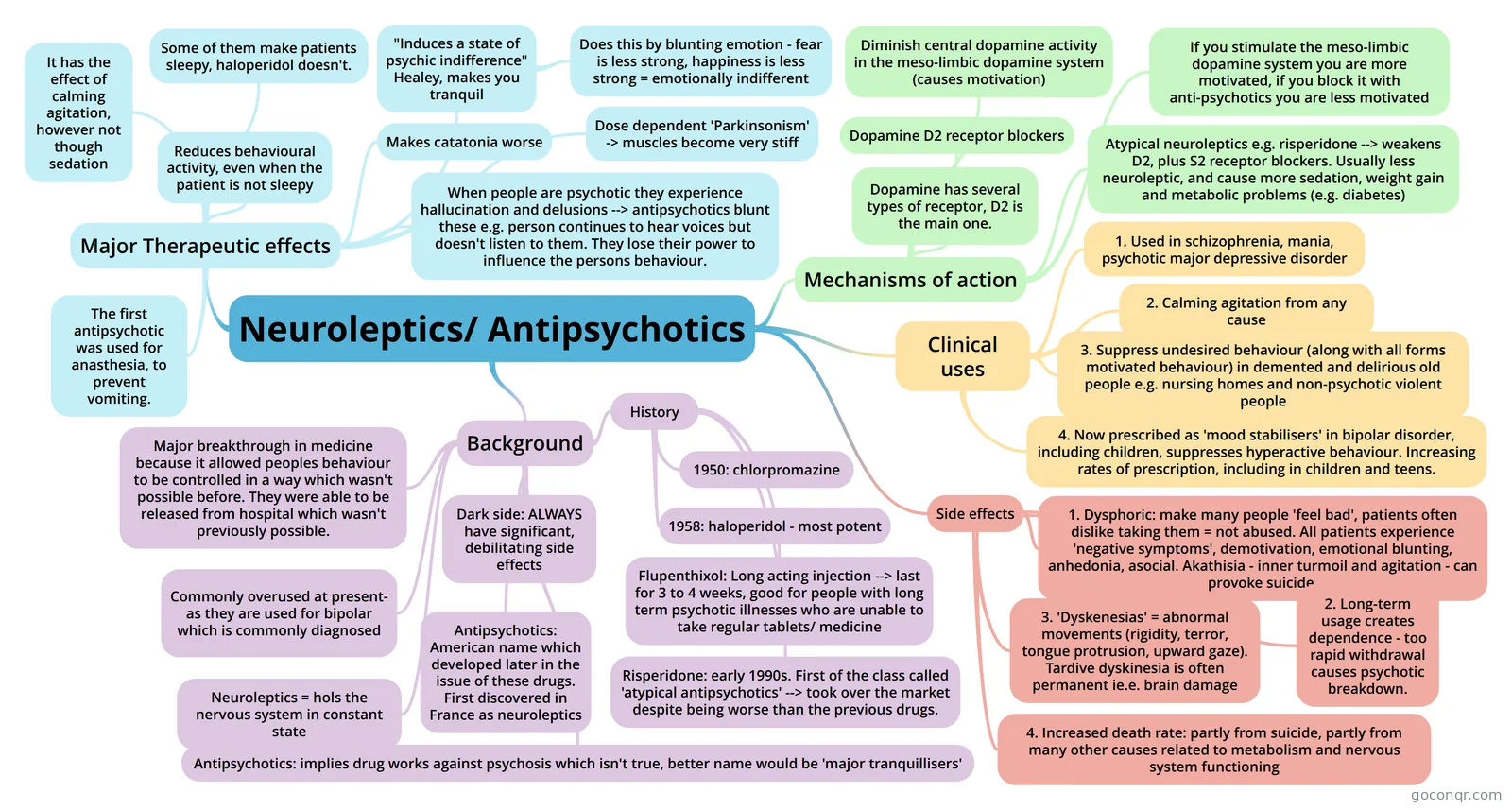
Mind map: Neuroleptics and antipsychotics
Inhalt der Mindmap
Neuroleptics/ Antipsychotics
Background
- Major breakthrough in medicine because it allowed peoples behaviour to be controlled in a way which wasn't possible before. They were able to be released from hospital which wasn't previously possible.
- Dark side: ALWAYS have significant, debilitating side effects
- Commonly overused at present- as they are used for bipolar which is commonly diagnosed
- History
- 1950: chlorpromazine
- 1958: haloperidol - most potent
- Flupenthixol: Long acting injection --> last for 3 to 4 weeks, good for people with long term psychotic illnesses who are unable to take regular tablets/ medicine
- Risperidone: early 1990s. First of the class called 'atypical antipsychotics' --> took over the market despite being worse than the previous drugs.
- Antipsychotics: American name which developed later in the issue of these drugs. First discovered in France as neuroleptics
- Neuroleptics = hols the nervous system in constant state
- Antipsychotics: implies drug works against psychosis which isn't true, better name would be 'major tranquillisers'
Major Therapeutic effects
- The first antipsychotic was used for anasthesia, to prevent vomiting.
- It has the effect of calming agitation, however not though sedation
- Reduces behavioural activity, even when the patient is not sleepy
- Some of them make patients sleepy, haloperidol doesn't.
- "Induces a state of psychic indifference" Healey, makes you tranquil
- Does this by blunting emotion - fear is less strong, happiness is less strong = emotionally indifferent
- Dose dependent 'Parkinsonism' -> muscles become very stiff
- When people are psychotic they experience hallucination and delusions --> antipsychotics blunt these e.g. person continues to hear voices but doesn't listen to them. They lose their power to influence the persons behaviour.
- Makes catatonia worse
Mechanisms of action
- Dopamine D2 receptor blockers
- Dopamine has several types of receptor, D2 is the main one.
- Diminish central dopamine activity in the meso-limbic dopamine system (causes motivation)
- If you stimulate the meso-limbic dopamine system you are more motivated, if you block it with anti-psychotics you are less motivated
- Atypical neuroleptics e.g. risperidone --> weakens D2, plus S2 receptor blockers. Usually less neuroleptic, and cause more sedation, weight gain and metabolic problems (e.g. diabetes)
Clinical uses
- 1. Used in schizophrenia, mania, psychotic major depressive disorder
- 2. Calming agitation from any cause
- 3. Suppress undesired behaviour (along with all forms motivated behaviour) in demented and delirious old people e.g. nursing homes and non-psychotic violent people
- 4. Now prescribed as 'mood stabilisers' in bipolar disorder, including children, suppresses hyperactive behaviour. Increasing rates of prescription, including in children and teens.
Side effects
- 1. Dysphoric: make many people 'feel bad', patients often dislike taking them = not abused. All patients experience 'negative symptoms', demotivation, emotional blunting, anhedonia, asocial. Akathisia - inner turmoil and agitation - can provoke suicide.
- 2. Long-term usage creates dependence - too rapid withdrawal causes psychotic breakdown.
- 3. 'Dyskenesias' = abnormal movements (rigidity, terror, tongue protrusion, upward gaze). Tardive dyskinesia is often permanent ie.e. brain damage
- 4. Increased death rate: partly from suicide, partly from many other causes related to metabolism and nervous system functioning
Informationen
- Beschreibung
- Undergraduate - year 2 Abnormal Psychology And Psychiatry Mindmap am Neuroleptics/ Antipsychotics, erstellt von Izzy Sharpe am 23/05/2017.
- Erstellt von
- Izzy Sharpe
- Aufrufe
- 21
- Bewertung