
11286103
Beschreibung

Mindmap von Britz Garcia, aktualisiert more than 1 year ago

|
Erstellt von Britz Garcia
vor mehr als 8 Jahre
|
|
Plant Tissue
- Meristematic Tissue
- Apical Meristem (Growing Tip)
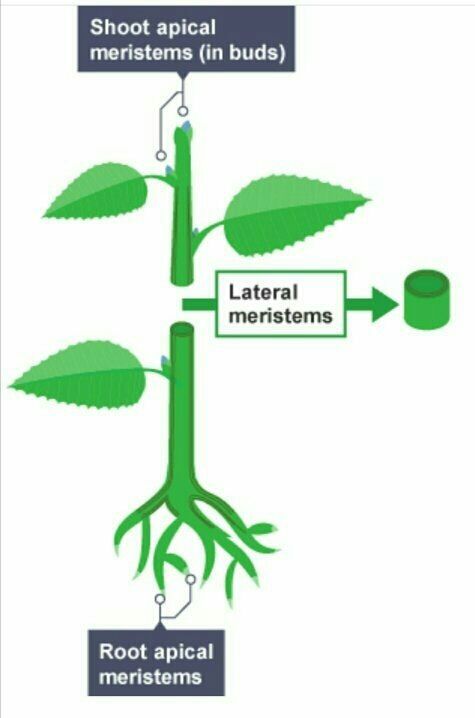
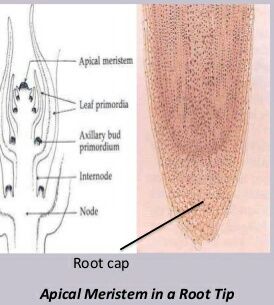
- - Tissue is present on the tips of stems and roots. - Function is to trigger the growth of new cells in young seedling at the tips of roots and shoots and forming buds. - Allows the plant to develop special structures as flowers and leaves. - Responsible for the Increase of length of the plant at the apex of stem and roots referred to as primary growth. - Occurs in the phyla of plants
- - Tissue is present on the tips of stems and roots. - Function is to trigger the growth of new cells in young seedling at the tips of roots and shoots and forming buds. - Allows the plant to develop special structures as flowers and leaves. - Responsible for the Increase of length of the plant at the apex of stem and roots referred to as primary growth. - Occurs in the phyla of plants
- Lateral Meristem
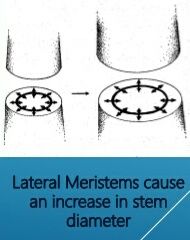
- -Produces bark on trees inner and outer layer. - Found on the side of the plant beneath the bark as cork cambium. - Makes thes plant grow tall making it strong. - Responsible for the increase of the thickening or growth in plants which is the secondary growth.
- -Produces bark on trees inner and outer layer. - Found on the side of the plant beneath the bark as cork cambium. - Makes thes plant grow tall making it strong. - Responsible for the increase of the thickening or growth in plants which is the secondary growth.
- Intercalary Meristem
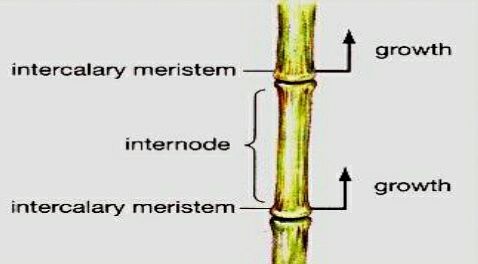
- - Classified by their location in the plant as apical, lateral and intercalary or stems region between where leaves attach and leaf bases especially of monocityledons. eg. Grasses - Tissue is present at the base of young leaves and internodes - Responsible for further lengthening of stems and and leaves. - Located between the permanent tissue.
- - Classified by their location in the plant as apical, lateral and intercalary or stems region between where leaves attach and leaf bases especially of monocityledons. eg. Grasses - Tissue is present at the base of young leaves and internodes - Responsible for further lengthening of stems and and leaves. - Located between the permanent tissue.
- - Coposed of cells that divide continuously. - Function is to continuously form a number of new cells. - Cells are small, thin-walled with no cenral vacuole and is made up of cellulose. - Cells are round, oval , polygonal or rectangular in shape. - Cells are closely arranged without intercellular spaces. - Located in the apical merstems.
- Apical Meristem (Growing Tip)
- Permanent Tissue
- Simple (Ground)
- - A group of cells which are similar in structure and in functions.
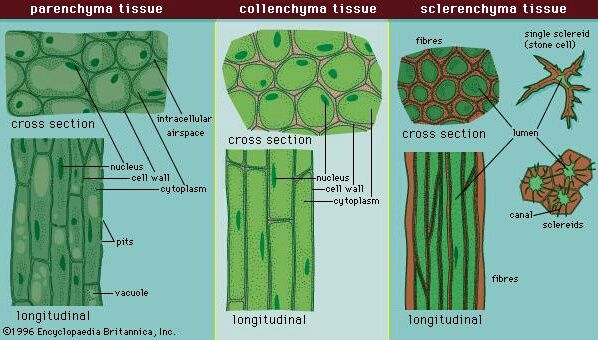
- Parenchyma
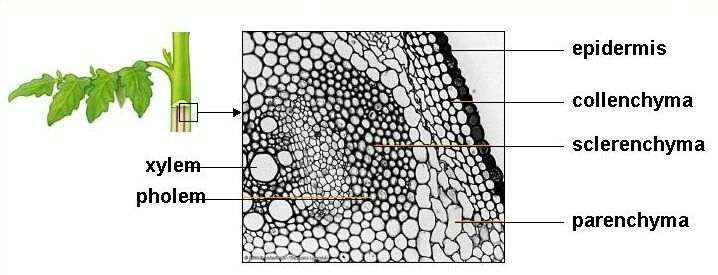
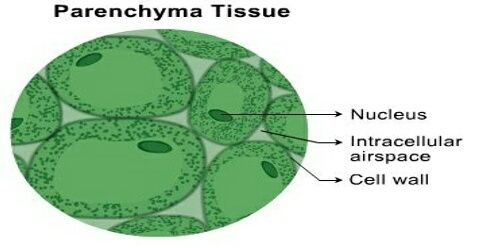
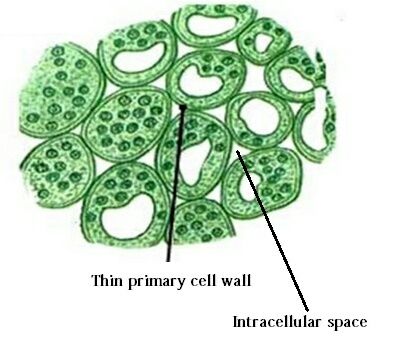
- - A simple tissue composed of spherical-shaped cells. -They are living cells -Thin primary wall -May be conpact or have extensive spaces between the cells. Functions: a. Photosynthesis & Respiration b. Storage (Starch, oil droplets, air water and salts) c. Wound healing & regeneration
- - A simple tissue composed of spherical-shaped cells. -They are living cells -Thin primary wall -May be conpact or have extensive spaces between the cells. Functions: a. Photosynthesis & Respiration b. Storage (Starch, oil droplets, air water and salts) c. Wound healing & regeneration
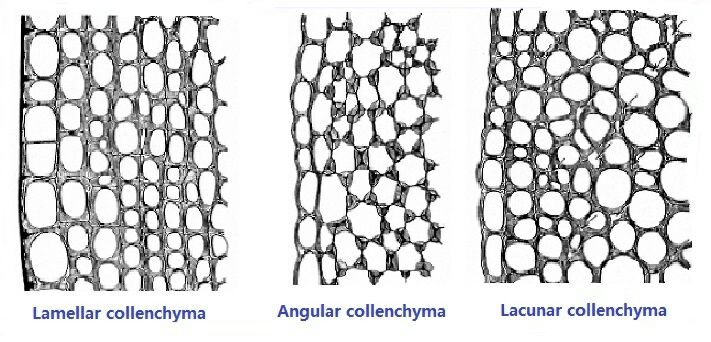
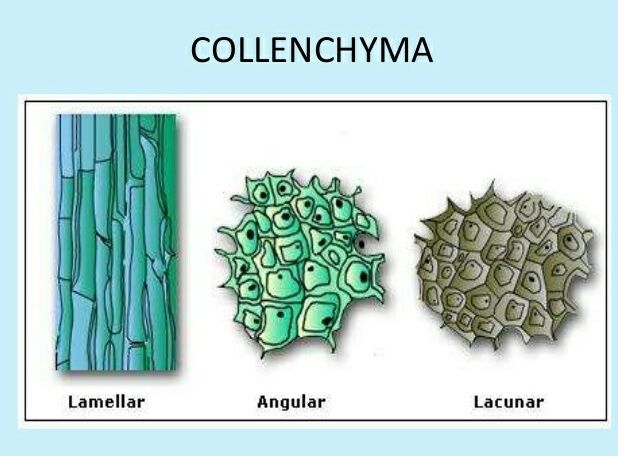
- Collenchyma
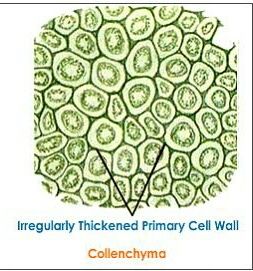
- - Composed of elongated cells with irregular tick and walls - They are living cells -Provide structural support found beneath the epidermis of stem and near the vascular tissue. eg. Midrib of leaves - If they contain chlorophyll they are known as chlorenchyma.
- - Composed of elongated cells with irregular tick and walls - They are living cells -Provide structural support found beneath the epidermis of stem and near the vascular tissue. eg. Midrib of leaves - If they contain chlorophyll they are known as chlorenchyma.
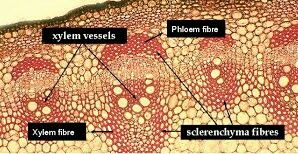
- Sclerenchyma
- - Have optic lignified secondary walls and often die when mature - Cells wall consists of cellulose -They are dead cells -Provides main structural support to a plant. -Usually in xylem tissue.
- - Have optic lignified secondary walls and often die when mature - Cells wall consists of cellulose -They are dead cells -Provides main structural support to a plant. -Usually in xylem tissue.
- - A group of cells which are similar in structure and in functions.
- Complex (Vascular)
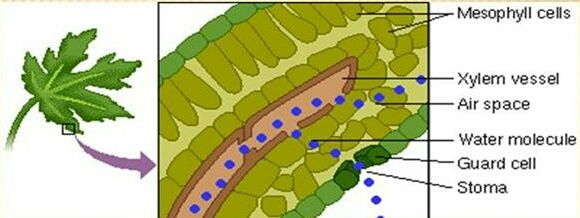
- Xylem
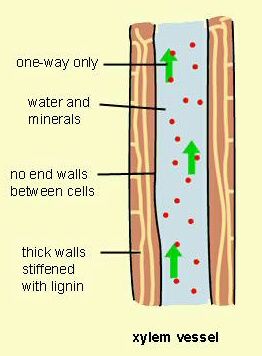
- -Transports H20 dissolved nutrients -Made up of long hollow tubes -Formed by none living cell walls call tracheids or vessel elements. -upward movement -Alive at maturity
- -Transports H20 dissolved nutrients -Made up of long hollow tubes -Formed by none living cell walls call tracheids or vessel elements. -upward movement -Alive at maturity
- Phloem
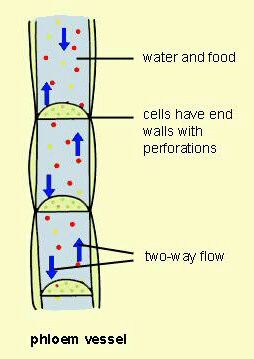
- -Transports product of photosynthesis. - Upward movement -Dead at maturity -Consists of conducting cells called sleve.
- -Transports product of photosynthesis. - Upward movement -Dead at maturity -Consists of conducting cells called sleve.
- -Tissue composed of more than one type of cell. -Helps in the transportation of organic minerals.
- Xylem
- - Is composed of cells that have lost the power of dividing and had obtained a definite form and shape.
- Simple (Ground)
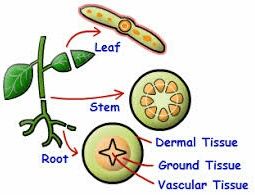
- *Tissue is a group of closely associated cells that perform related functions and are similar in structure. * Plant Tissue can be classified as: 1. Meristematic Tissue 2. Permanent Tissue
Medienanhänge
Möchten Sie kostenlos Ihre eigenen Mindmaps mit GoConqr erstellen? Mehr erfahren.