
Mindmap
Haemodialysis
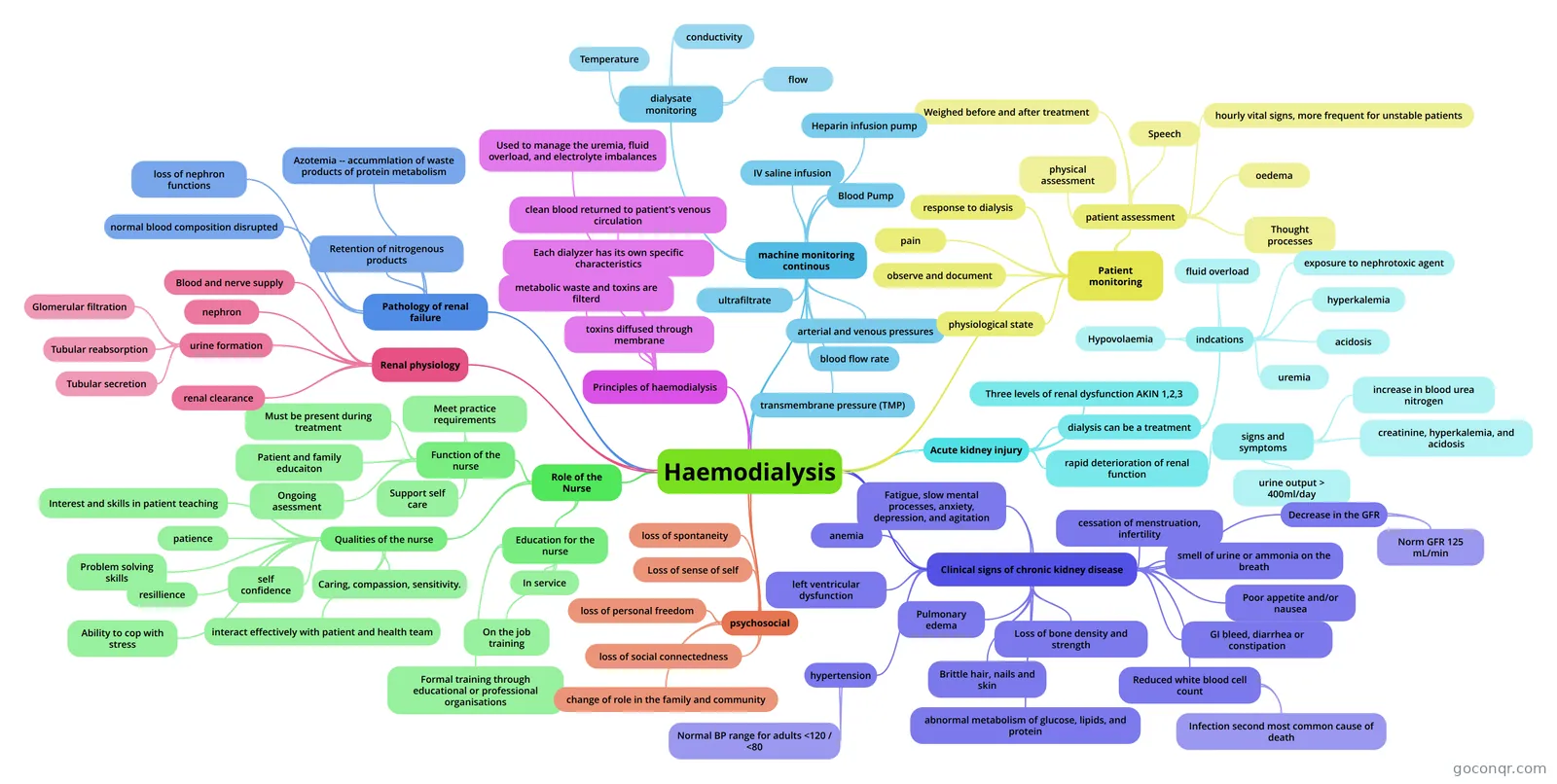
Mind map: Haemodialysis
Inhalt der Mindmap
Haemodialysis
Renal physiology
- Blood and nerve supply
- nephron
- urine formation
- Glomerular filtration
- Tubular reabsorption
- Tubular secretion
- renal clearance
Pathology of renal failure
- normal blood composition disrupted
- loss of nephron functions
- Azotemia -- accummlation of waste products of protein metabolism
- Retention of nitrogenous products
Principles of haemodialysis
- metabolic waste and toxins are filterd
- Used to manage the uremia, fluid overload, and electrolyte imbalances
- toxins diffused through membrane
- clean blood returned to patient's venous circulation
- Each dialyzer has its own specific characteristics
psychosocial
- change of role in the family and community
- loss of spontaneity
- loss of personal freedom
- loss of social connectedness
- Loss of sense of self
machine monitoring continous
- arterial and venous pressures
- blood flow rate
- transmembrane pressure (TMP)
- ultrafiltrate
- dialysate monitoring
- Temperature
- flow
- conductivity
- IV saline infusion
- Heparin infusion pump
- Blood Pump
Patient monitoring
- observe and document
- physiological state
- response to dialysis
- patient assessment
- hourly vital signs, more frequent for unstable patients
- physical assessment
- Weighed before and after treatment
- oedema
- Speech
- Thought processes
- pain
Role of the Nurse
- Qualities of the nurse
- interact effectively with patient and health team
- Interest and skills in patient teaching
- Problem solving skills
- self confidence
- patience
- resillience
- Caring, compassion, sensitivity.
- Ability to cop with stress
- Education for the nurse
- In service
- On the job training
- Formal training through educational or professional organisations
- Function of the nurse
- Meet practice requirements
- Patient and family educaiton
- Support self care
- Ongoing asessment
- Must be present during treatment
- Qualities of the nurse
Clinical signs of chronic kidney disease
- hypertension
- Normal BP range for adults <120 / <80
- Brittle hair, nails and skin
- Reduced white blood cell count
- Infection second most common cause of death
- Poor appetite and/or nausea
- smell of urine or ammonia on the breath
- GI bleed, diarrhea or constipation
- anemia
- Loss of bone density and strength
- Fatigue, slow mental processes, anxiety, depression, and agitation
- left ventricular dysfunction
- Pulmonary edema
- cessation of menstruation, infertility
- abnormal metabolism of glucose, lipids, and protein
- Decrease in the GFR
- Norm GFR 125 mL/min
- hypertension
Acute kidney injury
- Three levels of renal dysfunction AKIN 1,2,3
- dialysis can be a treatment
- indcations
- uremia
- hyperkalemia
- acidosis
- fluid overload
- exposure to nephrotoxic agent
- Hypovolaemia
- indcations
- rapid deterioration of renal function
- signs and symptoms
- urine output > 400ml/day
- increase in blood urea nitrogen
- creatinine, hyperkalemia, and acidosis
- signs and symptoms
Informationen
- Beschreibung
- Mindmap am Haemodialysis, erstellt von myjish am 24/08/2014.
- Erstellt von
- myjish
- Aufrufe
- 31
- Bewertung
Mehr zu Dialysis and Renal Replacement Therapy