
11841087
Beschreibung

Erzeugt von Gabriel Keen

|
Erstellt von Gabriel Keen
vor fast 9 Jahre
|
|
rivers - river processes
- erosion
- the process by which a river wears away at the land.
- the ability for a river to erode depends on its velocity
- the ability for a river to erode depends on its velocity
- lateral erosion
- starts to occur in the middle course and
prominent in the lower course
- starts to occur in the middle course and
prominent in the lower course
- vertical erosion
- occurs in the upper course
- occurs in the upper course
- types of erosion:
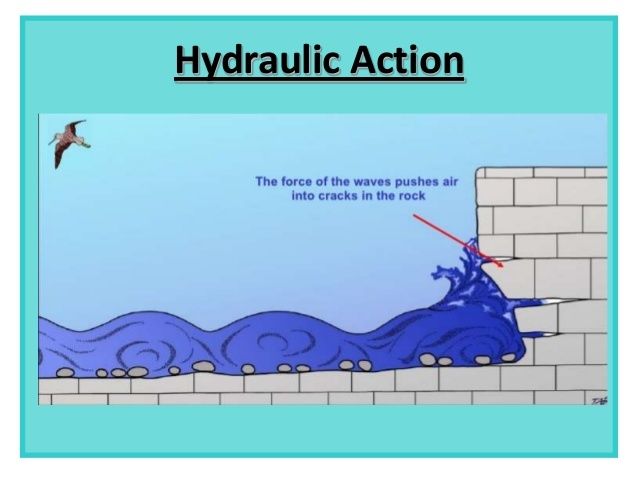
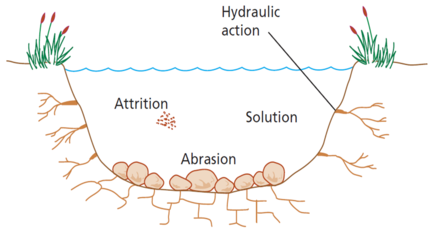
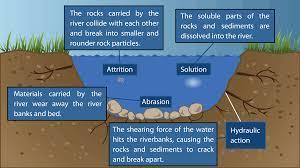
- hydraulic action
- sorry this is at the coast but it's the same principal
- sorry this is at the coast but it's the same principal
- the force of a river against the banks can cause air to be trapped in
cracks and crevices. the pressure weakens the banks and gradually
wears it away
- attrition
- stones that have just entered the river are large and jagged. As transportation occurs the stones
collide with each other and knock off each others jagged sides making them smaller and more
spherical. The further they travel the more this occurs.
- abraision
- sometimes called corrasion
- small load scratch and scrape their way down a river during transport, this
wears down the banks and bed of the river channel
- solution
- also called corrosion
- the dissolving of rocks such as limestone or chalk
- this could be the load itself
- this could be the load itself
- hydraulic action
- the process by which a river wears away at the land.
- transportation
- the process by which a river carries its load.
- load is anything carried by a river
- all shapes and sizes
- all different materials
- rocks fallen ito the river or the river banks
and bed that have been eroded
- all shapes and sizes
- load is anything carried by a river
- types of transportation:
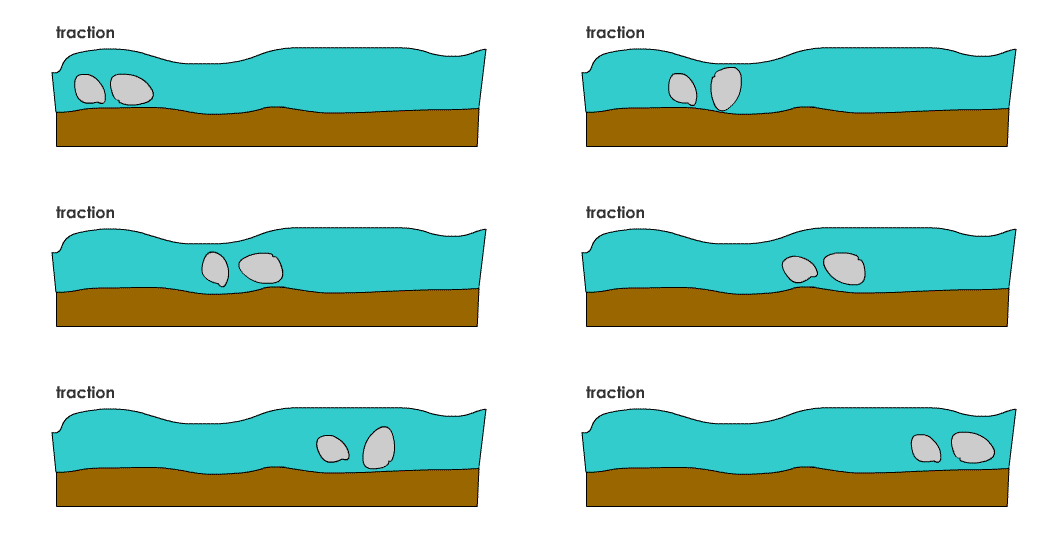
- traction
- large or heavy load is rolled along the river bed
- not
necessarily
heavy load, it
could be that
the rivers
velocity is not
big enough
- load carried in this way is called bedload
- not
necessarily
heavy load, it
could be that
the rivers
velocity is not
big enough
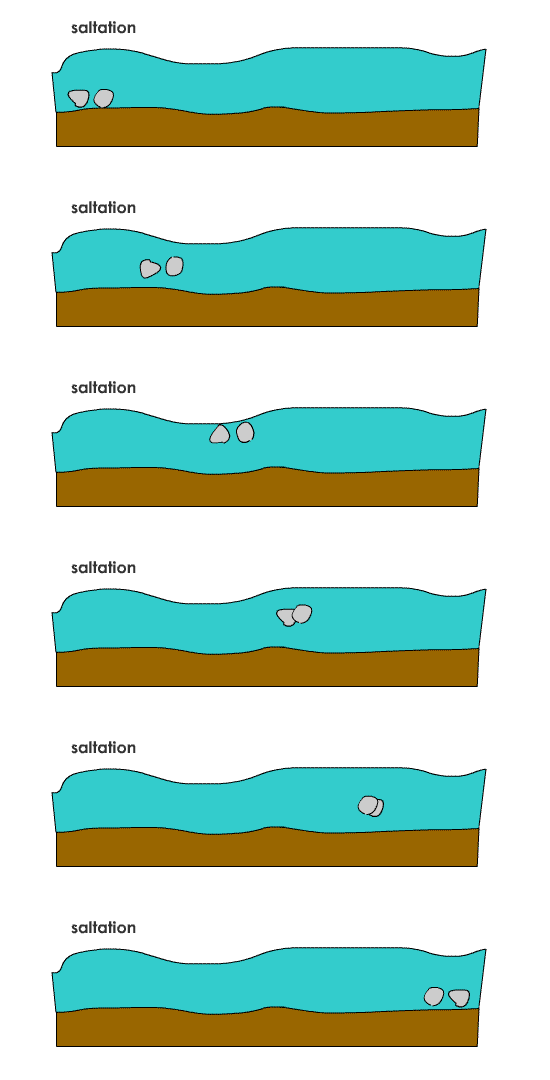
- saltation
- Small pebbles and stones are bounced along the river bed.
When velocity increases they are picked up, when it
decreases they are deposited.
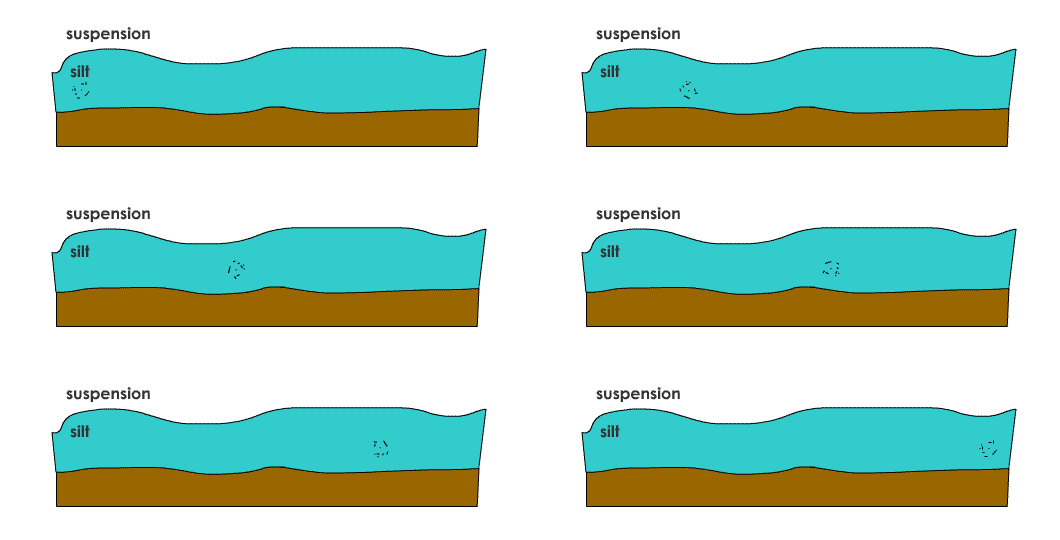
- suspension
- fine light material such as alluvium is held up and
carried within the rivers flow
- this is called suspended load
- this is called suspended load
- fine light material such as alluvium is held up and
carried within the rivers flow
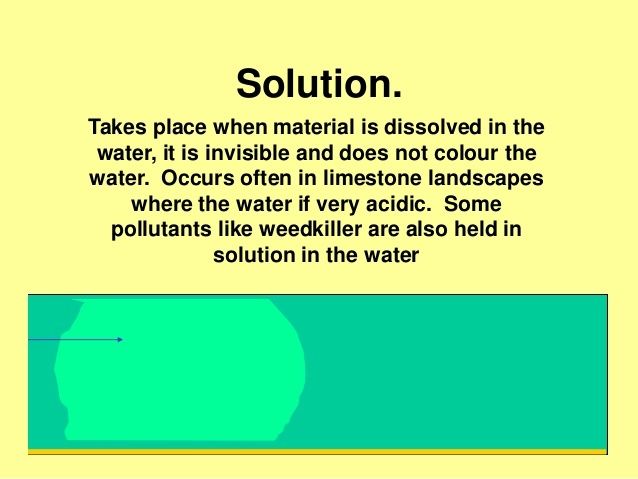
- solution
Anmerkungen:
- yes, again
- minerals are dissolved in the water
- this is a chemical change to rocks
such as limestone and chalk
- load carried in this way is called solute load
- this is a chemical change to rocks
such as limestone and chalk
- traction
- the process by which a river carries its load.
- deposition
- the bigger the load particle the more velocity is needed to keep it moving.
- when velocity falls, big boulders are therefore the first to be deposited
- this explains why mountain streams have boulders along their bed while there is only fine silt near the mouth
- this explains why mountain streams have boulders along their bed while there is only fine silt near the mouth
- when velocity falls, big boulders are therefore the first to be deposited
- the river will deposit more load when there is a period of
draught and the discharge is low
- the bigger the load particle the more velocity is needed to keep it moving.
Medienanhänge
Möchten Sie kostenlos Ihre eigenen Mindmaps mit GoConqr erstellen? Mehr erfahren.