
Mindmap
Ahmed has tremors
Inhalt der Mindmap
Ahmed has tremors
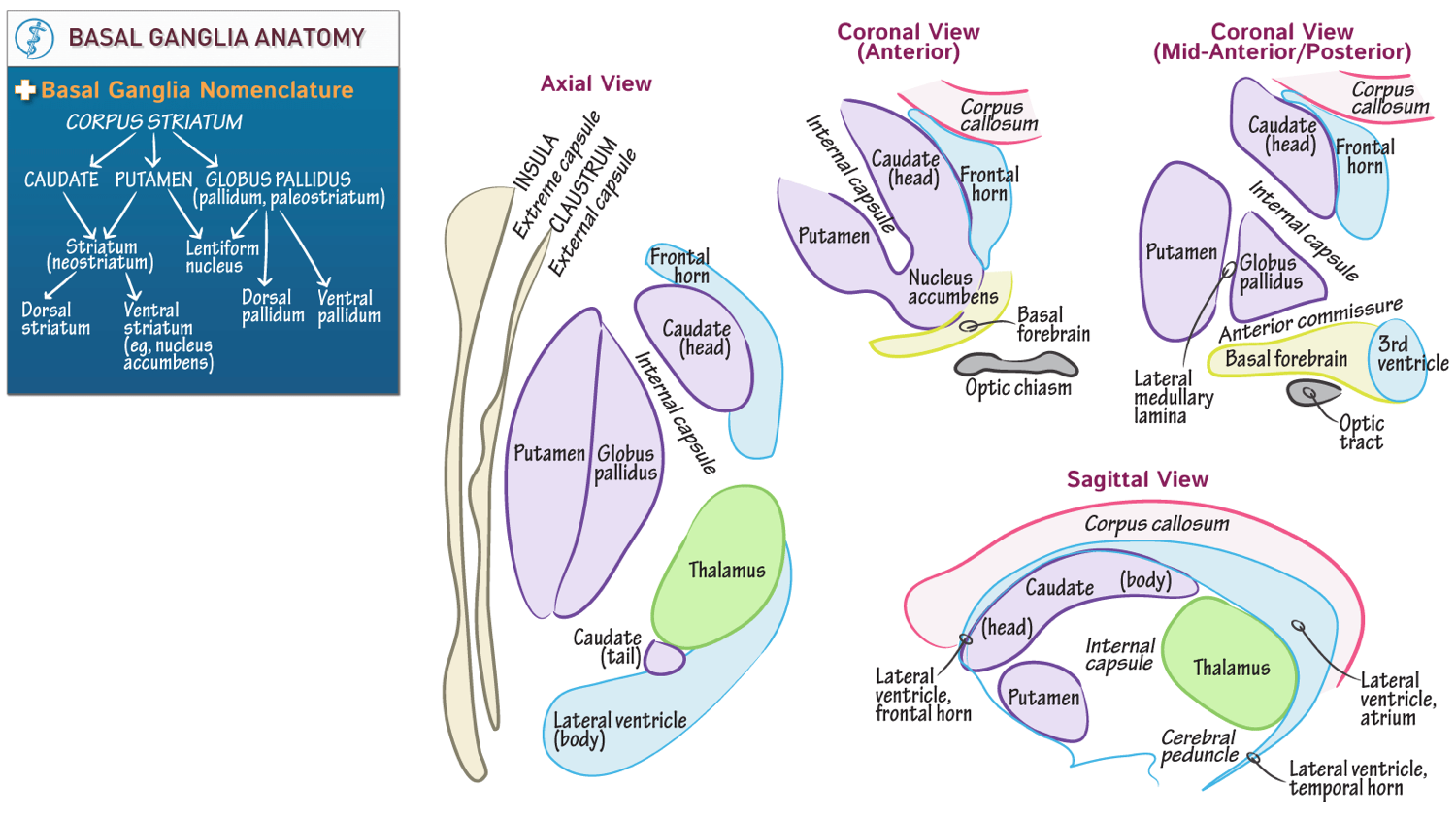
Anatomy of the basal ganglia
- Anatomical distribution
- Claustrum
- Lentiform
- Caudate
- Amygdala
- Caudate
- Lentiform
- Claustrum
- Functional distribution
- Claustrum
- Lentiform
- Subthalamic
- Substantia Nigra
- Subthalamic
- Lentiform
- Claustrum
- Anatomical distribution
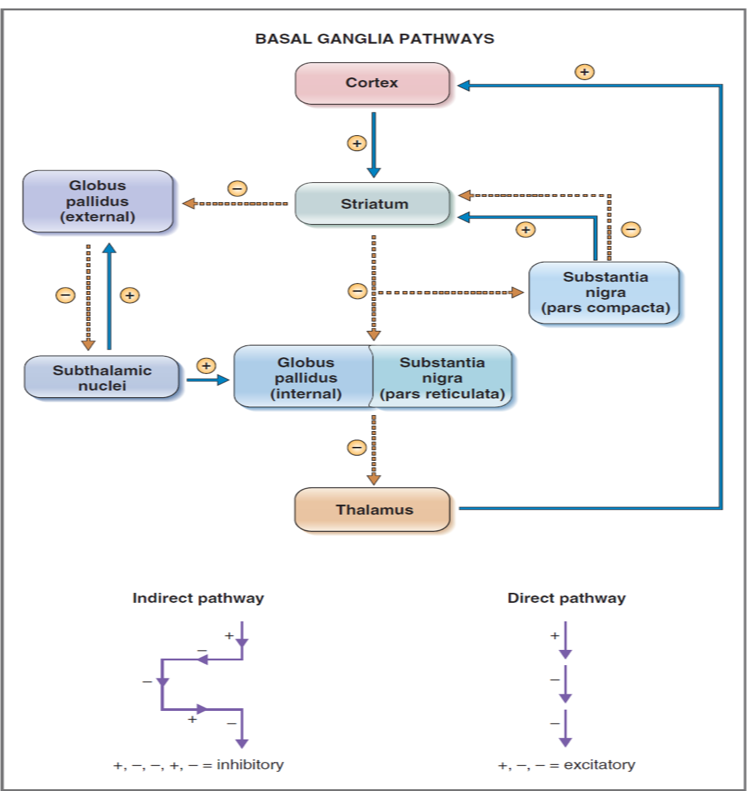
Physiology of basal ganglia
- Direct
- Indirect
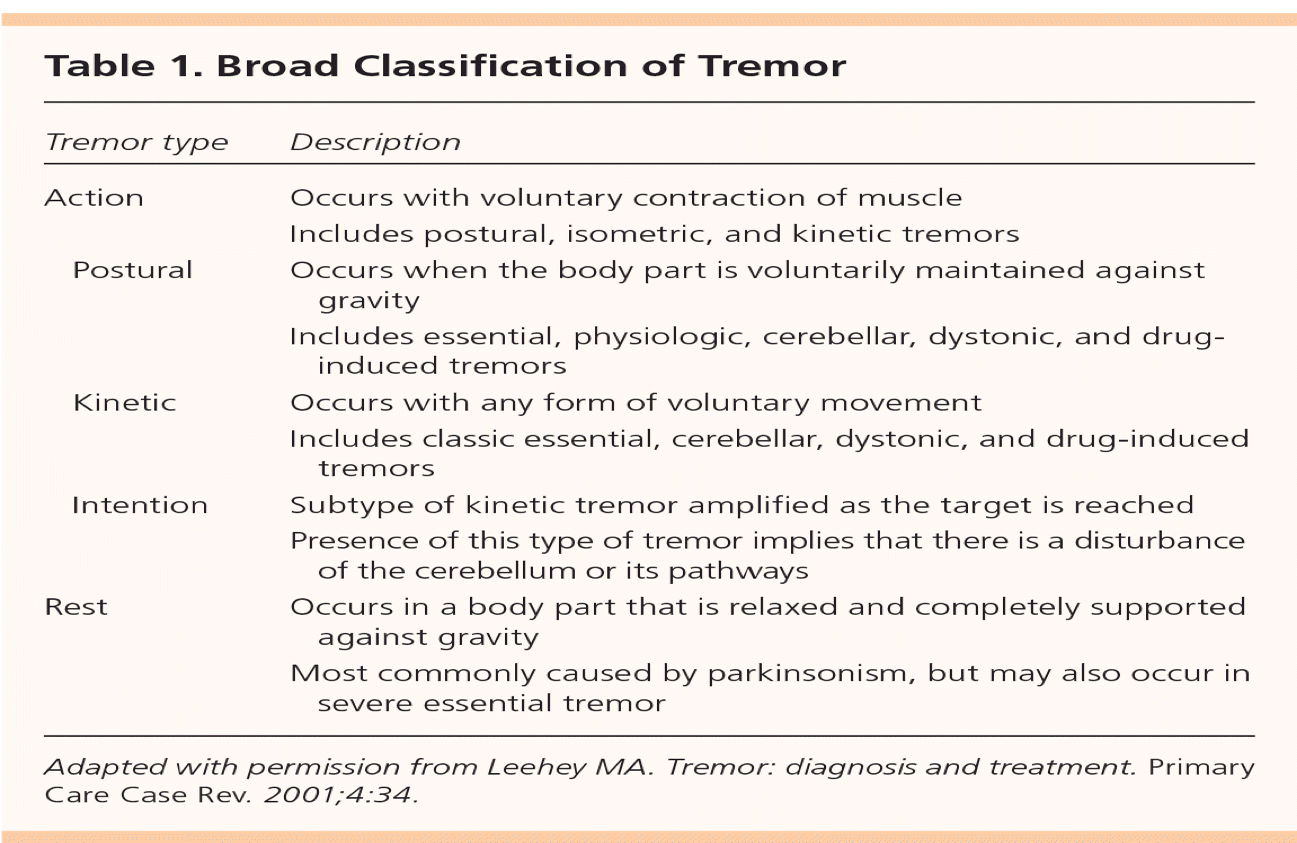
Tremors
- Tremor is defined as a rhythmic, involuntary, oscillating movement of a body part occurring in isolation or as part of a clinical syndrome
- Causes
- Neurological
- Stroke
- TBI
- Multiple sclerosis
- TBI
- Stroke
- Others
- Alcohol abuse
- Mercury poisoning
- Alcohol abuse
- Treatment
- Levodopa/Carbidopa
- COMT inhibitors
- Antiviral agents
- MAO B inhibitors
- Selegilline Rasagelline
- Dopamine Agonists
- Pramipexole
- Amantidine
- MAO B inhibitors
- Entacapone Tolcapone
- Antiviral agents
- COMT inhibitors
- Levodopa/Carbidopa
- Neurological
- Types
- Causes
- Tremor is defined as a rhythmic, involuntary, oscillating movement of a body part occurring in isolation or as part of a clinical syndrome
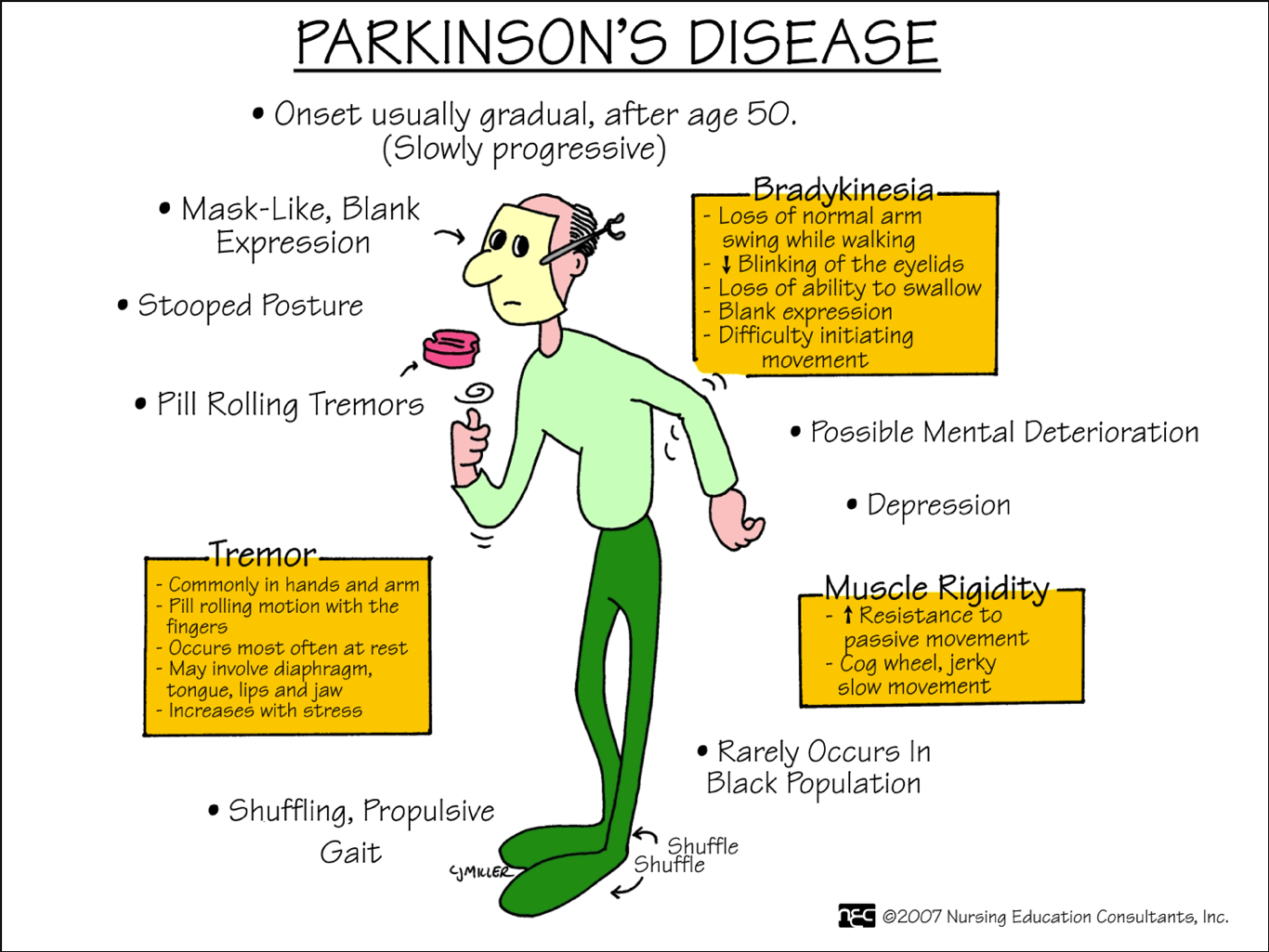
Parkinson's disease
- Causes
- Dopamine loss in the substantial nigra substance
- Genetic or environmental
- Falls and aspiration pneumonia are the main cause of death
- Genetic or environmental
- Dopamine loss in the substantial nigra substance
- Signs and symptoms
- Stages
- Stage one
- During this initial stage, the person has mild symptoms that generally do not interfere with daily activities. Tremor and other movement symptoms occur on one side of the body only. Changes in posture, walking and facial expressions occur.
- Stage two
- Symptoms start getting worse. Tremor, rigidity and other movement symptoms affect both sides of the body. Walking problems and poor posture may be apparent. The person is still able to live alone, but daily tasks are more difficult and lengthy.
- Stage 3
- Considered mid-stage, loss of balance and slowness of movements are hallmarks. Falls are more common. The person is still fully independent, but symptoms significantly impair activities such as dressing and eating.
- Stage 4
- At this point, symptoms are severe and limiting. It’s possible to stand without assistance, but movement may require a walker. The person needs help with activities of daily living and is unable to live alone. Stage Five
- Stage 4
- Considered mid-stage, loss of balance and slowness of movements are hallmarks. Falls are more common. The person is still fully independent, but symptoms significantly impair activities such as dressing and eating.
- Stage 3
- Symptoms start getting worse. Tremor, rigidity and other movement symptoms affect both sides of the body. Walking problems and poor posture may be apparent. The person is still able to live alone, but daily tasks are more difficult and lengthy.
- Stage two
- During this initial stage, the person has mild symptoms that generally do not interfere with daily activities. Tremor and other movement symptoms occur on one side of the body only. Changes in posture, walking and facial expressions occur.
- Stage one
- Stages
- Pathology
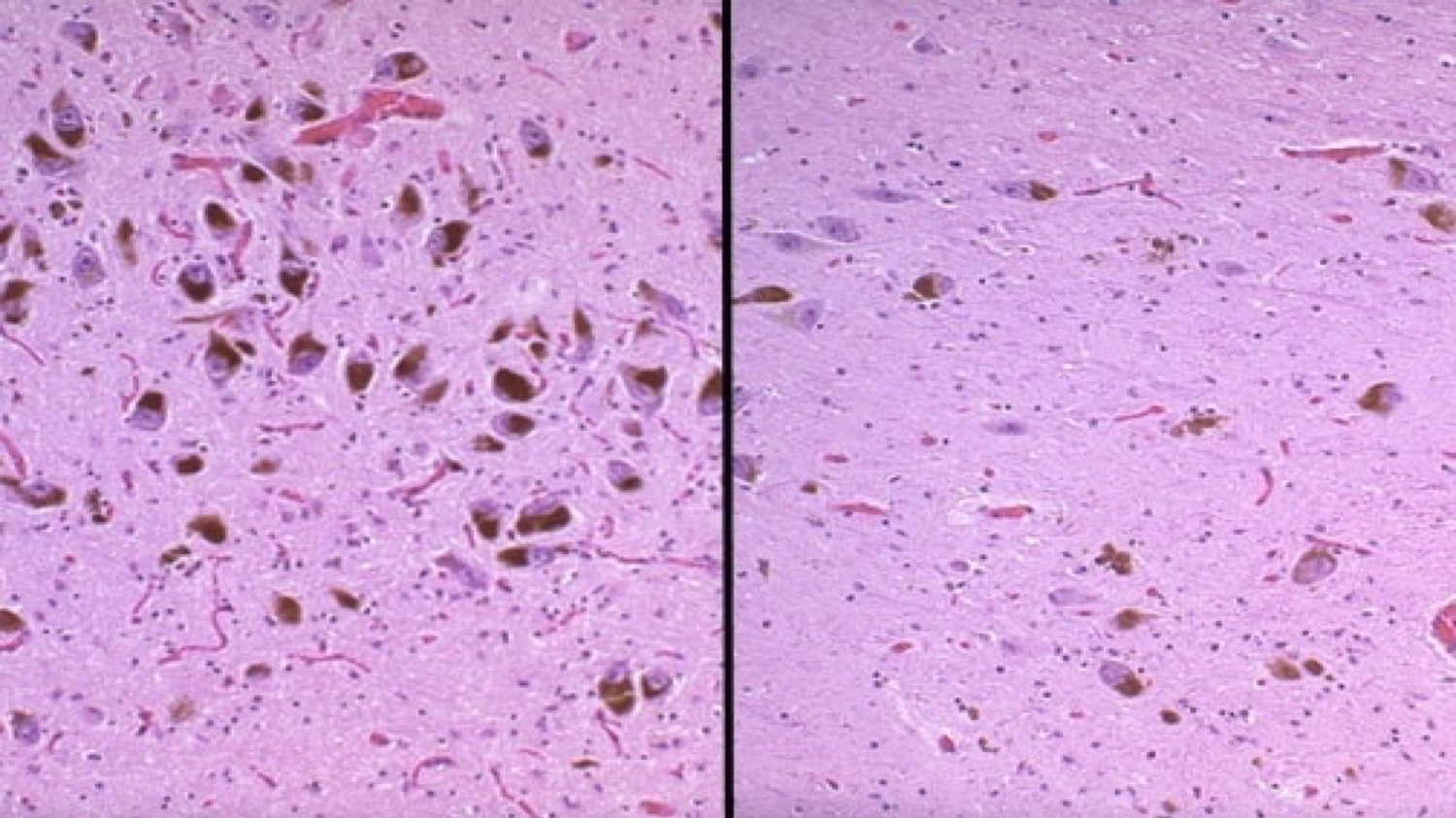
- PALLOR of the SUBSTANTIA NIGRA
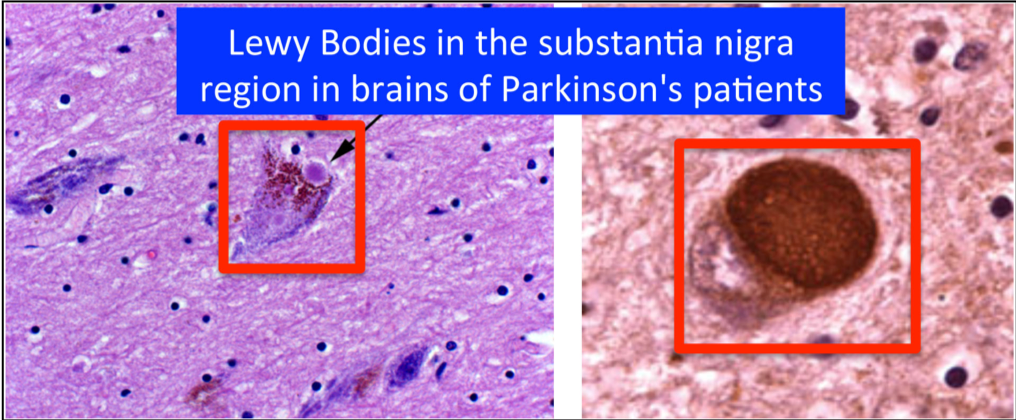
- LEWY BODIES (alpha-synuclein protein)
- α-synuclein, a protein involved in synaptic transmission.
- LEWY BODIES (alpha-synuclein protein)
- PALLOR of the SUBSTANTIA NIGRA
- Causes
Bilder und Dateien der Mindmap
Informationen
- Beschreibung
- Mindmap am Ahmed has tremors, erstellt von Heba Bassel am 25/10/2018.
- Erstellt von
- Heba Bassel
- Aufrufe
- 80
- Verlauf
-
- Erstellt von Fatima Alkhateeb · 20 Okt 2018
- Kopiert von Heba Bassel · 25 Okt 2018
- Bewertung