
Mindmap
MANAGING THE CLASSROOM
Inhalt der Mindmap
MANAGING THE CLASSROOM
- There are some things we have to consider: classroom space, classroom time, teacher's appareance, the way we talk, what role we should take according to the use of the mother tongue or the target language and one of the most difficult things: deal with difficult situations.
The Teacher in the Classroom
- All teachers have habits and also a particular way of being and behave. Those things determine a huge difference between a successful learning process and a less satisfactory learning. But it is no matter of appearence only, we have to think about the student's percention of us. Bear in mind that our abilities will be tested by our students in spite of the physical characteristics we have.
- Movement
- What could happen if the teacher stands in just one place the whole class? It is necessary for teacher to catch students' attention and the succeed of it depends on the movement around the classroom.
- Some teachers really like to stand in one place Others prefer to stand in the middle or to the side. And there are some that enjoy walking all around the classroom.
- If you feel comfortable moving around the classroom it's up to you. You can create your own style movement inside of it. The idea is to keep students' attention on the topics and explanations provided by the teacher.
- Awareness
- "The teacher's primary responsability is response-ability", as Lewis said, we should aware about what our students are doing even what they are feeling in the classroom. We have to asssess what they said properly as well.
- It is also important for us to be self-aware about our behaviour and the way we talk to our students.
- Proximity
- Teachers have to consider how close they should be to the students they are working with. We have to remember that the reaction of our students may change according to our actions. Some students feel uncomfortable if the teacher stands closer to them but there some students that may think the teacher doesn't want to interact with them because of the distance. So, we have to take into account these thoughts.
- Appropriacy
- This feature is pretty similar to proximity but here,we are going to focus on the fact of being close to students. Basically, proximity refers to that decision we make to stand closer or not to our students. On the other hand, appropriacy refers to the action itself.
- For example: If we are working with children we can sit down on the floor with them and it will be ok because it is a good way to inspire confidence and creates a comfortable environment but if we do this with upper grades it will be awkward because it might creates an unseriously and uncomfortable environment.
- But if there are some warm-up activities or planned lessons that requires that kind of environment, we can do it as well. Just don't forget about the students' reaction.
Using the voice
- The instrument the teacher uses to earn his daily bread is his voice. Here we have three aspect we should take into account about the use of our voice.
- Variety
- There are some situations in which we must raise our voice sometimes but there are some cases we should stay in silence, then the students will realise the teacher needs attention. We can control the tone of our voice according to the type of activity and lesson.
- Conservation
- As teachers, we must take care of our voice breathing deeply and avoiding to shout as much as possible.
- Audibility
- In simple words, teachers should be audible. We have to control the tone of our voice in order to be listened by the students who are at the back. You do not need to shout to be audible because it would be unpleasant. The good quality of the voice is more important than the volume.
Talking to students
- The way we talk with our students may change the learning process making it successful or less satisfactory in many aspects. There is a feature here called rough-tune that refers to the subconsciously ability to adapt the voice according to the person we are talking with. Parents and teachers have this skill in common.
- Teachers need to make the message comprehensible for students so there are three aspects to rough-tune our language as teachers: 1. The kind of language students are likely to understand. 2. Think about what they wish to say to students and how best to do it. 3. The manner in which they wil be speak.
- Create our own speaking style is up to us but don't forget about gestures, tone of voice and the behaviour because those factors can affect the perception of our students.
Giving Instructions
- Two things: 1. Instructions mus be kept as simple as possible. 2. Instructions must be logical. These are the general rules for giving instructions. This is crucial in the classroom management. Don't forget to make sure if your students understood what you said. Checking the instructions is important for both teacher and student.
Student Talk and Teacher Talk
- There are some elements we don't have to forget: TTT=(Teacher Talking Time) STT=(Student Talking Time) TTQ=(Teacher Talking Quality)
- Students need to improve their speaking skill so teachers should give them the opportunity to try, make mistakes and speak as much as possible. Don't forget also the quality of the teacher's speaking because this provides a good comprehensible input which is neccessary for students to understand better the target language and then they will be able to speak better.
Using L1
- Using the mother tongue to teach English is not something we cannot do but we have to consider the use of the target language to create an English environment in which students may learn better. We can use some translations strategies such as: creating L1 paragraphs then translate into L2 or viceversa.
- That does not mean we are going to go back to Grammar-Translation Method but we can apply this as a technique for learning successfully. We have to take into account that we have rules of our L1 and translate is something we cannot avoid at the beginnning but for that reason we should take advantage about that and create strategies that help students to avoid translation.
- At the end, we have to use English as much as possible. Instructions could be given to them in both languages but it's up to the teacher who knows the type of student and the process he is carrying out with his students.
Creating Lesson Stages
- What are we going to do next this activity? and the next step will be... As teachers, it is important to plan every activity we are going to develop in the classroom and the surprise factor is a particular feature that could help us to catch students' eyes on the topic.
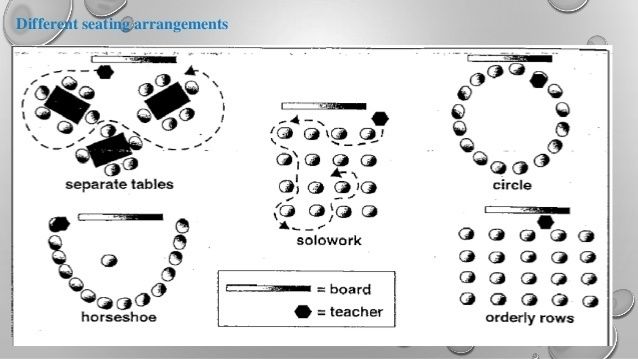
Different seating arrangements
- There are different ways to arrange the classroom according to the space and activities we are going to develop. Here we have some of them:
- Orderly Rows
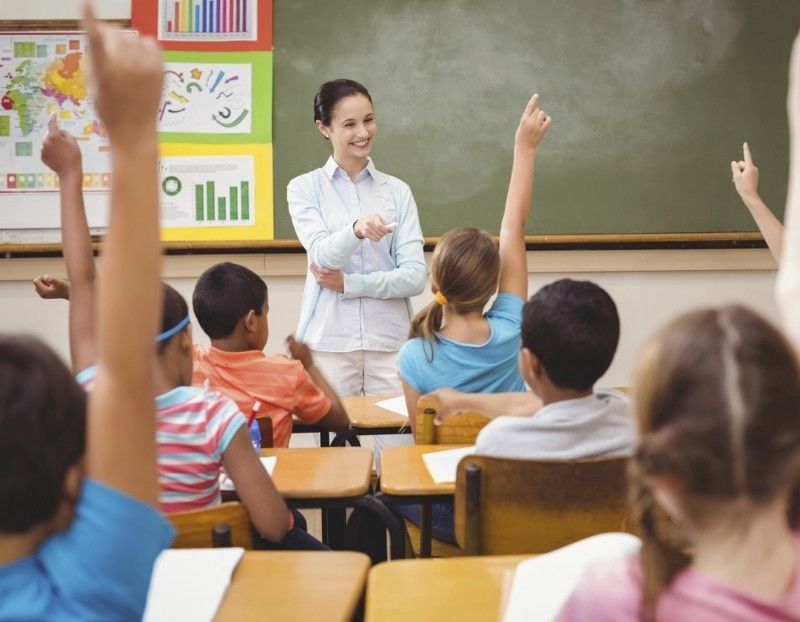
- This type of seating arrangement may help to: -Groupwork and pairwork. Students can work with the person next to them, in front of them and behind. -Clear overview of the classroom. -The use of the board. -Keep students guessing if the teacher models an activity that requires ask questions line by line. We have to make sure all the students are involved in the classroom.
- Circles and Horseshoes
- There are some characteristic about this seating arrangement: -It would be helpful if we have an equiped classroom regarding to overhead projector's position.-Leaving that space, the teacher's space seems less dominant. -Increase student's confidence because there is a symbol of equality.
- Separate Tables
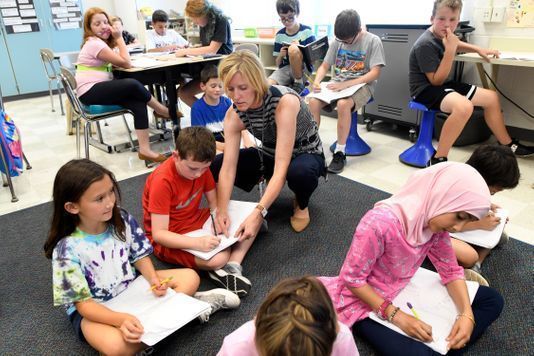
- Some of its features are: -Teacher may play his role as a guider providing students help about some difficulties during the class. -It is easier for the teacher to work table by table taking his time per one. -Promote the cooperative writing and individual task development. But it is difficult if they are doing their own thing without paying attention to the teacher while he or she is helping another team out.
Different student grouping
- How to organize students? Let's see it!
- Whole Class
- Basically, we have the option to work with the whole group of students in the classroom in a dynamic way making them feel involved. We can use the seating arrangement that stimulate the individual participation in the classroom.
- Groupwork and pairwork
- There are advantages and disadvantages of working in pairs and groups such as: -Increase cooperative work -Make the class more interesting BUT there are some disadvantages: -Disruptive behaviour -Difficult to assess individually, etc.
- Solowork
- This helps with individual assessment and the students take their own time to complete the activities.
- Class-to-class
- Having two different level of students in one class could be a great idea. Upper grades may help lower grades in surveys, researches, presentations and discussions. This helps to learn from other students making the learning process an enjoyable experience.
Bilder und Dateien der Mindmap

Informationen
- Beschreibung
- Mindmap am MANAGING THE CLASSROOM, erstellt von Taty Sanchez Mendez am 18/05/2019.
- Erstellt von
- Taty Sanchez Mendez
- Aufrufe
- 5
- Bewertung