
Mindmap
Quantum Phenomena
Inhalt der Mindmap
Quantum Phenomena
The Photoelectric Effect
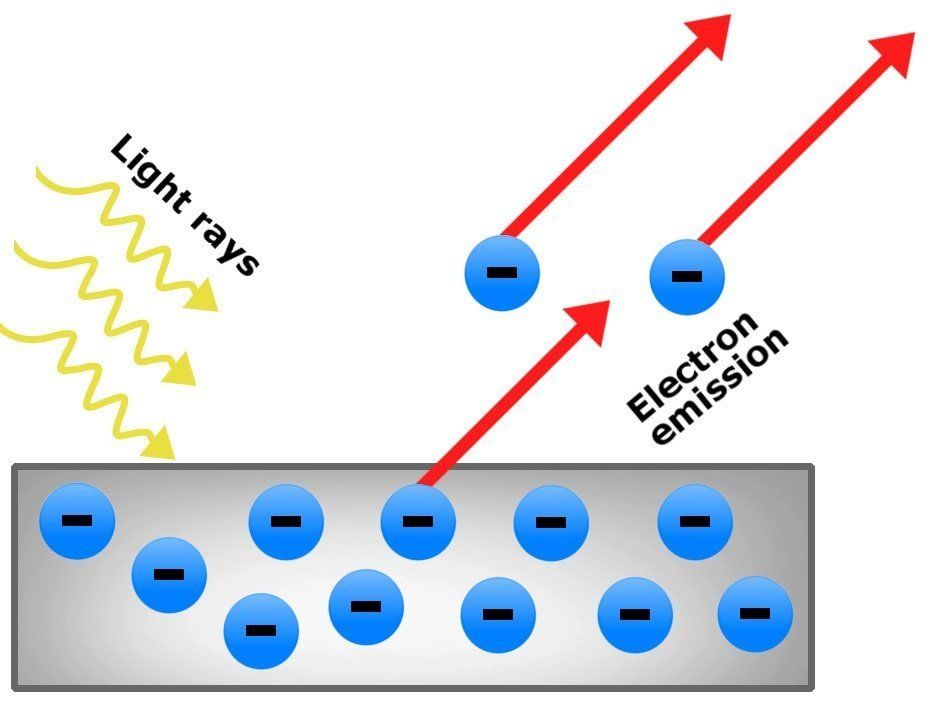
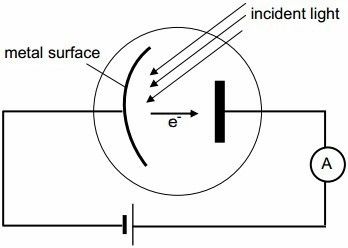
- If light (or electromagnetic radiation) of a high enough frequency is incident on a clean metal surface, electrons from the surface of the metal would be emitted (photoelectrons)
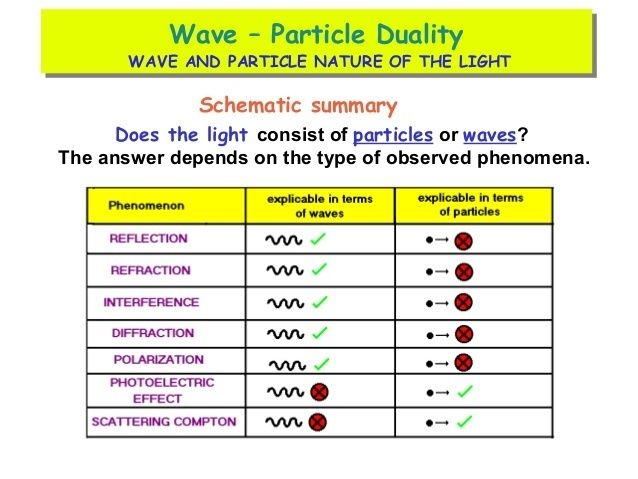
- Proves light is a particle/ a photon
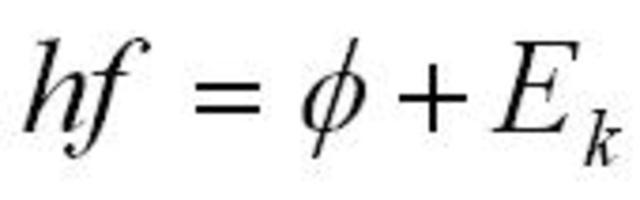
- Work Function (of a metal)/ ϕ - The minimum energy needed by the electron to escape from the metal surface
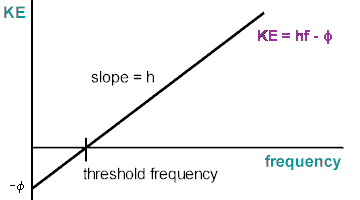
- Threshold Frequency - Minimum frequency of a photon required for an emission of an electron (from the surface of the metal to occur)
- If threshold frequency is reached, KE = 0
- Electrons emitted creates an electric current
- KE (MAX) - Maximum kinetic energy the electron would have (depending on the photon's energy)
- KE is a maximum because the work function only applies to electrons on the surface of the metal. Electrons deeper within the metal would experience more collisions and a greater distance to travel out the metal so exit with less KE
- E = hf - Energy of a photon (packet of energy), where h is Planck's Constant
- Laws of the Photoelectric Effect
- Emission of photoelectrons only occurs when it has reached the Threshold Frequency (different for each metal); otherwise, no photoelectrons are emitted
- Number of photoelectrons emitted is proportional to light intensity (more photons so more one on one energy transfers so more photoelectron emitted)
- Intensity has no effect on the kinetic energies of photoelectrons
- Disproves light as a wave because otherwise, the intensity would be proportional to the electron's KE. Also, the photoelectric effect would occur for any light, regardless of frequency or wavelength, as energy would be constantly absorbed (as a wave); this would take a delay for the emission of photoelectrons.
- Yet emission of photoelectrons occur instantly because as photons travel at the speed of light, all the photons energy is transferred instantly to the electron
- Disproves light as a wave because otherwise, the intensity would be proportional to the electron's KE. Also, the photoelectric effect would occur for any light, regardless of frequency or wavelength, as energy would be constantly absorbed (as a wave); this would take a delay for the emission of photoelectrons.
- Intensity has no effect on the kinetic energies of photoelectrons
- A range of (kinetic) energies are produced but the maximum depends on frequency
- One-to-One relationship
Collisions of Electrons with Atoms
- Ionisation
- Ion - When an uncharges atom loses or gains an electron, obtaining a charge
- Process of creating ions
- Can be done in two ways:
- Nuclear Radiation (Alpha, Beta & Gamma) interact and collide with atoms and cause electrons to be knocked out
- Electrons which can be accelerated by potential differences and can collide with gas or vapour particles creating ions (Flourescent & Discharge Tubes)
- Excitation
- When atoms absorb and emit energy without being ionised
- Can only happen at specific energies, which are characteristics of the atoms in the gas, due to each gas having different electronic configurations
- For electrons to absorb these specific energies, it can be done by:
- Incident photons of a specific amount of energy (Photoelectric Effect)
- Heating the substance
- A potential difference to accelerate electrons which can collide with atoms
- For electrons to absorb these specific energies, it can be done by:
- The energy absorbed by the electron to jump to a higher shell is called the Excitation Energy
- Excitation Energy < Ionisation Energy
- Ground State - Electron in the lowest/most stable state (usually n =1)
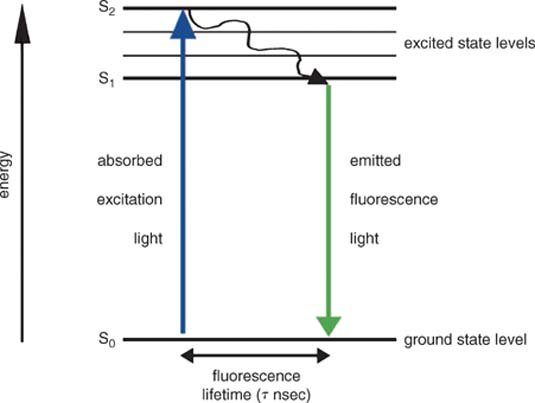
- An electron excited to a higher energy state returns to its ground state either directly or indirectly (goes through different states first)
- As different states have different energy differences between them, a certain amount of energy is emitted, as a photon, from the atom when the excited electron returns to a lower energy level.
- The energy of emitted photon = hf = E2 - E1 (Difference in energy levels)
- As different states have different energy differences between them, a certain amount of energy is emitted, as a photon, from the atom when the excited electron returns to a lower energy level.
- Used int fluorescent tubes for UV LIght
- In the tube, there is Mercury Vapour which is conducting. Electrons are accelerated by the p.d. which excite the mercury atoms by impacting it, producing (mainly) UV radiation
- The UV radiation is then absorbed by the coating which excites it and upon relaxing / de-exciting, produces visible light as elcectrons cascade down energy levels;
- This allows us to see the purple light in the tube since UV light cannot be seen with the human eye
- The UV radiation is then absorbed by the coating which excites it and upon relaxing / de-exciting, produces visible light as elcectrons cascade down energy levels;
- In the tube, there is Mercury Vapour which is conducting. Electrons are accelerated by the p.d. which excite the mercury atoms by impacting it, producing (mainly) UV radiation
- Electron Volts
- 1 electron volt is the work is done (or KE gained) by an electron when it is accelerated by a potential difference of 1V
- IeV = 1.6x10^-19 J
- Unit of energy
- Ionisation
Energy Levels and Photon Emissions
- LIne spectra can be used as evidence for transitions between discrete energy levels in atoms.
- e.g. State what happens in an atom when line spectra are produced
- When electrons de-excite from a higher energy level (or orbit) to a lower energy level, they will emit a photon with the definite frequency/wavelength; each photon emitted will have its own definite energy which corresponds to a line on the spectra
Wave-Particle Duality
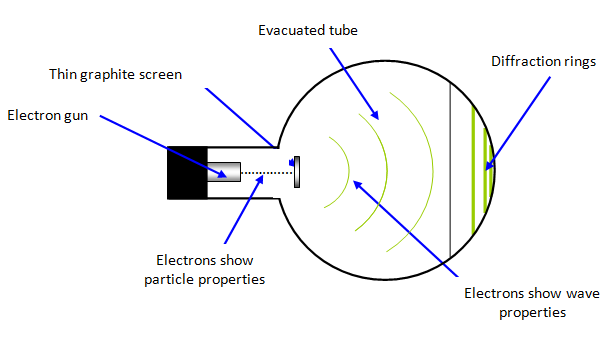
- Electrons can diffract so they also have a wave nature
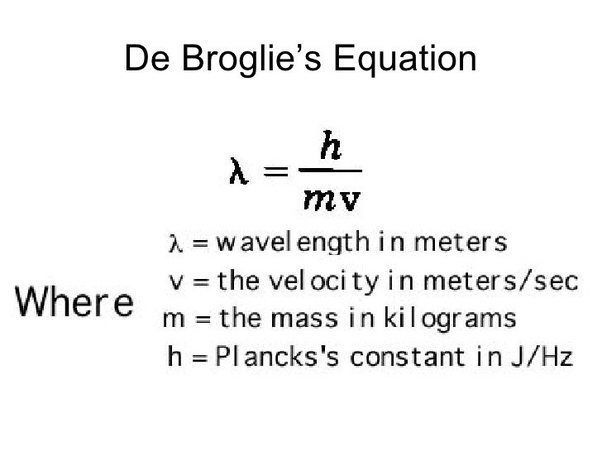
- De Broglie Wavelength
- Measures the size a gap would be for an object to diffract
Bilder und Dateien der Mindmap
Informationen
- Beschreibung
- A level Physics Mindmap am Quantum Phenomena, erstellt von 2402 2003 am 04/07/2020.
- Erstellt von
- 2402 2003
- Aufrufe
- 1
- Bewertung