
Mindmap
Elements, compounds and mixtures
Inhalt der Mindmap
Elements, compounds and mixtures
Democritus discovered atoms, which he originally called 'Atomos' meaning 'can't be divided'
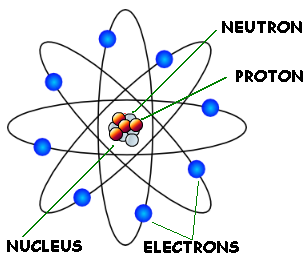
- the charge of an atom is 0, therefore the number of protons = the number of electrons in a neutral atom (for example: +5-5=0)
- Nucleus is the 'control center' of an atom. It is small but heavy, as the mass of an atom is given by the mass of the nucleus.
- Nucleus is the 'control center' of an atom. It is small but heavy, as the mass of an atom is given by the mass of the nucleus.
- the charge of an atom is 0, therefore the number of protons = the number of electrons in a neutral atom (for example: +5-5=0)
each element is made of its own particular type of atom.
- The ammount of protons in an element is the same as the ammount of electrons.
- The atomic number is the order elements are in on the periodic table.
- To find the Mass Number, you need to add the Protons and Neutrons together.
- To find the Neutrons, you need to subtract the protons from the Mass Number
- To find the Mass Number, you need to add the Protons and Neutrons together.
- Each electron carries a negative electric charge
- Each proton carries a positive electric charge.
- Neutrons have no electric charge
- The atomic number is the order elements are in on the periodic table.
- The ammount of protons in an element is the same as the ammount of electrons.
Metals
- Elements that have features of metals and non-metals are called Metalloids.
- only 22 of the elements are non-metals. They cant't polish to shine, they are brittle and shatter when hit, they can't be bent into shape, poor conductors of heat or electricity and usually melt at low temperatures.
- Metals are slid at room temperature, except Mercury, Can be polished to shine, good conductors of electricity and heat, 'malleable' meaning can be bent to change shape, 'ductile' can be made into wire, Usually melt at high temperature, except mercury melts at -40 degrees.
Left side of Periodic Table is highly reactive, the further towards the right is less reactive. The far right column is not at all reactive.
- About 118 elements in the periodic table. This changes because some are man made and others disappear
- About 118 elements in the periodic table. This changes because some are man made and others disappear
Molecules: A molecule is a group of atoms clumped together. Non-metals bonde together form molecules
- Elements: substances that contain only one type of atom
- Compound: the atoms of one element are bonded very tightly with the atom of another element (s). The elements that make up a coumpound are completely different from the compound. A compound is formed when the atoms of different elements bond.
- Mixtures: Made up of two or more elements, two or more compounds or a mixture of both. The substances in a mixture can usually be easily seperated.
- Elements in a compound cannot be easily separated from each other. You can seperate elements in a compound by: Passing electricity through a compound, burning the compound, mixing the compound with other chemicals. Each of these form completely different substances, due to chemical reactions.
- Compound: the atoms of one element are bonded very tightly with the atom of another element (s). The elements that make up a coumpound are completely different from the compound. A compound is formed when the atoms of different elements bond.
- Elements: substances that contain only one type of atom
Bilder und Dateien der Mindmap
Informationen
- Beschreibung
- Mindmap am Elements, compounds and mixtures, erstellt von prudence.h am 07/09/2015.
- Erstellt von
- prudence.h
- Aufrufe
- 24
- Bewertung