
Mindmap
Small animal GI surgery
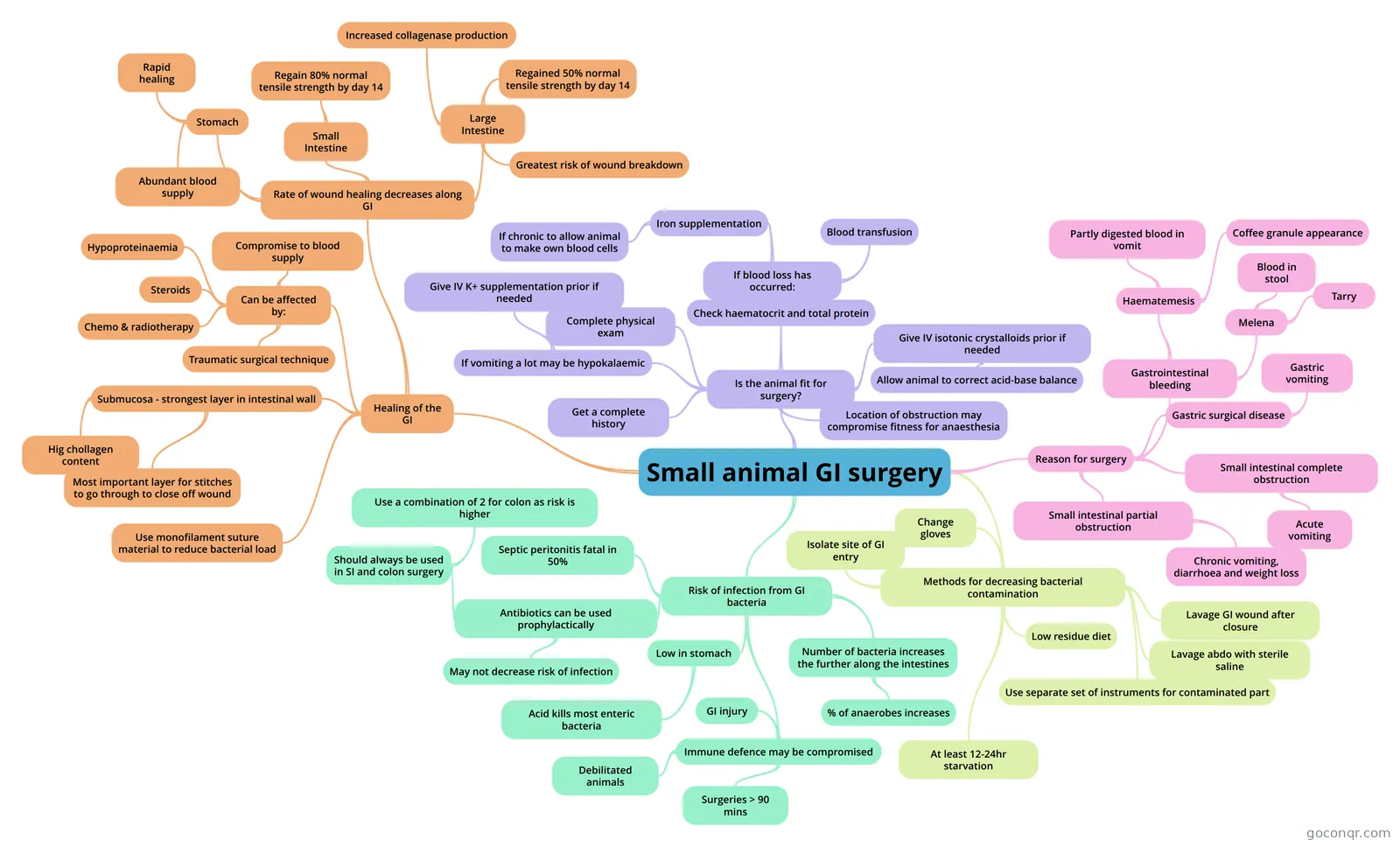
Mind map: Small animal GI surgery
Inhalt der Mindmap
Small animal GI surgery
Is the animal fit for surgery?
- Give IV isotonic crystalloids prior if needed
- Allow animal to correct acid-base balance
- If vomiting a lot may be hypokalaemic
- Give IV K+ supplementation prior if needed
- Location of obstruction may compromise fitness for anaesthesia
- Get a complete history
- Complete physical exam
- Check haematocrit and total protein
- If blood loss has occurred:
- Blood transfusion
- Iron supplementation
- If chronic to allow animal to make own blood cells
- If blood loss has occurred:
- Give IV isotonic crystalloids prior if needed
Reason for surgery
- Gastric surgical disease
- Gastric vomiting
- Small intestinal complete obstruction
- Acute vomiting
- Small intestinal partial obstruction
- Chronic vomiting, diarrhoea and weight loss
- Gastrointestinal bleeding
- Haematemesis
- Partly digested blood in vomit
- Coffee granule appearance
- Melena
- Blood in stool
- Tarry
- Haematemesis
- Gastric surgical disease
Risk of infection from GI bacteria
- Low in stomach
- Acid kills most enteric bacteria
- Number of bacteria increases the further along the intestines
- % of anaerobes increases
- Antibiotics can be used prophylactically
- May not decrease risk of infection
- Should always be used in SI and colon surgery
- Use a combination of 2 for colon as risk is higher
- Immune defence may be compromised
- Debilitated animals
- GI injury
- Surgeries > 90 mins
- Septic peritonitis fatal in 50%
- Low in stomach
Methods for decreasing bacterial contamination
- Isolate site of GI entry
- Use separate set of instruments for contaminated part
- Lavage GI wound after closure
- Lavage abdo with sterile saline
- Change gloves
- Low residue diet
- At least 12-24hr starvation
Healing of the GI
- Submucosa - strongest layer in intestinal wall
- Hig chollagen content
- Most important layer for stitches to go through to close off wound
- Rate of wound healing decreases along GI
- Stomach
- Rapid healing
- Abundant blood supply
- Small Intestine
- Regain 80% normal tensile strength by day 14
- Large Intestine
- Regained 50% normal tensile strength by day 14
- Increased collagenase production
- Greatest risk of wound breakdown
- Stomach
- Can be affected by:
- Compromise to blood supply
- Traumatic surgical technique
- Hypoproteinaemia
- Chemo & radiotherapy
- Steroids
- Use monofilament suture material to reduce bacterial load
- Submucosa - strongest layer in intestinal wall
Informationen
- Beschreibung
- Degree Alimentary Mindmap am Small animal GI surgery, erstellt von alicecarpenter12 am 02/10/2015.
- Erstellt von
- alicecarpenter12
- Aufrufe
- 4
- Bewertung