Mindmap
Transportation: costing & pricing

Inhalt der Mindmap
Transportation: costing & pricing
Market Considerations
- Structure Models
- Pure competition
- Oligopoly
- Competition between a few large sellers of relatively products.
- Monopolistic Competition
- Many small sellers with some differentiation of products.
- Contestable Markets
- It substitutes potential competition for the active participation of many sellers.
- 1. No barriers to entry.
- 2. Economies of scale could not be present.
- 3. Consumers willing & able to switch quickly among carriers.
- Structure Models
Cost-of-service Pricing
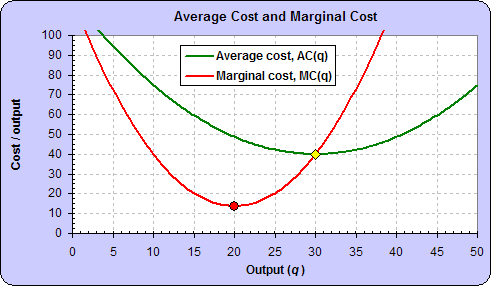
- Marginal Cost
- Average cost
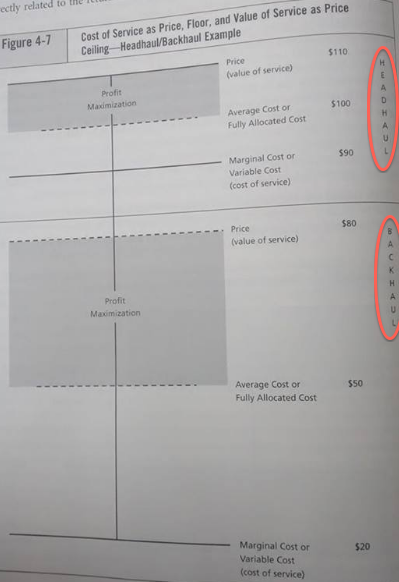
Value of Serving Pricing
- Pricing according to the value of the product.
- Third-degree price discrimination
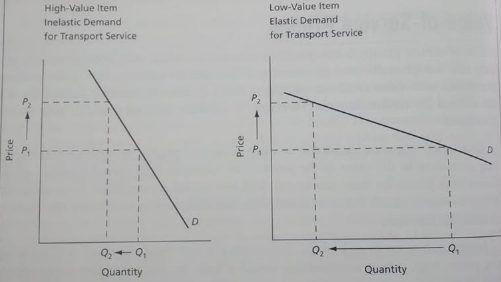
- Seller must separate buyers into groups according to their different elasticities of demand
- Seller must prevent the transfer of sales between the submarkets
- Seller must possess some degree of monopoly power.
- Differential Pricing
- Done based on several methods of segregating the buyers into distinct groups.
- Key Success
- Determine the appropriate costs and to stimate demand elasticity in the various markets.
Rate Making in Practice
- General Rates
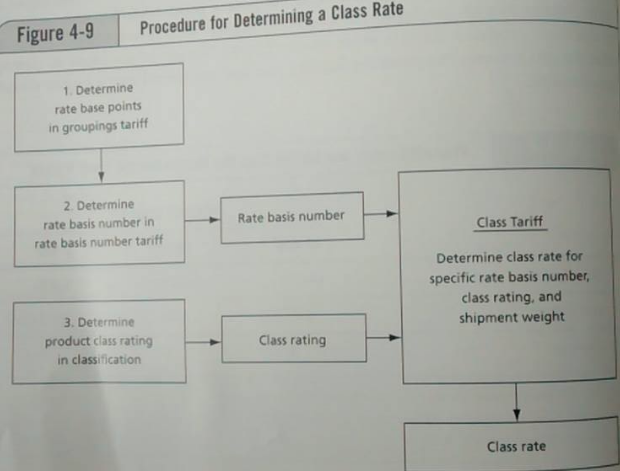
- Class Rate
- Provides a rate for any commodity between any two points
- From uniform distance and product systems.
- Simplification Steps
- 1. Consolidated the 1,000´s of shipping points by dividing the nation into geographic squares
- 2. Deals w/the 1,000´s of different items that might be shipped between any two base points.
- 3. Groups together products w/similar transportation characteristics so that one rating can be applied to the whole group
- 2. Deals w/the 1,000´s of different items that might be shipped between any two base points.
- 1. Consolidated the 1,000´s of shipping points by dividing the nation into geographic squares
- Product characteristics that impact the carrier´s costs.
- Handling
- Liability
- Storability
- Product density
- Exception Rates
- Carriers in particular regions can depart from the product scale system for any one of many reasons
- Modification to the national classification instituted by an individual carrier.
- Carriers in particular regions can depart from the product scale system for any one of many reasons
- Commodity Rates
- For specific origin-destination shipping patterns of specific commodities.
- Class Rate
- General Rates
Special Rates
- Character of Shipment Rates
- LTL. Less than Truckload
- Multiple car
- Incentive
- Unit-train
- Per-car, per-truckload
- Any-quantity
- Density
- Area, Location, Rute rates
- Local
- Joint
- Proportional
- Differential
- Per-mile
- Terminal to terminal
- Blanket or groups
- Time/Service Rates
- Contract rates
- Deferred Delivery
- Others
- Corporate volume rates
- Discounts
- Loading allowances
- Aggregate Tender rates
- FAK rates
- Released Value rates
- Empty-haul rates
- 2 way-3way rates
- Spot market rates
- Menu pricing
- Character of Shipment Rates
Pricing in transportation Management
- Factors
- Customers (market)
- Government
- Other channel members
- Competition
- Decisions
- 1. Setting prices on a new service
- 2. Modify prices over time.
- Market & operating changes.
- 3. Decisions will make responding to price changes.
- Price leader
- Pricing Objective
- Reflect company objectives & how they will compete.
- Survival- based.
- Increasing cash flow through the use of low prices.
- Unit volume
- Utilize a carrier´s existing capacity to the fullest.
- Profit Maximization
- Measures such as return on investment
- Skimming Price
- High price--> attrack market focused on quality, status.
- Skimming Price
- Measures such as return on investment
- Penetration price
- Market share
- When revenues are stagnant or declining
- Social Responsibility
- Demand
- Price slasticity
- Direct attitude survey
- Market test
- Factors
It is detemrined primarily by considering a carrier´s cost.
Implies a value that is detemirned based on prevailing market forces.
- Dinamic economic enviroment