
818538
Beschreibung

Mindmap von Ellen Laidlaw, aktualisiert more than 1 year ago

|
Erstellt von Ellen Laidlaw
vor mehr als 11 Jahre
|
|
Population Case Studies
- Solving Overpopulation
through Birth Control
- China's 1 Child Policy 1979
- Reasons for it
being Introduced?
- Baby Boom
- Led to famine in 1950's
killing 35 million people.
- Baby Boom
- Effects of it?
- Gave 10% salary increase to
those that followed it and provided
free healthcare and schooling.
- Those that disobeyed, fined to
point of bankruptcy and forced
abortions (Granny Police)
- Reduced population by 400 million people over
20 years, more food, money and jobs available.
- However, boys valued more, led to female infranticide
and abandonment. Difficult for people on farms.
- Gave 10% salary increase to
those that followed it and provided
free healthcare and schooling.
- Changes to it in 1990's?
- Only children themselves
and farmers allowed 2.
- Still gender imbalance - 60 million more boys.
- 4 2 1 syndrome
- As China has developed, wealthier (people can afford
fines) and women emancipation (Naturally less births)
- Only children themselves
and farmers allowed 2.
- Reasons for it
being Introduced?
- Solving Overpopulation
without using Birth Control
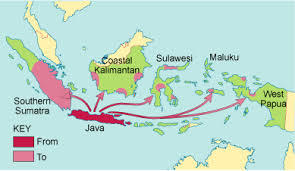
- Indonesia Transmigration
- Problems
- Overcrowding particularly in
Jakarter: lacking food and space
and suffering poor health.
- Overcrowding particularly in
Jakarter: lacking food and space
and suffering poor health.
- Solutions
- Transmigration: Encouraged to move via boats to sparsely populated islands
like Borneo with incentives including: free land, free house and free travel.
- Transmigration: Encouraged to move via boats to sparsely populated islands
like Borneo with incentives including: free land, free house and free travel.
- Effects
- Total of 3
million moved.
- Helps to develop
rural areas.
- Deforestation ruins habitats
and causes soil erosion.
- Strained relationships
between locals and settlers.
- Only delays and spreads out problem.
- Total of 3
million moved.
- Problems
- Ageing
Population
- UK
- Why?
- Increased Life Expectancy as a result of
better healthcare and better lifestyles
(exercising, good diets and leisure time)
- Dropping Birth Rates as a result
of emancipation of women.
- Increased Life Expectancy as a result of
better healthcare and better lifestyles
(exercising, good diets and leisure time)
- Issues
- Residential Homes and Healthcare
under pressure (Expensive)
- Too few economically
active people to
support them (Bad
dependancy ratio)
- Government struggles
paying pensions.
- Residential Homes and Healthcare
under pressure (Expensive)
- Solutions
- Raising Retirement Age to 67
- Encouraging Women to have Children -
longer maternity, paid hours of childcare
and support going back to work.
- Encouraging Immigration of young peope - more economically
active (taxes) and more women of child-bearing age.
- Raising Retirement Age to 67
- Why?
- Migration within the EU
- Eastern Europe
(Poland) to the UK
- Eastern Europe (Poland)
- Positives
- Remittance
sent home
- Reduces
pressure on
resources.
- Remittance
sent home
- Negatives
- Brain Drain
- Bad Dependancy Ratio
when people leave.
- Brain Drain
- Positives
- UK
- Positives
- Unwanted '3D'
Jobs taken by
cheap immigrants.
- Pay tax in UK -
better dependancy
- Cultural Diversity
- Unwanted '3D'
Jobs taken by
cheap immigrants.
- Negatives
- Take jobs from
unemployed Britons.
- Money sent back
in remittance - lose
£4 billion a year
- Pressure on
resources & services.
- Racial Intolerance
- Take jobs from
unemployed Britons.
- Positives
- Eastern Europe (Poland)
- International Migration
- Ghana to Italy
- PUSH FACTORS: GDP only $540, 28% live in
poverty & 100,000 forced from homes due to war.
- PULL FACTORS: GDP $26,000, 10% live
in poverty, job opportunity & healthcare.
- Ghana
- Positives
- 7.6% of GDP
from remittance
- Less pressure
on resources.
- 7.6% of GDP
from remittance
- Negatives
- Brain Drain - lost 2000
nurses/doctors in 2000
- 150,000 left in 2000
- Brain Drain - lost 2000
nurses/doctors in 2000
- Positives
- Italy
- Positives
- Cheap
labour for
businesses.
- Sharing of Culture
- Cheap
labour for
businesses.
- Negatives
- 40% of their population growth from immigrants
- 3x Unemployment Rate as
migrants take jobs for less money.
- 40% of their population growth from immigrants
- Positives
- PUSH FACTORS: GDP only $540, 28% live in
poverty & 100,000 forced from homes due to war.
Medienanhänge




Möchten Sie kostenlos Ihre eigenen Mindmaps mit GoConqr erstellen? Mehr erfahren.