
Mindmap
Electrostatics
Inhalt der Mindmap
Electrostatics
Bonus
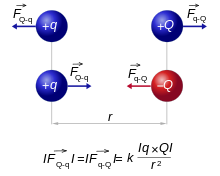
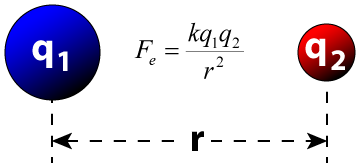
- Calculating Electric Force
- Look out!
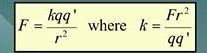
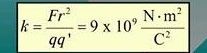
- The proportionality contant "K" for Coulomb's law depends on the choice of units for charge
- When the charge "q" is in Coulombs, the distance "r" is in meters and the force F is in newtons.
- The proportionality contant "K" for Coulomb's law depends on the choice of units for charge
- Look out!
- Summary of Formulas
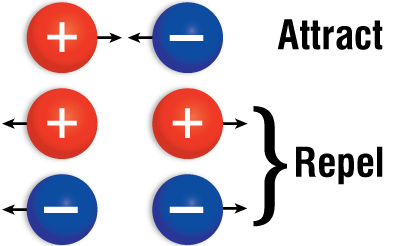
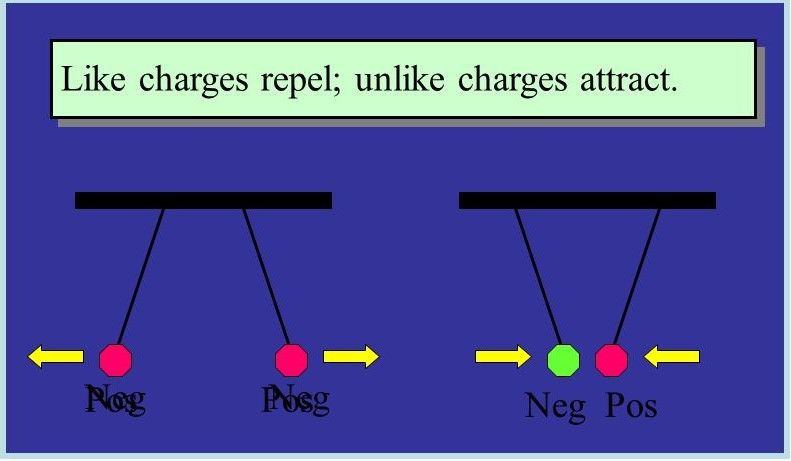
- Charges Repel
- Charges Attract
- Charges Repel
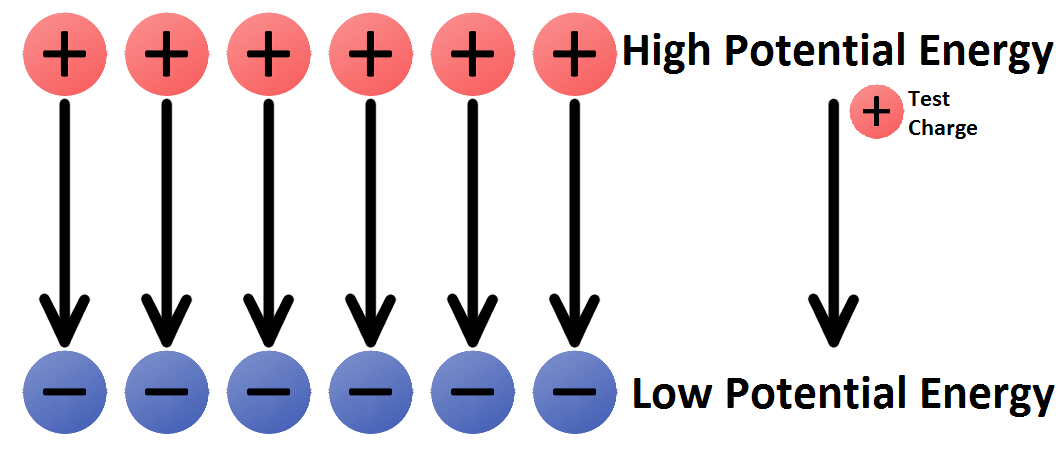
- Potential Energy
- have been
- Extended to electrical phenomena
- when
- A charge "q" is moved against a constant electric force for distance d, use the system: U=qEd
- "E" is the constant electric field intensity. If the charge is released: K= 1/2mvv=qEd
- V at a point a distance r from a charge Q is equal to the work per unit charge
- The potential at a point in the vicinity of a number of charges is equal to the algebraic sum
- Difference between two ponts A and B is the difference in the potentials at those points
- The work done by an electric field in moving a charge "q" from point A to point Bcan be defined from "Work and potencial Difference"
- The potential difference between two oppositely charged plates is equal to the product of the field intensity and the plate separation.
- have been
- Calculating Electric Force
is
- The science that treats charges at rest.
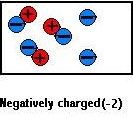
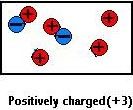
- There are two kinds of charge
- Negatively Charged
- If
- An object has an excess of electrons.
- If
- Positively Charged
- If
- Has a deficiency of electrons
- If
- Negatively Charged
- There are two kinds of charge
- The science that treats charges at rest.
Concepts
- The first Law of electrostatics
- states
- Charges repel each other and unlike charges attract each other
- states
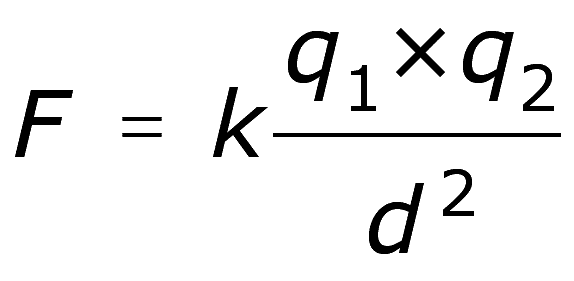
- Coulomb's Law
- states
- The force of attraction or repulsion between two point charges is directly proportional to the product of the two charges and inversely proportional to the separation of the two charges.
- Bonus
- The force F is in newtons (N)
- only when
- the seperation "r" is in meter
- The charge "q" is measured in coulombs
- only when
- The force F is in newtons (N)
- Bonus
- The force of attraction or repulsion between two point charges is directly proportional to the product of the two charges and inversely proportional to the separation of the two charges.
- states
- The first Law of electrostatics
The Quantity of Charge
- Defined
- In terms of the number of electrons, but the Coulomb (C) is better unit for later work.
- Temporary definition
- The Coulomb: 1C = 6.25X10 18 electrons
- That means
- The charge on a single electron
- is
- 1 electron: e- = -1.6x10⁻¹⁹ C
- is
- The charge on a single electron
- That means
- The Coulomb: 1C = 6.25X10 18 electrons
- Temporary definition
- In terms of the number of electrons, but the Coulomb (C) is better unit for later work.
- Defined
Units of Charge
- Is
- Actually a very large unit for static electricity
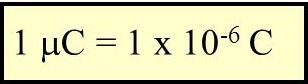
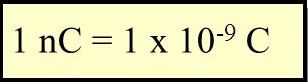
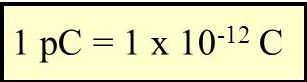
- We need to use the metric prefixes
- We need to use the metric prefixes
- Actually a very large unit for static electricity
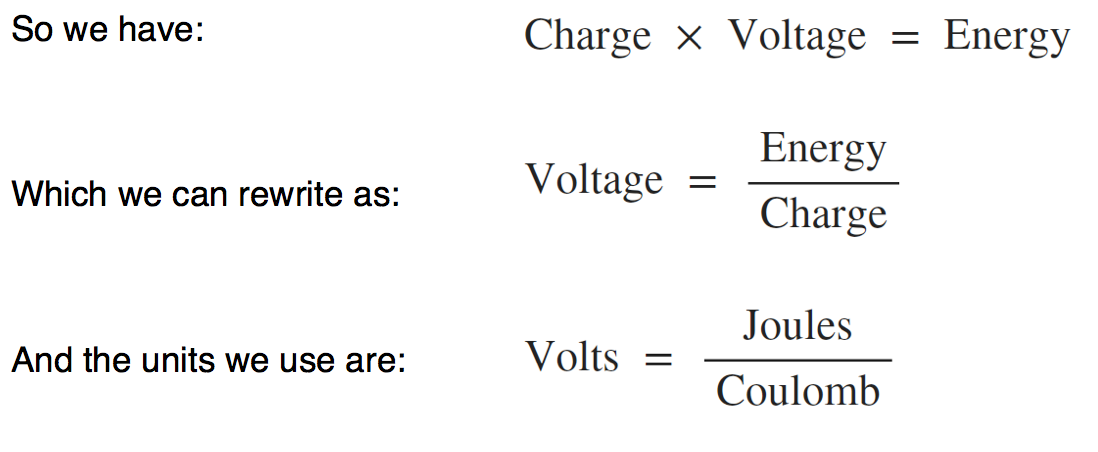
- The units of electric potential is in joule per coulomb
- Is
Electric field
- Describe
- The region surreounding and electric charge.
- is determined
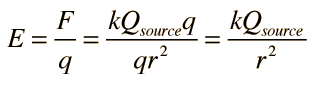
- By the force a unit charge will experience at a given location
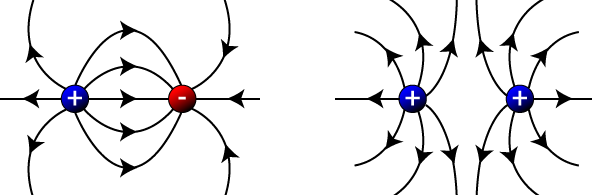
- Distance is the same as the force on a positive charge at that point
- Lines were postilated to give a visual picture of electric field
- Distance is the same as the force on a positive charge at that point
- By the force a unit charge will experience at a given location
- is determined
- The region surreounding and electric charge.
- Concepts
- Exist in a region of space in wich an electric charge will experience an electric force
- Units
- Newton per coulomb (N/C)
- Units
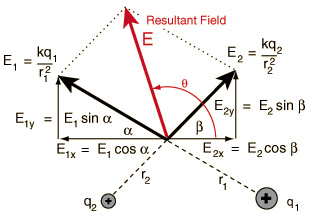
- The resultants field intensity at a point in the vicinity of a number of charges is the vestor sum of the contributions from each charges
- Exist in a region of space in wich an electric charge will experience an electric force
- Bonus
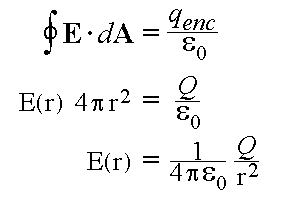
- Gauss's Law
- state
- The net number of electric field lines crossing an y closed surface in an outward direction is numerically equal to the net total charge within that surface
- state
- Gauss's Law
- Describe
Bilder und Dateien der Mindmap



Informationen
- Beschreibung
- Mindmap am Electrostatics, erstellt von Esveydi Torres am 16/05/2017.
- Erstellt von
- Esveydi Torres
- Aufrufe
- 0
- Bewertung