
Notizen
New Developments Post Cold-War 1991-2001

Inhalt der Notizen (6)
Seite 1
Cold War Legacy
The legacy of the Cold War led to conflicts in the 1990s and beyond.
The State of the Middle East:
Israel:
The state of Israel was founded in 1948; carved out of the land that had been inhabited by Muslim Arabs for centuries
Most of the Muslim Arab states in the region were hostile to Israel
The main reason for the survival of Israel was its close links with the US
This relationship created much resentment towards the US among many Muslims
Afghanistan:
After the Soviet army withdrew, civil war broke out amongst the various factions
By the mid-1990s, the most powerful group was the radical Muslim organisation called the Taliban
The Taliban had support from Pakistan and were hostile towards outside influence
The Taliban believed that the US cultural influence was a threat to Islam
Many of the Taliban had been mujahidin, which meant they were well-armed and trained by the US during the Afghan War
Iraq and the Gulf War:
Iraq was ruled by Suddam Hussein from 1976
He went to war with Iran in 1980, initially with huge support from the US
Then, in 1990, Saddam invaded Kuwait, an ally of the USA
USA led a coalition against Iraq and defeated Saddam in the Gulf War 1991
The US claimed it was defending Kuwait; Muslims believed the US was trying to control the region and its valuable oil supplies
Iran:
Hostile towards the US since an Islamic revolution overthrew the US-supported shah in 1979
Iran had been a rival of Saudi Arabia, as it was the most important country in the region
Iran was hostile towards Israel because the Israelis were in conflict with Muslim Palestinian Arabs
Israel and Saudi Arabia were important allies to the US
Seite 2
Roots of Al-Qaeda and 9/11
On the morning of 11 September 2001, two hijacked jet airliners were deliberately crashed into the Twin Towers of the World Trade Center in New York. Around 3,000 people died in this incident and the events sent shock and terror throughout the US - and the world - that this would occur on US soil.
The Roots of Al-Qaeda:
The story of Al-Qaeda lies in Saudi Arabia and Afghanistan, and the beliefs and influences of its founder, Osama bin Laden.
The Afghan War 1979-86
The USSR invaded Afghanistan in 1979 to assist the communist government in dealing with a revolt of Muslim tribal leaders
Conservative and strict Muslims in rural areas did not like the atheistic system of communism
These tribal leaders fought against the government's modernising reforms that challenged traditional views
Soviet's invaded, people flocked to join the mujahidin to stand against the invading enemy and government
The mujahidin were supported by neighbouring Muslim states, notably Pakistan
War against the Soviets was funded by the US (political reasons) and Saudi Arabia (religious reasons)
US president, Ronald Reagan, had no hesitation in supporting the mujahidin
The US supplies provided the mujahidin with the skills and training for an efficient modern army
Seite 3
Osama bin Laden and Abudallah Azzam
Osama bin Laden was one of many young Saudis who joined the Afghan war effort. After fundraising for the cause, he soon became a mujahidin fighter. While bin Laden was in Afghanistan, he came under the influence of the radical Muslim preacher Abdullah Azzam. Azzam argued Islam was under threat from enemies everywhere and that it was every Muslims responsibility to resist these attacks by taking part in jihad.
Azzam's ideas formed the basis of Al-Qaeda's actions - that it should wage jihad against:
Western democracies
Communism
Jews and the state of Israel
Muslim governments that were not strict enough or who cooperated with Al-Qaeda's enemies
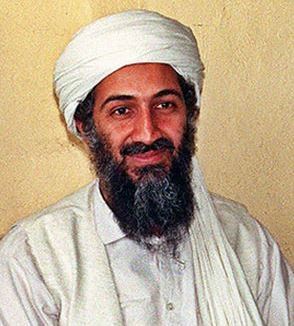
Osama bin Laden (1957-2011) -
His father was a billionaire businessman in Saudi Arabia and bin Laden came from a large extended family. He attended university to study civil engineering, where he also devoted much of his time to religious studies. Bin Laden left college in 1979 to fight in the war in Afghanistan.
When bin Laden returned to Saudi Arabia in 1990, the country was divided between ideas of modernising and accepting US ideas and values, and those who rejected these ideas and held to strict Muslim practices. The division intensified when Iraq invaded Kuwait and threatened Saudi Arabia. The king of Saudi Arabia, King Fahd, accepted the assistance of the US in terms of foreign troops. Bin Laden publicly criticised the king and was forced into exile in Sudan and was stripped of his citizenship in 1994.
Seite 4
Al-Qaeda in Action
Although labelled as a terrorist group, Al-Qaeda had essentially three components:
Hard-core militant organisation
A network sharing its views with other groups, and providing finance, training and support for them to carry out their own attacks
An idea for modern militant Islam, providing information and propaganda about the aims of militant Islam across the world
In 1998, bin Laden announced the formation of the World Islamic Front. He made clear statements warning of attacks on the US and the methods that might be utilised.
7 August 1998 - US embassies in Nairobi (Kenya) and Dar es Salaam (Tanzania) were hit by truck bombs
The Nairobi attack killed 213 and wounded around 4,600
In Dar es Salaam, 11 people died and 85 were wounded
October 2000 - suicide bombers drove a boat packed with explosives into the side of the US warship USS Cole, killing 17
Seite 5
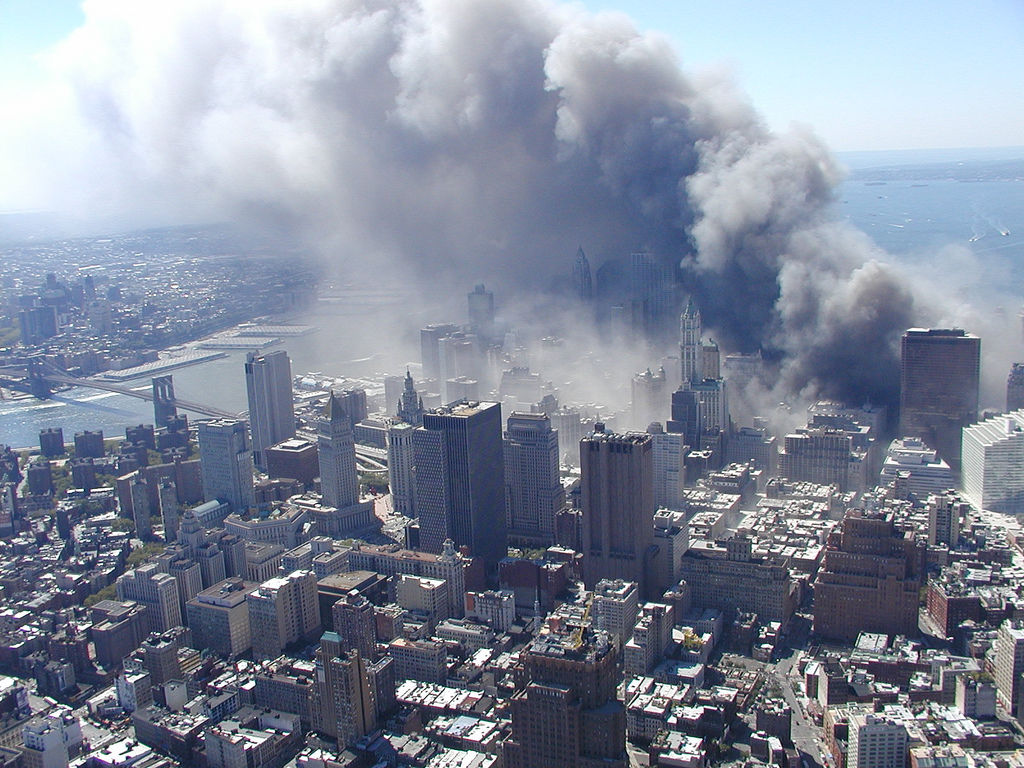
9/11
The most significant attack carried out be the Al-Qaeda occurred on September 11, 2001. Two planes hit the World Trade Center, another targeted the Pentagon and a fourth was forced to crash land. These attacks resulted in the deaths of around 3,000 people. Islamic militants celebrated this attack as a great victory, while many Americans were shocked.
Bin Laden issued a video of praise to the attackers, which was broadcast on Arabic TV station al-Jazeera.
Seite 6
US Response to 9/11- The War on Terror
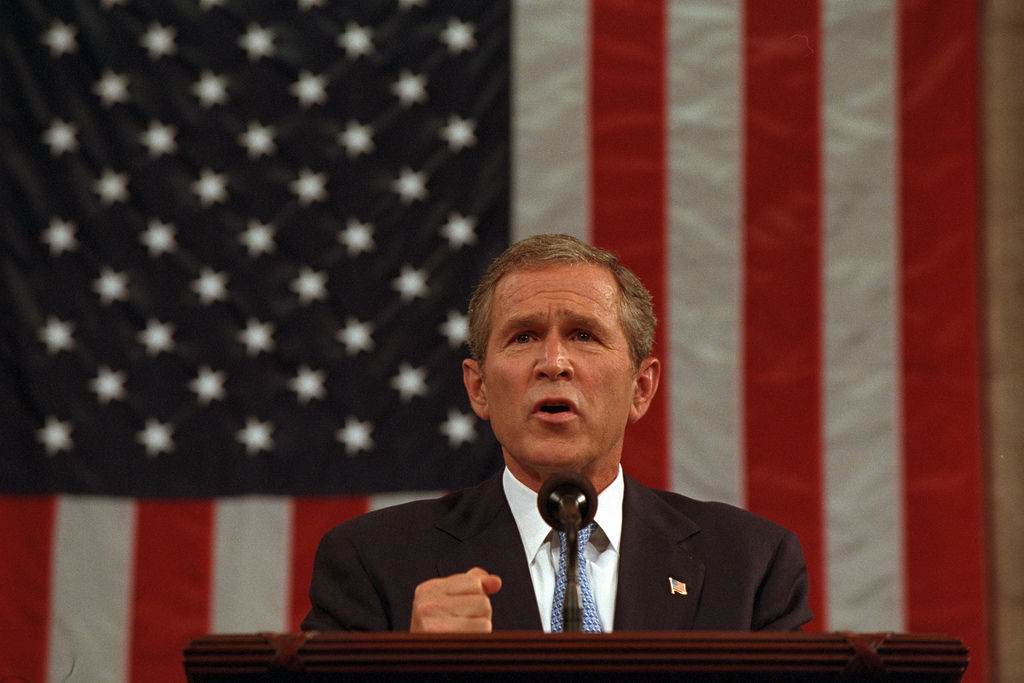
20 September 2001 - US president, George W. Bush, demanded Taliban leader Mullah Omar to turn Osama bin Laden over to US authorities
The Taliban refused these demands
US built a coalition of allies, with British prime minister, Tony Blair, playing a key role in the process
US forces joined with Afghan opponents of the Taliban in a massive assault of the country in October 2001
Began with an aerial bombardment campaign, with the land campaign commencing in November 2001
Middle of November, the Afghan capital, Kabul, had fallen
Eventually, the Taliban stronghold Kandahar fell in December and Omar fled to Pakistan
Many Taliban and Al-Qaeda forces fell back to their mountain strongholds
Al-Qaeda was defeated militarily and the US and its allies concentrated on new measures to fight Al-Qaeda in the future
Osama bin Laden was discovered in 2011 and killed by US forces
Informationen
- Beschreibung
- Der Nutzer hat seine Fachbereichs-Information gelöscht. Notiz am New Developments Post Cold-War 1991-2001, erstellt von Gelöschter Nutzer am 01/09/2017.
- Erstellt von
- Gelöschter Nutzer
- Aufrufe
- 29
- Verlauf
-
- Erstellt von Andrew Burke · 3 Jul 2017
- Kopiert von Andrew Burke · 1 Sep 2017
- Bewertung