
Notizen
Monoclonal Antibodies - Uses and Immunity
Inhalt der Notizen (6)
Seite 1
How are monoclonal antibodies produced?
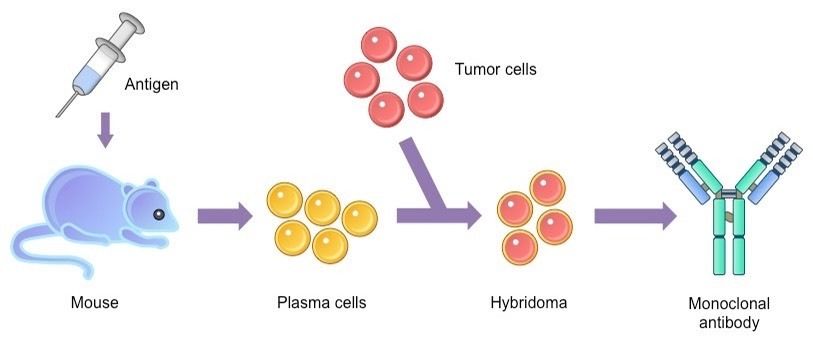
* Antibodies are produced by B-lymphocytes (a type of white blood cell).
* Monoclonal antibodies are produced from clones of a single white blood cell
(This means all of the antibodies are identical and will only target one specific
protein antigen)
* However, lymphocytes don’t divide very easily so it is difficult to grow more of
them.
* Tumour cells, on the other hand, don’t make antibodies but divide lots – so can
be grown easily.
* It is therefore possible to fuse a mouse B-lymphocyte with a tumour cell to
create a cell called a hybridoma. The hybridoma cell can divide and make the
antibody.
* Hybridoma cells can be cloned to get lots of identical cells. These cloned cells all
produce the same antibodies (monoclonal antibodies).
* A large amount of the antibody can be collected and purified.
* The antibodies are specific to one binding site on one protein antigen and so are
able to target a specific chemical or specific cells in the body. You can make
monoclonal antibodies that bind to anything you want e.g. an antigen that’s
only found on the surface of one type of cell
Seite 2
How can monoclonal antibodies be used?
* For diagnosis such as in pregnancy tests
* in laboratories to measure the levels of hormones and other chemicals in blood,
or to detect pathogens
* in research to locate or identify specific molecules in a cell or tissue by binding
to them with a fluorescent dye
* to treat some diseases: for cancer the monoclonal antibody can be bound to a
radioactive substance, a toxic drug or a chemical which stops cells growing and
dividing. It delivers the substance to the cancer cells without harming other cells
in the body.
Seite 3
How are monoclonal antibodies used in pregnancy tests?
* A hormone called HCG is found in the urine of pregnant women
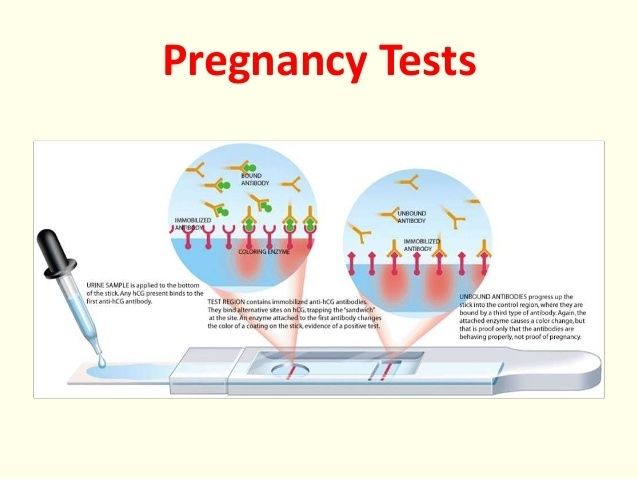
* Pregnancy testing sticks detect this hormone. This is how they work:
* The bit of the stick you wee on has some antibodies to the HCG hormone with
blue beads attached.
* The test strip (which turns blue if you are pregnant) has some more antibodies
to the hormone stuck on to it, so they can’t move.
* The HCG hormone binds to the antibodies on the bit of the stick where you wee
and the antibodies on the test strip.
If you’re pregnant and you wee on the stick:
* The HCG hormone binds to the antibodies attached to the blue beads.
* The urine moves up the stick carrying the HCG hormone and the blue beads
with it.
* The blue beads and HCG hormone bind to the antibodies on the test strip –
so the antibodies get stuck on the test strip turning it blue – showing you
are pregnant.
If you’re not pregnant and you wee on the stick:
* The urine still moves up the stick carrying the blue beads. * But because there is no HCG hormone to bind to the antibodies on the test strip it doesn’t go blue.
Seite 4
How are monoclonal antibodies used to treat diseases?
* Different cells in the body have different antigens on their surface – so you can
make monoclonal antibodies that will bind to specific cells in the body.
* Cancer cells have antigens on their cell membrane that are not found on normal
body cells – they’re called tumour markers.
* In labs you can make monoclonal antibodies that will bind to these tumour
markers.
* An anti-cancer drug can be attached to these monoclonal antibodies. This might
be a radioactive substance, a toxic drug or a chemical which stops cancer cells
growing and dividing.
* The antibodies are given to a patient through a drip.
* The antibodies target specific cells (the cancer cells) because they only bind to
the tumour markers.
* The drug kills the cancer cells but doesn’t kill any normal body cells near the
tumour
Seite 5
Cancer
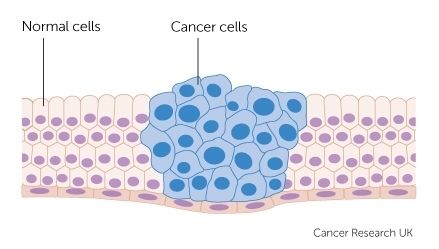
* Cancer is the result of changes in cells that leads to uncontrolled growth and
division.
* Benign tumours are growths of abnormal cells which are contained in one area,
usually within a membrane. They do not invade other parts of the body.
* Malignant tumour cells are cancers. They invade neighbouring tissues and spread
to different parts of the body in the blood where they form secondary tumours.
* Scientists have identified lifestyle risk factors for various types of cancer e.g.
smoking and lung cancer, obesity and cancers of the bowel, liver and kidney. U.V.
radiation from the sun can also cause skin cancer.
* Viral infections can also be a risk factors for certain cancers e.g. HPV and cervical
cancer.
* There are also genetic risk factors for some cancers e.g. having certain faulty
genes has shown an increased likelihood of developing breast and ovarian
cancer.
Seite 6
Natural Immunity
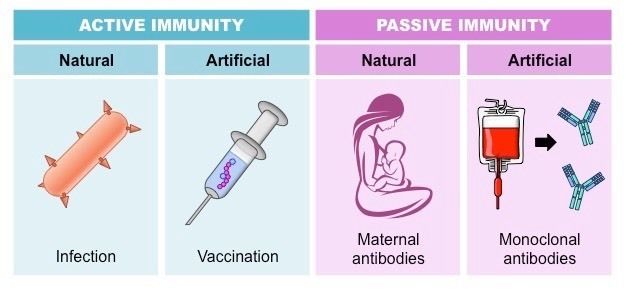
* If your white blood cells have made a particular antibody in the past they can
remember how to make that particular antibody.
* If you have an illness caused by a particular pathogen your white blood cells
produce the correct antibody and destroy the pathogen.
* If you are infected by exactly the same identical pathogen your white blood cells
will remember how to make the correct antibody, produce it quickly and
destroy the pathogen before it can make you ill.
* If the pathogen is different it will have different antigens on its surface and your
white blood cells will need to make a different antibody to destroy it. – You can
become ill while you are waiting for your white blood cells to make the correct
antibody
Informationen
- Beschreibung
- Der Nutzer hat seine Fachbereichs-Information gelöscht. Notiz am Monoclonal Antibodies - Uses and Immunity, erstellt von Gelöschter Nutzer am 22/01/2019.
- Erstellt von
- Gelöschter Nutzer
- Aufrufe
- 16
- Tags
- Verlauf
-
- Erstellt von bill fingleton · 22 Jan 2019
- Kopiert von bill fingleton · 22 Jan 2019
- Bewertung