
Notizen
Adverbs
Inhalt der Notizen (1)
Seite 1
ADVERBS:
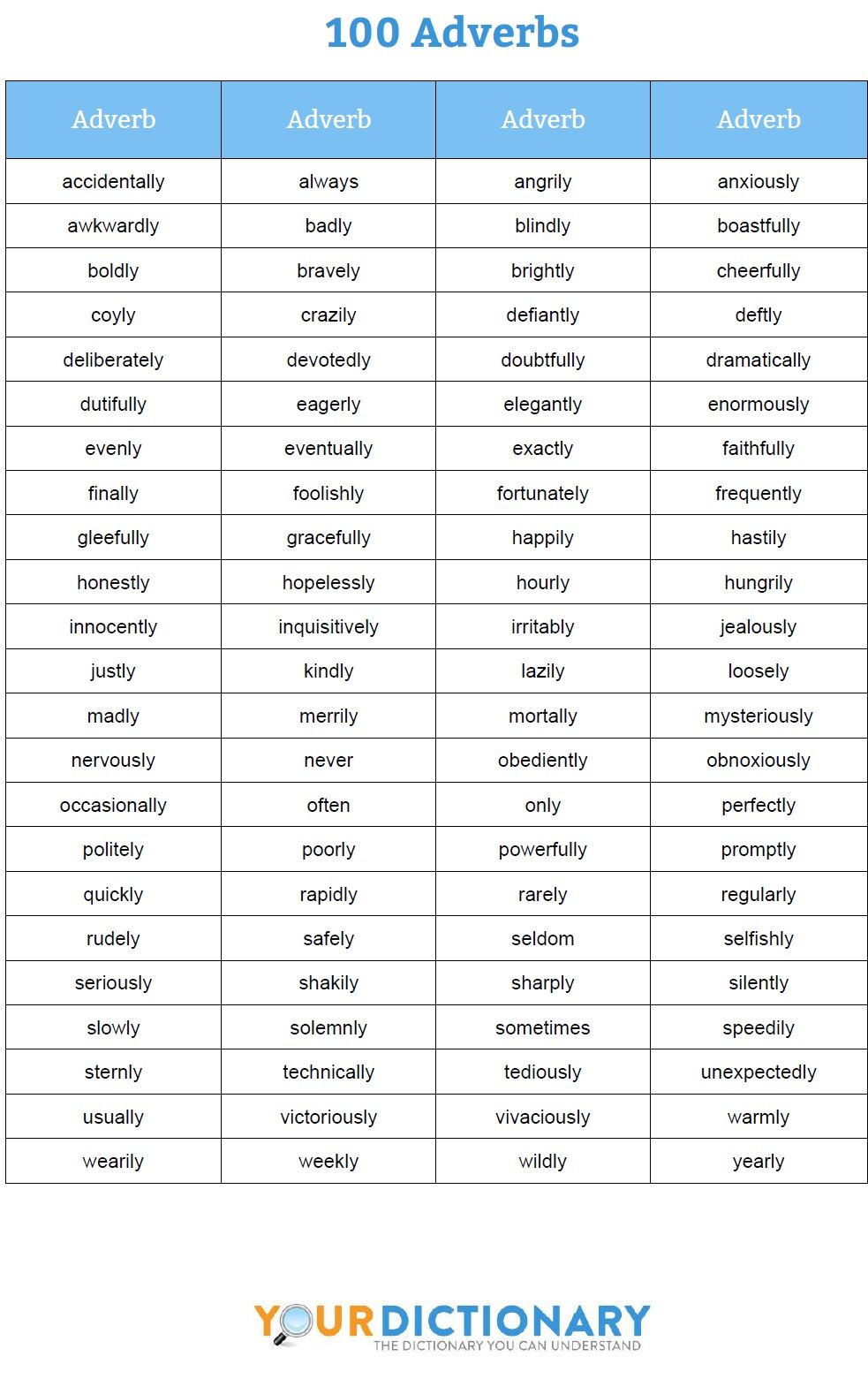
An adverb adds to a verb. In other words, an adverb describes, modifies or provides more information about a verb in a sentence. So, if you said "I am going to quickly run to the store," the adverb in that sentence (quickly) would be modifying the verb run.Adverbs can be confused with adjectives, which also modify things. However, adjectives modify nouns and pronouns. If you said "I have a nice dog," dog is the noun which is being modified by the adjective nice. On the other hand, if you said that "My dog quickly ate his dinner," the adverb "quickly" would modify the verb "ate."
In addition to verbs, adverbs also modify adjectives and other adverbs. So, when you say "I have the most beautiful dog," the dog is the noun, beautiful is the adjective describing the noun, and most is the adverb describing beautiful.
In case you haven’t figured it out by now, there is a trend when it comes to identifying adverbs. Many, but not all adverbs, end in the letters “ly.” Luckily, this little trick makes it relatively easy to identify adverbs in sentences. However, this is not always the case, as some frequency adverbs, such as always, often, sometimes, seldom, and never, do not follow this rule. Still, it can be a good tip to help you along the way.
Read more at http://grammar.yourdictionary.com/parts-of-speech/adverbs/list-of-100-adverbs.html#d4dfjfoPxUpvLRQw....
We use ever in interrogative sentences:
a. Have you ever been to the United States?
b. Have you ever traveled by train?
c. Have you ever failed a class?
We use never in affirmative sentences: but the meaning is negative.
a. I have never cheated in an exam.
b. My son has never been to Moscow.
c. My brother have never gone to London.
We use just to express a recently completed action.
a. The cat has just caught a bird.
b. The guests have just arrived.
c. I have just finished my homework.
We use already to express that something has happened sooner than expected.
a. Don't forget to bring your book! Oh, I have already brought it.
b. The boys are going to pack, aren't they? No. They have already packed.
c. Is Adam going to buy a new car? No, he isn't. He has already bought it.
We use yet in interrogative and negative sentences and it suggests a time later than expected.
a. Have you done your homework? No, I haven't done it yet
b. Has your father seen your report? No, he hasn't seen it yet
c. Have the visitors arrived? No, they haven't arrived yet.
Informationen
- Beschreibung
- Notiz am Adverbs, erstellt von dianagondim am 19/10/2015.
- Erstellt von
- dianagondim
- Aufrufe
- 147
- Tags
- Bewertung