
Quiz
Breasts :)
Dieses Quiz enthält Fragetypen, die sich im gewohnten Player öffnen.
Fragen in diesem Quiz (18)
1Breast development begins duing the fetal stage
- ARichtig
- BFalsch
2At the ducts ends of the nipples, there are lactiferous sinuses to store the milk.
- ARichtig
- BFalsch
3Initially, both men and women have the [blank_start]same[blank_end] inactive breasts. It is not until [blank_start]puberty[blank_end] that breasts begin to differentiate. The hormones [blank_start]estrogen[blank_end] (encourages cell growth) and [blank_start]progesterone[blank_end] (muscle relaxant) cause breast maturation. Women begin to develop [blank_start]glandular[blank_end] [blank_start]tissue[blank_end], which contains [blank_start]glands[blank_end]--which contain the cells needed to produce [blank_start]milk[blank_end].
- Asame
- Bpuberty
- Cestrogen
- Dprogesterone
- Eglandular
- Ftissue
- Gglands
- Hmilk
4Progesterone is a muscle relaxant and specifically allows breast development by
- Acausing lactiferous duct proliferation
- Bpromotes alveolar buds formation
- Cstimulates milk release
- Dleads to formation of the aerola
5At the end of every menstrual cycle, the alveolar buds retreat and "close up" again.
- ARichtig
- BFalsch
6Due to the hormonal peaks of (alphabetical order) [blank_start]estrogen[blank_end] and [blank_start]progesterone[blank_end], breast [blank_start]tenderness[blank_end] can coincide with [blank_start]ovulation[blank_end]. This is because the hormones are causing the [blank_start]lactiferous[blank_end] [blank_start]ducts[blank_end] within the breast to grow more as well as the [blank_start]alveolar[blank_end] [blank_start]buds[blank_end] to open up in anticipation of producing milk.
- Aestrogen
- Bprogesterone
- Ctenderness
- Dovulation
- Elactiferous
- Fducts
- Galveolar
- Hbuds
7What is true regarding Sir Atley Cooper's model of breast?
- Alactiferous ducts are quite elastic structures
- Ba constant supply of milk is available for the baby
- Cmilk can be stored in the breast
- Dmilk can be produced in lobules and the ducts
- Ebaby suckling leads to milk production
- Fbaby crying can lead to immediate progesterone stimulation and milk production
8The [blank_start]Tanner[blank_end] stages are a way to measure proper breast development.
- ATanner
9Fill in the important things to remember regarding the tanner stages (all lower case)
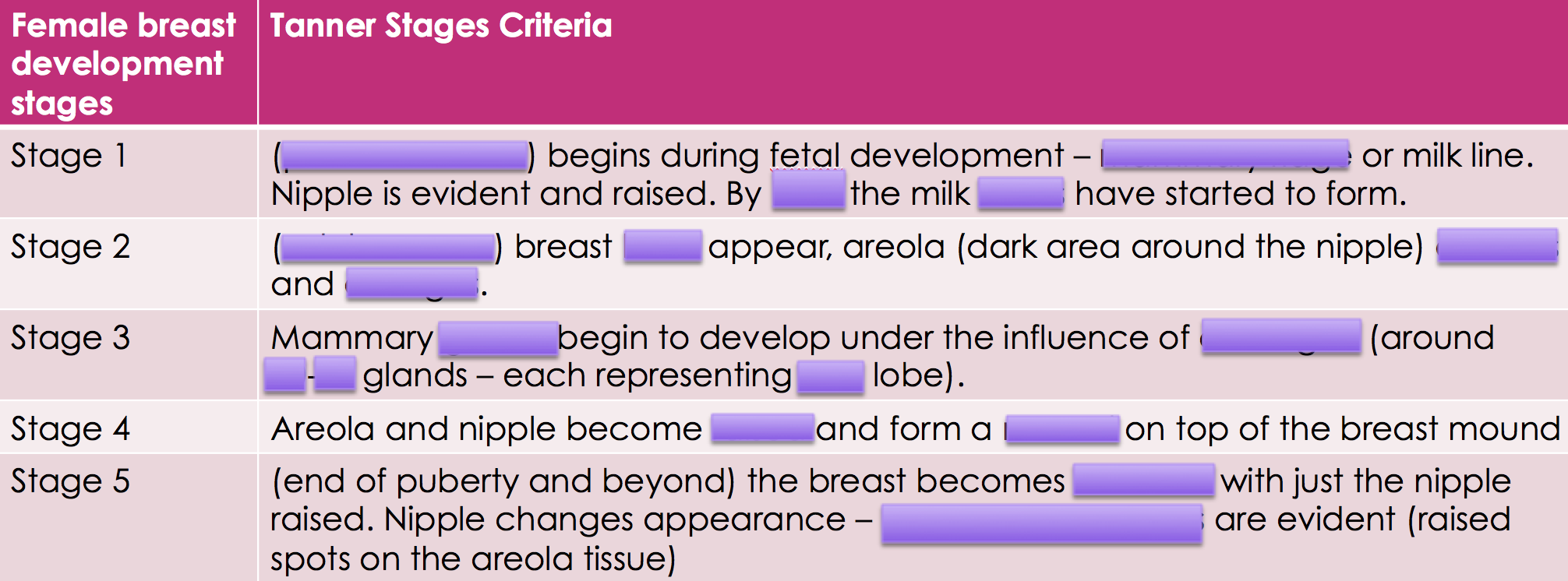
- Apre-adolescence
- Bmammary
- Cridge
- Dbirth
- Educts
- Fbuds
- Gadolescence
- Hdarkens
- Ienlarges
- Jglands
- Kestrogen
- L10
- M20
- N1
- Oraised
- Pmound
- Qrounded
- Rmontgomery's ducts
10Which of these are pregnancy changes in breasts?
- A10-20 lobes
- B8-14 lobes
- Clobes shrink
- Dlobens further develop
- Eeach lobe drains into multiple mammary ducts
- Fsecretory alveoli buds develop more so
- Glactiferous ducts develop more so
- Hinvolved hormones: prolactin and growth factors
- Iinvolved hormones: estrogen and progesterone
- Jinvolved hormones: human placental lactogen (HPL)
11At roughly week [blank_start]16[blank_end] during pregnancy, the breast will start producing [blank_start]colostrum[blank_end], which is essentially a milk precursor. This [blank_start]sticky[blank_end] substance will continue to be produced until the first incident of infant [blank_start]suckling[blank_end], which will then enable milk production ([blank_start]lactation[blank_end]) to take place.
- A16
- Bcolostrum
- Csuckling
- Dlactation
- Esticky
12Once parturition happens, two hormones play pivotal roles. Within the breast, [blank_start]prolactin[blank_end] causes milk to be produced and then released into the [blank_start]ducts[blank_end]. Then, upon the infant [blank_start]suckling[blank_end], [blank_start]oxytocin[blank_end] causes the external release and also the final step of lactation--[blank_start]milk[blank_end] [blank_start]ejection[blank_end].
- Aprolactin
- Bducts
- Csuckling
- Doxytocin
- Eejection
- Fmilk
13Label the stages--> pay attention to how the breast looks not just within but also externally (the answers can be more than 1 word)
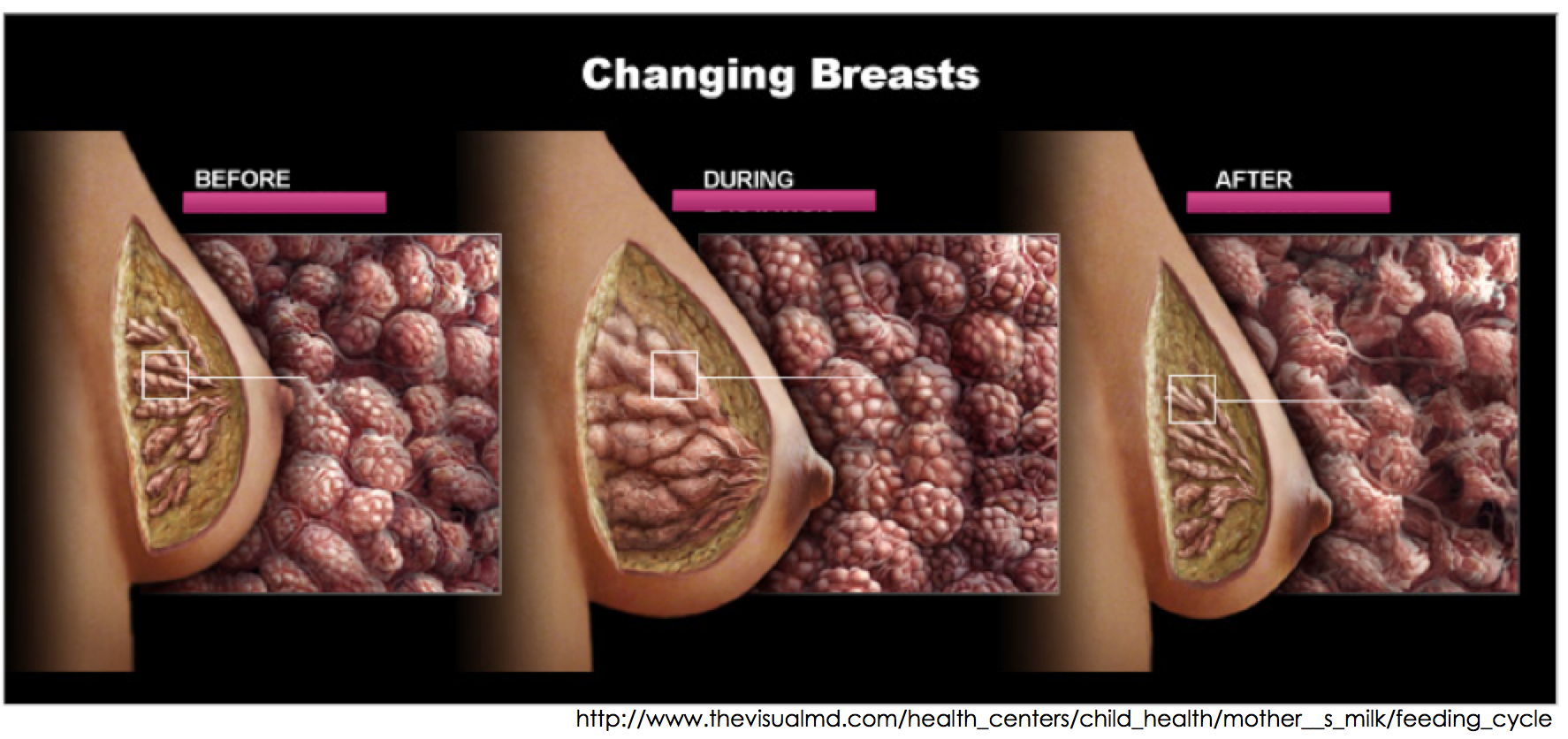
- Apregnancy
- Bpregnancy
- Cbreast feeding
14Which of these contribute to neo natal immunity?
- AIgG
- BIgE
- CIgA
- DIgD
- EIgM
15IgA specifically provides protection within...
- Athe new born's gut
- Bthe new born's blood
- Cthe new born's bone marrow
- Dthe new born's brain
16Within the alveolar buds:
[blank_start]Lactocytes[blank_end] actually make the milk.
These are surrounded by [blank_start]myoepithelial[blank_end] cells, which contract and squeeze the milk into the ducts.
These contractile cells contract when they receive the hormonal [blank_start]let[blank_end]-[blank_start]down[blank_end] reflex.- ALactocytes
- Bmyoepithelial
- Clet
- Ddown
17Hormonal basis for Lactational amenorrhea (all lower case, no prepositions)
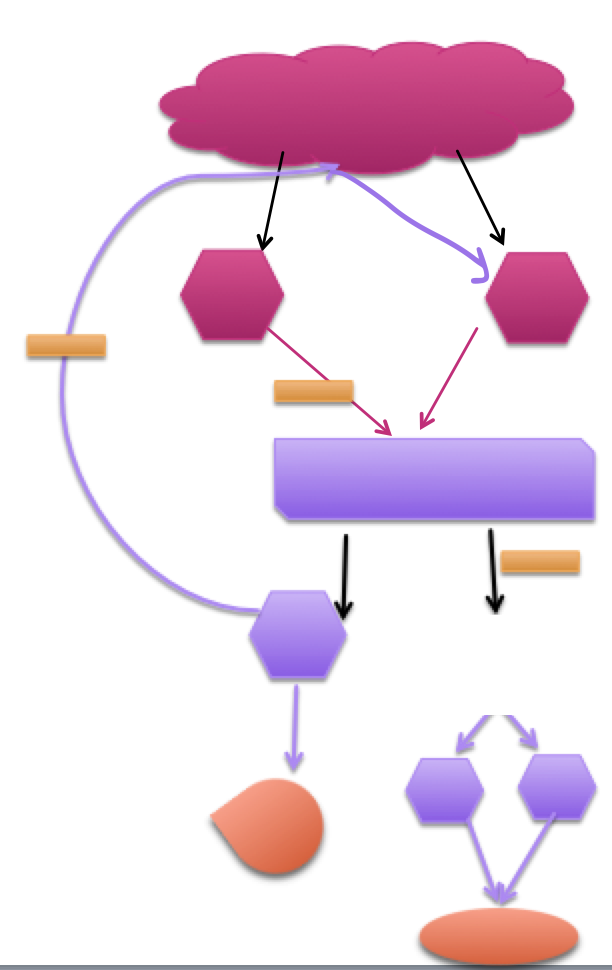
- Afollicle stimulating hormone
- Bleutinizing hormone
- Covary
- Dbreast
- Eprolactin
- Fpositive
- Ganterior pituitary
- Hnegative
- Igonadotropin releasing hormone
- Jinhibited
- Kdopamine
- Lhypothalamus
18Suckling causes [blank_start]turgor[blank_end] pressure, which leads to [blank_start]prolactin[blank_end] being promoted and milk being produced.
- Aturgor
- Bprolactin
Informationen
- Beschreibung
- REALLLLLY GOOD VIDEOs (basically the osmosis playlist on these topics) https://youtu.be/hHY80BIjPdg https://youtu.be/hHY80BIjPdg
- Autor
- Plymouth Med
- Sprache
- English
- Aufrufe
- 61
- Verlauf
- Erstellt am 27 Jan 2018 · aktualisiert am 29 Jan 2018
- Schlagwörter
- Bewertung
- Noch keine Bewertungen Bewerte dieses Quiz