
Quiz
BIOL 108: Human Body Unit 3 Exam--Practice Quiz
Dieses Quiz enthält Fragetypen, die sich im gewohnten Player öffnen.
Fragen in diesem Quiz (96)
1Label the different parts of the pulmonary circuit.
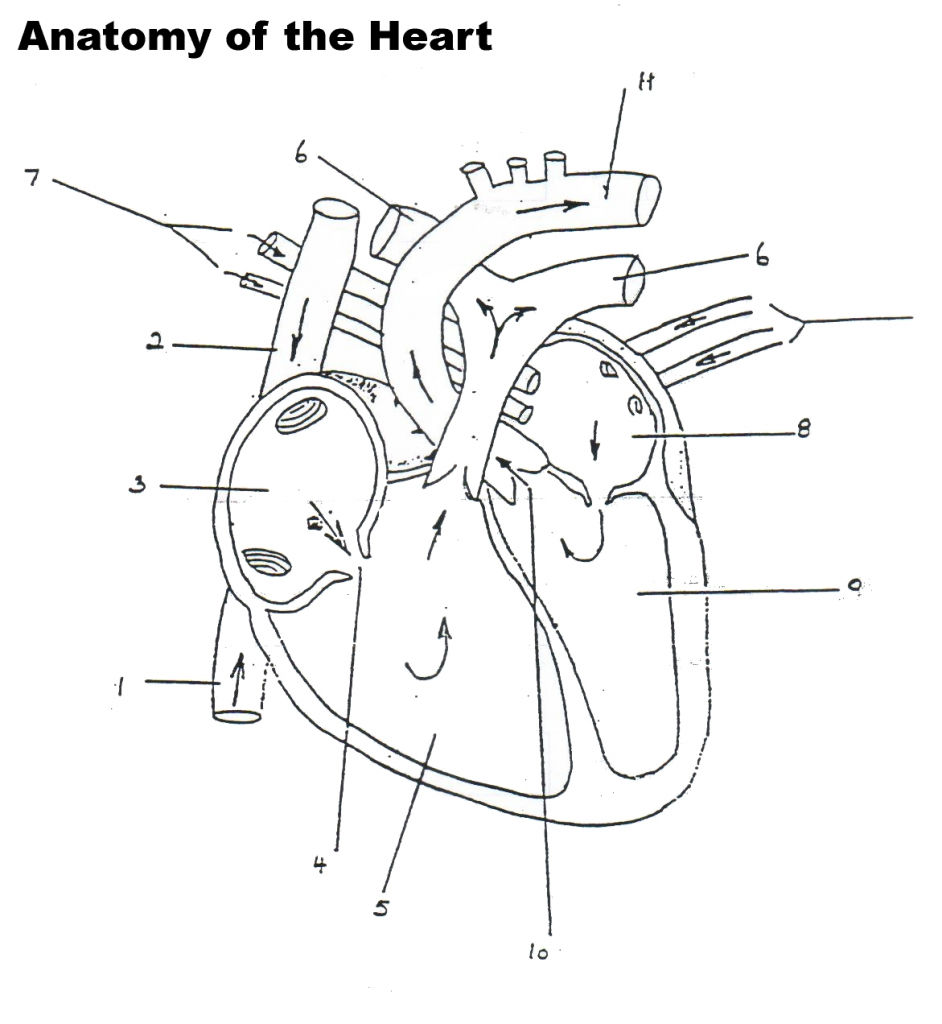
- A1. Superior Vena Cava
- B1. Inferior Vena Cava
- C2. Superior Vena Cava
- D2. Inferior Vena Cava
- E3. Right Atrium
- F3. Right Ventricle
- G3. Left Atrium
- H3. Left Ventricle
- I4. Aortic Semilunar Valve
- J4. Pulmonary Semilunar Valve
- K4. Tricuspid Valve
- L4. Bicuspid (Mitral) Valve
- M5. Right Atrium
- N5. Right Ventricle
- O5. Left Atrium
- P5. Left Ventricle
- Q7. Aorta
- R7. Pulmonary Artery
- S7. Left Pulmonary Veins
- T7. Right Pulmonary Veins
- U8. Right Atrium
- V8. Right Ventricle
- W8. Left Atrium
- X8. Left Ventricle
- Y6. Aorta
- Z6. Pulmonary Artery
- AA6. Left Pulmonary Vein
- AB6. Right Pulmonary Vein
- AC9. Right Atrium
- AD9. Right Ventricle
- AE9. Left Atrium
- AF9. Left Ventricle
- AG10. Aortic Semilunar Valve
- AH10. Pulmonary Semilunar Valve
- AI10. Tricuspid Valve
- AJ10. Bicuspid Valve
- AK11. Aorta
- AL11. Pulmonary Artery
- AM11. Left Pulmonary Veins
- AN11. Right Pulmonary Veins
- AO12. Superior Vena Cava
- AP12. Inferior Vena Cava
- AQ13. Aortic Semilunar Valve
- AR13. Pulmonary Semilunar Valve
- AS13. Tricuspid Valve
- AT13. Bicuspid (Mitral) Valve
- AU14. Aortic Semilunar Valve
- AV14. Pulmonary Semilunar Valve
- AW14. Tricuspid Valve
- AX14. Bicuspid (Mitral) Valve
- AY15. Aortic Semilunar Valve
- AZ15. Pulmonary Semilunar Valve
- BA15. Tricuspid Valve
- BB15. Bicuspid (Mitral) Valve
- BC16. Aorta
- BD16. Pulmonary Artery
- BE16. Right Pulmonary Veins
- BF16. Left Pulmonary Veins
- BG17. Deoxygenated blood
- BH17. Oxygenated Blood
- BI18. Deoxygenated Blood
- BJ18. Oxygenated Blood
2A low hematocrit suggests that you have a high oxygen-carrying capacity.
- ARichtig
- BFalsch
3A high white blood cell count suggests that you are either sick or having an allergic reaction.
- ARichtig
- BFalsch
4A differential white blood cell count is more useful than a total white blood cell count because it suggests what your body is fighting (such as a virus, bacterium, allergic reaction, etc.).
- ARichtig
- BFalsch
5Select the phrase from the drop-down box with the most appropriate definition.
1. [blank_start]______[blank_end] Removes microorganisms and old red blood cells from the blood
2. [blank_start]______[blank_end] Removes microorganisms and cellular debris from your lymph
3. [blank_start]______[blank_end] An organ where T cells mature and undergo a selection process to kill cells that are ineffective or would attack your own body's cells
4. [blank_start]______[blank_end] Location where white blood cells are produced- A1. Lymph node
- B1. Spleen
- C1. Thymus
- D1. Tonsil
- E1. Red bone marrow
- F2. Lymph node
- G2. Spleen
- H2. Thymus
- I2. Tonsil
- J2. Red bone marrow
- K3. Lymph node
- L3. Spleen
- M3. Thymus
- N3. Tonsil
- O3. Red bone marrow
- P4. Lymph node
- Q4. Spleen
- R4. Thymus
- S4. Tonsil
- T4. Red bone marrow
6This is the first step of a muscle contraction.
- AT-tubules transmit electrical impulses throughout a muscle cell.
- BMyosin binds to actin and pulls it towards the center of the sarcomere.
- CAcetylcholine binds to receptors on the muscle.
- DTroponin-tropomyosin complex shifts to expose myosin binding sites.
- ECalcium is released from the sarcoplasmic reticulum.
7This is the second step of a muscle contraction.
- AT-tubules transmit electrical impulses throughout the muscle cell.
- BMyosin binds to actin and pulls it towards the center of the sarcomere.
- CAcetylcholine binds to receptors on the muscle.
- DTroponin-tropomyosin complex shifts to expose myosin binding sites.
- ECalcium is released from the sarcoplasmic reticulum.
8This is the third step of a muscle contraction.
- AT-tubules transmit electrical impulses throughout the muscle cell.
- BMyosin binds to actin and pulls it towards the center of the sarcomere.
- CAcetylcholine binds to receptors on the muscle.
- DTroponin-tropomyosin complex shifts to expose myosin binding sites.
- ECalcium is released from the sarcoplasmic reticulum.
9This is the fourth step of a muscle contraction.
- AT- tubules transmit electrical impulses throughout muscle cell.
- BMyosin binds to actin and pulls it towards the center of the sarcomere.
- CAcetylcholine binds to receptors on the muscle.
- DTroponin-tropomyosin complex shifts to expose myosin binding sites.
- ECalcium is released from the sarcoplasmic reticulum.
10This is the fifth step of a muscle contraction.
- AT- tubules transmit electrical impulses throughout muscle cell.
- BMyosin binds to actin and pulls it towards the center of the sarcomere.
- CAcetylcholine binds to receptors on the muscle.
- DTroponin-tropomyosin complex shifts to expose myosin binding sites.
- ECalcium is released from the sarcoplasmic reticulum.
1111. If I have a blood type of A+...
--------------------------------------------------------------------------------
11.1: What antigens do I have? [blank_start]_________[blank_end]
11.2: Specifically, where are those antigens located? [blank_start]______[blank_end]
11.3: What antibodies do I have? [blank_start]______[blank_end]
11.4: Specifically, where are those antibodies located? [blank_start]______[blank_end]
11.5: Which ABO blood type(s) can I safely give blood to? [blank_start]______[blank_end]- A11.1 A and Rh
- B11.1 B and Rh
- C11.1 O and Rh
- D11.2 On red blood cells
- E11.2 In the blood plasma
- F11.3 Anti-A antibodies only
- G11.3 Anti-B antibodies only
- H11.3 Anti-A and Anti-B antibodies
- I11.3 Neither anti-A or anti-B antibodies
- J11.4 On red blood cells
- K11.4 In the blood plasma
- L11.5: Type A only
- M11.5 Type A or Type AB
- N11.5 Type B only
- O11.5 Type B or Type AB
- P11.5 Type O
12Blood is made of 4 main components. What are they?
NOTE: Your answers are not case-sensitive.
1. [blank_start]__________[blank_end]
2. [blank_start]__________[blank_end]
3. [blank_start]__________[blank_end]
4. [blank_start]__________[blank_end]- APlasma
- BRed blood cells
- CWhite blood cells
- DPlatelets
13The scientific term for a white blood cell is an erythrocyte.
- ARichtig
- BFalsch
14Platelets help with blood clotting.
- ARichtig
- BFalsch
15Please select the cellular components of blood from the list below.
- APlasma
- BErythrocytes (red blood cells)
- CLeukocytes (white blood cells)
- DPlatelets
16Plasma carries most of the oxygen in the body.
- ARichtig
- BFalsch
17Which of the following causes a high hematocrit?
- AExercise in a low-oxygen environment
- BMenstruation
- CDietary iron deficiency
18 Hematocrit is determined by the percentage of blood that is made of platelets.
- ARichtig
- BFalsch
19Please select the following that are TRUE about white blood cells (WBC):
- ATheir main function is to support the immune system and defend against all things foreign
- BA high WBC count is a sign that your body is healthy
- CWBC count can be differentiated to help you know what is in your body (virus, bacterium, allergen, etc.)
- DWBCs can leave the blood vessels to go to tissues to the site of an infection or injury
- EWBCs are also known as leukocytes
20What causes agglutination to occur?
- AAntigens attack red blood cells with foreign antibodies, which causes the antigens and antibodies to clump together (agglutinate)
- BAntigens attack white blood cells with foreign antibodies, which causes the antigens and antibodies to clump together (agglutinate)
- CAntibodies attack red blood cells with foreign antigens, which causes the antibodies and antigens to clump together (agglutinate)
- DAntibodies attack white blood cells with foreign antigens, which causes the antibodies and antigens to clump together (agglutinate)
21What are the three steps of blood clotting?
Step 1: [blank_start]__________[blank_end]
Step 2: [blank_start]__________[blank_end]
Step 3: [blank_start]__________[blank_end]- A1. Platelets form a plug
- B1. Vascular spasm
- C1. Clot forms a solid plug
- D2. Platelets form a plug
- E2. Vascular spasm
- F2. Clot forms a solid plug
- G3. Platelets form a plug
- H3. Vascular spasm
- I3. Clot forms a solid plug
22Type O blood is the universal recipient blood type (ie, it can receive blood from any ABO type).
- ARichtig
- BFalsch
23Select the most appropriate vocabulary term from the drop-down list for each question.
1. [blank_start]______[blank_end] These vessels have the lowest blood pressure of any vessel on this list
2. [blank_start]______[blank_end] This is the smallest blood vessel on this list
3. [blank_start]______[blank_end] These blood vessels transport blood from the heart to the tissues of the body
4. [blank_start]______[blank_end] These vessels remove fluid from the spaces between the cells in your body's tissues- A1. Artery
- B1. Blood capillary
- C1. Lymphatic capillary
- D1. Vein
- E2. Artery
- F2. Blood capillary
- G2. Lymphatic capillary
- H2. Vein
- I3. Artery
- J3. Blood capillary
- K3. Lymphatic capillary
- L3. Vein
- M4. Artery
- N4. Blood capillary
- O4. Lymphatic capillary
- P4. Vein
24Select the appropriate term from the drop-down list for each cellular immunology attribute.
1. [blank_start]__________[blank_end] Kill infected body cells
2. [blank_start]__________[blank_end] Target specific antigens and can produce memory cells
3. [blank_start]__________[blank_end] Can kill a bacterium or virus that has not yet entered one of your cells
4. [blank_start]__________[blank_end] A non-specifc defence- A1. B cell
- B1. T cell
- C1. Natural killer cell
- D1. Phagocytic cell
- E1. B cell and T cell
- F1. T cell and natural killer cell
- G1. Natural killer cell & phagocytic cell
- H2. B cell
- I2. T cell
- J2. Natural killer cell
- K2. Phagocytic cell
- L2. B cell and T cell
- M2. T cell and natural killer cell
- N2. Natural killer cell & phagocytic cell
- O3. B cell
- P3. T cell
- Q3. Natural killer cell
- R3. Phagocytic cell
- S3. B cell and T cell
- T3. T cell and natural killer cell
- U3. Natural killer cell & phagocytic cell
- V4. B cell
- W4. T cell
- X4. Natural killer cell
- Y4. Phagocytic cell
- Z4. B cell and T cell
- AA4. T cell and natural killer cell
- AB4. Natural killer cell & phagocytic cell
25Select the appropriate type of muscle from the drop-down list with its appropriate definition.
1. [blank_start]______[blank_end] Moves a bone of insertion towards a bone of origin
2. [blank_start]______[blank_end] Lines the walls of blood vessels
3. [blank_start]______[blank_end] Generates pressure that moves blood around the body- A1. Cardiac muscle
- B1. Skeletal muscle
- C1. Smooth muscle
- D2. Cardiac muscle
- E2. Skeletal muscle
- F2. Smooth muscle
- G3. Cardiac muscle
- H3. Skeletal muscle
- I3. Smooth muscle
26This is the only muscle type that is under voluntary control:
- ACardiac muscle
- BSkeletal muscle
- CSmooth muscle
2724. When you stand up suddenly after lying down for awhile, the pressure in your carotid artery (the major blood vessel that delivers ~80% of the blood to your brain) immediately decreases as gravity increases the flow of blood down and away from your brain and impairs the flow upwards toward your brain. How should the carotid artery respond… should it:
- AContract (vasoconstriction)
- BRelax (vasodilation)
- CNot change
28If you become dehydrated, and your body senses system-wide low blood pressure, how should your major arteries respond to restore a higher, normal pressure?
- AContract (vasoconstriction)
- BRelax (vasodilation)
- CNot change
29If a capillary bed in your spleen senses elevated blood pressure, how should your local arterioles respond to restore a lower, normal, safe pressures?
- AContract (vasoconstriction)
- BRelax (vasodilation)
- CNot change
30The major function of the 1st line of defense against pathogens is:
- ASpecific defenses fight one particular antigen
- BNon-specific defenses fight off anything foreign that enters the body
- CKeep pathogens out of the body
31Examples of the 1st line of defense against pathogens:
- AFever, inflammation, Natural Killer cells, phagocytes
- BT cells, B cells, antibodies
- CSkin, acidic secretions, mucous membranes
32The general function of the 2nd line of defense against pathogens is:
- ASpecific defenses fight one particular antigen
- BKeep pathogens out of the body
- CNon-specific defenses fight off anything foreign that enters the body
33Examples of the 2nd line of defense against pathogens include:
- AT cells, B cells, antibodies
- BFever, inflammation, Natural Killer cells, phagocytes
- CSkin, acidic secretions, mucous membranes
34The general function of the 3rd line of defense against pathogens is:
- ASpecific defenses fight one particular antigen
- BKeep pathogens out of the body
- CNon-specific defenses fight off anything foreign that enters the body
35Examples of the 3rd line of defense against pathogens:
- ASkin, acidic secretions, mucous membranes
- BT cells, B cells, antibodies
- CFever, inflammation, Natural Killer cells, phagocytes
36Arteries move blood away from the heart.
- ARichtig
- BFalsch
37Veins move blood toward the heart.
- ARichtig
- BFalsch
38Capillaries are the thickest and largest of the blood vessels.
- ARichtig
- BFalsch
39Label the different muscle layers of blood vessels.
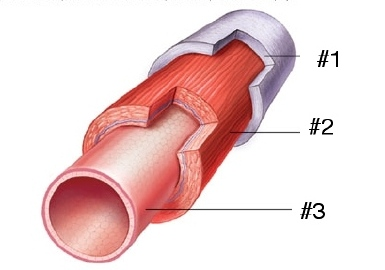
- A1. Smooth muscle with elastic fibers
- B1. Endothelium
- C1. Connective tissue
- D2. Smooth muscle with elastic fibers
- E2. Endothelium
- F2. Connective tissue
- G3. Smooth muscle with elastic fibers
- H3. Endothelium
- I3. Connective tissue
40An aneurysm is a weakening of the blood vessel wall.
- ARichtig
- BFalsch
41Select the following which can cause an aneurysm to occur:
- AThe blood vessel bulges outward
- BThe blood vessel pinches inward
- CThe blood vessel dies
42What are the three methods of venous return (ie, how does blood return to the heart)?
1. [blank_start]__________[blank_end]
2. [blank_start]__________[blank_end]
3. [blank_start]__________[blank_end]- AOne-way valves
- BSkeletal muscles
- CRespiratory muscles
43These are the thin-walled receiving chambers of the heart:
- ARight atrium
- BRight ventricle
- CLeft atrium
- DLeft ventricle
44These are the thick-walled, strong chambers of the heart:
- ARight atrium
- BRight ventricle
- CLeft atrium
- DLeft ventricle
45What is the proper order of the SYSTEMIC CIRCUIT of the heart?
[blank_start]left atrium[blank_end] --> [blank_start]left ventricle[blank_end] --> [blank_start]aorta[blank_end] --> [blank_start]body[blank_end] --> [blank_start]inferior vena cava[blank_end] --> [blank_start]right atrium[blank_end]- Aleft atrium
- Bleft ventricle
- Caorta
- Dbody
- Einferior vena cava
- Fright atrium
46Arrange the following components of a muscle in order of increasing size:
- AMyofibril, fiber, fascicle, muscle
- BFiber, myofibril, fascicle, muscle
- CMuscle, myofibril, fascicle, fiber
- DFascicle, myofibril, fiber, muscle
47The primary energy source used by muscle cells to generate ATP is
- ACalcium ions
- BFatty acids
- CProteins
- DGlucose
48Blood doping is artificially increasing
- AVolume of blood plasma
- BOverall volume of blood
- CNumber of RBCs
- DNumber of WBCs
49Calcium is important in muscle contractions because it
- AHelps the muscle action potential spread throughout the muscle cell
- BBinds to troponin, which moves tropomyosin away from myosin binding sites on actin
- CQuickly regenerates ATP after the ATP stored in the cell is used up
- DBinds to myosin, causing actin to slide past myosin, which causes the muscle to shorten
50Which of the following would NOT cause an increase in the force generated by a contracting muscle?
- AMore motor units recruited (or stimulated)
- BLarger motor units recruited (or stimulated)
- CAction potentials sent to the muscle more frequently
- DLarger action potentials sent to the muscle
51Passive immunity differs from active immunity in that passive immunity:
- AIs not effective against a preexisting condition
- BInvolves the introduction of antibodies from an outside source
- CResults in the production of memory cells
- DCauses long-term immunity
52Hemoglobin is a component of blood plasma.
- ARichtig
- BFalsch
53This type of cell is responsible for producing and releasing antibodies:
- APlasma cell
- BPhagocyte
- CNatural killer cell
- DT cell
54The “lub” of the “lub-dub” heart sounds that can be heard through a stethoscope happens when the right and left [blank_start]ventricles[blank_end] [blank_start]contract[blank_end].
- Aventricles
- Batria
- Crelax
- Dcontract
55Vaccines contain antigens of the pathogen.
- ARichtig
- BFalsch
56Which of the following cell types is most useful to a runner in a marathon?
- ASlow-twitch muscle fibers
- BFast-twitch muscle fibers
- CReticular muscle fibers
- DTetanic muscle fibers
57An [blank_start]embolism[blank_end] occurs when a clot that forms in an undamaged vessel becomes dislodged, circulates through blood vessels, and eventually becomes stuck in a vessel, thereby blocking the flow of blood through that vessel.
- Aembolism
- Baneurysm
- Cinfarction
- Dthrombus
58A person with dysfunctional platelets will have problems with
- AFatigue/low energy levels
- BIncreased risk of infection
- CInflammatory responses
- DImpaired blood clotting
59The left ventricle has a more muscular wall than the other three chambers of the heart because the left ventricle must generate enough blood pressure to pump blood to tissues throughout the body.
- ARichtig
- BFalsch
60When the hormone erythropoietin is released in response to low oxygen levels, it is transported to [blank_start]red bone marrow[blank_end] to stimulate red blood cell production.
- Akidney
- Bspleen
- Cred bone marrow
- Dliver
61Match each definition with its associated term from the drop-down list.
1. [blank_start]______[blank_end] A disorder of the respiratory system that causes permanent damage by breaking down lung tissue
2. [blank_start]______[blank_end] A blockage in a blood vessel that deprives cells of oxygen, causing tissue death
3. [blank_start]______[blank_end] Caused by an infection in the respiratory tract that increases mucus production, which decreases airway diameter, reducing air flow
4. [blank_start]______[blank_end] Can be caused by reduced iron, hemoglobin, or red blood cells- A1. Asthma
- B1. Bronchitis
- C1. Emphysema
- D2. Anemia
- E2. Aneurysm
- F2. Embolism
- G3. Asthma
- H3. Bronchitis
- I3. Emphysema
- J4. Anemia
- K4. Aneurysm
- L4. Embolism
62Match the appropriate term from the drop-down list to the following definitions.
1. [blank_start]______[blank_end] The volume of air that fills your lungs after you’ve exhaled as much air as you possibly can
2. [blank_start]______[blank_end] CANNOT be measured using a spirometer
3. [blank_start]______[blank_end]The amount of air entering the lungs during a normal resting breath- A1. Vital capacity
- B1. Residual volume
- C1. Tidal volume
- D1. Total lung capacity
- E3. Vital capacity
- F3. Residual volume
- G3. Tidal volume
- H3. Total lung capacity
- I2. Vital capacity and residual volume
- J2. Vital capacity and tidal volume
- K2. Vital capacity & total lung capacity
- L2. Residual volume and tidal volume
- M2. Residual volume & total lung capacity
- N2. Tidal volume & total lung capacity
63Match the appropriate term from the drop-down box to its definition.
1. [blank_start]______[blank_end] Fragments of cells that help form blood clots
2. [blank_start]______[blank_end] Carries most of the oxygen traveling in your blood
3. [blank_start]______[blank_end] Makes up more than half of the volume of your blood- A1. Blood plasma
- B1. Platelets
- C1. White blood cells
- D1. Red blood cells
- E2. Blood plasma
- F2. Platelets
- G2. White blood cells
- H2. Red blood cells
- I3. Blood plasma
- J3. Platelets
- K3. White blood cells
- L3. Red blood cells
64The functional difference between the systemic circuit and the pulmonary circuit is that the systemic circuit [blank_start]delivers oxygen[blank_end] [blank_start]to tissues[blank_end] and the pulmonary circuit [blank_start]picks up oxygen[blank_end] [blank_start]from the lungs[blank_end].
- A1. delivers oxygen
- B1. picks up oxygen
- C2. to tissues
- D2. from the lungs
- E3. delivers oxygen
- F3. picks up oxygen
- G4. to tissues
- H4. from the lungs
65The pulmonary circuit uses more pressure than the systemic circuit.
- ARichtig
- BFalsch
66A typical blood pressure is 120/80 mmHg.
----------------------------------------------------------------------------------
1. Does this refer to pulmonary or systemic pressure? [blank_start]______[blank_end]
2. What’s happening in the heart to generate the 120 mmHg?
[blank_start]_______________[blank_end]
3. What’s happening in the heart when the blood pressure falls to 80 mmHg?
[blank_start]_______________[blank_end]- Apulmonary pressure
- Bsystemic pressure
- C2. ventricular systole
- D2. ventricular diastole
- E3. ventricular systole
- F3. ventricular diastole
67You feel cold at the beginning of a fever because chemicals released cause your brain (hypothalamus) to reset your body’s thermostat to a higher temperature, which causes you to feel cold even though your body is at its usual 98.6°F.
- ARichtig
- BFalsch
68Your fever ‘breaks’ when your hypothalamus resets your thermostat back to the normal temperature, but because your body has increased its temperature to match the higher setting you now feel hot.
- ARichtig
- BFalsch
69One benefit of a high fever is that proteins can denature (unfold) at high temperatures.
- ARichtig
- BFalsch
70One risk of a high fever is that it may inhibit some bacterial growth.
- ARichtig
- BFalsch
71When you breath more deeply and quickly during exercise, this helps you
- AUnload more carbon dioxide by increasing the percent of air in your lungs that is carbon dioxide.
- BUnload more carbon dioxide by decreasing the total air pressure in your lungs.
- CGet more oxygen by increasing the percent of air in your lungs that is oxygen.
- DGet more oxygen by increasing the total air pressure in your lungs.
72When hiking in the mountains at 12,000 ft of elevation, the atmospheric pressure is about 483mmHg. Oxygen makes up ~14% of alveolar air. The alveolar (lung) PO2 (partial pressure of oxygen) would be [blank_start]66mmHg[blank_end], which will result in [blank_start]less[blank_end] oxygen moving into the blood compared to what you would experience at sea level, where the atmospheric pressure is [blank_start]higher[blank_end].
- A66mmHg
- B760mmHg
- Cless
- Dmore
- Ehigher
- Flower
73A quiet/resting exhale relies on
- AContraction of the diaphragm and intercostal muscles
- BContraction of intercostal and abdominal muscles
- CRecoil of lung tissues and contraction of the internal intercostal muscles
- DSurface tension of fluid lining the air sacs in the lungs and recoil of elastic fibers in lung tissue.
74Select the following true statements about the effect of smoking on the respiratory system:
- ASmoking inhibits the activity of cilia lining the respiratory tract.
- BParticles and debris from the smoke accumulate in the mucus of the airway and increase risk for infections by pathogens.
- CThe production of mucus increases in response to the presence of smoke.
- DCilia once damaged by smoking can regrow once you stop smoking.
75When comparing viruses and bacteria, which of the following is correct?
- AViruses are larger than bacteria
- BViruses and bacteria contain genetic material
- CViruses have membrane-bound organelles; bacteria do not have membrane-bound organelles
- DViruses are pathogens; bacteria are beneficial
76Select all of the lymphatic structures from the list below:
- AThymus
- BSpleen
- CKidney
- DTonsils
77Erythropoietin is released by the [blank_start]kidneys[blank_end] and travels through the blood to the [blank_start]red bone marrow[blank_end] where it stimulates red blood cell production.
- A1. Thymus
- B1. Kidneys
- C2. Thymus
- D2. Kidneys
- E1. Red bone marrow
- F2. Red bone marrow
78Breathing in carbon monoxide can cause health problems because
- AIt competes with oxygen for binding sites on hemoglobin, which reduces oxygen loading at the lungs and delivery to the tissues
- BIt can come out of solution while circulating in the blood, which forms tiny, painful bubbles in the blood
- CIt can cause the formation of blood clots, which can block blood flow through vessels and cause tissue death from lack of oxygen
- DIt reacts with oxygen to form carbon dioxide in the blood
79Ebola has a high [blank_start]virulence[blank_end] but a fairly low [blank_start]transmissibility[blank_end].
- A1. transmissibility
- B1. virulence
- C2. transmissibility
- D2. virulence
80The "lub" of the "lub-dub" heart sounds that can be heard through a stethoscope happens when which valves close? Select all that apply.
- AAortic semilunar valve
- BPulmonary semilunar valve
- CTricuspid valve
- DBicuspid (mitral) valve
81Vaccination results in passive immunity.
- ARichtig
- BFalsch
82The [blank_start]alveoli[blank_end] is the site of gas exchange.
- Alarynx
- Balveoli
- Cthymus
- Dtrachea
83Humans must constantly breathe in oxygen in order to stay alive, because they use oxygen
- ATo efficiently make large quantities of ATP
- BAs an important source of energy for cells
- CTo make carbon dioxide, which is then used to produce ATP
- DTo make glucose
84Which of the following causes the swelling that is part of inflammation?
- AVasoconstriction of local blood vessels
- BEnlargement of lymph nodes
- CIncreased permeability or leakiness of local blood vessels
- DT cells that are attracted to the site of injury or infection
85As you exhale, the diaphragm [blank_start]relaxes[blank_end] and becomes [blank_start]more[blank_end] dome-shaped.
- Acontracts
- Brelaxes
- Cless
- Dmore
86As you inhale, the diaphragm [blank_start]contracts[blank_end] and becomes [blank_start]less[blank_end] dome-shaped.
- Acontracts
- Brelaxes
- Cless
- Dmore
87The smallest known pathogens that contain RNA or DNA are called
- APrions
- BBacteria
- CViruses
- DAllergens
88Hypertension risk factors:
[blank_start]High salt intake[blank_end]
[blank_start]Stress[blank_end]
[blank_start]Age[blank_end]
[blank_start]Heredity[blank_end]- AHigh salt intake
- BStress
- CAge
- DHeredity
89A heart attack is caused by the death of tissue due to a coronary vessel blockage.
- ARichtig
- BFalsch
90The immune system and lymphatic system are synonymous (the same).
- ARichtig
- BFalsch
91Select the following that are part of the INNATE defense system
- ANative killer cells
- BT cells
- CB cells
- DNeutrophils
- EEosinophils
92Cytotoxic T cells:
- ANon-specific
- BSpecific to one antigen
- CMemory response
- DActivated in the bloodstream
- EActivated in a lymph node
- FKill abnormal or infected cells
93The flu shot gives you passive immunity.
- ARichtig
- BFalsch
94[blank_start]Antigens[blank_end] are in active immunization that helps you fight infections, whereas [blank_start]antibodies[blank_end] are in passive immunization that helps your body fight infections.
- A1. Antigens
- B1. Antibodies
- C2. antigens
- D2. antibodies
95The upper respiratory tract deals with air only.
- ARichtig
- BFalsch
96The purpose of the diaphragm is to power breathing.
- ARichtig
- BFalsch
Informationen
- Beschreibung
- Unit 3 Practice
- Autor
- Gelöschter Nutzer
- Sprache
- English
- Aufrufe
- 17
- Verlauf
- Erstellt am 5 Mär 2018 · aktualisiert am 5 Mär 2018
- Schlagwörter
- Bewertung
- Noch keine Bewertungen Bewerte dieses Quiz