
Quiz
Unit 5 Human Body Practice Exam
Dieses Quiz enthält Fragetypen, die sich im gewohnten Player öffnen.
Fragen in diesem Quiz (100)
1Male gametes are produced in the [blank_start]testes[blank_end] in structures called seminiferous tubules. From there, the sperm move into the [blank_start]epididymis[blank_end] where they become motile and are stored until sexual arousal causes them to move into the [blank_start]ductus deferens[blank_end]. A vasectomy involves litigating and cutting this structure, which prevents sperm from moving into the [blank_start]urethra[blank_end], which would carry the sperm out of the male body during ejaculation. If a male has not had a vasectomy, then during sex, sperm are ejaculated into the [blank_start]vagina[blank_end]. After this, they swim to the [blank_start]uterus[blank_end] and then are moved by contractions of the muscular wall of the female reproductive tract to the place where fertilization normally occurs. Female gametes are produced in the [blank_start]ovary[blank_end]. In response to changing hormone levels, an oocyte is ovulated and if all goes well, it gets drawn into the [blank_start]fallopian tube[blank_end]. Cilia lining the female reproductive tract move this oocyte (or developing embryo, if fertilization occurs) into the [blank_start]uterus[blank_end], where implantation should occur if the oocyte has been fertilized.
- A(1) testes
- B(1) prostate
- C(1) epididymis
- D(2) epididymis
- E(2) testes
- F(2) prostate
- G(3) ductus deferens
- H(3) fallopian tube (oviduct)
- I(3) seminiferous tubules
- J(4) urethra
- K(4) uterus
- L(4) seminiferous tubules
- M(5) vagina
- N(5) ovary
- O(5) uterus
- P(6) uterus
- Q(6) cervix
- R(6) ovary
- S(7) ovary
- T(7) cervix
- U(7) uterus
- V(8) fallopian tube
- W(8) vagina
- X(8) ovary
- Y(9) uterus
- Z(9) vagina
- AA(9) fallopian tube
2Match each term from the drop-down box with the correct phrase.
1. [blank_start]______[blank_end] All nutrients must cross this layer to get from the gut into the body
2. [blank_start]______[blank_end] Anchors the digestive tract to the body wall
3. [blank_start]______[blank_end] This layer contains blood and lymphatic vessels that transport nutrients away from the digestive tract and to the liver for processing and distribution to the rest of the body
4. [blank_start]______[blank_end] Its main function is to propel food through the digestive tract- A(1) Mucosa
- B(1) Muscularis externa
- C(1) Serosa/adventitia
- D(1) Submucosa
- E(2) Mucosa
- F(2) Muscularis externa
- G(2) Serosa/adventitia
- H(2) Submucosa
- I(3) Mucosa
- J(3) Muscularis externa
- K(3) Serosa/adventitia
- L(3) Submucosa
- M(4) Mucosa
- N(4) Muscularis externa
- O(4) Serosa/adventitia
- P(4) Submucosa
3Match each term from the drop-down box with the correct phrase. Each term will be used only once, BUT not all terms will be used.
1. [blank_start]______[blank_end] Secretion of this hormone causes the endometrial lining of the uterus to thicken in preparation for implantation of an embryo
2. [blank_start]______[blank_end] Present in a female’s body ONLY if she is pregnant; this is the hormone detected by home pregnancy tests
3. [blank_start]______[blank_end] Secreted by the testes; stimulates sperm production
4. [blank_start]______[blank_end] A sudden large release of this hormone from the pituitary gland stimulates ovulation
5. [blank_start]_____[blank_end] Stimulates the secretion of FSH and LH- AA. Estrogen
- BA. Follicle stimulating hormone (FSH)
- CA. Gonadotropin releasing hormone (GnRH)
- DA. Human chorionic gonadotropin (hCG)
- EA. Luteinizing hormone (LH)
- FA. Testosterone
- GB. Estrogen
- HB. Follicle stimulating hormone (FSH)
- IB. Gonadotropin releasing hormone (GnRH)
- JB. Human chorionic gonadotropin (hCG)
- KB. Luteinizing hormone (LH)
- LB. Testosterone
- MC. Estrogen
- NC. Follicle stimulating hormone (FSH)
- OC. Gonadotropin releasing hormone (GnRH)
- PC. Human chorionic gonadotropin (hCG)
- QC. Luteinizing hormone (LH)
- RC. Testosterone
- SD. Estrogen
- TD. Follicle stimulating hormone (FSH)
- UD. Gonadotropin releasing hormone (GnRH)
- VD. Human chorionic gonadotropin (hCG)
- WD. Luteinizing hormone (LH)
- XD. Testosterone
- YE. Estrogen
- ZE. Follicle stimulating hormone (FSH)
- AAE. Gonadotropin releasing hormone (GnRH)
- ABE. Human chorionic gonadotropin (hCG)
- ACE. Luteinizing hormone (LH)
- ADE. Testosterone
4Estrogen is secreted either by follicles or the corpus luteum in the ovaries.
- ARichtig
- BFalsch
5[blank_start]Estrogen[blank_end] is secreted eitehr by the follicles or the corpus luteum in the ovaries.
- AEstrogen
- BProgesterone
- CTestosterone
6Mach each term from the drop-down box with the correct phrase. Each term will be used only once, BUT not all terms will be used.
1. [blank_start]______[blank_end] Causes the burning, bad taste in your throat after you vomit
2. [blank_start]______[blank_end] Helps digest fats by breaking large droplets into smaller droplets
3. [blank_start]______[blank_end] Begins the process of carbohydrate digestion
4. [blank_start]______[blank_end] About 9 litres of this goes into your digestive tract every day- AA. Bile
- BA. Hydrochloric acid (HCl)
- CA. Mucus
- DA. Pepsin
- EA. Salivary amylase
- FA. Water
- GB. Bile
- HB. Hydrochloric acid (HCl)
- IB. Mucus
- JB. Pepsin
- KB. Salivary amylase
- LB. Water
- MC. Bile
- NC. Hydrochloric acid
- OC. Mucus
- PC. Pepsin
- QC. Salivary amylase
- RC. Water
- SD. Bile
- TD. Hydrochloric acid
- UD. Mucus
- VD. Pepsin
- WD. Salivary amylase
- XD. Water
7Match each term from the drop-down box with the correct phrase. Each term will be used only once, BUT you will not use all terms.
1. [blank_start]______[blank_end] Stores bile in between meals
2. [blank_start]______[blank_end] Secretes a wide variety of digestive enzymes capable of chemically digesting every major kind of macromolecule
3. [blank_start]______[blank_end] The small intestine delivers its contents to this region
4. [blank_start]______[blank_end] Leads directly into the stomach – reflux of acid into this region causes ‘heartburn’
5. [blank_start]______[blank_end] Produces bile
6. [blank_start]______[blank_end] Food passes from the mouth into this region
7. [blank_start]______[blank_end] Mechanical and chemical digestion begins here
8. [blank_start]______[blank_end] Mixing waves move through this structure about 2-4 times each minute after you eat a meal- AA. Esophagus
- BA. Gall bladder
- CA. Large intestine
- DA. Liver
- EA. Mouth
- FA. Pancreas
- GA. Pharynx
- HA. Small intestine
- IA. Stomach
- JB. Esophagus
- KB. Gall bladder
- LB. Large intestine
- MB. Liver
- NB. Mouth
- OB. Pancreas
- PB. Pharynx
- QB. Small intestine
- RB. Stomach
- SC. Esophagus
- TC. Gall bladder
- UC. Large intestine
- VC. Liver
- WC. Mouth
- XC. Pancreas
- YC. Pharynx
- ZC. Small intestine
- AAC. Stomach
- ABD. Esophagus
- ACD. Gall bladder
- ADD. Large intestine
- AED. Liver
- AFD. Mouth
- AGD. Pancreas
- AHD. Pharynx
- AID. Small intestine
- AJD. Stomach
- AKE. Esophagus
- ALE. Gall bladder
- AME. Large intestine
- ANE. Liver
- AOE. Mouth
- APE. Pancreas
- AQE. Pharynx
- ARE. Small intestine
- ASE. Stomach
- ATF. Esophagus
- AUF. Gall bladder
- AVF. Large intestine
- AWF. Liver
- AXF. Mouth
- AYF. Pancreas
- AZF. Pharynx
- BAF. Small intestine
- BBF. Stomach
- BCG. Esophagus
- BDG. Gall bladder
- BEG. Large intestine
- BFG. Liver
- BGG. Mouth
- BHG. Pancreas
- BIG. Pharynx
- BJG. Small intestine
- BKG. Stomach
- BLH. Esophagus
- BMH. Gall bladder
- BNH. Large intestine
- BOH. Liver
- BPH. Mouth
- BQH. Pancreas
- BRH. Pharynx
- BSH. Small intestine
- BTH. Stomach
8The small intestine is the only region of the digestive tract where defecation happens.
- ARichtig
- BFalsch
9Hydrochloric acid (HCl) is released in the gallbladder, which helps kill bacteria and begins protein digestion by causing them to unfold.
- ARichtig
- BFalsch
10The gallbladder can be removed from the body without serious negative consequences (ie, you can live a normal life without it and removing it will not cause you to die).
- ARichtig
- BFalsch
11Pepsin begins the process of protein digestion.
- ARichtig
- BFalsch
12Match each term from the drop-down box with the correct phrase. Each term will be used only once, and ALL terms will be used.
1. [blank_start]______[blank_end] The location where fertilization normally occurs
2. [blank_start]______[blank_end] Sperm must penetrate a layer of mucus lining this structure in order to make it to the place where an oocyte might be ready for fertilization
3. [blank_start]______[blank_end] Oocytes are stored here prior to puberty
4. [blank_start]______[blank_end] Sperm are deposited here during sexual intercourse
5. [blank_start]______[blank_end] This structure is lined with endometrium, part of which is shed at the beginning of each 28 day female reproductive cycle- AA. Cervix
- BA. Fallopian tube
- CA. Ovary
- DA. Uterus
- EA. Vagina
- FB. Cervix
- GB. Fallopian tube
- HB. Ovary
- IB. Uterus
- JB. Vagina
- KC. Cervix
- LC. Fallopian tube
- MC. Ovary
- NC. Uterus
- OC. Vagina
- PD. Cervix
- QD. Fallopian tube
- RD. Ovary
- SD. Uterus
- TD. Vagina
- UE. Cervix
- VE. Fallopian tube
- WE. Ovary
- XE. Uterus
- YE. Vagina
13If fertilization occurs, the embryo normally implants in the [blank_start]uterus[blank_end].
- Auterus
- Bvagina
- Ccervix
- Dovary
- Efallopian tube
14Select the following which are characteristics of the SMALL INTESTINE:
- AThis structure includes the appendix and rectum.
- BThis is the most important site of nutrient and water absorption.
- CThe stomach delivers its contents to this region.
- DBacteria living here digest cellulose (a large carbohydrate that is a major component of plant cell walls), releasing vitamins that the human body can absorb and use, and gases that have unpleasant odors.
15Select the following which are true statements about the LARGE INTESTINE:
- AThis structure includes the appendix and rectum.
- BThis is the most important site of nutrient and water absorption.
- CThe stomach delivers its contents to this region.
- DBacteria living here digest cellulose (a large carbohydrate that is a major component of plant cell walls), releasing vitamins that the human body can absorb and use, and gases that have unpleasant odors.
16Drag and drop the appropriate layer name to each layer of the gut wall, with "1" indicating the innermost layer (facing the lumen, or inside the gut) and "4" indicating the outermost layer.
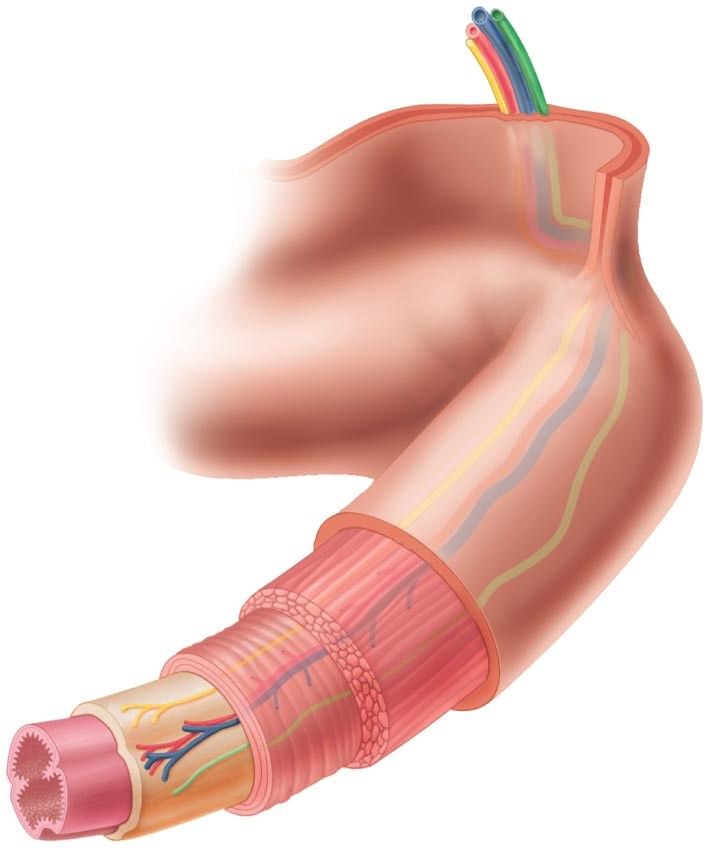
- A(1) Mucosa
- B(1) Muscularis externa
- C(1) Submucosa
- D(1) Adventitia/serosa
- E(2) Mucosa
- F(2) Submucosa
- G(2) Muscularis externa
- H(2) Adventitia/serosa
- I(3) Mucosa
- J(3) Muscularis externa
- K(3) Submucosa
- L(3) Adventitia/serosa
- M(4) Adventitia/serosa
- N(4) Mucosa
- O(4) Muscularis externa
- P(4) Submucosa
17Match the appropriate term with the appropriate function regarding layers of the gut wall. Each function will only be used ONCE.
1. [blank_start]______[blank_end] Anchor to the surrounding tissues
2. [blank_start]______[blank_end] Secretion/absorption
3. [blank_start]______[blank_end] Propulsion of food/chyme through gut
4. [blank_start]______[blank_end] Contains blood vessels that carry away absorbed nutrients- AA. Adventitia/serosa
- BA. Mucosa
- CA. Muscularis externa
- DA. Submucosa
- EB. Adventitia/serosa
- FB. Mucosa
- GB. Muscularis externa
- HB. Submucosa
- IC. Adventitia/Serosa
- JC. Mucosa
- KC. Muscularis externa
- LC. Submucosa
- MD. Adventitia/serosa
- ND. Mucosa
- OD. Muscularis externa
- PD. Submucosa
18Which of the following is the most likely result of hyperovulation?
- AAn ectopic pregnancy
- BIdentical twins
- CNon-identical twins
- DEndometriosis
19Absorption is the process by which nutrients are moved into the body from the gastrointestinal tract.
- ARichtig
- BFalsch
20Celiac disease is typically caused by a bacterium.
- ARichtig
- BFalsch
21Place the structures in a list of smallest (S), medium (M), and largest (L).
[blank_start]__________[blank_end], [blank_start]__________[blank_end], [blank_start]__________[blank_end]- A(S) Microvilli
- B(S) Villi
- C(S) Folds
- D(M) Microvilli
- E(M) Villi
- F(M) Folds
- G(L) Microvilli
- H(L) Villi
- I(L) Folds
22Segmentation is the process by which food is propelled through the digestive tract by alternating contraction and relaxation of smooth muscle.
- ARichtig
- BFalsch
23After a meal, the stomach is filled with [blank_start]chyme[blank_end], which is a mixture of [blank_start]gastric juice[blank_end] and partially digested food.
- A(1) chyme
- B(1) bile
- C(1) gastric juice
- D(2) gastric juice
- E(2) chyme
- F(2) bile
24The corpeus luteum develops in the [blank_start]ovary[blank_end] from the [blank_start]ruptured follicle[blank_end].
- Aovary
- Buterus
- Ccervix
- Druptured follicle
- Eimmature oocyte
- Fovulated follicle
- Gembryo
25Ovulation usually occurs on about day ____ of a 28-day reproductive cycle.
- A1
- B7
- C14
- D28
26Male gametes are haploid, whereas female gametes are diploid.
- ARichtig
- BFalsch
27Ovulation involves
- AThe degeneration of the corpus luteum
- BThe release of an oocyte from a mature follicle
- CThe shedding of part of the endometrial lining of the uterus
- DThe implantation of an embryo into the wall of the female reproductive tract
28Human gametes are produced by the process of meiosis.
- ARichtig
- BFalsch
29The beginning of the chemical digestion of proteins begins in the
- AStomach
- BMouth
- CEsophagus
- DSmall intestine
30Bile is stored in the [blank_start]gallbladder[blank_end], and its function is to [blank_start]mechanically break down lipids[blank_end].
- AGallbladder
- BSmall intestine
- CStomach
- Dmechanically break down lipids
- Echemically digest lipids
- Fchemically digest proteins
- Gdenature proteins
31[blank_start]Just after fertilization by a sperm cell[blank_end], a female oocyte finishes the 2nd meiotic division to produce a mature oocyte (or ovum).
- AJust after fertilization by a sperm cell
- BJust before ovulation
- CDuring puberty
32The acrosome of a sperm cell
- AProvides energy to help the flagellum beat to propel the sperm towards the oocyte (egg)
- BStimulates muscular contractions in the female uterus and Fallopian tube
- CReleases enzymes to help digest through the protective coverings surrounding the oocyte (egg)
- DContains the DNA of the sperm cell
33Select the following TRUE statements about endometriosis
- AIt can reduce the likelihood of a female becoming pregnant
- BIt is heritable, meaning that it can be passed on genetically from mother to daughter
- CIt is a condition where endometrial tissue moves to a location outside of the uterus
- DIt is caused by severe bacterial infection
34In vitro fertilization is more likely to result in identical twins than natural conception.
- ARichtig
- BFalsch
35What is the most important region of the digestive tract for CHEMICAL digestion and absorption?
- AStomach
- BLarge intestine
- CSmall intestine
- DEsophagus
36What region of the digestive tract does NOT perform mechanical processing of materials moving through it?
- AStomach
- BEsophagus
- CLarge intestine
- DSmall intestine
37When digested, proteins are broken down into [blank_start]amino acids[blank_end].
- Aamino acids
- Bglucose
- Cfatty acids
- Dmonosaccharides
38If pregnancy does occur, the embryo begins to secrete [blank_start]human chorionic gonadotropin (hCG)[blank_end], which maintains the corpus luteum as a(n) [blank_start]estrogen[blank_end]-secreting structure.
- A(1) human chorionic gonadotropin (hCG)
- B(1) estrogen
- C(1) luteinizing hormone (LH)
- D(1) gonadotropin releasing hormone--GnRH
- E(2) estrogen
- F(2) human chorionic gonadotropin (hCG)
- G(2) luteinizing hormone (LH)
- H(2) gonadotropin releasing hormone--GnRH
39Celiac disease results due to damage in the intestinal villi in response to improper digestion of a protein in wheat products.
- ARichtig
- BFalsch
40Menstruation involves
- AThe release of an oocyte from a mature follicle
- BThe shedding of part of the endometrial lining of the uterus
- CA surge in luteinizing hormone
- DThe implantation of an embryo into the wall of the female reproductive tract
41For a sperm to fertilize an egg (oocyte), a sperm must release enzymes to digest the zona pellucida surrounding the oocyte.
- ARichtig
- BFalsch
42Label the following structures in the reproductive tract.
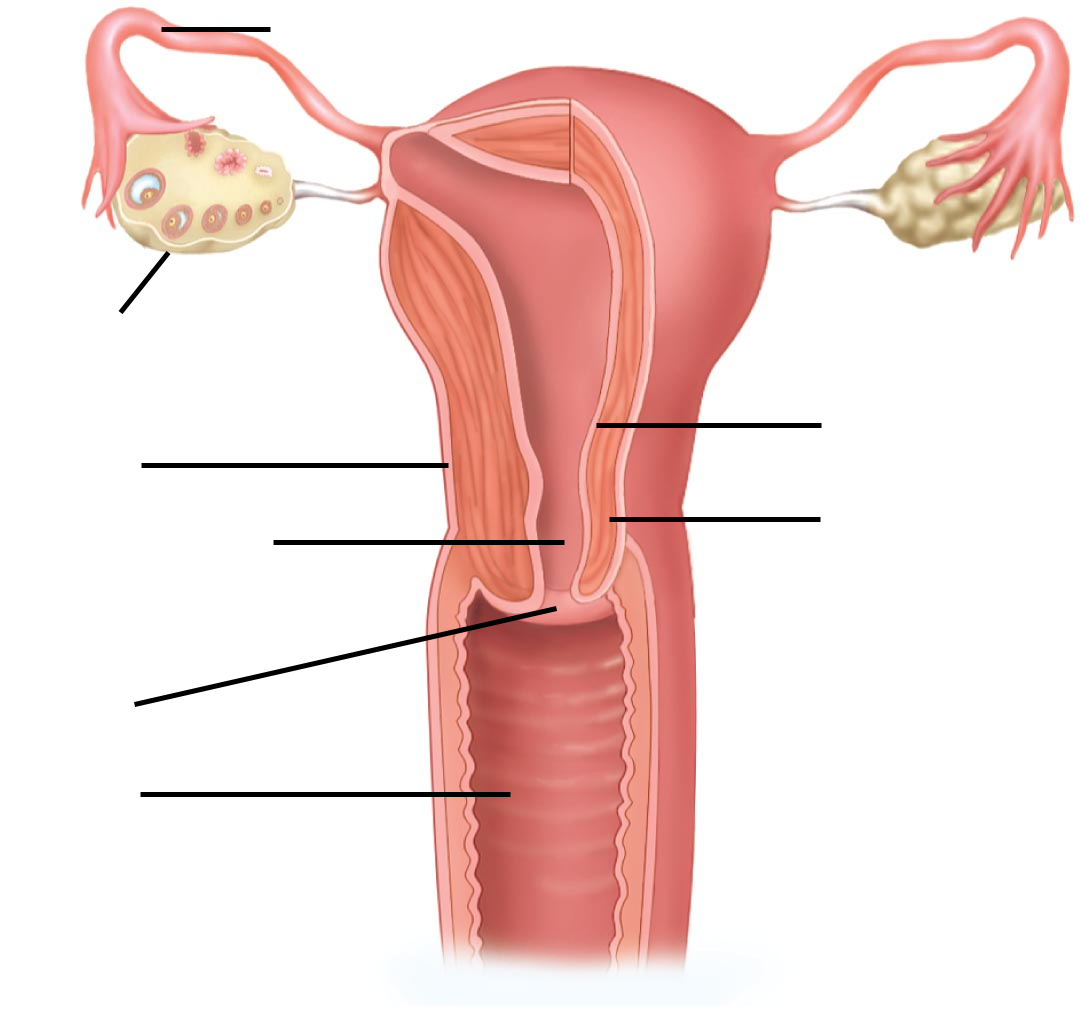
- Aoviduct
- Bovary
- Cendometrium
- Duterus
- Emyometrium
- Fcervical canal
- Gcervix
- Hvagina
- Ifollicle
43Label the structures for the male reproductive tract.
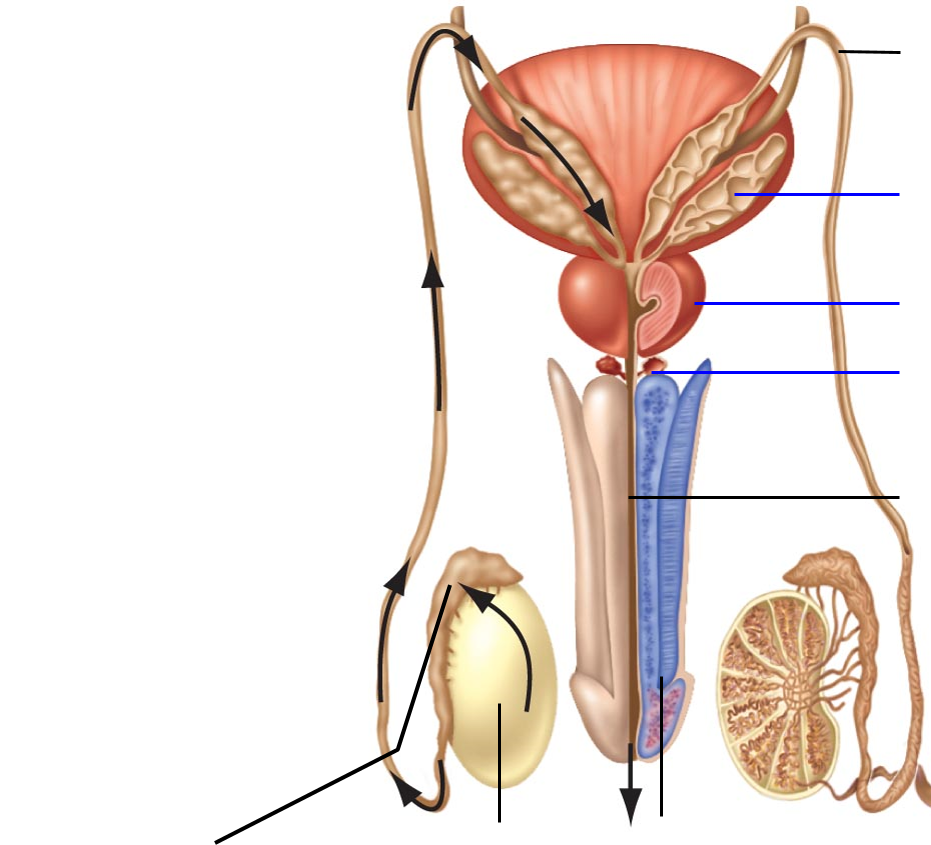
- Atestis
- Bepididymis
- Cductus travesty
- Dseminal vescicle
- Eprostate gland
- Fbulbourethral gland
- Gurethra
- Hpenis
44Select the following structure(s) where sperm are produced:
- AEpididymis
- BPenis
- CProstate gland
- DSeminiferous tubules
- ETestis
- FVas (ductus) deferens
45Sperm are stored in the [blank_start]epididymis[blank_end] to mature, and they leave this location during sexual arousal.
- Aepididymis
- Bpenis
- Cprostate gland
- Dseminiferous tubules
- Etestis
- Fvas (ductus) deferens
46This is a structure that produces part of the fluid in semen; inflammation or a tumor in this structure can cause difficulty urinating.
- APenis
- BTestis
- CProstate gland
- DEpididymis
47The [blank_start]vas (ductus) deferens[blank_end] would be ligated (tied) and cut during a vasectomy.
- Avas (ductus) deferens
- Bepididymis
- Curethra
- Dseminiferous tubules
48Fill in the table below to describe the hormonal regulation of reproduction in males and females.
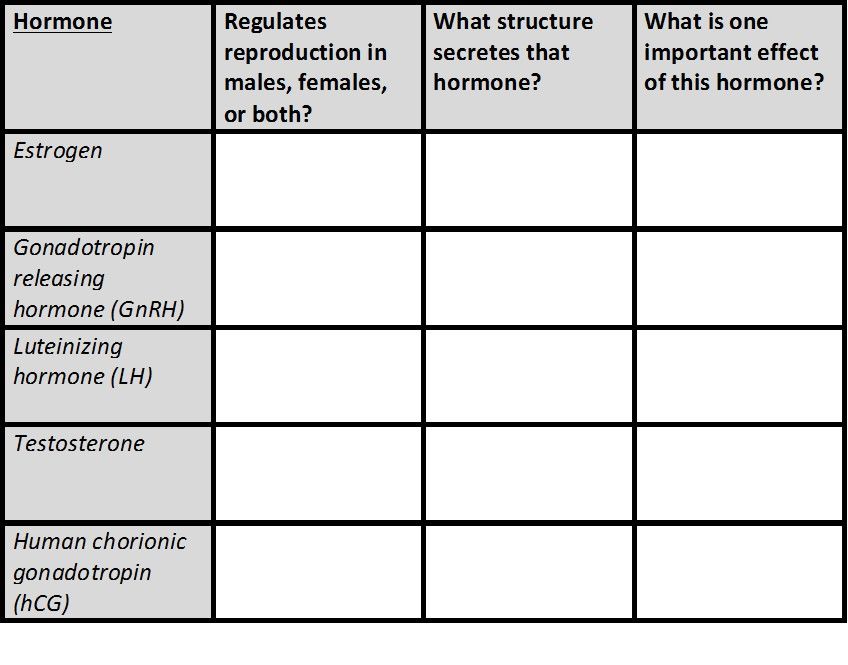
- Afemales
- Bboth
- Cboth
- Dmales
- Efemales
- Fovary (follicle/corpus luteum)
- Ghypothalamus
- Hpituitary
- Itestes
- Jembryo
- Kstimulates surge in LH
- Lstimulates release of LH/FSH
- MStimulates ovulation in females
- Nrelease of testosterone in males
- Ostimulates sperm production
- Pmaintains corpus luteum
49Label all structures in the female reproductive tract.
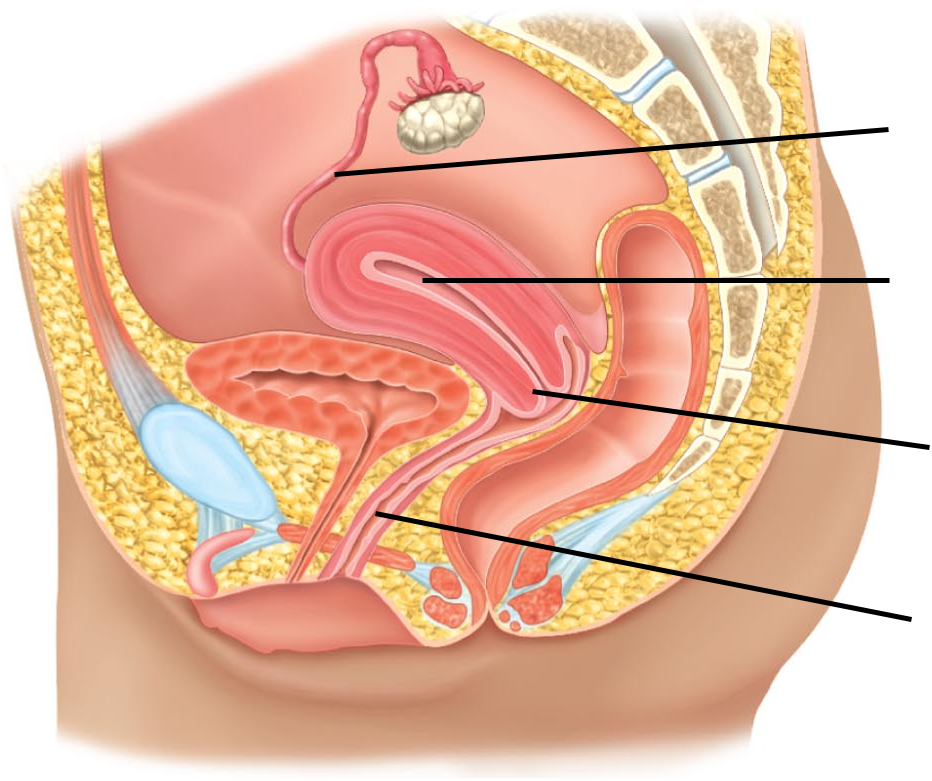
- Aovary
- Bfallopian tube
- Cuterus
- Dcervix
- Evagina
50Although protein digestion begins in the stomach, pancreatic enzymes break the final polypeptide chains into [blank_start]amino acids[blank_end].
- Aamino acids
- Bmonosaccharides
- Cfructose
51Select the following macromolecules which go directly from the lumen of the small intestine to the epithelial cells of the intestine and on through to the blood stream.
- ACarbohydrates
- BLipids
- CProteins
- DNone of these
52Another name for the alimentary canal is the [blank_start]gastrointestinal tract[blank_end].
- Agastrointestinal tract
- Breproductive tract
53Pepsin is a digestive enzyme that specifically targets
- AStarch
- BGlycogen
- CProtein
- DFatty acids
54Malfunction of the lower esophageal sphincter may result in
- ADiarrhea
- BStomach ulcers
- CBulimia
- DAcid reflux
55Once food leaves the mouth, it goes from the pharynx to the esophagus, then from the stomach to the small intestine, then to the large intestine, through the rectum, and out the anus.
- ARichtig
- BFalsch
56The gastrointestinal tract is composed of
- Aall the organs of the digestive system
- Bthe accessory organs of the digestive system
- Cthe hollow organs of the digestive system
- Dthe blood vessels and nerves that supply the digestive system
57Which major digestive process involves nutrient molecules passing across the mucosal layer of the gastrointestinal tract into the blood or lymph?
- Aabsorption
- Bsecretion
- Celimination
- Ddigestion
58The cervix transports the oocyte from the ovary to the uterus.
- ARichtig
- BFalsch
59The myometrium contracts during labor and childbirth.
- ARichtig
- BFalsch
60If the pathway from the uterus to the oviduct is blocked
- AAn oocyte cannot be released
- BThe uterine cycle will be disrupted
- CAn oocyte cannot enter the oviduct
- DFertilization cannot occur
61Which two means of birth control are most similar in the way that they prevent pregnancy?
- ATubal ligation and condoms
- BTubal ligation and IUDs
- COral contraceptives and spermicides
- DOral contraceptives and hormone patches
62The corpus luteum produces the hormones that will support the early pregnancy.
- ARichtig
- BFalsch
63Secretion is the movement of substances from the kidney tubules into the blood.
- ARichtig
- BFalsch
64Select the following which is/are reabsorbed from filtrate:
- ASodium chloride
- BGlucose
- CWater
- DAmino acids
- EBicarbonate ions
- FNone of these
65The most abundant solute in urine is [blank_start]urea (and other nitrogenous wastes)[blank_end].
- Aurea (and other nitrogenous wastes)
- Bglucose
- Cplasma proteins
- Dsodium chloride
- Ewater
66An ectopic pregnancy is a generalized term for any pregnancy where the fertilized egg implants in the wrong place.
- ARichtig
- BFalsch
67A rapid increase in the [blank_start]luteinizing hormon[blank_end]e level stimulates ovulation.
- Aluteinizing hormon
- Bprogesterone
- Cestrogen
- Dfollicle-stimulating hormone
- Ehuman chorionic gonadotropin
68By secreting [blank_start]estrogen and progesterone[blank_end], the corpus luteum maintains the endometrium and inhibits [blank_start]FSH and LH[blank_end] secretion.
- A(1) estrogen and progesterone
- B(1) FSH and LH
- C(2) FSH and LH
- D(2) estrogen and progesterone
69Developing ovarian follicles primarily secrete [blank_start]estrogens[blank_end].
- Aestrogens
- Bprogesterones
- Cluteinizing hormone
- Dfollicle-stimulating hormone
- Ehuman chorionic gonadotropin
70If there is fertilization, secretion of human chorionic gonadotropin (hCG) by the early embryo maintains the corpus luteum.
- ARichtig
- BFalsch
71The usual site of fertilization of an egg cell is in the vagina.
- ARichtig
- BFalsch
72When the follicle ruptures, the oocyte is released, and the ruptured follicle then develops into the corpus luteum.
- ARichtig
- BFalsch
73In both the males and females, the urethra and the urinary bladder both share functions in the urinary system as well as the reproductive tract.
- ARichtig
- BFalsch
74The uterus is muscular, hollow, and about the size of a fist.
- ARichtig
- BFalsch
75Lipids, proteins, and carbohydrates are all digested within the small intestine.
- ARichtig
- BFalsch
76The hepatic portal system delivers nutrient-rich blood from the [blank_start]GI tract[blank_end] to the [blank_start]liver[blank_end].
- A(1) GI tract
- B(1) stomach
- C(1) liver
- D(1) gallbladder
- E(2) liver
- F(2) gallbladder
- G(2) stomach
- H(2) GI tract
77Bile assists in the chemical digestion of triglycerides by
- Aforming chylomicrons
- Bbreaking peptide bonds and hydrologizing them to amino acids
- Cemulsifying large fat droplets into tiny ones, providing more surface area for enzymes
- Dassisting with the active transport of triglycerides into the blood
78Which of the following is/are absorbed into capillaries?
- Aamino acids
- Btriglycerides
- Cwater
- Dmonosaccharides
79When digested, fats are broken down into
- Aglycerol only
- Bfatty acids only
- Camino acids
- Dboth glycerol and fatty acids
80Your small intestine can absorb [blank_start]fructoses[blank_end] without being further digested.
- Afructoses
- Bstarches
- Cfats
- Dnucleic acids
- Eproteins
81[blank_start]Salivary amylase[blank_end] begin(s) the breakdown of starch.
- ASalivary amylase
- BBile
- CLipase
- DNucleases
82Starch can be broken down into the disaccharide known as [blank_start]maltose[blank_end].
- Amaltose
- Bfructose
- Csucrose
- Dglucose
83The secretion of [blank_start]gastric juice[blank_end] by the [blank_start]stomach[blank_end] begins the digestion of proteins.
- Agastric juice
- Bsalivary amylase
- Chuman chorionic gonadotropin
- Dstomach
- Ekidney
- Fmouth
84[blank_start]Water[blank_end] is the main component of gastric juice.
- AWater
- BAmylase
- CInactive pepsin
- DHydrochloric acid
- EBile
85[blank_start]Bile[blank_end] is secreted by the [blank_start]liver[blank_end] and acts to emulsify [blank_start]fats[blank_end] in the [blank_start]small intestine[blank_end].
- ABile
- BLipase
- CAmylase
- Dliver
- Ekidney
- Fpancreas
- Gfats
- Hproteins
- Inucleic acids
- Jsmall intestine
- Kstomach
- Llarge intestine
86Carbonic acid is responsible for stomach acidity.
- ARichtig
- BFalsch
87The epididymis is the site of sperm production.
- ARichtig
- BFalsch
88Acrosomal enzymes break down the zona pellucida.
- ARichtig
- BFalsch
89Select any of the following that is/are not accessory gland(s)
- AProstate
- BSeminal vesicle
- CBulbourethral gland
- DVas deferens (ductus deferens)
90The urethra carries urine from the urinary bladder, through the penis, and out of the body.
- ARichtig
- BFalsch
91If a male is taking anabolic steroids, testosterone production in the interstitial cells would increase.
- ARichtig
- BFalsch
92Human gametes contain the [blank_start]haploid[blank_end] number of chromosomes.
- Ahaploid
- Bdiploid
93Sperm become capable of movement while in the
- Aseminiferous tubules
- Bvas deferens
- Cejaculatory ducts
- Durethra
- Eepididymis
94Sperm exit the male's body via the urethra.
- ARichtig
- BFalsch
95The secretion of androgens is regulated by a [blank_start]negative[blank_end] feedback mechanism involving the [blank_start]hypothalamus[blank_end] and [blank_start]pituitary gland[blank_end].
- Anegative
- Bpositive
- Chypothalamus
- Dthyroid
- Eseminal vesicles
- Fpituitary gland
- Gprostate gland
- Hpancreas
96Parathyroid hormone is directly responsible for triggering the development of the secondary sex characteristics of males, such as beard growth.
- ARichtig
- BFalsch
97Which pituitary secretion stimulates sperm production?
- ALH
- BACTH
- CTSH
- DFSH
98From production to exiting the male body, the pathway of sperm will be:
seminiferous tubules --> epididymis --> vas deferens --> ejaculatory duct --> urethra- ARichtig
- BFalsch
99A sperm with a defective acromosome would not be able to benetrate an egg.
- ARichtig
- BFalsch
100Nephrons are the smallest functional part of the urinary system.
- ARichtig
- BFalsch
Informationen
- Beschreibung
- Der Nutzer hat seine Fachbereichs-Information gelöscht. Quiz am Unit 5 Human Body Practice Exam, erstellt von Gelöschter Nutzer am 05/03/2018.
- Autor
- Gelöschter Nutzer
- Sprache
- English
- Aufrufe
- 9
- Verlauf
- Erstellt am 5 Mär 2018 · aktualisiert am 5 Mär 2018
- Schlagwörter
- Bewertung
- Noch keine Bewertungen Bewerte dieses Quiz