
Notizen
2.5 - Enzymes
Inhalt der Notizen (6)
Seite 1
2.5 - Enzymes
Active sites and enzymes
Enzymes:
globular proteins that work as catalysts
speed up biochemical reactions
aren't altered themselves in reactions
found in all living cells
also secreted by some cells to work outside
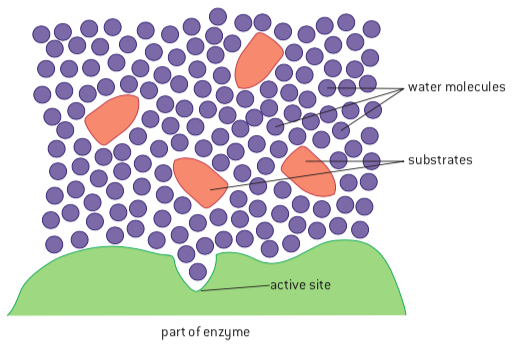
the substances that enzymes turn into products are substrates
enzyme-substrate specificity: enzymes need to fit with the substrate
active site:
a region on the surface on the enzyme
where substrates bind
the shape and chemical properties of the enzyme and substrate match
this allows the substrate to bind, but not other substances
substrates are converted into products when bound to the active site
the products are then released,
freeing the active site to catalyze another reaction
Seite 2
Enzyme activity
is the catalysis of a reaction by an enzyme.
three stages:
the substrate binds to the active site of the enzyme, sometimes 2 substrates
substrates change into different chemical substances, which are the products
products separate from the active site, leaving it free for substrates to bind
a substrate molecule can only bind to the active site if it moves very close to it
the coming together of a substrate and an active site is called collision
with most reactions, substrates are dissolved in water around the enzyme
particles dissolved in water are in contact with each other and in continuous motion
both substrates and enzymes with an active site are able to move
but most substrates are smaller than the enzyme so they move faster
collisions between substrate molecules and the active site occur because of random movements of both substrate and enzyme
successful collisions are ones where the substrate and active site are successfully aligned to allow binding to take place
Seite 3
Factors affecting enzyme activity
temperature, pH and substrate concentration affect the rate of activity in enzymes
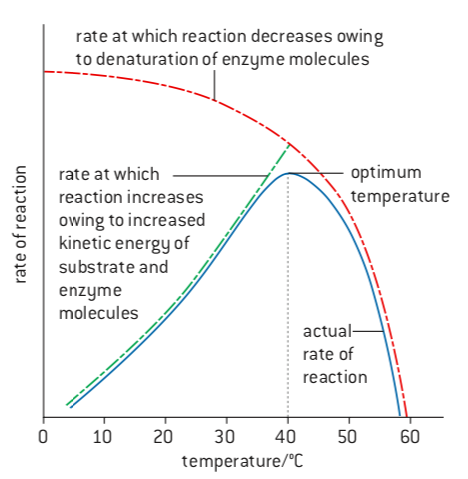
Temperature:
1st way
in liquids, the particles are in continual motion
higher temperatures increase the kinetic energy
so both enzyme and substrate move faster
therefore, enzyme activity increases
2nd way
when heated, enzyme bonds vibrate more
higher chance of the breaking of the bonds
when the bonds break, the structure is changed
this permanent change is called denaturation
the active site also changes, so no binding
as more enzymes are denatured, enzyme activity falls
pH
the lower the pH, the higher the hydrogen ion concentration
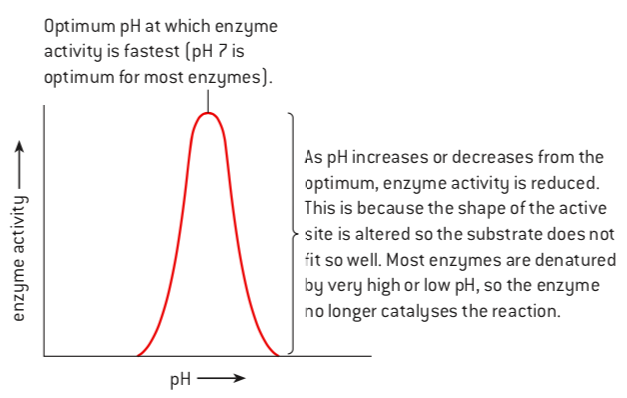
most enzymes have an optimum pH where their activity is highest
if the pH is increased or decreased, enzyme activity decreases then falls
because the structure of the enzyme is altered, including the active site
beyond a certain pH, the structure of the enzyme is irreversibly altered, (denaturation)
enzymes don't all have the same pH optimum
this reflects the wide range of pH environments in which enzymes work
for example, the protease secreted by Bacillus licheniformis has a pH optimum between 9 to 10. This bacterium is cultured to produce its alkaline-tolerant protease for use in biological laundry detergents, which are alkaline
Substrate concentration
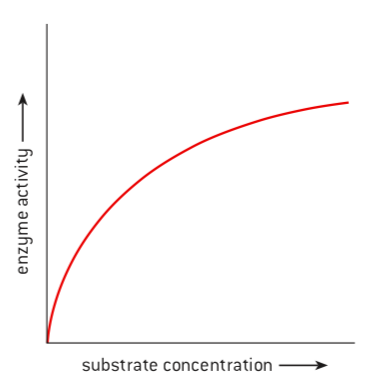
1st way
more substrates, more frequent collisions
enzyme activity increases
2nd way
after binding, the active site is occupied and unavailable
more substrates, more occupied active sites
a greater proportion of substrate-active site collisions are blocked
the increases in the rate of reactions get smaller
Seite 4
Denaturation
like other proteins, enzymes' structure can be irreversibly altered by certain conditions
can be caused by both high temperatures and either high or low pH
when an enzyme is denatured,
the active site is altered and a substrate cannot bind
f it binds, the reaction that the enzyme normally catalyzes doesn't occur
in many cases, denaturation causes enzymes that were dissolved in water to become insoluble and form a precipitate
Seite 5
Immobilized enzymes
in 1897, the Buchner brothers showed that an extract of yeast, containing no yeast cells, would convert sucrose into alcohol
Louis Pasteur had claimed that fermentation of sugars to alcohol could only occur if living cells were present
part of the vitalism theory (stated that substances in animals and plants can only be made under the influence of a "vital spirit" or "vital force")
the artificial synthesis of urea disproved this theory
the Buchners' research provided a clearer falsification of the theory
more than 500 enzymes now have commercial uses
the enzymes used in industry are usually immobilized
this is the attachment of the enzymes to another material or into aggregations so that the movement of the enzyme is restricted
there are many ways of doing this, such as
attaching the enzymes into a glass surface
trapping them in an alginate gel
bonding them together to form enzyme aggregates
enzyme immobilization has several advantages:
the enzyme can be easily separated from the products of the reaction, stopping the reaction at the ideal time and preventing contamination of the products
after being retrieved from the enzyme mixture, the enzyme can be recycled, giving useful cost savings, especially as many enzymes are very expensive
immobilization increases the stability of enzymes to changes in temperature and pH, reducing the rate at which they are degraded and have to be replaced
substrates can be exposed to higher enzyme concentration than with dissolved enzymes, speeding up reaction rates
Seite 6
Informationen
- Beschreibung
- Der Nutzer hat seine Fachbereichs-Information gelöscht. Notiz am 2.5 - Enzymes, erstellt von Gelöschter Nutzer am 20/02/2020.
- Erstellt von
- Gelöschter Nutzer · Feb 2020
- Aktualisiert
- 20 Feb 2020
- Aufrufe
- 18
- Verlauf
-
- Erstellt von Blen Abate · 14 Feb 2020
- Kopiert von Blen Abate · 20 Feb 2020
- Bewertung