
Mindmap
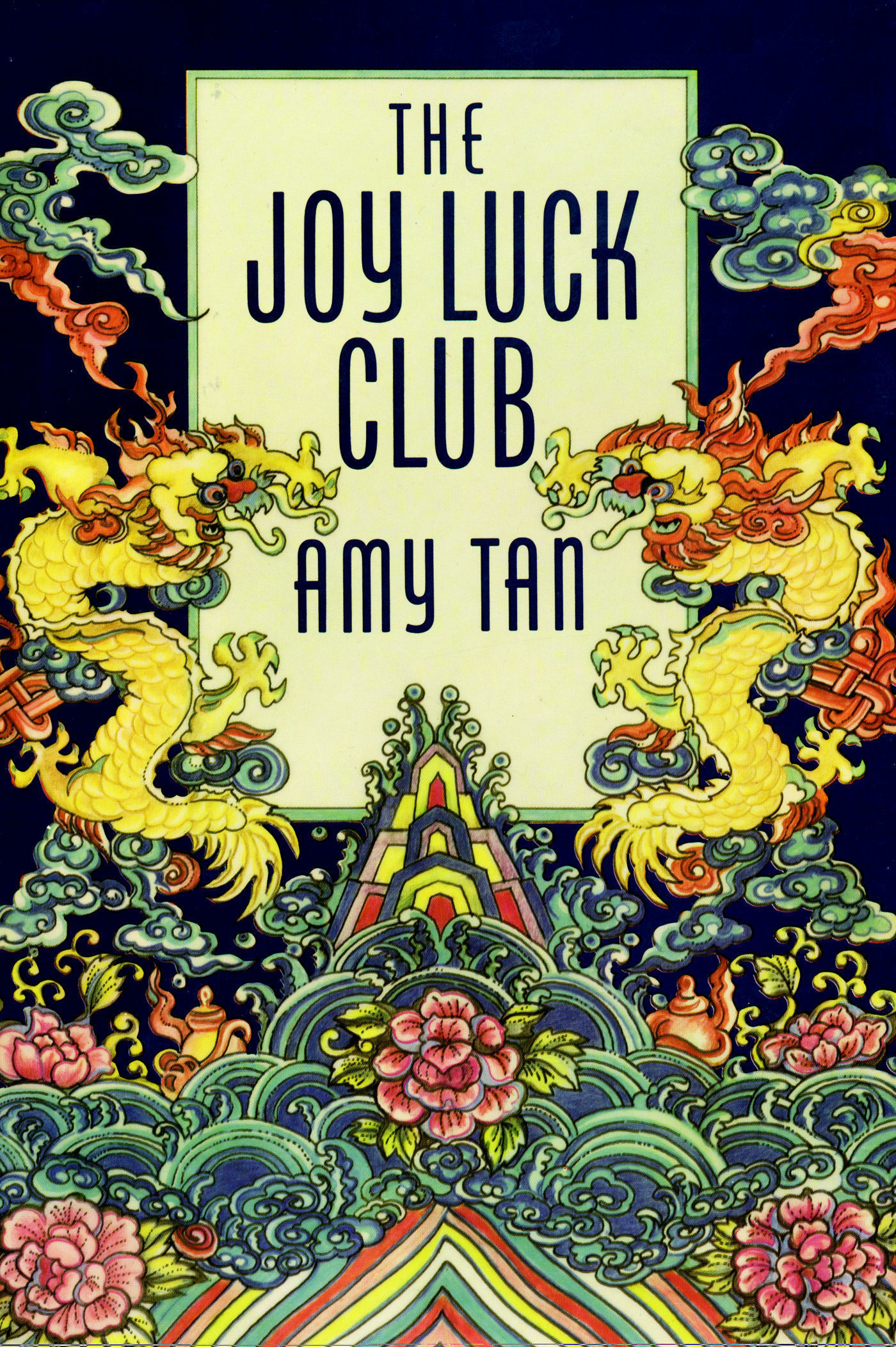
"The Joy Luck Club" by Amy Tan
Inhalt der Mindmap
"The Joy Luck Club" by Amy Tan
Author Background
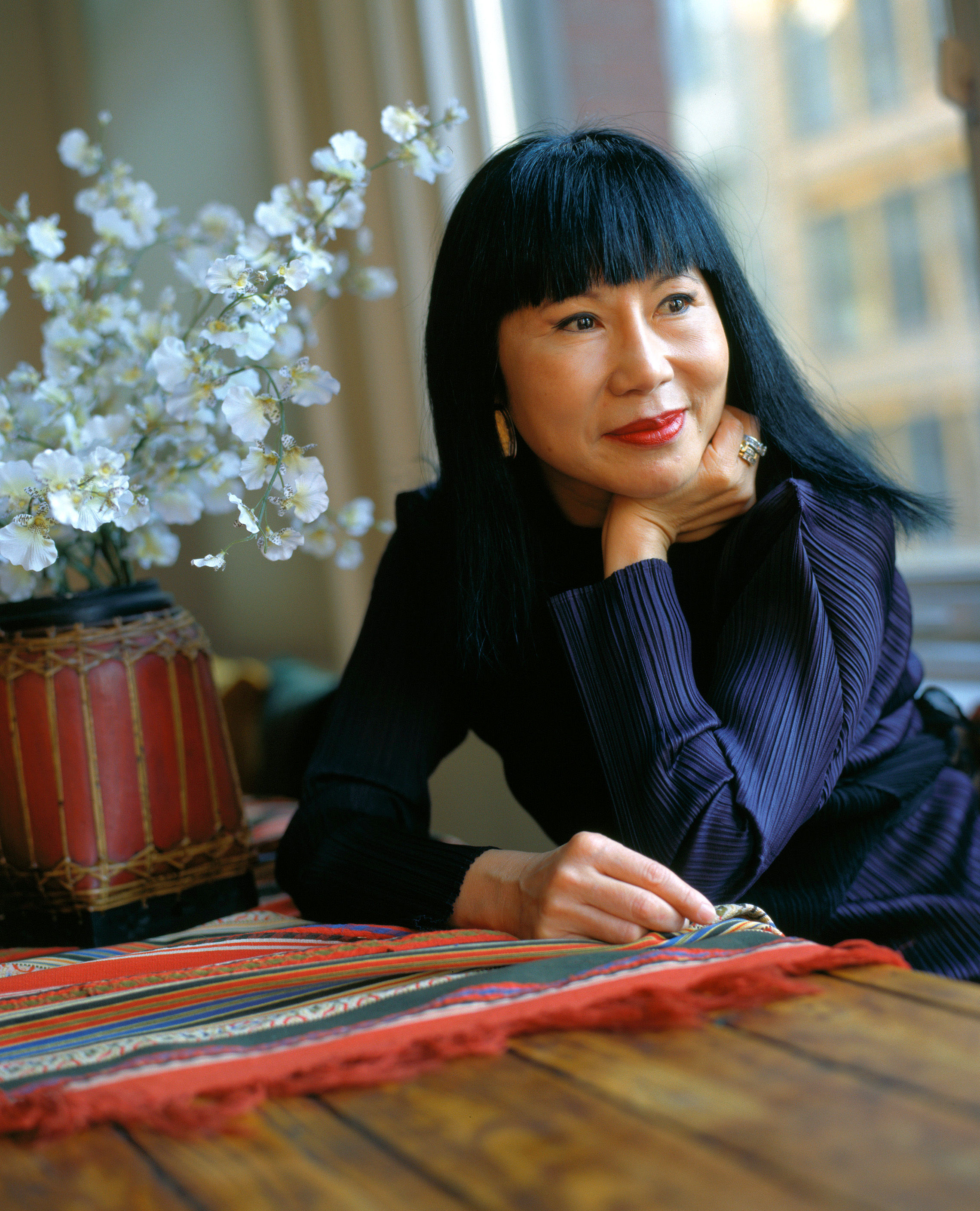
- Amy Tan, b. 1952, Oakland, CA.
- She was working as a language development consultant and freelance writer when she wrote a short story titled “Rules of the Game” for a workshop in 1985.
- By 1989, she had turned that short story into The Joy Luck Club.
- The Joy Luck Club was a major success was the longest-running New York Times bestseller of 1989.
- It has been translated into over 25 languages.
- In 1993, it was turned in to a movie. Tan co-wrote the screenplay.
- It has been translated into over 25 languages.
- The Joy Luck Club was a major success was the longest-running New York Times bestseller of 1989.
- By 1989, she had turned that short story into The Joy Luck Club.
- She was working as a language development consultant and freelance writer when she wrote a short story titled “Rules of the Game” for a workshop in 1985.
- Amy Tan, b. 1952, Oakland, CA.
Plot Overview
- Section 1: Feathers From a Thousand Li Away
- Parable: a Chinese woman emigrates from America carrying a swan
- Chapter 1: The Joy Luck Club
- This chapter is about Jing-mei, her mother, Suyuan, and the beginning of the Joy Luck Club.
- Chapter 2: Scar
- This chapter is the story of An-mei’s mother, who became a concubine of a rich man when An- mei was small. She almost forgets her mother, until she comes back to take care of her when she is sick.
- Chapter 3: The Red Candle
- This chapter tells the story of Lindo Jong’s childhood and her escape from an unhappy marriage and living situation. She ends up telling a lie to dissolve her arrange marriage.
- Chapter 4: The Moon Lady
- Ying-ying shares a story about visiting the Moon Festival when she was four. She was a mischievous child and got herself lost.
- Chapter 4: The Moon Lady
- This chapter tells the story of Lindo Jong’s childhood and her escape from an unhappy marriage and living situation. She ends up telling a lie to dissolve her arrange marriage.
- Chapter 3: The Red Candle
- This chapter is the story of An-mei’s mother, who became a concubine of a rich man when An- mei was small. She almost forgets her mother, until she comes back to take care of her when she is sick.
- Chapter 2: Scar
- This chapter is about Jing-mei, her mother, Suyuan, and the beginning of the Joy Luck Club.
- Chapter 1: The Joy Luck Club
- Parable: a Chinese woman emigrates from America carrying a swan
- Section 2: The Twenty-Six Malignant Gates
- Parable: an American-raised daughter argues with her Chinese mother
- Chapter 5: Rules of the Game
- This chapter tells the story of Waverly Jong’s childhood as a chess prodigy. Her mother becomes prideful, which makes Waverly angry and combative. The climax of this story is her yelling at her mother in the middle of the street.
- Chapter 6: The Voice from the Wall
- This chapter shares Lena St. Clair’s story about her relationship with her mother growing up. She talks about moving to a different neighborhood and the strange girl who lived in the apartment next to theirs. Lena needed to be her mother’s translator, which she used as an opportunity to avoid awkward or embarrassing situations.
- Chapter 7: Half and Half
- This chapter is both about Rose’s divorce with her husband, Ted, and her mother’s loss of religious faith.
- Chapter 8: Two Kinds
- This chapter is another story of Jing-mei’s from her childhood. She remembers how her mother was convinced that she would be a prodigy, too, like Waverly Jong.
- Chapter 8: Two Kinds
- This chapter is both about Rose’s divorce with her husband, Ted, and her mother’s loss of religious faith.
- Chapter 7: Half and Half
- This chapter shares Lena St. Clair’s story about her relationship with her mother growing up. She talks about moving to a different neighborhood and the strange girl who lived in the apartment next to theirs. Lena needed to be her mother’s translator, which she used as an opportunity to avoid awkward or embarrassing situations.
- Chapter 6: The Voice from the Wall
- This chapter tells the story of Waverly Jong’s childhood as a chess prodigy. Her mother becomes prideful, which makes Waverly angry and combative. The climax of this story is her yelling at her mother in the middle of the street.
- Chapter 5: Rules of the Game
- Parable: an American-raised daughter argues with her Chinese mother
- Section 3: American Translation
- Parable: a Chinese mother makes her daughter move her mirror away from her bed out of superstitious fear
- Chapter 9: Rice Husband
- This chapter is a story of the time Lena St. Clair’s mother visited her new house. Lena is curious about what her mother will think, considering her insightful predictions about evil.
- Chapter 10: Four Directions
- This chapter involves an adult Waverly trying and failing to share the news of her engagement with her mother. She also jumps back to the time after her last, disastrous chess tournament.
- Chapter 11: Without Wood
- This chapter involves Rose’s indecision about how to handle her divorce to her husband. She receives courage from her mother to speak her mind.
- Chapter 12: Best Quality
- This chapter has Jing-mei remembering one of the last large get-togethers her family and their friends had before her mother passed away.
- Chapter 12: Best Quality
- This chapter involves Rose’s indecision about how to handle her divorce to her husband. She receives courage from her mother to speak her mind.
- Chapter 11: Without Wood
- This chapter involves an adult Waverly trying and failing to share the news of her engagement with her mother. She also jumps back to the time after her last, disastrous chess tournament.
- Chapter 10: Four Directions
- This chapter is a story of the time Lena St. Clair’s mother visited her new house. Lena is curious about what her mother will think, considering her insightful predictions about evil.
- Chapter 9: Rice Husband
- Parable: a Chinese mother makes her daughter move her mirror away from her bed out of superstitious fear
- Section 4: Queen Mother of the Western Skies
- Parable: a Chinese grandmother lovingly talks to her grandchild about her past, her parenting, and her daughter
- Chapter 13: Magpies
- This chapter comes back to An-mei, Rose’s mother. An-mei reflects on her daughter’s failing marriage and her own struggle to find her voice.
- Chapter 14: Waiting Between the Trees
- This chapter is now Lena’s mother lamenting over the signs of her daughter’s broken marriage. Ying-ying tells the story of her first marriage, which she says drained her spirit.
- Chapter 15: Double Face
- This chapter is about the Lindo regretting not teaching Waverly enough about being Chinese. She knows that trying to raise a half Chinese and half American daughter was actually impossible.
- Chapter 16: A Pair of Tickets
- This chapter relates Jing-mei’s trip to meet her long-lost half-sisters, and also the final piece of her mother’s story. Jing-mei’s father is able to finally share the story of how her mother came to abandon her children in China.
- Chapter 16: A Pair of Tickets
- This chapter is about the Lindo regretting not teaching Waverly enough about being Chinese. She knows that trying to raise a half Chinese and half American daughter was actually impossible.
- Chapter 15: Double Face
- This chapter is now Lena’s mother lamenting over the signs of her daughter’s broken marriage. Ying-ying tells the story of her first marriage, which she says drained her spirit.
- Chapter 14: Waiting Between the Trees
- This chapter comes back to An-mei, Rose’s mother. An-mei reflects on her daughter’s failing marriage and her own struggle to find her voice.
- Chapter 13: Magpies
- Parable: a Chinese grandmother lovingly talks to her grandchild about her past, her parenting, and her daughter
- Section 1: Feathers From a Thousand Li Away
Characters
- The Mothers
- Suyuan Woo
- Lindo Jong
- Ying-ying St. Clair
- An-mei Hsu
- life taught her lessons about the importance of speaking up for yourself
- she does not think she has passed them on to her daughter
- life taught her lessons about the importance of speaking up for yourself
- an incident in her childhood makes her learn to be passive
- she lets her American husband and daughter incorrectly translate her feelings
- she thinks her daughter is similar in her marriage
- she lets her American husband and daughter incorrectly translate her feelings
- An-mei Hsu
- worries that she may have become to assimilated
- tried to give daughter American opportunities, but perhaps at the expense of a Chinese identity
- Ying-ying St. Clair
- founder of the Joy Luck Club
- tragically lost her twin daughters when fleeing war in China
- full of hope and expectations for the future
- tragically lost her twin daughters when fleeing war in China
- Lindo Jong
- Suyuan Woo
- The Daughters
- Jing-mei (June) Woo
- Waverly Jong
- Lena St. Clair
- Rose Hsu Jordan
- she lets her husband make all the decisions
- when she can’t step up and take more responsibility her marriage crumbles
- she lets her husband make all the decisions
- began to be passive in life like her mother
- does not think herself capable of controlling her marriage or career
- Rose Hsu Jordan
- a model of success
- she was a chess prodigy when she was young
- Lena St. Clair
- She must take her mother’s place in the Joy Luck Club
- she is also given the task of finding her half-sisters and sharing their mother’s story with them.
- Waverly Jong
- Jing-mei (June) Woo
- The Mothers
Themes
- Storytelling
- The JLC focuses on the importance of telling stories to carry on traditions and cultural ideas.
- All of these stories can stand alone, but it is when they are read together that they tell us something about the experiences of Chinese-Americans.
- The JLC focuses on the importance of telling stories to carry on traditions and cultural ideas.
- Cultural Translation
- Confusion occurs when parents who grew up in one culture try to make sense of their children’s lives (who have grown up in a new culture and place).
- Children, too, have trouble understanding their parent’s actions.
- This theme is closely connected to the theme/idea of cultural and linguistic barriers.
- There are times when the daughters mistranslate or misrepresent their mothers to cover up something embarrassing, uncomfortable, or untranslatable.
- This theme is closely connected to the theme/idea of cultural and linguistic barriers.
- Children, too, have trouble understanding their parent’s actions.
- Confusion occurs when parents who grew up in one culture try to make sense of their children’s lives (who have grown up in a new culture and place).
- Immigrant Identity
- This theme comes out in relation to both the mothers and their daughters.
- The mothers are learning how to live in a different cultural landscape.
- The daughters are trying to reconcile the ways they are both Chinese and American.
- EX: Ying-ying St. Clair comes to America as a young wife to a white American. Her identity as an immigrant puts her off-balance in life.
- Her husband changes her name to the American ‘Betty.’ And accidentally writes the wrong birthday (important for a Chinese woman who cares about the traditional zodiac)
- She is labeled as a ‘displaced person’ by the immigration office.
- Ying-ying also never grasps English well, but instead relies on her American-born, American-looking daughter.
- She is labeled as a ‘displaced person’ by the immigration office.
- Her husband changes her name to the American ‘Betty.’ And accidentally writes the wrong birthday (important for a Chinese woman who cares about the traditional zodiac)
- EX: Ying-ying St. Clair comes to America as a young wife to a white American. Her identity as an immigrant puts her off-balance in life.
- The daughters are trying to reconcile the ways they are both Chinese and American.
- The mothers are learning how to live in a different cultural landscape.
- This theme comes out in relation to both the mothers and their daughters.
- Resilience of Women
- These stories revolve around the lives of women. They show how resilient women can be in the face of different struggles.
- For the mothers, these struggles sometimes appear more dangerous. They are all immigrants that left China and had harder lives than the daughters they raised.
- But in many ways, the mothers are able to help their daughters with their struggles based on their experiences.
- For the mothers, these struggles sometimes appear more dangerous. They are all immigrants that left China and had harder lives than the daughters they raised.
- These stories revolve around the lives of women. They show how resilient women can be in the face of different struggles.
- Storytelling
Structure
- 4 parts; 4 chapters each
- Somewhat like a game of mahjong
- The 16 chapters proceed as 16 separate stories with an interlocking plot.
- Each of the 4 sections is preceded by a short parable.
- Parable: a short story that centers around some moral or piece of wisdom
- These parables introduce the major themes of that sections’ stories.
- The Chinese woman in all of them can be read as the same person.
- These parables introduce the major themes of that sections’ stories.
- Parable: a short story that centers around some moral or piece of wisdom
- Each of the 4 sections is preceded by a short parable.
- The 16 chapters proceed as 16 separate stories with an interlocking plot.
- Somewhat like a game of mahjong
- 4 parts; 4 chapters each
Bilder und Dateien der Mindmap
Informationen
- Beschreibung
- Der Nutzer hat seine Fachbereichs-Information gelöscht. Mindmap am "The Joy Luck Club" by Amy Tan, erstellt von Gelöschter Nutzer am 22/03/2021.
- Erstellt von
- Gelöschter Nutzer · Mär 2021
- Aktualisiert
- 22 Mär 2021
- Aufrufe
- 24
- Verlauf
-
- Erstellt von Joseph Gianotti · 9 Feb 2021
- Kopiert von Joseph Gianotti · 22 Mär 2021
- Bewertung