
Notizen
C.5 U.S History, Skill #2
Inhalt der Notizen (12)
Seite 1
C.5 U.S History, Skill #2
Analyze the social, cultural, political, and economic development of the Americas during the colonial period.
Seite 2
The Colonial World
colonization impacted by four major factors:
mercantilism
colonies exist for the economic benefit of the mother country and are useless unless they help achieve profit
each nation's goal was to export more than it imported
believed econ activity should be regulated by gov
colonies provided staple crops that England would have been forced to import from other countries
rivalry of major nations (England, France, Spain)
geography
native population in the area
Seite 3
Spain
focused primarily on South America, Central America, Mexico, and the American Southwest
king remained source of all authority, explorers needed king's permission/ help
sought gold
brought in Catholic priests to convert natives, damaged their civilizations, and were cruel to their laborers; included them in the social and economic aspects of society
Seite 4
France
focused on North America
Samuel de Champlain established trading post in Quebec in 1608
exploration spread through the Great Lakes region and the valleys of the Mississippi and Ohio rivers
settlements generally forts and trading posts serving the fur trade
joint stock companies
friendly with Natives, included them in the social and economic aspects of society
Seite 5
Holland
Henry Hudson (Englishman) sent to look for Northwest Passage
discovered Hudson river and made trade agreements with Iroquois for furs
not interested in forming colonies, interest in New World purely economic
1624 Dutch trading outposts were estab on Manhattan Island and Albany
Seite 6
England
economic
commercial capitalism in England allowed colonization to be funded by private funds, rather than government funds
Virginia Company of London
joint-stock company that raised capital by the sale of shares of stock, received charter from King James I to settle between the Hudson and Cape Fear rivers
settled Jamestown in 1607 (1st permanent Eng. settlement)
primary crop tobacco
King James revoked charter in 1624 and made Virginia a royal colony
Virginia Company of Plymouth
joint-stock company, received charter to settle from the Potomac to the northern border of present-day Maine
religious
Puritans
in 1629 Charles I wanted to persecute Puritans and rule without Puritan dominated parliament
chartered joint-stock company called the Massachusetts Bay company, charter did not specify where headquarters should be
saw colony as a place to serve God and build his kingdom; dissidents only tolerated if they didn't interfere with colony's mission
Roger Williams
became disruptive to colony
asked to leave, bought land from the Natives, and founded Providence (1636)
Anne Hutchinson
openly contradicted Puritan doctrine and was banished from colony
founded Portsmouth (1638)
Separatists
believed Church of England was beyond saving and so felt they must separate from it
led by William Bradford
left in 1620 under charter from London Company to settle South side of Hudson river on the Mayflower
Mayflower compact
estab foundation for orderly government based on the consent of the governed
Charles II
Carolina
granted 8 nobleman who helped him regain the crown a charter for all land south of VA and north of Spanish FL
New York
granted brother James, Duke of York, title to all Dutch lands if he conquered them first
New Amsterdam
excluded Natives from their social, econ, and political lives (the Quaker communities exhibited tolerance)
Seite 7
North American Colonies
New England colonies
MA, RI, CT, NH
Puritans placed importance on the family (patriarchy), literacy (so everyone could read Bible)
economy
climate/ soil unsuited to large-scale farming
economy based on small farming, home industry, dishing, trade, shipbuilding
Boston first international port
Southern and Chesapeake Colonies
mercantilism
tobacco first planted in 1611 and quickly became commodity crop that helped VA grow into full-sized settlement
headright system
VA Company disbanded and made a royal colony by James I 1617
way to get more Europeans to come to America to grow tobacco (every new person given 50 acres of land)
indentured servants: wealthy planters offered to pay for passage of those who could not afford to pay themselves in exchange for labor for an agreed upon period of time, after which they would be given a plot of land to tend on their own
Blacks made up small percentage of population at first and by 1750 made up 30-40% of the population; initially treated as indentured servants and eventually came to be seen as lifelong slaves whose status would be inherited by their children
NC followed VA in econ and social development while SC developed society even more dominated by large plantations and chattel slavery
Mid-Atlantic Colonies
Quakers
founded PA
believed all people held an "inner light" that allowed them to commune directly with God, little importance on the Bible
Delaware
initially part of PA and eventually given separate legislature by William Penn
types of colonial governments
Royal colonies:
English monarch controlled the colonies and appointed governors and their councils to run them
all 13 colonies became royal colonies by mid-1700s
shifted from a focus on farming to a focus on household manufacturing and some commercial industries for profit such as fishing, lumbering, shipbuilding, etc.
proprietary colonies: landowners determined the direction of government
corporate colonies: corp. and their stockholders determined the direction of the gov and econ
Seite 8
Economic changes during 18th cent
types of colonial work
agricultural
plantation farming: based on commercial single-crop commodities
commercial farming: people on smaller farms would raise crops to sell on the market
self sufficient family farming where people grew crops to satisfy their own needs and used surplus to buy goods/ pay taxes
craftsman
men went through apprenticeships to become blacksmiths, coopers, weavers, carpenters, and shipwrights
mercantilists
in trading, merchants would buy and sell goods they themselves did not make in order to make a profit
service provision
other people offered services in the community such as butchers, market workers, doctors, etc.
social classes
rural landowners
southern plantation owners who invested in land, slaves, buildings, tools, etc.
merchants
traders and sellers of goods and services
wage earners
invested in industrial stock/ various enterprises
Seite 9
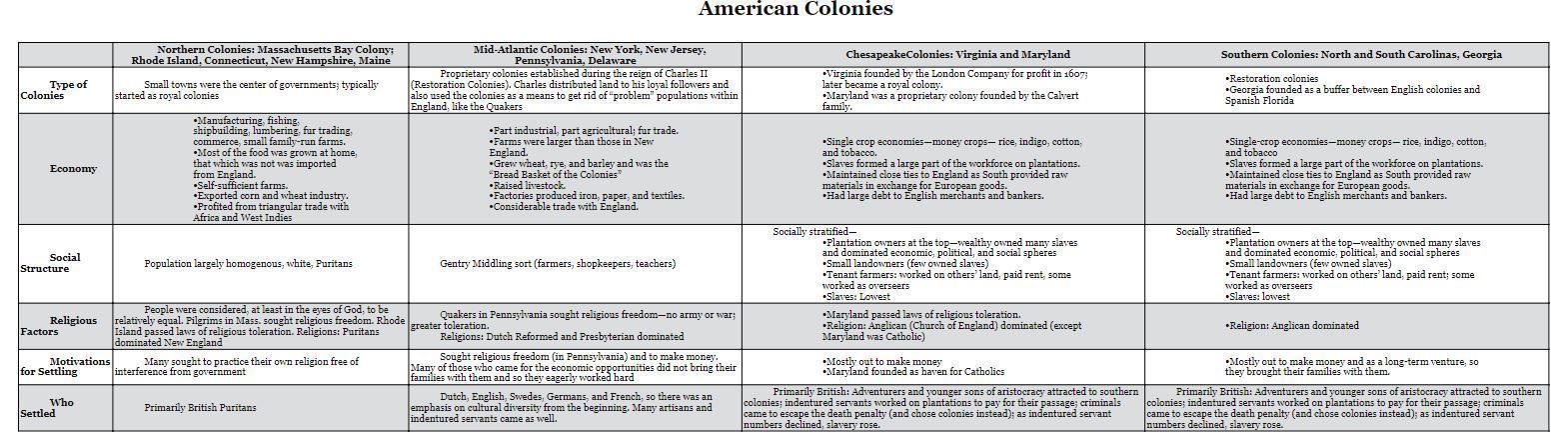
American Colonies
Seite 10
Types of colonial societies
Colonial Farming societies
majority of colonists lived on small, family-run and self-sufficient farms
most in the New England and Southern Colonies, many in Middle Colonies
Urban Seaport
big cities developed along the Atlantic Seaboard and became major seaports and commercial centers (Boston, NY, Newport, Philly, and Charleston)
wealthy merchants and traders became powerful
Frontier
colonists living with bare necessities and creating every aspect of their society
did not have strong community presence because everyone was spread out and lacked organized law and order, community institutions, or organized churches
believed they were not given adequate protection or equal representation because they were "foreigners" (mainly German or Scot/ Irish)
Plantation/ Slave
highly stratified society in which social mobility did not occur
Native American
natives moved westward as they were dispossessed of their lands and their populations decimated
Seite 11
Social Changes During the 18th Century
enormous population growth (300k in 1700 to 2.5mil. in 1775)
ethnic and linguistic composition changes de to West African slaves and Scots-Irish ang German immigrants
cities contained 20% of population; 4 main cities: Boston, NY, Philly, Charleston
social and economic stratification intensified after 1750
aristocratic plantation owners in the South had the most wealth and influence
lawyers, merchants, officials clergymen dominated North
Land-owning, Yeoman farmers made up the majority of the population
indentured servants and slaves were the lowest level of society; about 20% of pop. slaves
Great Awakening spread in the 1730s-40s in the Southern and Middle colonies
revitalization of religious beliefs and practice
action against established churches
Seite 12
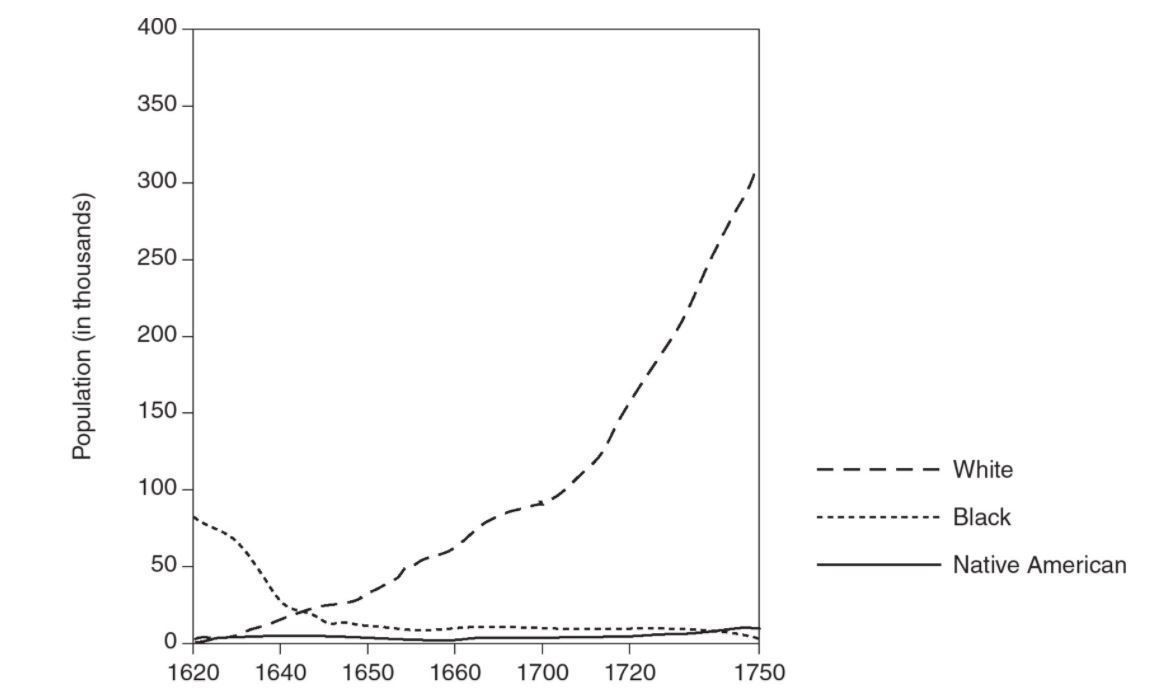
Population of the New England Colonies
Informationen
- Beschreibung
- Der Nutzer hat seine Fachbereichs-Information gelöscht. Notiz am C.5 U.S History, Skill #2, erstellt von Gelöschter Nutzer am 30/03/2021.
- Erstellt von
- Gelöschter Nutzer · Mär 2021
- Aktualisiert
- 30 Mär 2021
- Aufrufe
- 10
- Verlauf
-
- Erstellt von Jasmine M. · 29 Mär 2021
- Kopiert von Jasmine M. · 30 Mär 2021
- Bewertung