
C&P summary full
Folien in diesem Satz (9)
-
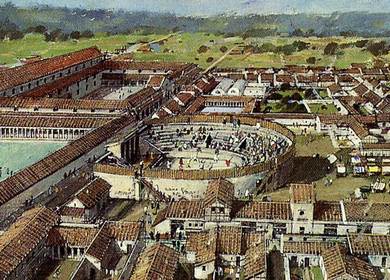
- Crime/Laws- Every possible crime had laws. Householders had to keep the streets outside their homes clean, and starting fires was illegal. The Twelve Tables were the first recorded Roman laws. In 533AD Justinian simplified and organised the laws into the Digest of Roman Laws.
- Law Enforcement- Legionaries policed towns and villages. They were volunteers and often away fighting wars. The Vigiles prevented and put out fires and patrolled at night. Other members of the army stopped riots.
- Trials- Judges for minor, juries for major crimes. Had to collect evidence yourself. Could hire lawyers if you had the money. Defendant could present evidence.
- Punishment- Death for serious crimes e.g. Arson, Attacking the Emperor, Robbing temples. Punishments for lesser crimes e.g. theft or selling under-weight bread included whipping, replaying cost of goods etc. Nobles could escape execution by going into exile. Decimation and crucifixion for slaves- all crucified if one tried to kill master.
- Reasons/change etc- More violent over time including punishment for killing father- tied in a sack with snakes and thrown into a river to drown.
-
- Crime/Laws- Saxon kings made laws
- Law Enforcement- Community based. Hue and Cry and tithings
- Trials- Juries of local people decided. No lawyers. Used experience of people concerned. If they could not decide, trial by ordeal was used. Hot iron (women) hot water (men) cold water (men) consecrated bread (priests) Royal courts for serious cases, shire courts were local serious cases, private courts and hundred courts
- Punishment- Blood feud early on. Compensation called Wergild. 100 for killing freeman, 300 for nobleman. Couldn't pay- slavery. treason etc. punished by death. Reoffending- mutilation. Didn't come to court- outlawed.
- Reasons/change etc-
-
- Crime/Laws- Kept Saxon laws but added forest laws. Trees couldn't be cut down, couldn't own bows and arrows. People hated these.
- Law Enforcement- Rebels executed without mercy. Destroyed animals, crops etc. to prevent revellion
- Trials- Basically same as before- trial by combat added
- Punishment- Killing deer = blinding. No more Wergild. More harsh punishments. Murdrum fine- if a Norman was killed everyone in the region had to pay a fine.
- Reasons/change etc- William believed crimes were committed against his peace
-
- Crime/Laws- Laws made by Kings
- Law Enforcement- Hue and cry, constables (no pay, led H&C) coroners inquired into unnatural deaths, sheriff and posse (track down criminals)
- Trials- Reorganised. Royal courts- 2 or 3 times a year in each county for serious cases. Quarter sessions. Noblemen held courts 4 times a year. Private and manor courts held be landowners. Church courts to try priests etc. Trial by ordeal stopped in 1215.
- Punishment- Serious crimes punished by death/mutilation. Benefit of clergy- if you could read Bible verse could be tried in less harsh church courts. Executions in public. Local manor courts used stocks and fines. Sanctuary- stand trial or leave country within 40 days.
- Reasons/change etc- Hierarchical. Kings relied on nobles to keep order and had to keep control of peasants.
-
- Outlaws weren't really like Robin Hood and his merry men
- Outlaws were feared and stole from anyone
- Poor villagers were also targets and they kept the money - not always sharing equally among themselves
- Churches were targets- contained valuable ornaments
- Threatened victims with arson and used violence.
- Some similarities e.g. daring rescues. One gang cut down one of their members for the gallows and took him to a church where he claimed santuary
- Often stayed together for a long time and had a mix of members
- Folville gang were involved in at least 3 murders. Never captured. Leader's father was a knight + lord.
- Henry V- worked hard, good leader. Took action personally e.g. two feuding knights- told them they'd be hanged if they didn't settle dispute after finishing oysters
- Henry VI- weak king. Refused to punish Lord Moleyns despite a request from a neighbour. Wanted support of nobels. Easily influenced
-
Peasant's Revolt 1381 a.k.a Great Revolt
- Wanted fairer taxes
- Poll tax- 5p tax paid by everyone
- Protection from French attacks
- Marched to London, murdered 2 leading advisors. Beheaded Archbishop of Canterbury
- Richard II met rebels and leader (Wat Tyler) was killed
- Most rebels got off lightly. Only 100 executed.
-
Early Modern Britain 1500-1750
- Crime/Laws- Vagabonds (some were sturdy beggars who thought it was easier to trick people than to work), highwaymen (glamorised, but actually feared and violent. Grew and then declined), poaching, smuggling
- Law Enforcement- Rewards used- especially for highwaymen. Thief takers tracked down criminals. Hue and cry and constables still used. Watchmen still however poorly paid and of little use. Army put down protests and rebellions.
- Trials- Still a variety of courts. Royal judges, quarter sessions, church courts and manor. Could claim benefit of clergy. Magistrates now helped quarter sessions. By the 1600s, benefit of the clergy didn't apply to serious crimes since so may could read. Lawyers being used more and more from the 1720s. Juries considered cases one by one by the 1700s.
- Punishment- bloody code from late 1600s. Vagabonds were often whipped and/or sent home. Sometimes reoffending could lead to execution. Poaching- Whaltham Black Act made hunting deer, hare or rabbits a capital crime. However- difficult to enforce because people saw it as unfair. Smuggling- also difficult to enforce because of the thousands of miles of unguarded coastline, the good organisation, and the fact it was accepted by the poor.
- Reasons/change etc- Population growth (hard to find jobs(, increased wealth and poverty (vagrants), puritans, increased travel (highwaymen) increased taxation (smuggling) landowner's attitudes (keep poor in their place- harsh laws against poaching) invention of printing, political change (civil war- feared more revolutions)
-
Protest in Early Modern Britain
- Pilgrimage of Grace- 1536. Henry VIII set up CofE. Monasteries closed. 30,000 rebels met in Yorkshire and Linconshire. Assembled at Doncaster to talk to king's advisers after taking control of several areas including York. Most rebels pardoned, but arrested and tried leaders for treason. Robert Aske (the leader) was hung, drawn and quartered. 200 were executed. Great Chain of Being. Feared it might encourage an invasion from Catholic Spain.
- Kett's Rebellion-1549. Food prices were risin and landowners were fencing off farmland to graze sheep which employed fewer people. Protesters led by a landowner called Robert Kett. Ripped down fences in Norwich. 16,000 men camped outside of the city and sent a list of complaints to Edward VI. They refused to leave, though a messenger said they would be pardoned if they did. They tried to take over the city but an army of 10,000 men were sent and 3,000 rebels were killed. Kett was hanged in chains from Norwich castle and 300 were executed. 9 were hung, drawn and quartered.
- Gunpowder Plot- 1605. King James I was harsh against Catholics and demanded that fines should be collected for not attending CofE services- there were laws like this before but not enforced very strongly.
Informationen
- Beschreibung
- Folienset am C&P summary full, erstellt von Joanna Henney am 11/03/2016.
- Erstellt von
- Joanna Henney · Mär 2016
- Aktualisiert
- 18 Mär 2016
- Aufrufe
- 0
- Bewertung