
jessica eslava
Folien in diesem Satz (12)
-
-
- 1) Sujeto + verbo to be + so + adjective + that + clause (subject + verb + complement).
- It was so cold that we cancelled our anniversary party = hacía tanto frío que cancelamos nuestra fiesta de aniversario.
- I’m so tired that I don’t feel like going out = estoy tan cansada que no me apetece salir.
- Como ves, utilizamos so cuando detrás tenemos un adjetivo, y lo traducimos por “tan”. El “that” que ponemos detrás del adjetivo se puede omitir, no es obligatorio.
- 1) Sujeto + verbo to be + so + adjective + that + clause (subject + verb + complement).
- It was so cold that we cancelled our anniversary party = hacía tanto frío que cancelamos nuestra fiesta de aniversario.
- I’m so tired that I don’t feel like going out = estoy tan cansada que no me apetece salir.
- As you see , we use so when behind an adjective , and translate as "tan" . The "that" we put behind the adjective it can be omitted, it is not mandatory .
-

- -En este ejemplo tenemos: subject (it) + verb to be (‘s) + adjective (nice) + to infinitive (to know), por tanto, la estrucutra so + adjective, también puede ir seguida de to infinitive. Más ejemplos: it’s so cold to go out (hace tanto frío para salir), it was so dangerous to go alone (era tan peligroso ir sólo).
- -In this example we have : subject (it) + verb to be ( ' s ) + adjective (nice) + to infinitive (to know ) , therefore the estrucutra so + adjective, can also be followed by infinitive to . More examples : it's so cold to go out ( so cold to go out ) , it was so dangerous to go alone (it was so dangerous to go only).
-
- 2) Sujeto + verbo to be + such + a/an + adjective + noun + that + clause (subject + verb + complement).
- It was such a sunny day that we decided to have a picnic = era un día tan soleado que decidimos hacer un picnic.
- I had never heard such a lovely song = nunca había oído una canción tan bonita.
- En este caso, utilizamos such cuando tenemos un sustantivo detrás. Delante del sustantivo podemos poner adjetivo, sí, pero lo importante aquí es saber que detrás de such es necesario el sustantivo. Si el sustantivo es singular contable, como “day” y “song”, el artículo indefinido (a/an) también es obligatorio.
- 2) Sujeto + verbo to be + such + a/an + adjective + noun + that + clause (subject + verb + complement).
- It was such a sunny day that we decided to have a picnic = era un día tan soleado que decidimos hacer un picnic.
- I had never heard such a lovely song = nunca había oído una canción tan bonita.
- In this case , we use when we have a noun Such behind . Before the noun we can put an adjective, yes, but what is important here is to know that behind the noun Such necessary. If the noun is singular accounting , as "day" and "song " , the indefinite article (a / an ) it is also required.
-
-
- -Make tiene muchos significados.
- Y, en realidad, cuando se compara con "permit", "allow" y "let", "make" tiene poco que ver porque significa lo opuesto, "obligar", forzar a alguien a hacer algo (no permitir).
- Pero se suele estudiar conjuntamente con estos verbos porque tiene una estructura similar.
- -Make has many meanings.
- And in fact , when compared to " permit" , "allow " and "let" , "make" has little to do because it
- means the opposite, "force " to force someone to do something( not allow) .
- But usually they studied in conjunction with these verbs because it has a similar structure.
-
- -
- Por ejemplo:
- She made me clean the floor. Ella me hizo limpiar el suelo.
- Nota: Fíjate, que al igual que "let", el verbo que va detrás del objeto (me) no lleva "to".
- -for example:
- She made me clean the floor. Ella me hizo limpiar el suelo.
- Note : Look, that like "let" , the verb that goes behind the object (me) does not lead "to " .

-
- -Henos dicho que "let" es el más informal de los tres verbos y que también significa permitir, dejar.
- Por ejemplo:
- Let me tell you something. Déjame decirte algo.
- ¿Te has fijado en un detalle? El verbo que va detrás del objeto (persona) va en infinitivo pero sin "to".
- -- Hays said that "let" is the most informal of the three verbs and that also means allow , leave .
- For example:
- Let me tell you something. Déjame decirte algo.
- Have you noticed anything ? The verb that follows the object
- ( person) will infinitive without "to " .
-
- -Más ejemplos.
- Let me explain to you my problems. Déjame explicarte mis problemas.
- No es let me explain. No es let me say.
- Ahora compararemos let con allow.
- -More examples.
- Let me explain to you my problems. Déjame explicarte mis problemas.
- Not TO let me explain. Not to say let me .
- Now let compare with allow .
-
- -Es muy similar a "permit" solo que menos formal. Estas oraciones sí las ves escritas, o incluso la gente las suele decir.
- We do not allow dogs in here.
- No permitimos perros aquí dentro.
- Presta atención:
- Si hay un objeto (persona) detrás de "allow" el verbo que sigue a "allow" irá en infinitivo.
- Pero, si no lo hay, el verbo que sigue a "allow" terminará en ing.
- -It is very similar to one that less formal " permit" . These prayers if you see them written , or even the people say.
- -We do not allow dogs in here .
- - No permitimos perros aqui adentro .
- Pay attention:
- If an object ( person) behind "allow " the verb that follows " allow" will infinitive .
- But if there is not, the verb that follows " allow" end in ing.
-
- -
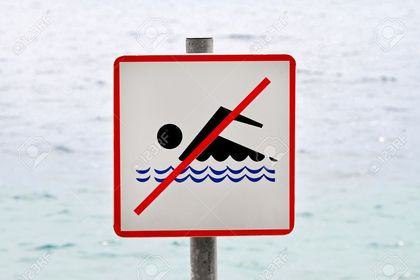
- We do not allow people (objeto) to swim (verbo en infinitivo) in this river.
- No permitimos que la gente nade en este río.
- We do not allow (no hay objeto) swimming (verbo terminado en -ing) in this river.
- No permitimos la natación es este río.
- Las estructuras pasivas son frecuentes con "allow". Si no sabes lo que es la voz pasiva,
- -We do not allow people ( object) to swim ( infinitive ) In This River .
- -We do not allow people to swim in this river.We do not allow ( no object) swimming ( finished verb in -ing ) In This River .
- -We do not allow swimming is this river.
- Passive structures are common to " allow" . If you do not know what the passive voice , read this.
-


Informationen
- Beschreibung
- recuperacion ingles
- Erstellt von
- jessikyjhos · Jul 2016
- Aktualisiert
- 26 Sep 2016
- Aufrufe
- 7
- Bewertung