
Karteikarten
The Greco- Persian Wars

Karten in diesem Stapel (50)
- 1The First Greco -Persian War 490BC. CausesRemember the phrase WAR to understand the key causes of this war.
W=Women
A = Assets
R=Revenge - 2The Causes of the Greco- Persian Wars. Long Term. 1. WomenHerodotus claims that events involving 3 women were the long term causes of the conflict between Greece and Persia.
The 3 women were IO, Medea and Helen of Troy.
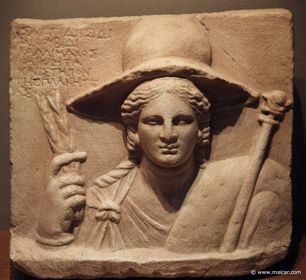
- 3Long Term 1.Women IOIO
Was a Greek princess who was stolen by the Phoenicians but the event was blamed on the Persians. Or did she go willingly?
- 4—Medea
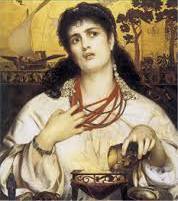
Helped Jason acquire the golden fleece from the Medes. He then left her on a deserted island!!
- 5Long Term 1.Women Helen of TroyHelen
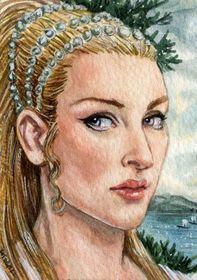
Helen was the Queen of Sparta taken by Paris (Alexander) to Troy. This started the Trojan War. Was she worth it - the Persians thought not!!
- 6Causes of the First Greco - Persian Wars. 2. AssetsAssets
Undoubtedly the assets that the Greeks had acquired were a reason for the war. Athens in particular had a large fleet that had been funded by new silver mines. Gold, land and trade routes were also important factors. Don't forget both Persia and Greece was expanding so war would occur.

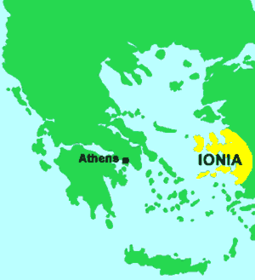
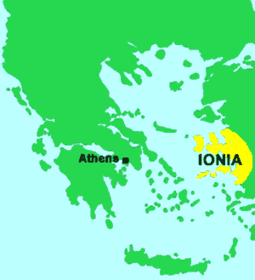
- 7The Causes of the First Greco-Persian War. Short Term 3.RevengeThe Ionian Revolt 500-494BC.
In this period the Greeks living in Ionia revolted against Persian rule. Ultimately they were defeated.
- 8The Causes of the First Greco-Persian War. Short Term 3.RevengeThe Ionian Revolt (2)
The Ionian Greeks wanted greater freedom and to move towards democracy. They were encouraged by the Athenians and the Greek islands.
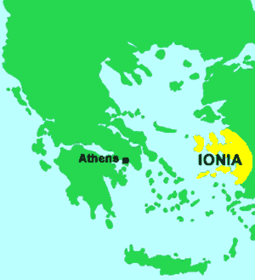
- 9The Causes of the First Greco-Persian War. Short Term 3.RevengeThe Ionian Revolt (3)
The Athenians sent 4000 men to support the Ionians and the Persian city of Sardis was sacked by the Greek forces.
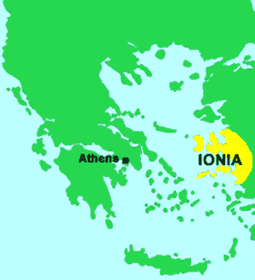
- 10The Causes of the First Greco-Persian War. Short Term 3.RevengeThe Ionian Revolt (4)
The Persians wanted revenge for this. Herodotus says Darius asked his servants to remind him everyday about the sacking of Sardis.
- 11Test Your Knowledge1. What does WAR stand for?
2. Who were the 3 women from mythology believed to have been part of the long term causes of the war?
3. What was the Persian attitude to fighting over women?
4. Name 3 assets the Persians desired from Greece?
5. Why did the Ionians revolt?
6. What were the dates of the Ionian revolt?
7. How many Athenians fought in Ionia?
8. Which Persian city was sacked by the Greek forces?
9. How did Darius remember these events?
- 12Exam Question PracticeUsually for the causes of the wars the question will be a 5 mark question. It will usually ask you to outline or describe the causes.
Outline two reasons why Darius chose to invade Greece?
To do this you must remember to-
Give two different causes for the invasion.
Explain each of those reasons with examples.
If you can give two different reasons, explain them and give examples for both the explanations you will get 5 marks!!
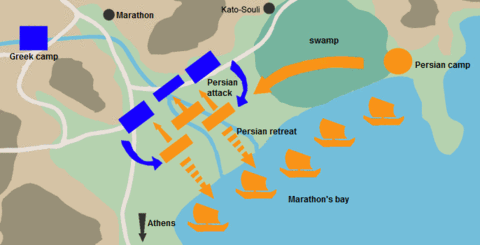
- 13The First Greco- Persian War 490BC The Build up to Marathon.King Darius decided to invade Greece in 490BC. He chose to attack by sea from Ionia, attacking Greek islands on the way and landing his forces at Marathon Bay on the advice of an ex-tyrant Hippias.
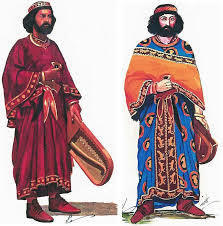
- 14The First Greco- Persian War 490BC The Build up to Marathon.Datis was given over all control of the Persian army as he was the cavalry commander.
Artaphernes was in charge of the infantry.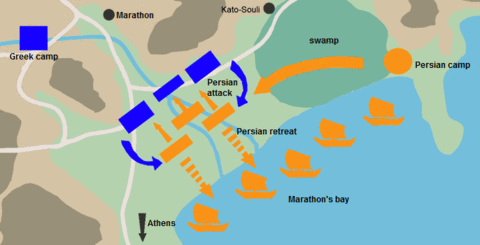
- 15The First Greco- Persian War 490BC The Build up to Marathon.Hippias
Had been a tyrant of Athens but was forced out of power by the Spartans. He fled to Persia but wanted to control Athens. Encouraged the invasion of Greece by the Persians.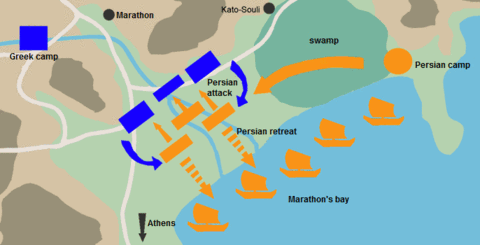
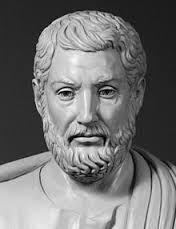
- 16The First Greco- Persian War 490BC The Build up to Marathon.Hippias (2)
He landed at Marathon with the Persians and apparently stumbled and lost a tooth which he took to be a bad omen. He is supposed to have had dreams of both Persian defeats and victories!!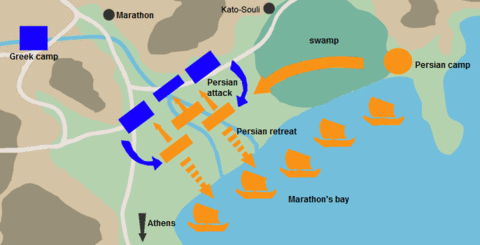
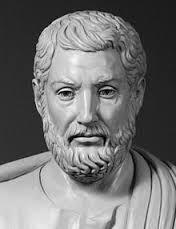
- 17The First Greco- Persian War 490BC The Build up to Marathon.Hippias (3)
From Marathon he went to Athens where he encouraged the people to give up to the Persians. It was his actions that led to Datis deciding to split his forces and to try and seize Athens. This ultimately forced the battle to take place.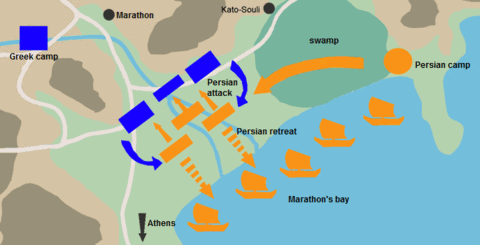
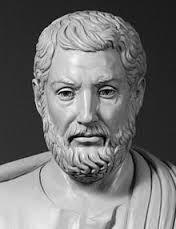
- 18The First Greco- Persian War 490BC The Build up to Marathon.The Persians captured a series of islands on the way to Marathon. They chose Marathon because it was a wide bay with flat land - an advantage for their cavalry.
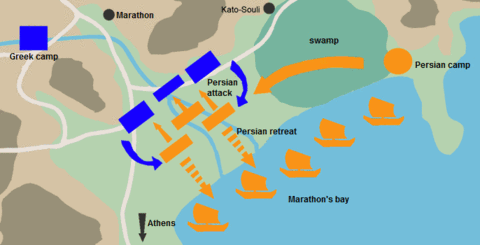
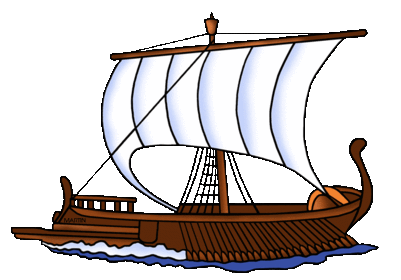
- 19The First Greco- Persian War 490BC The Build up to Marathon.30 000 Persian troops landed at Marathon and a mixture of cavalry, archers and infantry.
Remember only
13 000 actually fought at the battle.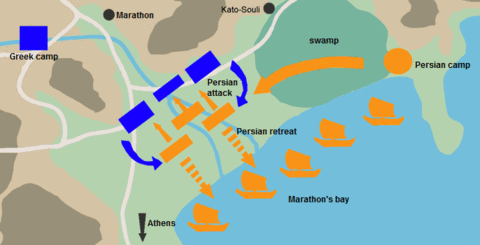
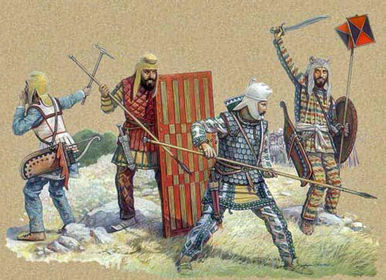
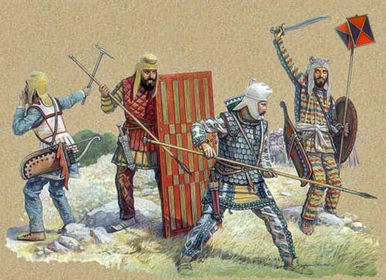
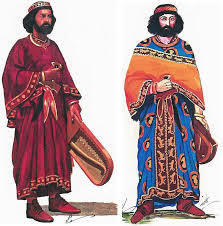
- 20The First Greco- Persian War 490BC The Build up to Marathon.The Persians had the advantage in numbers and variety of troops. However, their army came from all over the Empire (Herodotus claims language was a problem), they had very little armour (cloth and wicker shields) and they were not as well trained as a Hoplite.
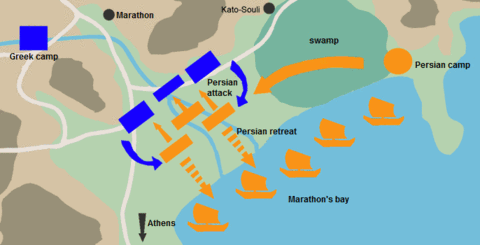
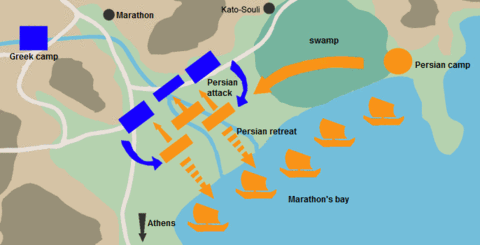
- 21The First Greco- Persian War 490BC The Build up to Marathon.It is estimated that there were around about 10 000 Greek Hoplites at Marathon. However, there were also troops called skirmishers who were more lightly armoured but fought in front of the hoplite lines. Herodotus doesn't really talk about them as they were not seen as important.
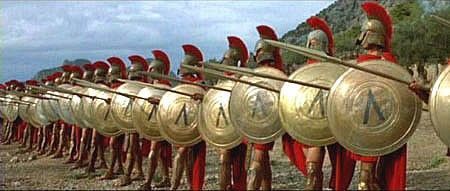
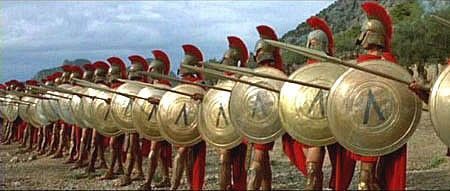
- 22The First Greco- Persian War 490 BC The Build up to Marathon.The Hoplites had many advantages over their Persian enemies.
They were heavily armoured, well trained, disciplined and well motivated as they were defending their country.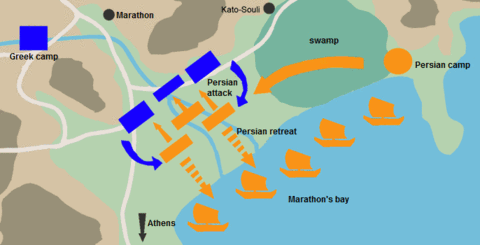
- 23The First Greco- Persian War 490BC The Build up to Marathon.The two armies faced each other for a number of days before the battle actually took place. The Greeks stayed on top of a defensive hill that prevented the Persians from attacking Athens. However, they would not attack the Persians on the flat plain as the cavalry would have cut them to pieces.

- 24The First Greco- Persian War 490BC The Build up to Marathon.The Greek army had 10 generals. They could not decide what to do. 5, led by Militiades wanted to attack the Persians while 5 others wanted to wait longer.

- 25The First Greco- Persian War 490BC The Build up to Marathon.Militiades wanted to lead the army. He decided to try and persuade the War Archon - Callimarchus - to support him. The War Archon was elected by the people of Athens to represent their views in battles. In return for leading the right hand side of the Greek army Callimarchus gave his support to Militiades. This now meant the Greeks had decided to fight with Militiades as their commander.

- 26The First Greco- Persian War 490BC The Build up to Marathon.The night before the battle of Marathon Datis came up with a cunning plan. He would sail at night with 17000 cavalry and the next day capture Athens. No battle would be needed and he left Artaphernes behind with 13 000 troops just to keep the Greeks worried and to prevent them from leaving Marathon. The war would be over quickly with little bloodshed.
- 27The First Greco- Persian War 490BC The Build up to Marathon.The plan was a good one.
However, Greek scouts discovered the Persians were leaving on their ships and reported this to Militiades. He realised this was a major problem.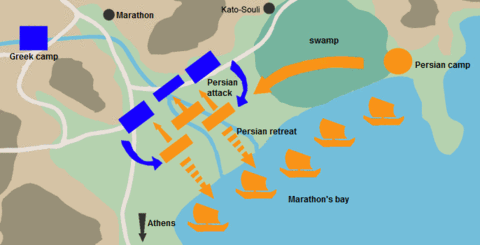

- 28The First Greco- Persian War 490BC The Build up to Marathon. Test Your Knowledge1. Who was the War Archon?
2. What position did Hippias hold in Athens before being removed by the Spartans?
3. What did Hippias lose on the beach at Marathon?
4. What route did Darius take for the invasion of Greece?
5.What elements made up the Persian army?
6. How many Greeks were there at Marathon?
7. Describe what happened at the Battle of Marathon.
8. Why did the Persians choose to land at Marathon?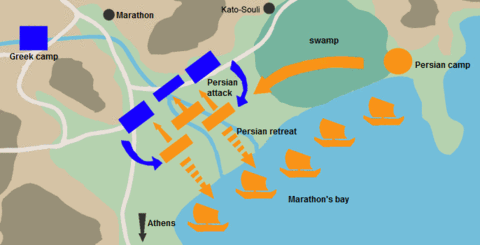
- 29The First Greco- Persian War 490BC The Build up to Marathon. Exam Question Practice.Question 2 style
Will always be out of 13 marks.
This will be divided into 3 sections covering these different skills.
4 marks for knowledge.
4 marks for source analysis.
5 marks for reliability of the historian(s).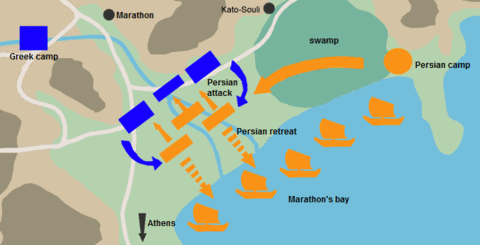
- 30The First Greco- Persian War 490BC The Build up to Marathon. Exam Question Practice.Question 3 style
Will always be out of 14 marks.
This will be 1 question and you will need to show these 3 skills in your answer. A paragraph on each is a good way to do this.
4 marks for knowledge.
5 marks for source analysis.
5 marks for reliability of the historian(s).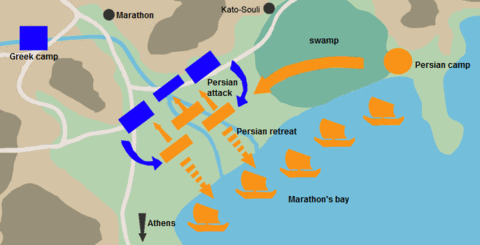
- 31The First Greco- Persian War 490BC The Build up to Marathon. Exam Question Practice.Question 4 style
Will always be out of 18 marks.
This will be 1 question and you will need to show these 3 skills in your answer. A paragraph on each is a good way to do this.
5 marks for knowledge.
5 marks for source analysis.
8 marks for reliability of the historian(s) with conclusion.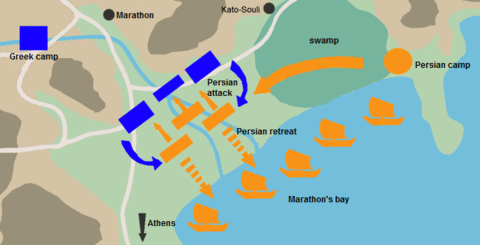
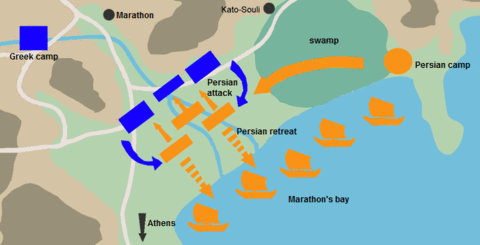
- 32The Battle of Marathon 490BCMilitiades decided that the battle had to take place quickly. He had ton defeat the Persian army and then march quickly to Phaleron Bay to prevent the Persian forces from landing there.
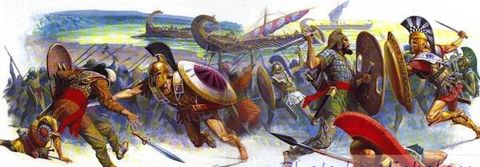
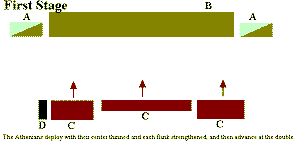
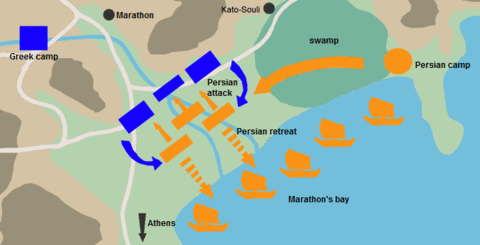
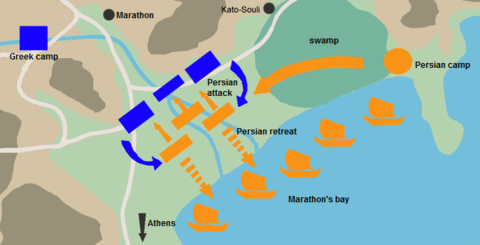
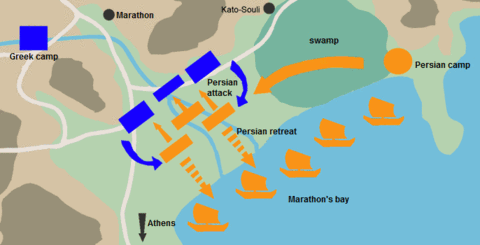
- 33The Battle of Marathon 490BCHe was worried about the Persian archers so thickened his forces on the wings and weakened his centre. The Persians massed their forces in the centre and had archers on the wings. The Persian tactics had worked before against the Greeks in the Ionian wars and when invading the Greek islands.
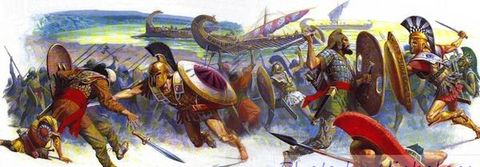
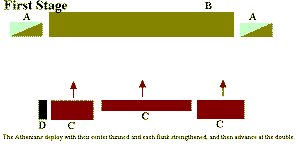
- 34The Battle of Marathon 490BCMilitiades ordered his men to run at the Persians as fast as they could and the Skirmishers to attack the archers first. This part of the plan was a complete success. The Archers fled into the swamps and were quickly defeated.
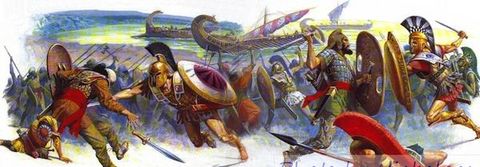
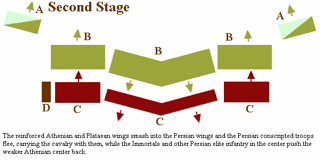
- 35The Battle of Marathon 490BCHowever, the Persian centre pushed the Greek centre back and they were very close to breaking through. This would have given the Persians victory.
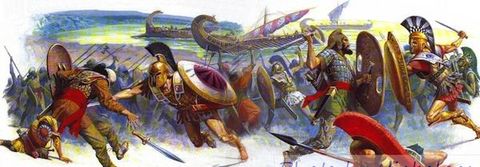
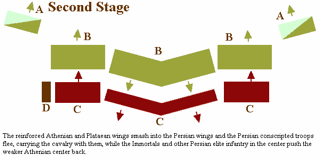
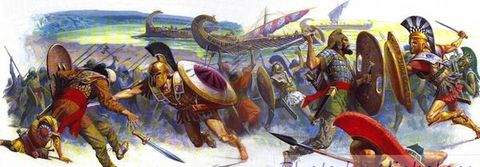
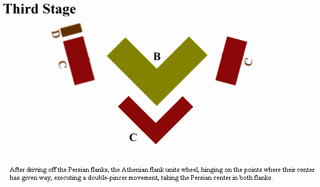
- 36The Battle of Marathon 490BCThe Greek centre held and then the forces on the wings surrounded the Persian centre. The Persians now panicked as they were cut off from their ships and facing annhilation. They fought hard to escape but were heavily defeated. Round 1 to the Greeks.
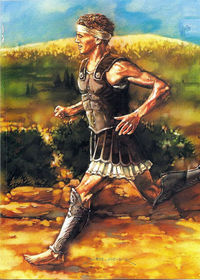
- 37The Battle of Marathon 490BCThe Marathon Run
Militiades had Pheidippedes run to Athens to report the Greek victory. He marched the Greek army to Phaleron Bay just in time to see the Persian ships arriving. Datis decided fighting on the beach would be a disaster and fled back to Persia.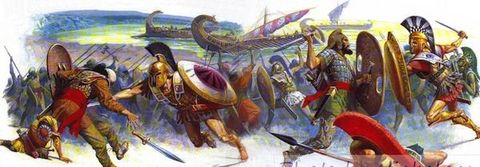
- 38The Battle of Marathon 490BC Test Your Knowledge1. How many Greeks were at the battle?
2. How many Persians were at the battle?
3. Who was the Persian commander at Marathon?
4. How were the Greeks organised for the battle?
5. Describe the events of the battle.
6. Name the Greek Marathon runner.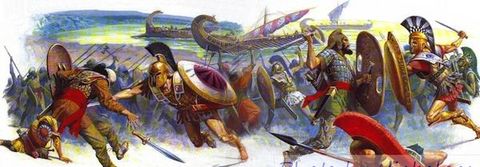
- 39The Battle of Marathon 490BC The reasons the Greeks won and the Persians lost. Overview.An important part of History and the exam is deciding which reason is the most significant in any event. For the Battle of Marathon there are 4 main reasons you need to take into account.
1. Militiades.
2. Datis and Artaphernes.
3. The two armies.
4. Luck!!

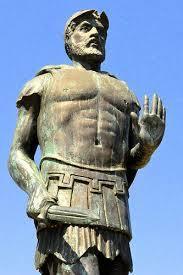
- 40The Battle of Marathon 490BC The reasons the Greeks won and the Persians lost. Reason 1 - MilitiadesThe leadership of Militiades is one of the key reasons Herodotus gave for the Greek victory.
1. He chose the battle tactics.
2. He had adapted them from his experiences fighting the Persians in the Ionian wars.
3. He made a stirring speech on the morning of the battle.
4. He persuaded Callimarchus to make him the main general.
5. He rushed the troops back to Phaleron Bay.
6. He sent the runner to Athens.
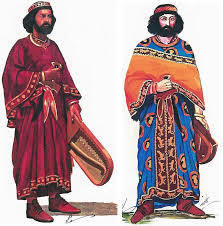
- 41The Battle of Marathon 490BC The reasons the Greeks won and the Persians lost. Reason 2 - Datis and ArtaphernesThe decisions of Datis and Artaphernes also influenced the outcome.
1. Artaphernes stayed with the same tactics he had always used.
2. Datis had weakened the army by taking nearly all the cavalry with him. Without this the battle may not have happened at all!!
3. The Persian fleet didn't get to Phaleron Bay before the Greek army that fought at Marathon.
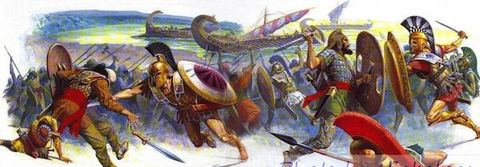
- 42The Battle of Marathon 490BC The reasons the Greeks won and the Persians lost. Reason 3 - The Two ArmiesIn the battle situation armour, discipline, organisation, training and communications are often vital. Morale and motivation are also significant factors. Once the two sides were nearly equal in numbers these factors heavily favoured the Greek Hoplites over the Persian forces.

- 43The Battle of Marathon 490BC The reasons the Greeks won and the Persians lost. Reason 4- Luck!!As in most cases in life luck is a very important element in being successful.
1. It was lucky the Greek Scouts discovered what the Persians were doing.
2. A series of events convinced many Persians they were going to fail.
3. The ships failed to reach Phaleron Bay before the Greek army got there.
4. Militiades was selected as commander.

- 44The Battle of Marathon 490BC The reasons the Greeks won and the Persians lost. Test Your Knowledge1. What are the 4 reasons given for the Greeks winning at Marathon?
2. Name 3 examples for why Militiades was chosen as a factor?
3. Give 3 reasons why luck was an important factor?
4. Name the 2 Persian commanders?
5. Give 2 reasons they were a significant factor in the defeat of the Persians.
6. Give 3 reasons why the differences between the two armies was important.
- 45The Battle of Marathon 490BC The reasons the Greeks won and the Persians lost. Exam Question PracticeThis is nearly always a 30 mark style question.
This means you need to know how each of these factors played a part and have evidence to back up your points.
The question will nearly always ask about one of the factors only - but you will be expected to show knowledge of all of them to get the highest marks.
- 46The Battle of Marathon 490BC The reasons the Greeks won and the Persians lost.This is because the markscheme expects you -
1. To have detailed knowledge of the events.
2. Have a well organised argument, that answers the question set and shows knowledge of Herodotus.
3. You must have a paragraph that writes about Herodotus and whether we can believe him or not.
a) This must state what you can believe about his ideas.
b) What you can't believe about his ideas.
c) It must link to what is the point of the question i.e. the fact he was paid by the Athenians and he favoured individuals does mean he is unreliable about the other factors.
- 47The Battle of Marathon 490BC The reasons the Greeks won and the Persians lost. Exam Question PracticeConclusion
You must always give a well explained conclusion for this style of question.
You need to choose one reason as more important than the others. The examiner is looking for your reasoning not the actual reason!!
- 48The Battle of Marathon 490BC The reasons the Greeks won and the Persians lost. Exam Question PracticeThe Markscheme for the 30 mark paper is divided like this.
Knowledge 10 marks.
Organisation and source understanding
10 marks.
Reliability of Herodotus and Conclusion
10 marks.
- 49The Battle of Marathon 490BC The reasons the Greeks won and the Persians lost. Exam Question PracticeExamples of 30 mark questions to practice.
'Without Militiades, Athens would have been doomed in 490 BC'. Using Herodotus' account, explain to what extent you agree with this view of Militiades' role at Marathon.
What can we learn about the strengths and weaknesses of the Persian forces from the battles of Artemisium and Thermopylae?
- 50Exam Technique AdviceThe exam is only 1 hour and 15 minutes long and it is worth 80 marks. Timing is always a problem.
Tip - Answer the paper in reverse order!!
Start with the 30 mark question, then do the 18 mark question, then the 14, then the 13 and finish with the 5 mark.
This way if you are running out of time you will only lose a few marks.
Informationen
- Beschreibung
- Information cards about the Greco-Persian Wars - including causes, the key battles and the reliability of Herodotus
- Erstellt von
- Gelöschter Nutzer · Okt 2016
- Aktualisiert
- 8 Dez 2016
- Aufrufe
- 34
- Verlauf
-
- Erstellt von Bryan Jackson · 21 Jan 2015
- Kopiert von Kev Wilson · 14 Okt 2016
- Bewertung