
Notizen
Energy Resource Management
Inhalt der Notizen (5)
Seite 1
Types of Energy
Energy is used in most human activities in the world today.
Energy comes in two forms; renewable and non-renewable.
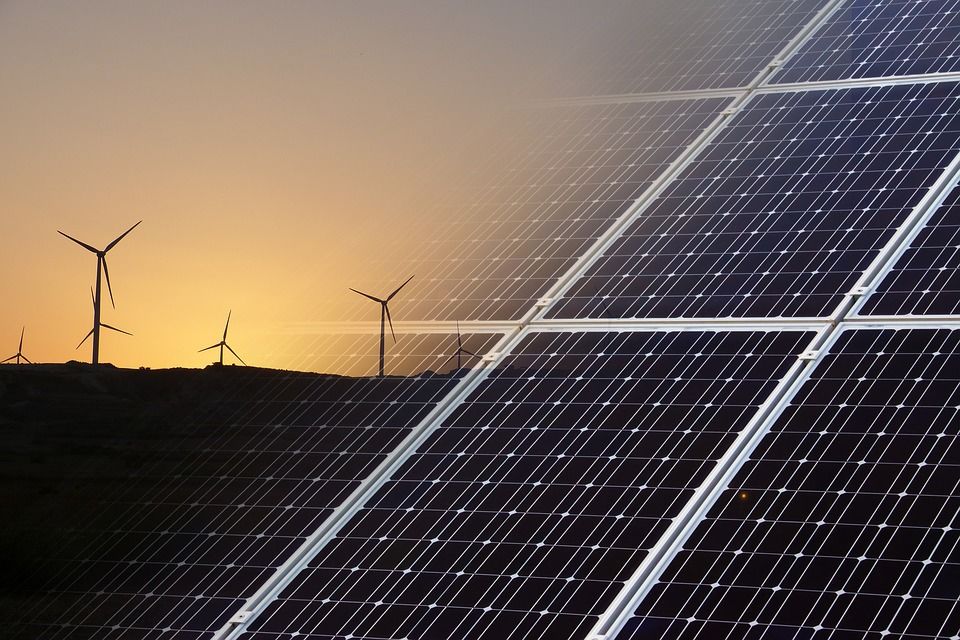
Renewable Energy:
Comes from energy sources that will not run out.
Examples: solar, wind, hydroelectric, hydrothermal etc.
Are generally expensive to develop but are otherwise free.
Environmentally friendly.
Non-renewable Energy:
Accounts for most of the world's consumption.
Come from finite sources.
Release greenhouse gasses.
Extraction damages the landscape.
Examples: coal, oil, and gas.
Seite 2
How Energy is Used:
Different countries of the world use different proportions of renewable and non-renewable energy depending on the resources available and their level of development.
Less developed countries usually do not have the money to invest into renewable energy innovation.
Countries with the highest populations usually don't have the highest consumption of energy.
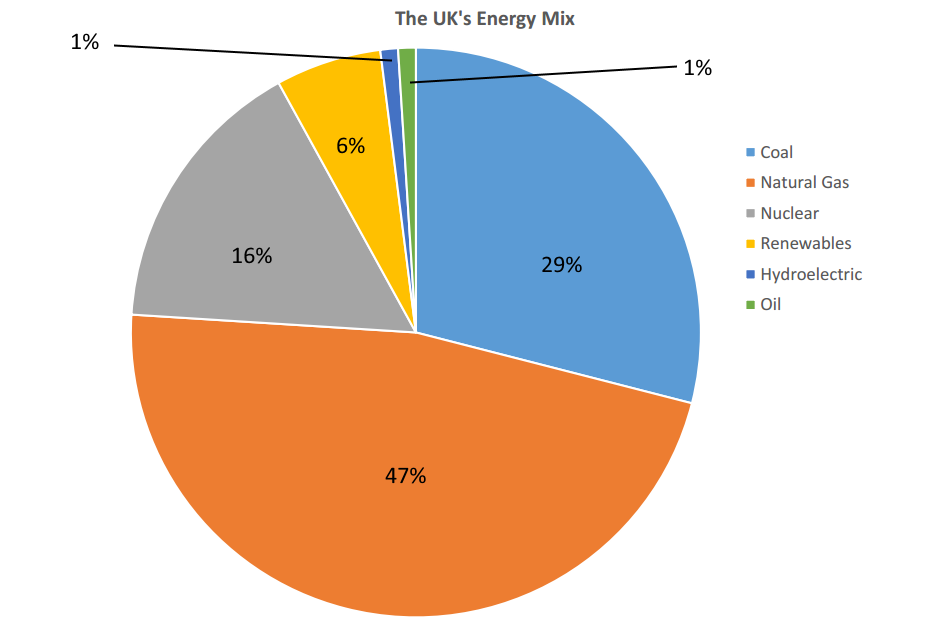
The UK's Energy Mix:
The UK uses a mix of renewable and non-renewable energy sources, this mix has taken a shift between 2007 and 2013 with increasing emphasis on renewable energy.
Factors such as the Paris Agreement in 2015 and the Rio +20 Conference in 2012 have helped to form this shift.
Up to recent years, renewable energy was not part of the UK's energy mix.
The UK's energy mix is shown on the diagram below.
Seite 3
Global Distribution of Supply and Consumption
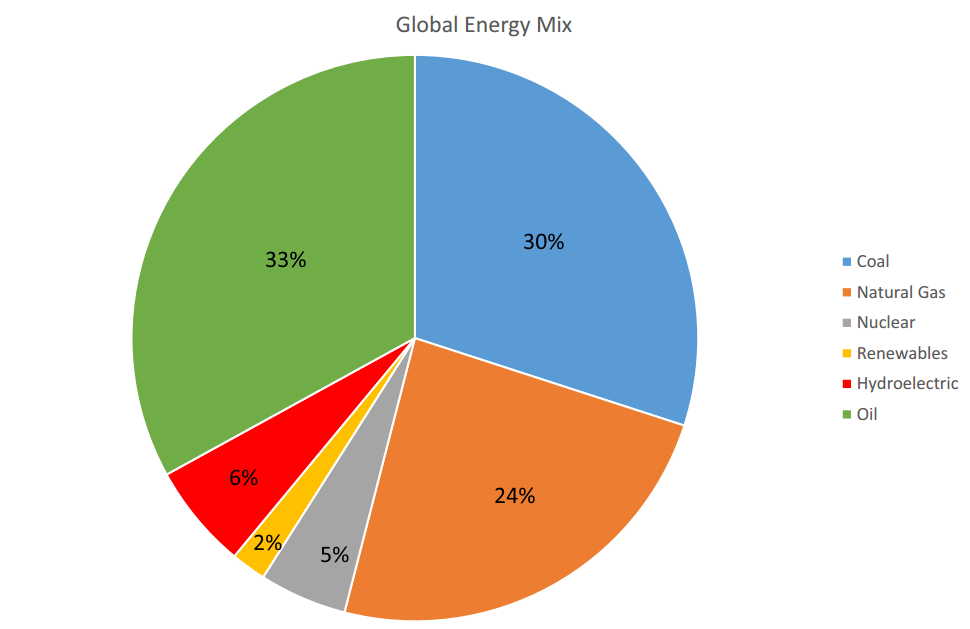
Nearly 90% of the world's energy supply comes from non-renewable fossil fuels.
The largest consumers in the world are also some of the major producers in the world.
The largest consumers tend to be high income countries.
These countries have energy security and energy is available to most of the population at an affordable price.
Energy production is generally low in countries where demand is low.
Demand is usually low in low income countries where there is energy insecurity.
The parts of the world at lowest risk to energy insecurity are Canada, Russia, Australia, and several Middle Eastern countries.
Higher risk countries include areas of Africa and Latin America.
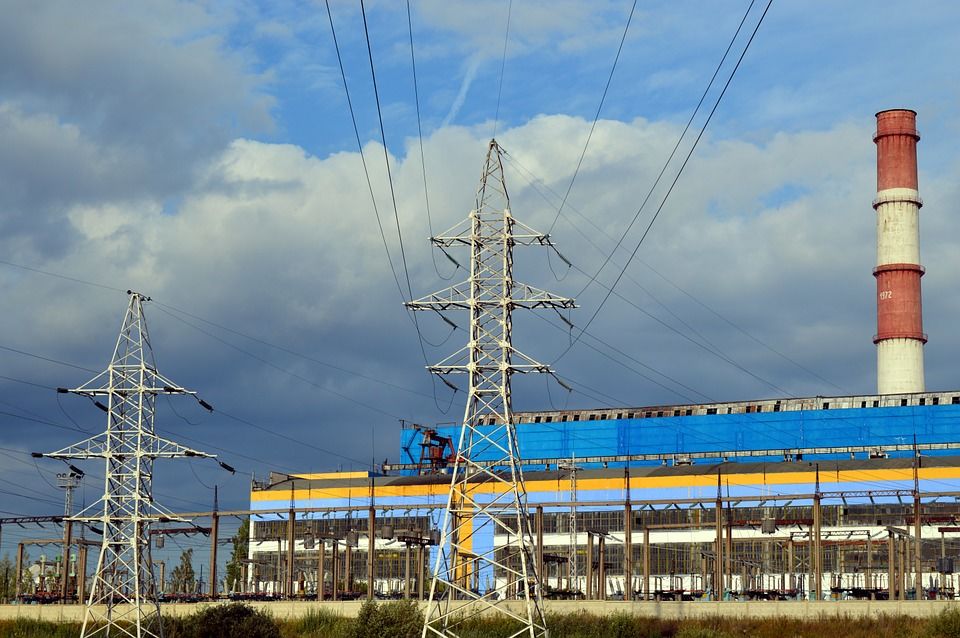
Recently, many countries are facing what is known as the energy gap.
As demand for renewable energy is increasing, countries are phasing out fossil fuels.
Many low income countries do not have the infrastructure ability to invest in renewable sources of energy, but instead rely on fossil fuels.
As supplies of fossil fuels run low, these less developed countries begin to rely on imported supplies of energy.
Seite 4
Factors Affecting Supply and Consumption
Geology determines the amount of fossil fuels available to an area. This also determines if the supply of fuel can be easily extracted and used economically.
Climate is an important factor in renewable energy production; this affects the amount of wind, sunshine, and precipitation an area receives.
Environmental conditions, particularly harsh conditions, can make extraction more difficult.
Technological advances can bring new, more efficient ways of harnessing energy.
The cost of producing energy plays a big role in the type of energy to be produced. The cost of oil in particular can persuade producers to produce more or less energy.
Political factors have a large effect on energy security. An energy importing country needs to ensure that the country they are buying energy from is politically stable as things like war can cut off energy supplies.
Seite 5
Reasons for Increasing Energy Consumption
Global energy consumption has nearly tripled over the last 50 years.
Lifestyle was very different 100 years ago; increased wealth has brought the introduction of cars, central heating in homes, and technology.
Population growth puts more pressure on global energy supplies.The global population has grown from under 2 billion in 1916 to over 7 billion today. The majority of population growth has taken place in developing countries where demand for energy is relatively low.
Development brings increased wealth and standards of living; this increases demand for energy. This also causes a move in industry and agricultural practices. Farms move to more intensive practices and factories become larger, needing more energy.
Modern technology often requires more energy to run. The spread of this technology to less developed areas also increases this effect.
Informationen
- Beschreibung
- Der Nutzer hat seine Fachbereichs-Information gelöscht. Notiz am Energy Resource Management, erstellt von Gelöschter Nutzer am 29/06/2017.
- Erstellt von
- Gelöschter Nutzer · Jun 2017
- Aktualisiert
- 29 Jun 2017
- Aufrufe
- 18
- Verlauf
-
- Erstellt von Antonia Blankenberg · 26 Jun 2017
- Kopiert von Antonia Blankenberg · 29 Jun 2017
- Bewertung