
Notizen
Modern Atomic Model 2
Inhalt der Notizen (4)
Seite 1
Bohr Model of Atoms
Relative charge Relative mass
Proton +1 1
Electron -1 1/1835
Neutron 0 1
The radius of a typical atom is about \(10^{-10}m\) and its mass is about \(10{–23}g\).
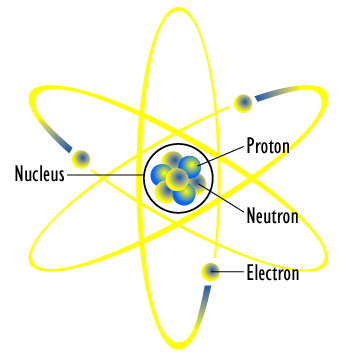
Nucleus: Contains protons and neutrons
Electron shells: Surround the nucleus and are filled with electrons. Also known as orbits
The first and fourth electron shell can contain two electrons, while the rest can contain up to eight.
The lower shells must be completely filled before higher shells can be filled.
Atoms in the same element have an equal number of protons and electrons and are therefore not charged.
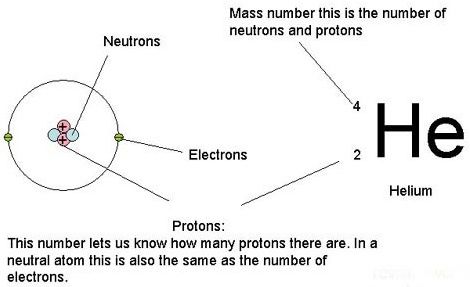
Mass number: Total number of protons and neutrons in an atom.
Atomic number: Number of protons in an atom.
Seite 2
Isotopes
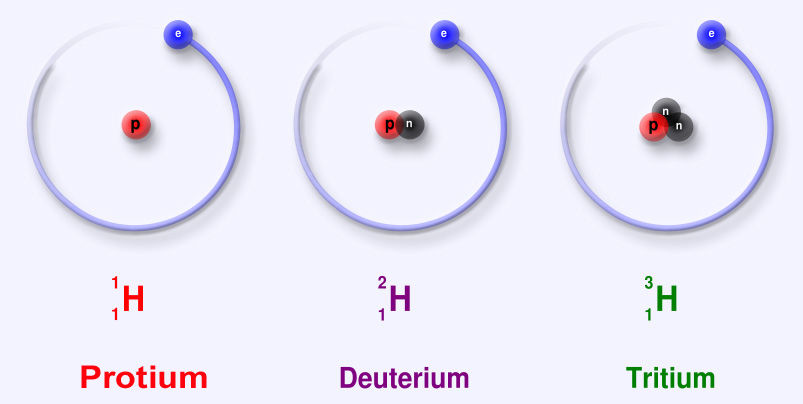
Isotopes: Atoms of the same element that have different masses due to different number of neutrons in the nucleus
Relative atomic mass: Mean mass of an atom of an element compared with carbon-12
Relative atomic mass = \[ \frac{\text{Total mass of the atoms}}{\text{Total number of atoms}} \ \]
The more the number of neutrons differs from the stable form of the element, the more likely it is that the atom will be radioactive.
Radioactive elements are unstable and likely to decay.
Seite 3
The Periodic Table
In 1817, Dobereiner arranged elements into groups of threes, known as Dobereiner's triads.
According to Dobereiner, the atomic weight of the middle element is nearly the same as average of the atomic weights of other two elements.
In 1864, Newlands organised elements into groups of eight, known as Newlands' Octaves, in order of increasing atomic weight.
This arrangement of elements showed a regular repeating pattern.
A number of elements had to be placed into incorrect groups and the trend quickly broke down.
In 1869, Dmitri Mendeleev organised the elements in a periodic table in order of their atomic weights.
He found that when ordered this way, the properties of the elements repeated themselves periodically.
He left gaps and reversed the positions of some elements so that the chemical properties of the elements would match the group they were in.
For example, he switched the positions of Tellerium and Iodine.
Mendeleev was able to use his table to make predictions about elements that had not yet been discovered.
The table did not contain the halogens.
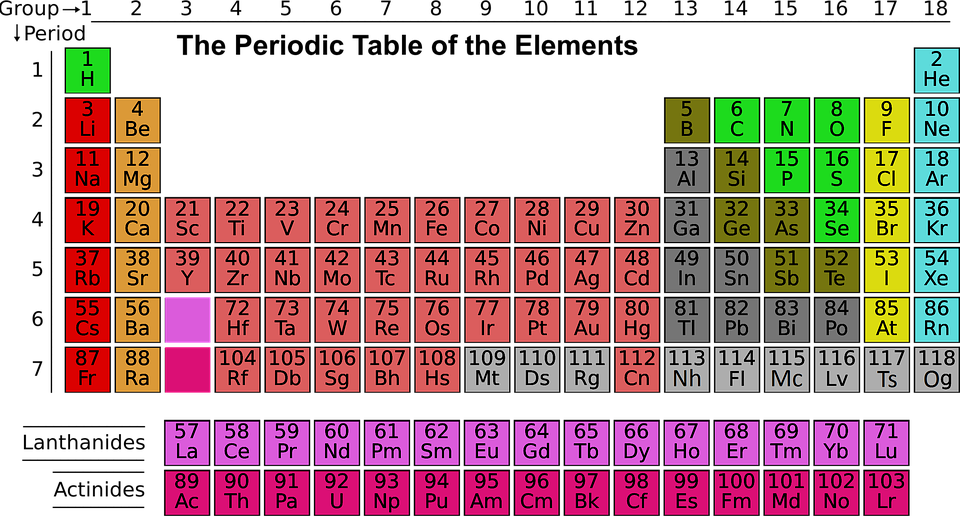
Moseley discovered that if sorted in order of atomic number, none of the orders need be reversed.
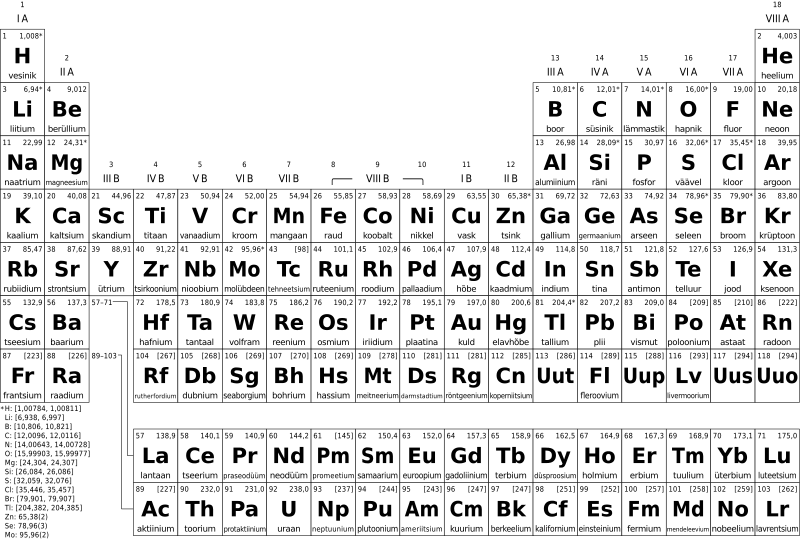
Moseley's periodic table is the basis of the modern periodic table. (shown below)
Seite 4
Electron configuration
Examples:
Question: A neutral atom has 4 electrons. What element is this atom?
Answer: A neutral atom has equal numbers of protons and electrons. Therefore, an atom with 4 electrons also has four protons, and therefore an atomic number of four. Referring to the periodic table shown below, we can deduce that this element must be beryllium.
Question: How many protons, neutrons and electrons does a neutral aluminium atom have?
Answer: Many periodic table show the relative atomic mass rather than the mass number, so you can round the number shown in the table for the purpose of this kind of calculation. Al has a relative atomic mass of 26.98 and hence a mass number of 27. Its atomic number is 13. Therefore, it has 13 electrons, 13 protons and 27-13=14 protons.
Informationen
- Beschreibung
- Der Nutzer hat seine Fachbereichs-Information gelöscht. Notiz am Modern Atomic Model 2, erstellt von Gelöschter Nutzer am 30/06/2017.
- Erstellt von
- Gelöschter Nutzer · Jun 2017
- Aktualisiert
- 30 Jun 2017
- Aufrufe
- 15
- Verlauf
-
- Erstellt von Niamh Ryan · 26 Jun 2017
- Kopiert von Niamh Ryan · 30 Jun 2017
- Bewertung