
The Nazis and Those Who Did Not Belong AQA

Folien in diesem Satz (5)
-
- The Nazis believed in the superiority of the Aryan race and persecuted minorities: Jehovah's Witnesses, Gypsies, homosexuals and mentally handicapped people
- In families where there was hereditary illnesses, sterilisation was enforced
- Between 1934-1945, 300,000 men and women were sterilised
- A euthanasia programme began in 1939, at least 5,000 severely intellectually disabled babies and children were killed from 1939-1945
- 1939-1941 - 72,000 mentally ill patients were gassed before a public outcry ended the extermination
- Extermination of Gypsies did not cause an outcry, five out of six Gypsies living in Germany in 1939 were killed by the Nazis
- Little or no complaint about 'asocials' - homosexuals, alcoholics, the homeless, prostitutes, criminals and beggars - who were sent to concentration camps
- Bildunterschrift: Family of Gypsies living in Germany
-
- Anti-Semitism means hatred of the Jewish race
- Throughout European history, Jews had been treated unequally, whether in court or being forced to live in ghettos
- The main reason for hatred of Jews in Nazi Germany was they tended to be well educated and had the highest paying jobs or ran successful shops and businesses
- Hitler had become obsessed with the fact that Jews ran many of the most successful businesses especially department stores
- This offended his ideology of the superiority of the Aryan race
- Hitler also blamed Jewish businessmen and bankers for Germany's defeat in World War One
- As soon as Hitler took power in 1933, he began to mobilise the full power of the state against the Jews
- Jews were immediately banned from the civil service and public services, such as broadcasting and teaching
- SA and SS organised boycotts of Jewish shops and businesses

- Bildunterschrift: Jewish businesses were identified by placing a star of David on the outside of the shop
-
- Nuremberg Laws:
- In 1935, the Nuremberg Laws took away German citizenship from Jews
- Jews were forbidden from having sexual relations with pure-blooded Germans
- Goebbel's propaganda outlets bombarded the public with anti-Jewish messages
- Jews were often refused jobs
- Shopkeepers refused to serve them
- In schools, Jewish children were often humiliated and then segregated
- These laws paved the way for widespread discrimination against the Jews
- Kristallnacht:
- November 1938 - a young Jew killed a German diplomat in France; the Nazis used this as an excuse to violently react against the Jews
- SS troopers were issued with pickaxes and hammers and the addresses of Jewish businesses
- They smashed up Jewish businesses, 91 Jews were murdered and many synagogues were burned
- 20,000 Jews were taken to concentration camps and thousands fled the country
- This event was known as Kristallnacht ('Night of the Broken Glass')
- The Nazi-controlled press presented this event as a reaction of ordinary Germans against the jews
-
- Following the events of Kristallnacht the treatment of the Jewish population in Europe was horrific.
- In 1941, German squads in Russia started mass-shootings of Jews
- This was carried out by special units known as the Einsatzgruppen
- In Germany, all Jews were forced to wear a star of David on their clothing
- In 1942, at the Wansee Conference (20 January) Nazi leaders decided on the Final Solution, which was to gas all Europe's Jews
- Himmler (head of the SS and Gestapo) was put in charge of the systematic killing of all Jews in Germany and Germany occupied territory
- Some of the main death camps were at Auschwitz, Treblinka and Chelmo
- Some people were killed straight away, others forced into labour camps and some used for medical experiments
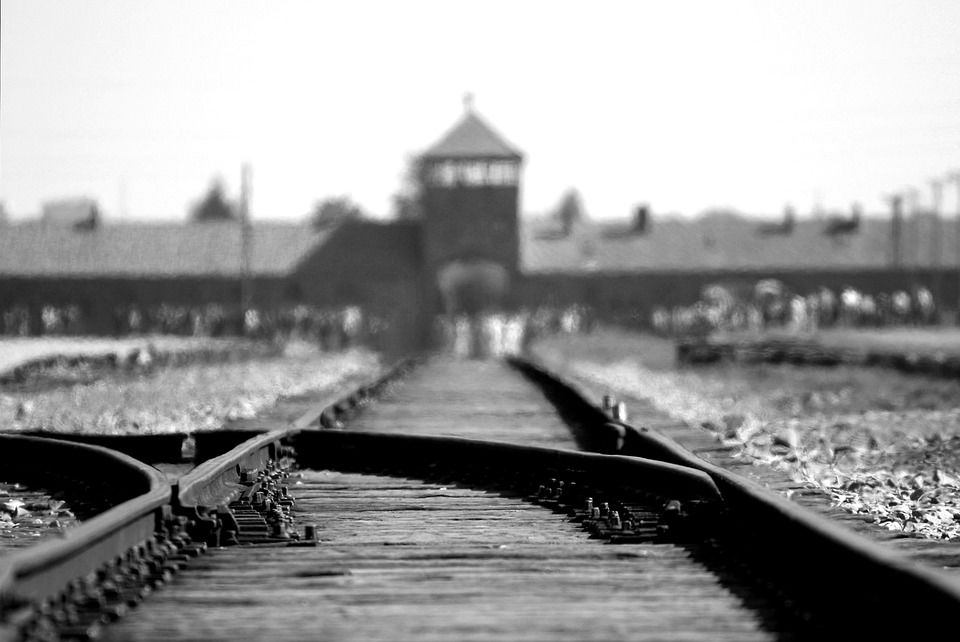
- Bildunterschrift: Rail tracks leading into the concentration camp at Auschwitz
-
Why so little Nazi opposition?
- Historians would argue that considering how extreme Nazi policies were, there was remarkably little opposition
- It is important to understand many people approved of the Nazis, in the sense that they made their lives better
- Also, no one would dream of opposing Hitler because of the power he held
- Goebbels and his team ensured that Germany was subject to constant reminders of the glories of the Third Reich and of Hitler

- Bildunterschrift: Joseph Goebbels (1897-1945)
Informationen
- Beschreibung
- Der Nutzer hat seine Fachbereichs-Information gelöscht. Folienset am The Nazis and Those Who Did Not Belong AQA, erstellt von Gelöschter Nutzer am 11/07/2017.
- Erstellt von
- Gelöschter Nutzer · Jul 2017
- Aktualisiert
- 11 Jul 2017
- Aufrufe
- 18
- Verlauf
-
- Erstellt von Andrew Burke · 6 Jul 2017
- Kopiert von Andrew Burke · 7 Jul 2017
- Kopiert von Andrew Burke · 11 Jul 2017
- Bewertung