
Notizen
Treatment and Care for the Wounded
Inhalt der Notizen (2)
Seite 1
Treatment and Care for the Wounded
Depending on the day, there could be a few hundred wounded British soldiers on the Western Front or a few thousand. With the conditions of the trenches and battlefield transporting wounded soldiers was extremely difficult and hazardous.
Processing and treating casualties:
The survival of a wounded soldier often depended on prompt medical treatment, which was not always possible during the middle of a fight. Once a soldier was taken to the nearest aid post for initial treatment, they then moved on to the dressing station. The next stage was the assessment of the wound in the casualty clearing station. The wounded soldier would either be sent to back to battle, bandaged up or sent to a base hospital.
Regimental aid post and stretcher bearers:
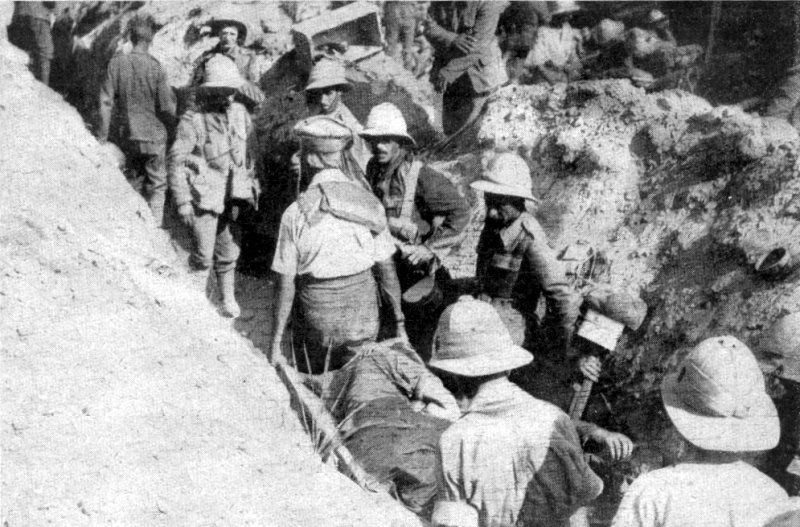
Stretcher bearers had to retrieve men from the battlefield and carry them, often under fire, to the closest regimental aid post
Here wounded soldiers received basic treatment by the stretcher bearers (they carried bandages and morphine)
Usually 16 stretcher bearers to every 1,000 soldiers
The regimental aid post was often a dug-out in the side of the trench
Here a regimental medical officer would determine whether a soldier had a light wound or severe wound
In the case of a severe wound, the soldier was sent to the dressing station
Field ambulance, dressing station and triage:
Field ambulances were mobile medical units set up in tents or derelict buildings, usually a quarter of a mile behind the front line
The served as dressing stations and operated on a system of triage
Triage involved making an initial assessment of the wounded, then sorting them into groups based on the severity of the wound itself
These stations contained medical officers and support staff such as orderlies and nurses
Doctors at dressing stations were limited to bandaging, putting on splints and giving morphine
Serious cases were passed on to casualty clearing stations
Casualty clearing station:
Located several miles behind to front line in either wooden huts or tents
Contained around seven doctors with nurses and other staff such as orderlies
Doctors carried out surgery here in operating theatres
There was access to X-ray machines and wards to care for 50 men
Upon arrival a triage system was organised, dividing the wounded into three groups:
Less severely wounded were put on trains and sent to a base hospital
Those who needed a life-saving operation (e.g. amputation of badly injured limb)
Those who could not be saved were sent to the 'moribund ward' for their last few hours of life
Base hospitals and Blighty:
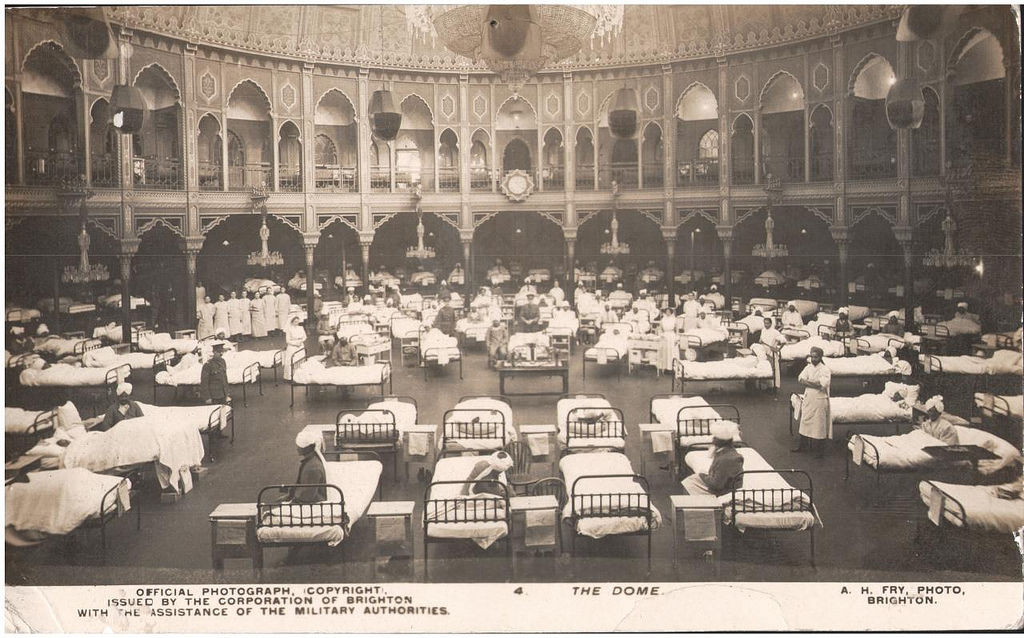
The seriously wounded were brought to a base hospital, this could either be a civilian hospital or converted building
Usually near railways to allow quick transportation of patients
Some hospitals were large enough to accommodate thousands of patients
Some patients had wounds bad enough to get them sent back home to Blighty (England) for further treatment and recovery
Seite 2
The RAMC and Nursing Corps
All medical personnel in 1914 were part of the RAMC - Royal Army Medical Corps. This consisted of all ranks from doctors to stretcher bearers. As the war grew more intense the number of RAMC staff expanded on the Western Front. It grew from 9,000 men (1914) to 113,000 (1918). At the initial stages of the war the only nurses allowed to treat wounded soldiers were well-trained Queen Alexandra's nurses. There was 300 of these nurses in 1914.
However, they grew in size in 1918 to 10,000 and were joined by 15,000 unpaid volunteer nurses. The volunteers belonged to the VAD (Voluntary Aid Detachment) and consisted mainly of middle- and upper-class women who never previously had a job, but felt the need to help the wounded at the front. At the end of the war, 25,000 women were serving at the front as nurses.
Informationen
- Beschreibung
- Der Nutzer hat seine Fachbereichs-Information gelöscht. Notiz am Treatment and Care for the Wounded, erstellt von Gelöschter Nutzer am 12/07/2017.
- Erstellt von
- Gelöschter Nutzer · Jul 2017
- Aktualisiert
- 12 Jul 2017
- Aufrufe
- 36
- Verlauf
-
- Erstellt von Andrew Burke · 11 Jul 2017
- Kopiert von Andrew Burke · 12 Jul 2017
- Kopiert von Andrew Burke · 12 Jul 2017
- Bewertung