
Notizen
Dealing with disease
Inhalt der Notizen (3)
Seite 1
Treatment
As already discussed most of the traditional treatments and remedies from the medieval period carried over into the Renaissance and early modern period. There were a number of new developments mainly in relation to theory, but not practice. Most physicians at the time charged very high fees and only the richest could afford their services.
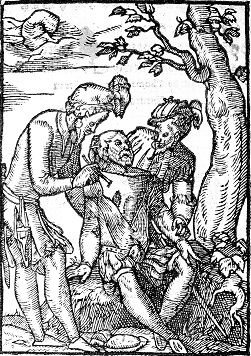
Ordinary people turned to a number of familiar and new treatments that they could afford:
Country-doctors: lower fees than town doctors, however, not that well trained
Barber-surgeons: paid for small operations
Apothecaries: no medical training, but sold their medicines
Quacks: these were travelling barbers, tooth-pullers, who sold medicines which were supposed to cure everything
Seite 2
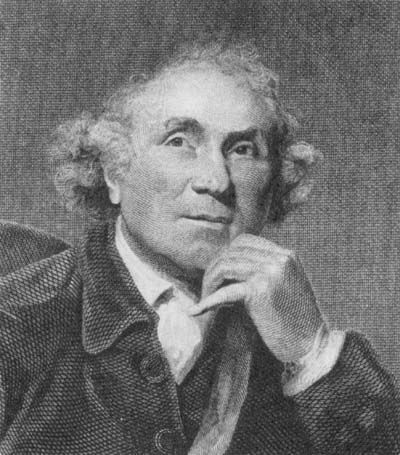
John Hunter (1728-1793)
Hunter came to London in 1748, when he began to work as an assistant to his older brother in the anatomy school. Under William's provision, John studied and made great progress in his knowledge and dissection of human anatomy.
In 1754, he entered St George's Hospital as a surgical pupil, then in 1760 he signed up as an army surgeon. Eventually, he was admitted to the Company of Surgeons in 1768, where he established a large practice and trained students.
In 1783, Hunter set up his own museum, in which he presented anatomy on a large scale. He is labelled as the man who first made surgery a science, the founder of pathological anatomy. He was one of the first early advocates of the importance of experimentation and investigation in the medical process. Hunter also developed a forerunner of the modern ventilators we witness today.
Seite 3
Prevention
Smallpox:
This is an acute contagious disease that is caused by the variola virus
Smallpox was declared eradicated following a global vaccination campaign in 1980 led by the World Health Organisation
In earlier times, 30-60% of those who caught smallpox died
Smallpox had long been endemic in Britain from the 17th century
1796 - an endemic killed 35,000
1837-1840 - 42,000 were killed
Queen Mary died of smallpox in 1694
Vaccinations date from the 18th century but before that inoculations were utilised
Lady Mary Montagu, whose husband was the Ambassador to the Ottoman Empire, introduced the inoculation to England in 1721
An inoculation involved introducing a mild form of smallpox to the body, so that the person would fight of the disease and become resistant to stronger versions
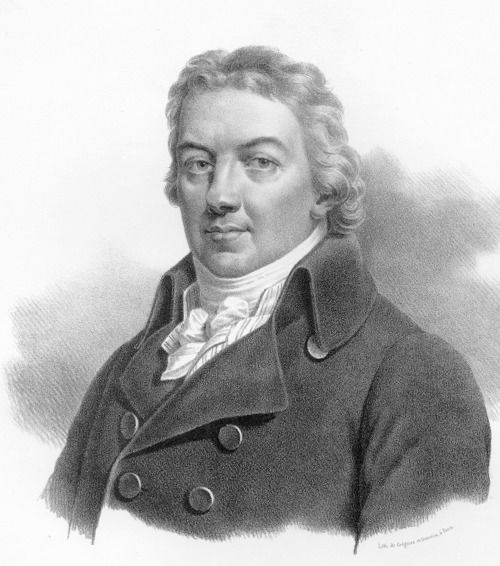
Edward Jenner:
Jenner was a country doctor from Gloucestershire who studied in London. Through his experiments on local people he found a cure for smallpox:
He chose a 9 year old boy, James Phipps, who had neither cowpox or smallpox
He injected the boy with pus from the sores of a milkmaid who had cowpox
James developed cowpox but then recovered
Jenner then gave James a dose of smallpox; turns out James was immune to the smallpox
Jenner proved that an injection of cowpox prevented smallpox
He submitted a paper to the Royal Society in 1797 but was asked for more evidence. Jenner carried out more experiments keeping detail of all that happened. In 1798, he published An Inquiry into the Causes and Effects of the Variola Vaccine, or Cow-Pox. In 1807. the Royal College of Physicians confirmed the success of the vaccine.
Impact of the vaccine:
Many felt it was wrong to inject pox into humans, while others argued this was God's punishment and people should not interfere
Others thought it should be up to the parents to decided whether to treat their children or not
1840 - as a result of the deadly epidemic since 1837, the vaccination was made free to all infants
1852 - the vaccination was made compulsory, but not strictly enforced
An anti-vaccine league was established in 1866 in opposition of compulsory vaccination
1871 - the government introduced fines for parents not vaccinating their children
1887 - once the death rate had dramatically reduced, the government introduced the right for parents to refuse vaccination
Informationen
- Beschreibung
- Der Nutzer hat seine Fachbereichs-Information gelöscht. Notiz am Dealing with disease, erstellt von Gelöschter Nutzer am 20/07/2017.
- Erstellt von
- Gelöschter Nutzer · Jul 2017
- Aktualisiert
- 20 Jul 2017
- Aufrufe
- 24
- Verlauf
-
- Erstellt von Andrew Burke · 20 Jul 2017
- Kopiert von Andrew Burke · 20 Jul 2017
- Bewertung