
Notizen
Developments in Patient Care - 20th Century
Inhalt der Notizen (5)
Seite 1
Twentieth Century Liberal Reforms
The beginning of the 20th century witnessed the creation of the Welfare State by the government to take responsibility in caring for the sick and those in need. 1906-1914 saw the introduction of reforms that were aimed at the sick, old and unemployed to help them cope through difficulties. Some of the major reforms that came in the 1909 budget were seen as took expensive for the state to pay.
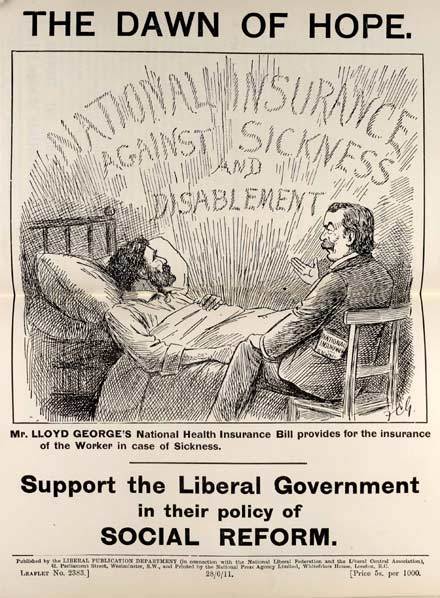
The National Insurance Act 1911:
This was the first step towards a welfare state
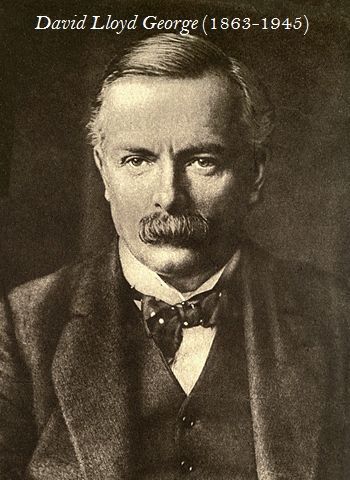
The minister responsible for this Act was Lloyd George (Chancellor of the Exchequer)
This insurance scheme involved workers and their employers making weekly contributions into a central fund
This fund was utilised to give workers sickness benefit and free medical care from a panel doctor if they became ill
Those workers contributing to the scheme would be entitled to free medical attention and a payment of 10 shillings per week for 26 weeks due to absence from work
Many doctors opposed the scheme initially
Lloyd George got rid of the opposition by paying doctors more money for each patient they saw
National Insurance Act 1913:
Created unemployment insurance
Workers could claim unemployment benefits of 7 shillings a week for up to 15 weeks
The scheme was restricted to certain trades and occupations
It failed to cover families, the elderly, the mentally ill or the chronically ill
Seite 2
Welfare Care 1920s-1930s
After the First World War, Lloyd George initiated a building programme for 200,000 new houses
These were to be constructed buy 1922 to replace slum housing
The National Insurance Act was extended to cover a great proportion of the workforce
Insured persons could now claim both sickness and unemployment benefit (dole)
The Depression in the 1930s made good medical care harder to access
The government began to reduce contributions to health insurance
Many unemployed folk failed to keep up their regular contribution payments
1934 - there were 4 million insurance policies which people owed payments
Seite 3
The Beveridge Report
Even though there was a free health service from 1914, it was only for insured workers. Wives and children still had to pay for treatment and visits to any sort of medical professional had to be paid for. During World War Two, people began asking questions of how medical care should be organised once the war effort ended.
The Beveridge Report 1942:
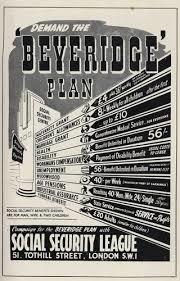
June 1941 - the government set up a committee under William Beveridge to investigate welfare provision
The Beveridge Report was published in December 1942
It sold over 600,000 copies
The paper identified 'five evil giants' that needed to be tackled by the government
'Want, Disease, Ignorance, Squalor and Idleness'
Labour Party leader, Clement Attlee, promised to put the proposals into action if his party was elected after the war
Seite 4
National Health Service After 1946
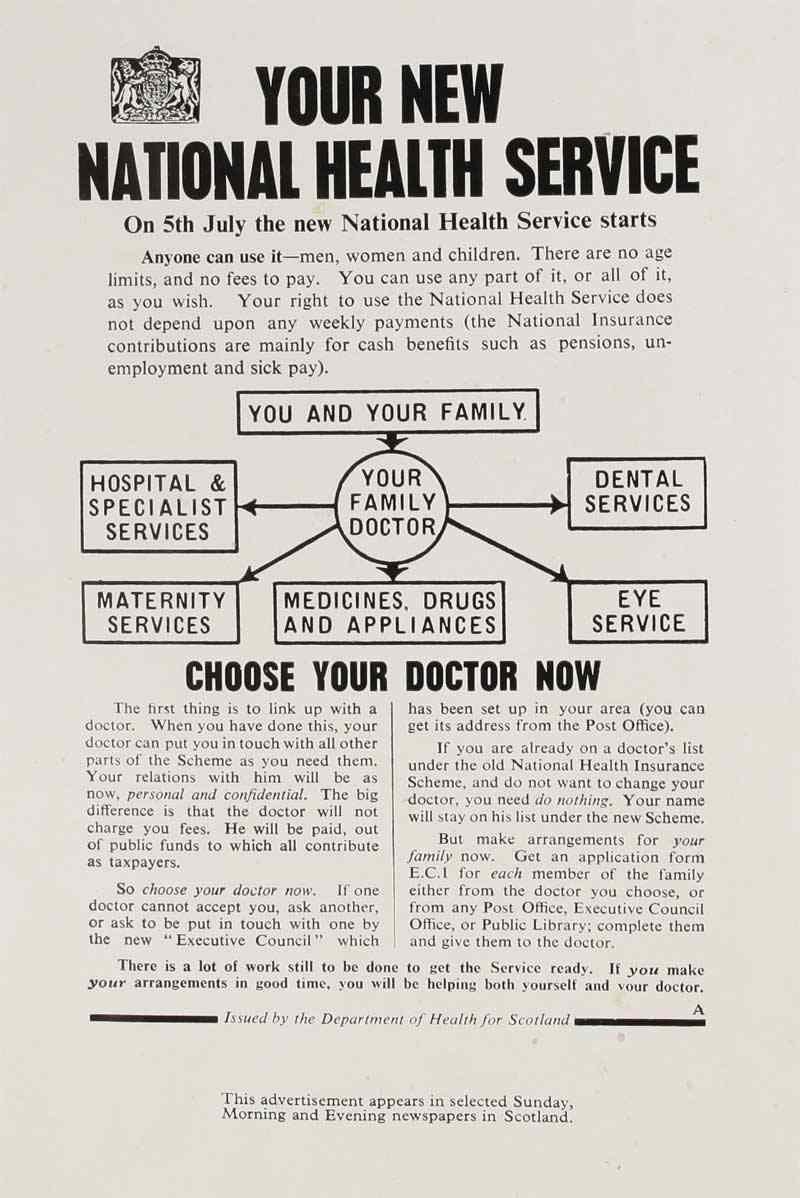
This Act in 1946 is considered the foundation of the Welfare State. This aimed at creating a health service that was free of charge and accessible to everyone. The main features of the act were:
Every British citizen could have free medical treatment - hospitals, doctors, nurses, pharmacists, opticians and dentists were all brought under one umbrella organisation
Nationalisation of all hospitals, under the control of the states Ministry for Health
Consultants in hospitals received salaries and all treatments to patients was to be free
A national system of general practitioners was to be set up and they, along with dentists and opticians, were to obtain fees according to the numbers of patients on their registers. All treatment was to be free to the patient
Health centres were to be established - local authorities were paid to provide vaccinations, maternity care, district nurses and ambulances
Provide support from the 'cradle to the grave' - financed through National Insurance contributions
These changes took two years to complete after 1946. This is mainly due to Health Minister, Aneurin Bevan, receiving opposition from the British Medical Association (BMA) and Conservative MPs regarding these proposals.
BMA opposed these changes - a survey in January 1948 demonstrated 90% of its members would refuse to cooperate with the NHS
Local authorities and voluntary bodies opposed the nationalisation of hospitals
Arguments occurred over the costs of this project
By the start of 1948, the opposition had largely waned and the NHS was officially launched in July 1948 with 90% of doctors enrolling in the new scheme,
Within the first year of the National Health Service the numbers receiving treatment were extensive:
187 million prescriptions had been written out
5.2 million pairs of glasses had been issued
8.5 million people obtained free dental treatment
Seite 5
National Health Service After 1948
The NHS has been a very costly service to run since it was first set and there have been many changes introduced at various points. In 1950, the NHS budget was under pressure and various charges commenced in 1952. Here are some of the main changes over the decades:
Early 1960s - new building programme began to replace out-of-date hospitals
Thatcher governments (1979-90) tried to cut the cost of the NHS and encouraged people to pay for private medical care
1990s - hospitals were allowed become trusts and GPs were allowed to become fund holders
1998 - NHS Direct was launched; 24-hour health advice over the phone
2002 - primary care trusts were launched to help the functioning of administration and delivery of healthcare at the local level
2004 - foundation trusts were launched, run by local managers staff and members of the public
Informationen
- Beschreibung
- Der Nutzer hat seine Fachbereichs-Information gelöscht. Notiz am Developments in Patient Care - 20th Century, erstellt von Gelöschter Nutzer am 24/07/2017.
- Erstellt von
- Gelöschter Nutzer · Jul 2017
- Aktualisiert
- 24 Jul 2017
- Aufrufe
- 23
- Verlauf
-
- Erstellt von Andrew Burke · 17 Jul 2017
- Kopiert von Andrew Burke · 24 Jul 2017
- Kopiert von Andrew Burke · 24 Jul 2017
- Bewertung