
Notizen
Purity and Melting Points
Inhalt der Notizen (2)
Seite 1
Purity
Element: A substance that cannot be chemically interconverted or broken down into simpler substances
Compound: A compound is a substance formed when two or more chemical elements are chemically bonded together
Pure substance: A pure substance has the same fixed composition in all its parts.
We can't separate it into other substances using physical methods (such as filtering or picking bits out)
Mixture: Contains elements and/or compounds that are not chemically joined together. A mixture does not have a fixed composition.
We can use physical processes to separate mixtures into different substances
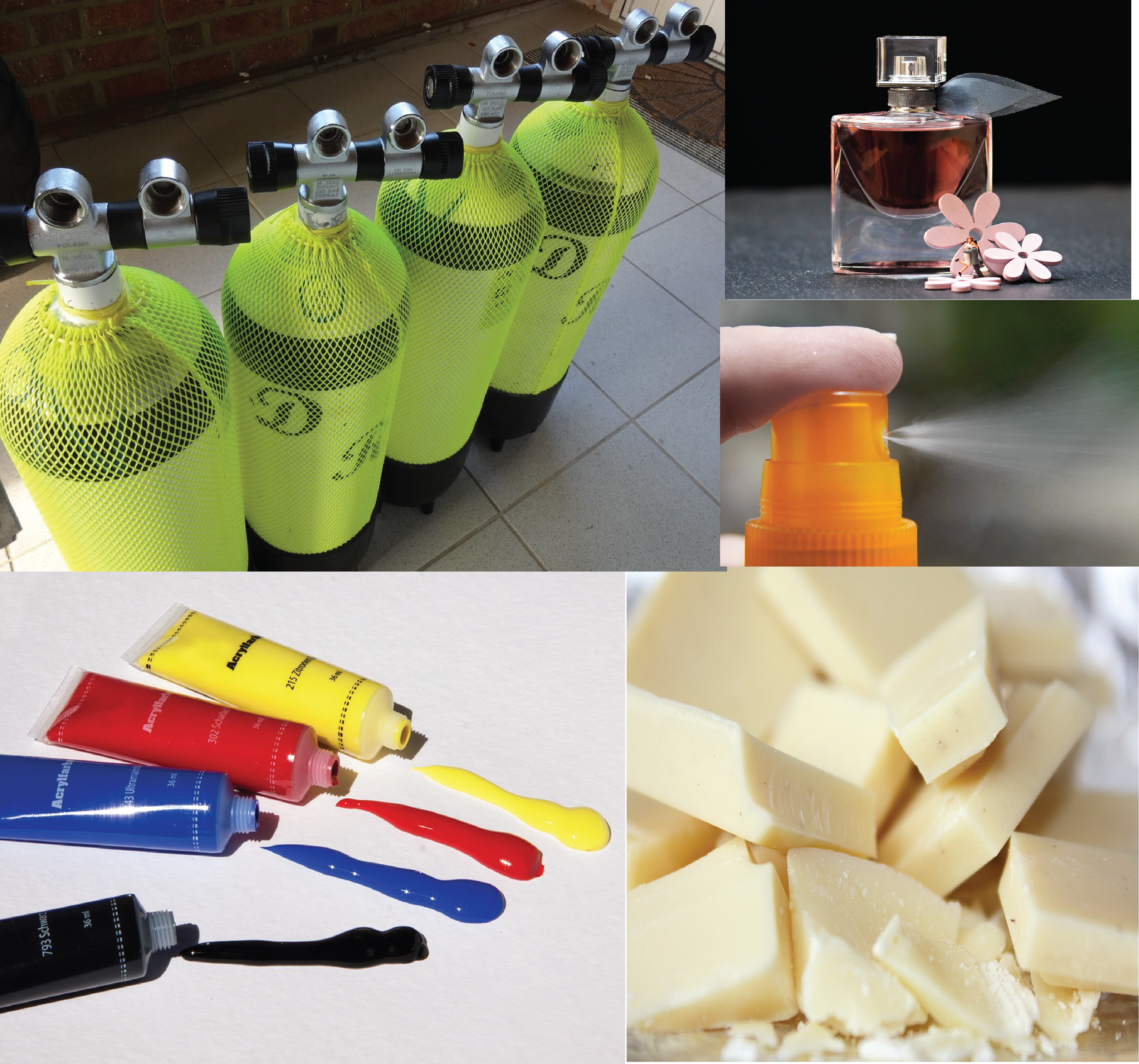
Examples of mixtures: food and drink products, medicines, sunscreens, perfumes and paints, air
Seite 2
Melting Points
Melting point: An example of a physical property. The point at which a solid of a certain substance turns to a liquid, or the liquid turns to a solid. This is the temperature at which the particles have enough energy to overcome the weak forces of attraction between them. When the substance is melted, the particles have enough energy to slide past each other.
A pure substance has the same composition throughout. Therefore, all of its part will have the same melting point.
When heating a pure substance with a constant supply of heat, it will gradually change temperature until it reaches its melting point. At this point, it will not change temperature until it has completely changed state (eg changed completely from a solid to a liquid). The heat required to undergo this change of state is called the latent heat.
A mixture will melt over a range of temperatures - it does not have a sharp fixed melting point.
The purity of a compound can be established from its melting point, its boiling point or Thin Layer Chromatography.
If a sample has high purity, it will melt or boil close to the known melting/boiling point.
If a sample has low purity, it will melt or boil over a wide range of temperatures .
The presence of an impurity usually:
Lowers the melting point
Raises the boiling point
Thin layer chromatography is similar to paper chromatography, but instead of paper, a thin layer of powder is coated onto a glass or plastic plate. Different powders and solvents are used, depending on the type of substance being separated. The results for a pure substance should show that:
The substance produces just one spot on the plate
The distance travelled by the substance is identical to a known sample of that substance on the same plate

Informationen
- Beschreibung
- Der Nutzer hat seine Fachbereichs-Information gelöscht. Notiz am Purity and Melting Points, erstellt von Gelöschter Nutzer am 02/08/2017.
- Erstellt von
- Gelöschter Nutzer · Aug 2017
- Aktualisiert
- 2 Aug 2017
- Aufrufe
- 147
- Verlauf
-
- Erstellt von Niamh Ryan · 31 Jul 2017
- Kopiert von Niamh Ryan · 2 Aug 2017
- Bewertung