
Punishments, Law and Women - Norman England

Folien in diesem Satz (5)
-
Community and Change in Punishment
- The Norman system of punishment relied heavily on a mixture of physical punishments, fines and execution. The Normans did end the system of wergild and fines now went to the king's officials. The king centralised law enforcement and extended his authority in crime and punishment.
- The Norman law system was founded on the idea that all people should expect to be safe from crime, and to live peacefully within their communities, under the authority of the king. This idea is known as the king's mund.
- Crime interrupted the king's mund. Therefore, there was an increase in crimes that were punishable by death or mutilation. In the Forest Laws, poaching carried the death penalty. Considering it was seen as a social crime, many people thought the punishment was unjust.
- Mutilation was an alternative to the death penalty sometimes. This might include branding or chopping off a body part.

-
- The Normans carried on the system of trial by ordeal from the Anglo-Saxons. However, they introduced a new ordeal - trial by combat. This trial was suited to situations where the was a dispute over large sums of money or land.
- Two people involved in the argument would fight using swords or large sticks. This was seen as a more honourable option for rich people.
-
- Local collective responsibility continued under the Normans as a means of apprehending suspects for crimes. Similarly to the Anglo-Saxons, every male over 12 had to belong to a tithing. If any member of that tithing was accused of a crime, the rest of the tithing would be expected to find the accused and take them to the local authorities.
- The hue and cry also continued. When a suspect escaped, all villagers were obligated to hunt them down and make sure justice was carried out. Community-based systems for enforcing the law continued to remain the most efficient and supreme means of addressing crime and punishment.
-
- There were a number of reason people would be able to escape the death penalty:
- A clergyman - due to his role in the church
- Winning a joust competition
- Soldier committing to military service
- A women who is pregnant
- Someone who is very wealthy
- The king's approver
-
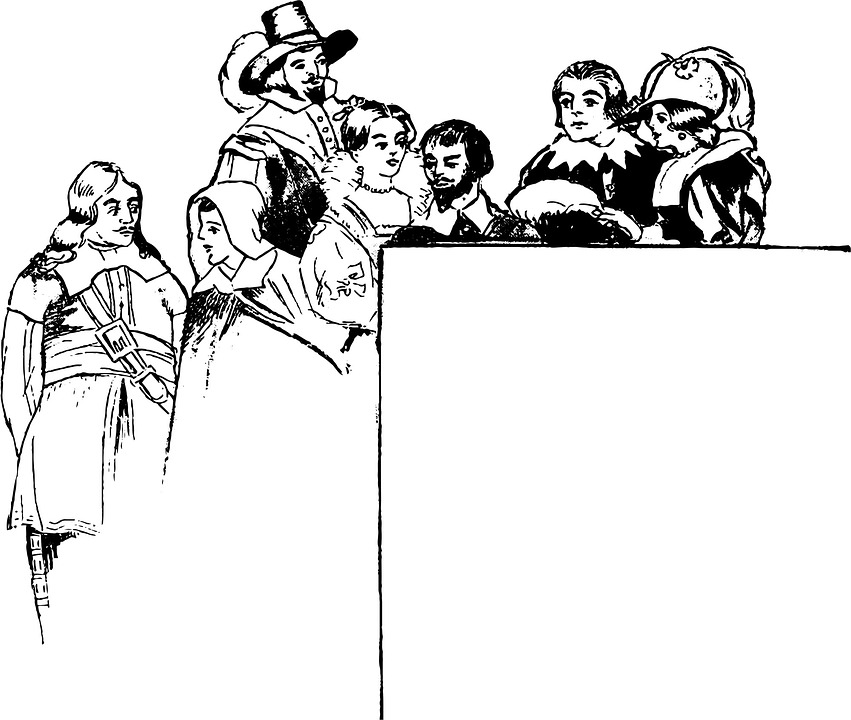
- Women had very few rights in the eyes of the law and were essentially the property of their husbands. Once they married all of their legal rights passed to their husband.
- Women were not allowed marry without the permission of their father
- Women were not allowed to divorce
- They could not own property or business of any kind
- They were not allowed to inherit property or business
- If a women did not fulfil her role and was disobedient she could be punished
Informationen
- Beschreibung
- Der Nutzer hat seine Fachbereichs-Information gelöscht. Folienset am Punishments, Law and Women - Norman England, erstellt von Gelöschter Nutzer am 02/08/2017.
- Erstellt von
- Gelöschter Nutzer · Aug 2017
- Aktualisiert
- 2 Aug 2017
- Aufrufe
- 225
- Verlauf
-
- Erstellt von Andrew Burke · 1 Aug 2017
- Kopiert von Andrew Burke · 2 Aug 2017
- Kopiert von Andrew Burke · 2 Aug 2017
- Bewertung