
Volcanic Hazards
Folien in diesem Satz (15)
-
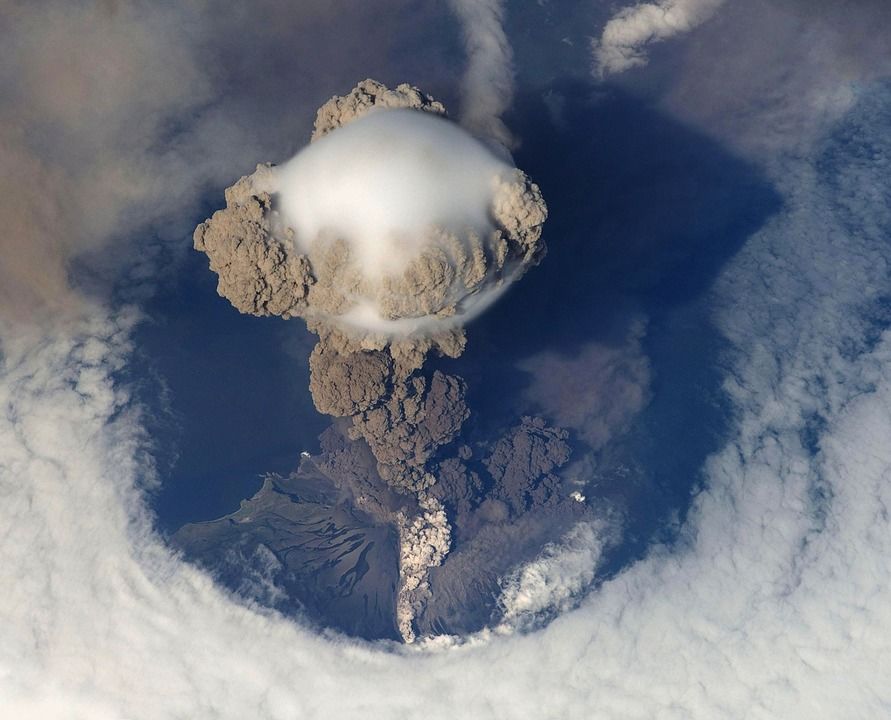
- A volcano is an opening in the crust of the Earth which allows molten rock to build up forming a variety of structures, most commonly a mountainous landform.
-
Positives and Negatives of Volcanoes
- Positives
- Geothermal Energy
- Tourism
- Fertile Soils
- New Land
- Minerals
- Negatives
- Destruction
- Poisonous/Burning Gasses
- Ash Clouds
- Lahars (mudflow)
-
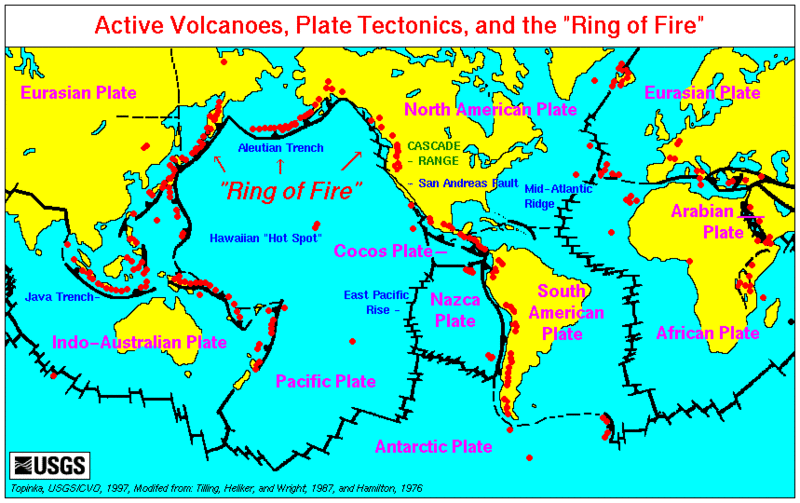
- Volcanoes form at 3 different locations:
- Destructive plate margins - where subducted crust melts and rises to the surface
- Constructive plate margins - where magma rises through gaps between plates
- Hotspots - where the mantle is unusually hot, causing chains of volcanoes to form
- The Pacific Ring of Fire in particular is home to many volcanoes.
-
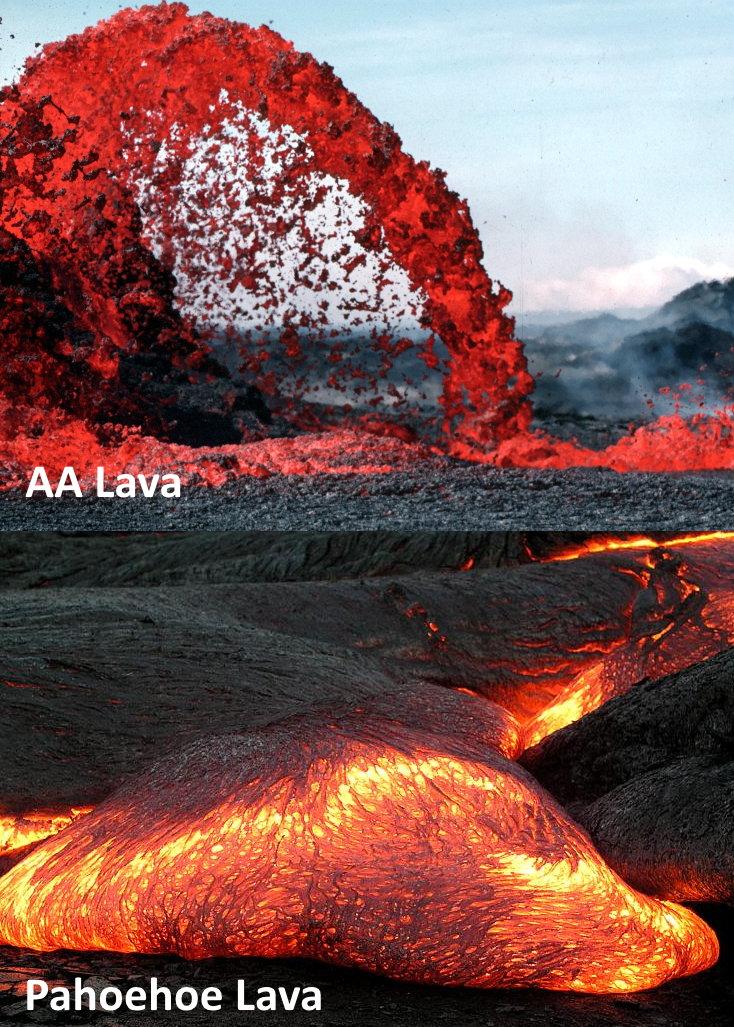
- Explosive eruptions usually take place at convergent (destructive) plate boundaries. The magma that rises to the surface here has a high viscosity. This is also called AA lava and has a high gas and silica content.
- Effusive eruptions usually occur at divergent (constructive) plate boundaries. The lava that erupts here has a lower viscosity, gas content and silica content. It is usually very runny and forms basalt when it cools. It is also called pahoehoe lava.
-
- A cinder cone is the simplest form of volcano.
- Cinder cones are typically round in shape and are composed of layers of cooled lava.
- Cinder cone eruptions are usually more violent in nature and there is often gas built up in the vent.
- Example: Paricutin, Mexico
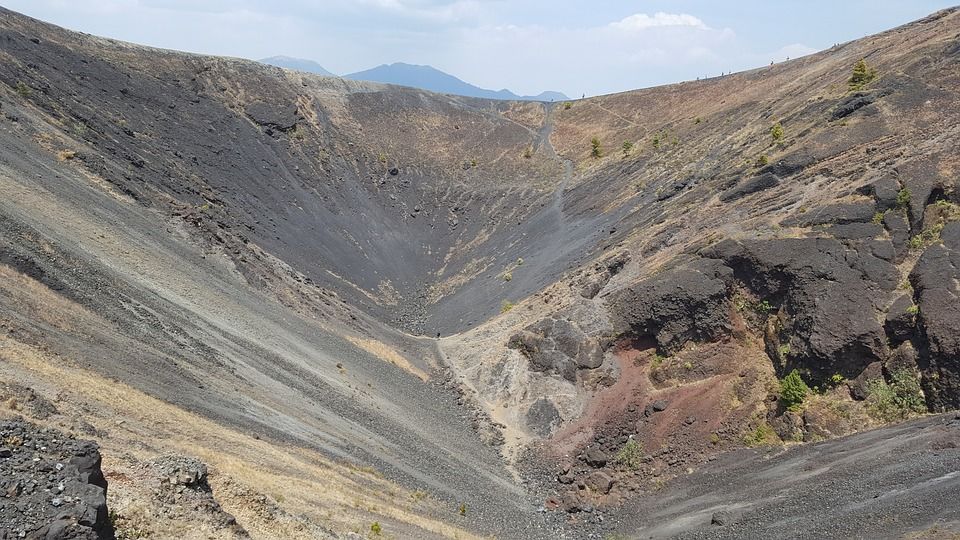
- Bildunterschrift: Crater of Paricutin, Mexico
-
Types of Volcano: Shield Volcano
- Shield volcanoes form from basic lava which has a low silica content and is quite runny in nature.
- Because the lava is runny, it spreads out before solidifying.
- Shield volcanoes typically have a wide base and gentle slopes to their peak.
- Example: Mauna Loa, Hawaii
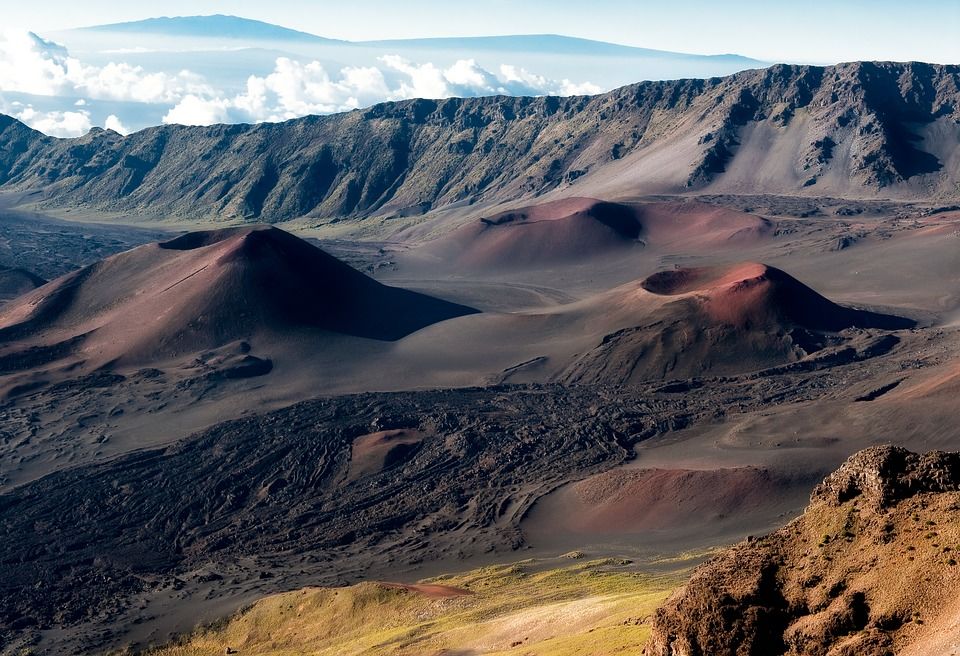
- Bildunterschrift: Haleakala, Hawaii
-
Types of Volcano: Stratovolcano
- A stratovolcano is a large volcano which is composed of layers of cooled and hardened lava, ash, and tephra (rock fragments).
- Stratovolcanoes usually have steep sides, unlike shield volcanoes and have very explosive eruptions.
- Example: Mount St. Helen's USA
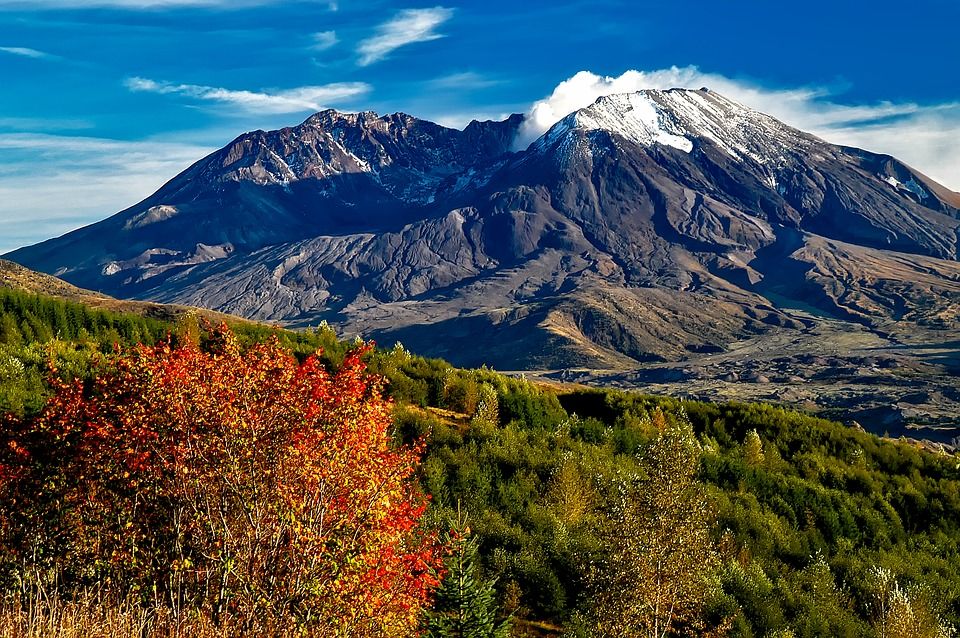
- Bildunterschrift: Mount St. Helen's USA
-
- A caldera is a volcano which has collapsed in on itself, this usually happens when the magma chamber of the volcano is emptied. This can also occur when there is a particularly violent eruption which causes the volcano to lose support.
- Calderas, particularly older ones, quite often contain lakes in their depressions.
- Example: Crater Lake, Oregon, USA.
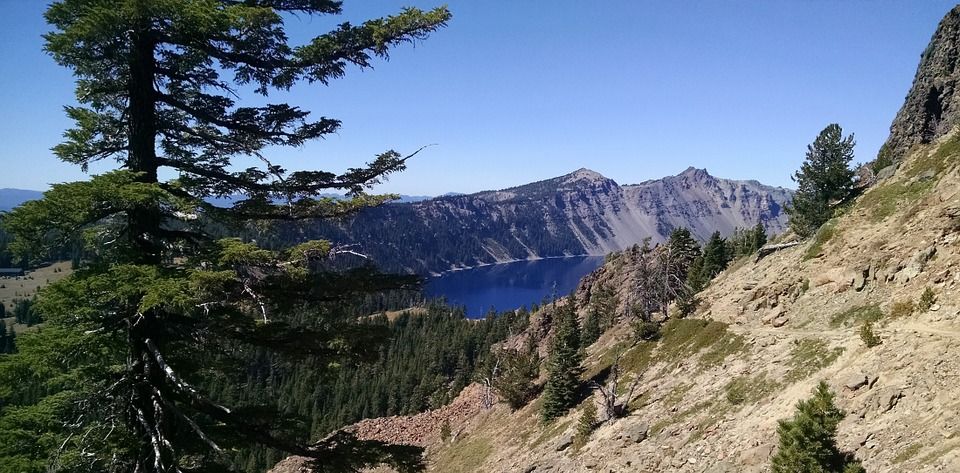
- Bildunterschrift: Crater Lake, Oregon, USA
-
Types of Volcano: Super-Volcano
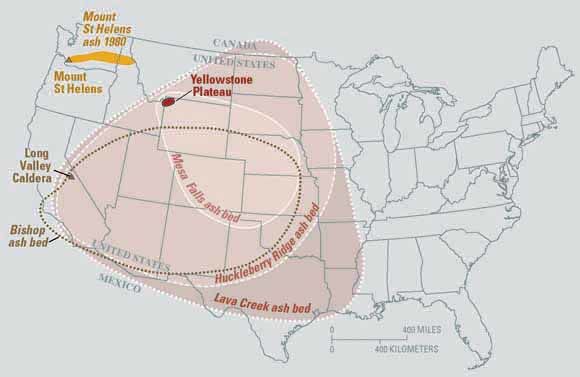
- A super-volcano is a volcano that has erupted more than 10¹⁵ kg of ejecta.
- These volcanoes form when huge amounts of magma build up under the crust.
-
- They can occur at hotspots and subduction zones.
- The effects of these eruptions are much more widespread and long-lasting.
-
- Example: Yellowstone Caldera, USA
-
Types of Volcanic Landform: Lava Tubes
- Lava tubes typically form from pahoehoe (basic) lava, which is runny.
- Runny lava tends to cool very quickly in comparison to acidic lava; when there is a flow of this lava under the surface, its edges can cool and harden while the lava is still flowing.
- This process creates a straw-like cave, some of which are large in nature.
- Lava tubes are only found under the surface of the Earth as when basic lava runs on the surface, it typically moves in a fanned out pattern.
- Example: Valentine Cave in Lava Beds National Monument, California.
-
Types of Volcanic Landform: Geysers
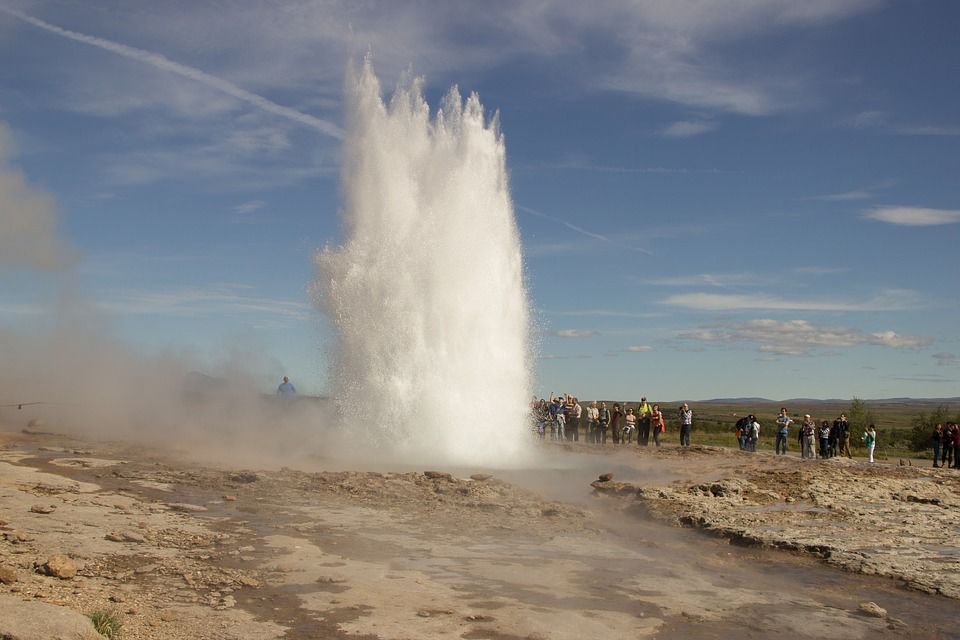
- A geyser is a hot spring heated by geothermal energy.
- Geysers are typically found in volcanic areas and are often tourist attractions.
- As water is heated, it expands and pressure builds under the surface. The eruption of a geyser acts as a release of pressure for this water.
- Example: Old Faithful, USA.
-
Primary Hazards of Volcanic Activity:
-
Primary Hazards of Volcanic Activity:
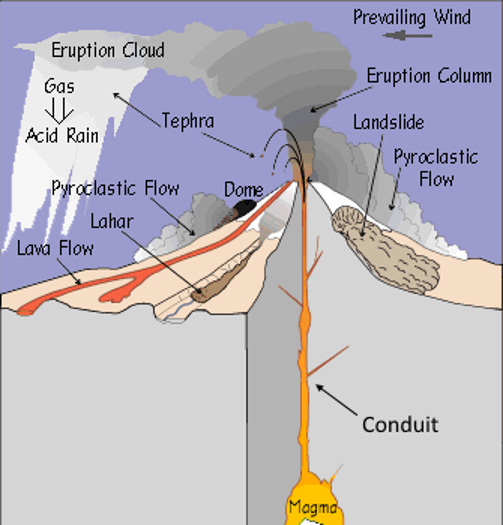
- Pyroclastic Flows:
- Responsible for most volcanic related deaths
- Also called "Nuées ardentes"
- Air bubbles in the lava burst and eject hot gases (up to 1000°C) and pyroclastic material (glass shards, pumice, crystals and ash)
- Most dangerous when they come out of the side of the volcano
- Tephra:
- Ejected rock fragments
- Vary in size from "bombs" (>32mm) to fine dust (<4mm)
- Hot rocks can start fires on the ground
- Fine dust can reduce visibility and air travel
- Lava Flows:
- Pose a threat to human life if they are fast moving
- The viscosity of the lava is determined by its silica content
- Can reach 15m/s on steep slopes
- Can start fires
- Volcanic Gases:
- Associated with explosive eruptions and lava flows
- Usually include: water vapour, sulphur dioxide, hydrogen, carbon monoxide
- Colourless and odourless
- Can accumulate in valleys
-
Secondary Hazards of Volcanic Activity:
- Lahars (volcanic mudflows) are generally composed of fine sand and silt. They occur when heavy rainfall mixes with deposited tephra on steep slopes. The degree of hazard depends on the gradient of the slope, volume of material and particle size.
- Jökulhlaups are a type of catastrophic glacial outburst flood. They can cause landform modification through erosion and deposition. They are very sudden and are caused by the failure of an ice or moraine dam.
- Heat from cooling magma can cause hydrothermal alteraton of the rocks, turning sections of them into clay. This weakens the rocks and increases the risk of slope failures and landslides.
- The gases and ash from volcanoes can add to the effects of climate change.
-
Volcanic Explosive Index (VEI):
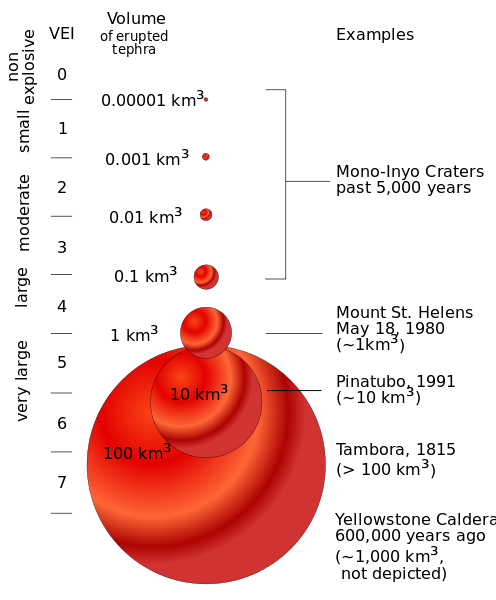
- Bildunterschrift: The Volcanic Explosivity Index (VEI) is a relative measure of the explosiveness of volcanic eruptions based on the volume of ejecta
Informationen
- Beschreibung
- Der Nutzer hat seine Fachbereichs-Information gelöscht. Folienset am Volcanic Hazards, erstellt von Gelöschter Nutzer am 09/08/2017.
- Erstellt von
- Gelöschter Nutzer · Aug 2017
- Aktualisiert
- 9 Aug 2017
- Aufrufe
- 50
- Verlauf
-
- Erstellt von Antonia Blankenberg · 14 Jun 2017
- Kopiert von Antonia Blankenberg · 2 Aug 2017
- Kopiert von Antonia Blankenberg · 9 Aug 2017
- Bewertung