
Notizen
Desertification
Inhalt der Notizen (4)
Seite 1
What is Desertification?
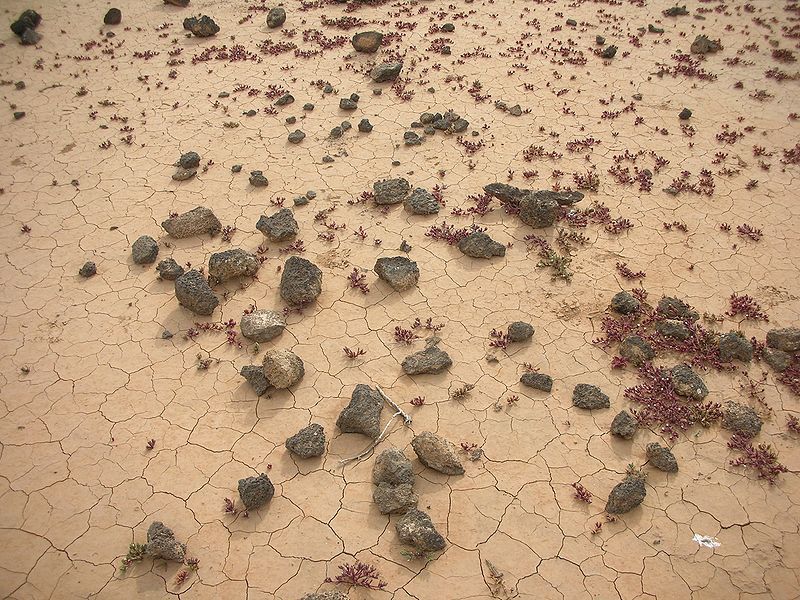
Desertification is the process by which fertile land becomes desert.
The United Nations Environment Programme (UNEP) defines desertification as "persistent degradation of dryland ecosystems, such that it threatens the livelihoods of vulnerable populations".
This is common in arid, semi-arid and sub-humid areas due to various factors including climatic variations and human activities.
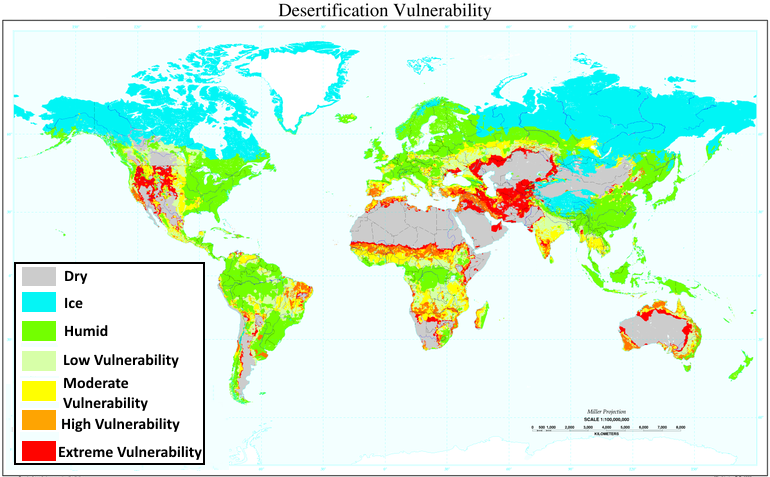
According to UNESCO, one third of world’s land surface is threatened by desertification.
Seite 2
Causes of Desertification
Climatic Variations:
Changes in rainfall can cause desertification and drought.
Regions that have low rainfall totals each year are at most risk from desertification. An example on one such area is the Sahel region in Northern Africa.
A lowering of the water table can cause plants to die off, removing the roots that bind soil together.
An increase in the amount of flooding can also cause damage. Flash floods wash away the exposed top soil, making the area vulnerable.
Human Impact:
Poverty in vulnerable areas leads to practices such as overgrazing and overcultivation. These practices damage the soil and make it prone to desertification.
The hooves of livestock compact the soil, meaning that rainwater simply washes off instead of soaking into the ground.
Reliance on irrigation removes groundwater and lowers the water table.
Overpopulation:
Population growth brings an increased demand for food, resulting in farming on marginal land.
Farmers often decrease the fallow period in an effort to produce more food. This means the land does not have time to recover or regenerate.
Increased demand for firewood leads to deforestation.
Frequent water shortages lead to the need for more wells, lowering the water table further.
Deforestation:
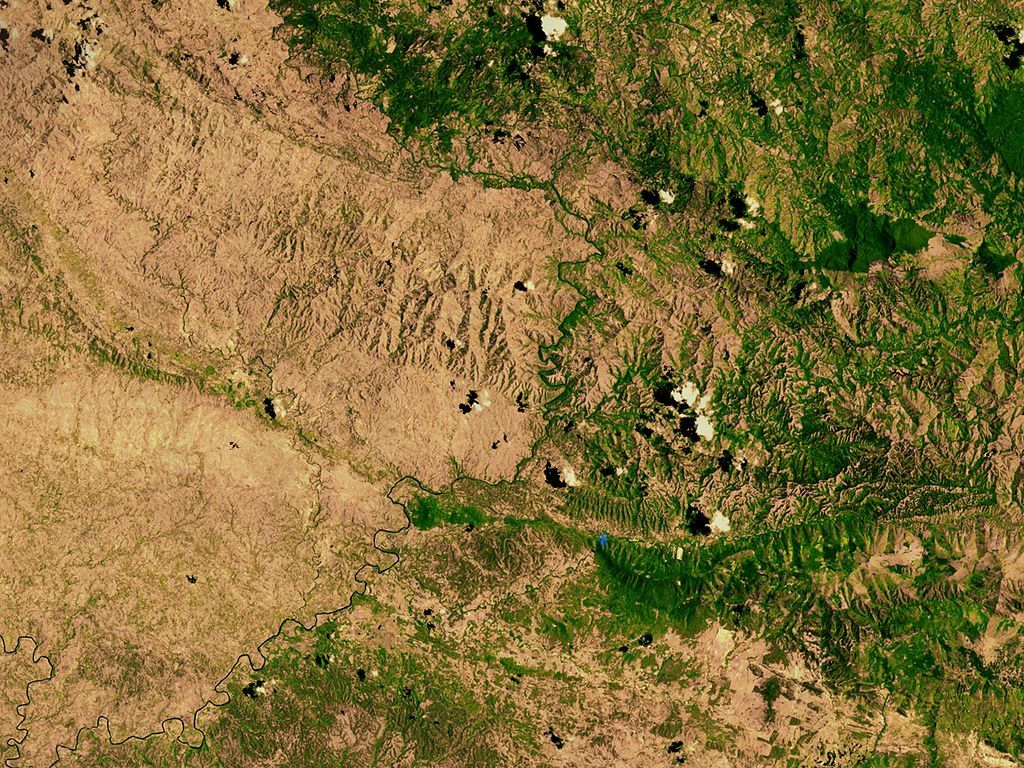
Trees provide fuel for local poorer populations. The removal of trees means that there are no roots to bind the soil together.
Large scale deforestation by companies increases this problem exponentially.
Burning trees for fuel also adds to the problem of climate change, shifting weather patterns and causing more droughts.
Seite 3
Impacts of Desertification
Fertile topsoil is often blown away by wind erosion, making the soil less fertile for farming.
Desertification reduces the availability of moisture to the soil. This reduces biodiversity.
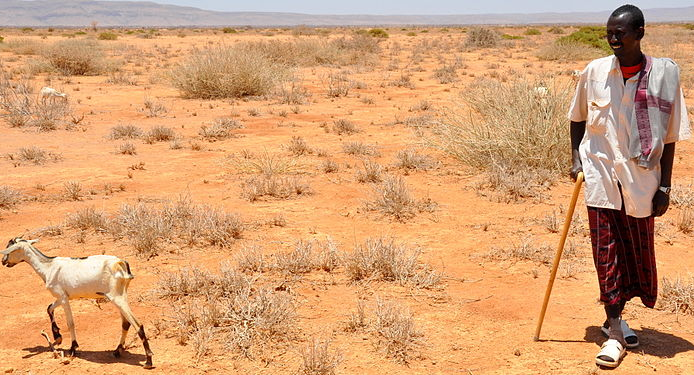
As the land becomes unproductive, farm income falls. This leads to widespread poverty and an increased reliance on overseas aid.
Population density is reduced as people leave the area in search of work/food.
Disputes are common when land becomes poor.
Seite 4
Desertification into the Future
Climate change is predicted to affect rainfall patterns.
Decreased rainfall can cause drought and desertification in more areas.
An increase in rainfall could cause flash flooding, washing vulnerable soils away.
Populations will need to adapt to changes in the environment, particularly with farming.
Unsustainable water use will continue to lower the water table. The growth of tourism adds to this as it brings increased demands for water.
Managing risk areas:
Several things can be done to reduce the risk of desertification:
Planting trees and plants, particularly drought resistant shrubs and grasses
Improving irrigation projects
Rotating crops to allow soil to recover
Controling grazing and promote other means of farming
Building more dams to control the flow of water
Informationen
- Beschreibung
- Der Nutzer hat seine Fachbereichs-Information gelöscht. Notiz am Desertification, erstellt von Gelöschter Nutzer am 17/08/2017.
- Erstellt von
- Gelöschter Nutzer · Aug 2017
- Aktualisiert
- 17 Aug 2017
- Aufrufe
- 76
- Verlauf
-
- Erstellt von Antonia Blankenberg · 16 Aug 2017
- Kopiert von Antonia Blankenberg · 17 Aug 2017
- Bewertung