
Notizen
Solid Lattices
Inhalt der Notizen (4)
Seite 1
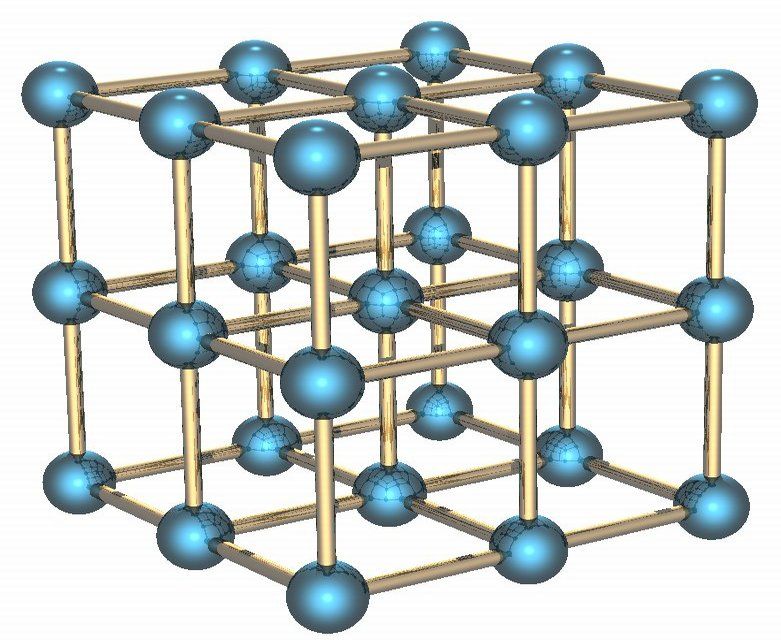
Metallic lattices
Metallic Lattices: Composed of a regular arrangement of positive metal ions surrounded by delocalised electrons
Typical properties:
High melting temperature
High boiling temperature
Good electrical conductivity
Good thermal conductivity
Malleability
Ductility
Seite 2
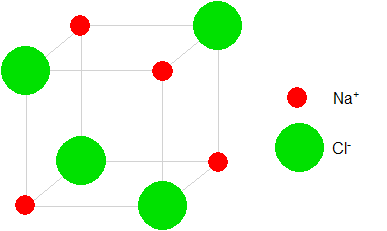
Giant Ionic Lattices
Ionic lattice: Composed of a regular arrangement of positive and negative ions
Typical properties:
Fairly high melting temperature
Brittle
Poor electrical conductivity when solid but good when molten
Often soluble in water
Seite 3
Giant Covalent Lattices
Giant covalent lattice: Giant network of atoms liked to each other by covalent bonds
Four most common giant covalent lattices:
Diamond
Graphite
Graphene
Silicon (IV) oxide
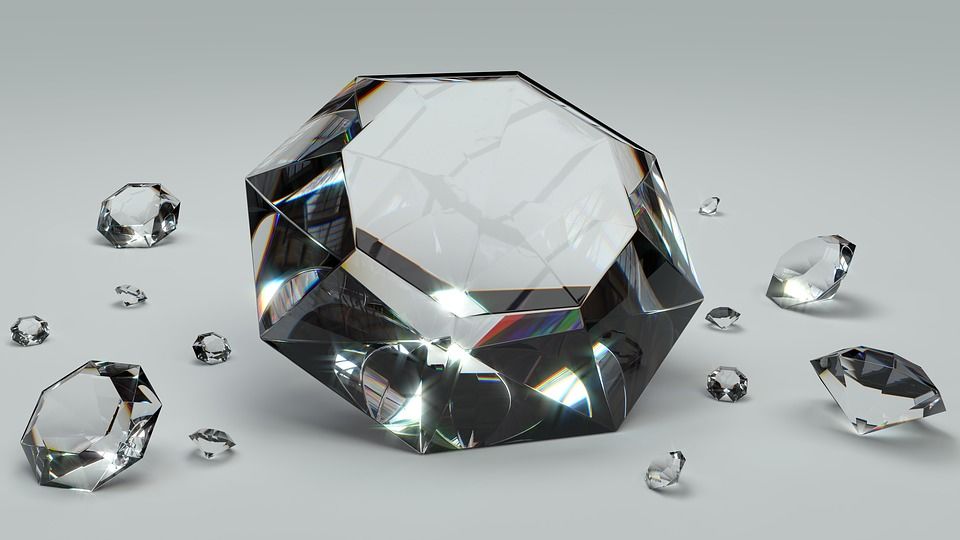
Diamond
Giant three dimension tetrahedral arrangement of carbon
Each carbon atom forms four sigma bonds to four other carbon atoms
All bond angles are 109.5°
Extremely hard and high melting temperature e to eat number of strong C-C bonds.
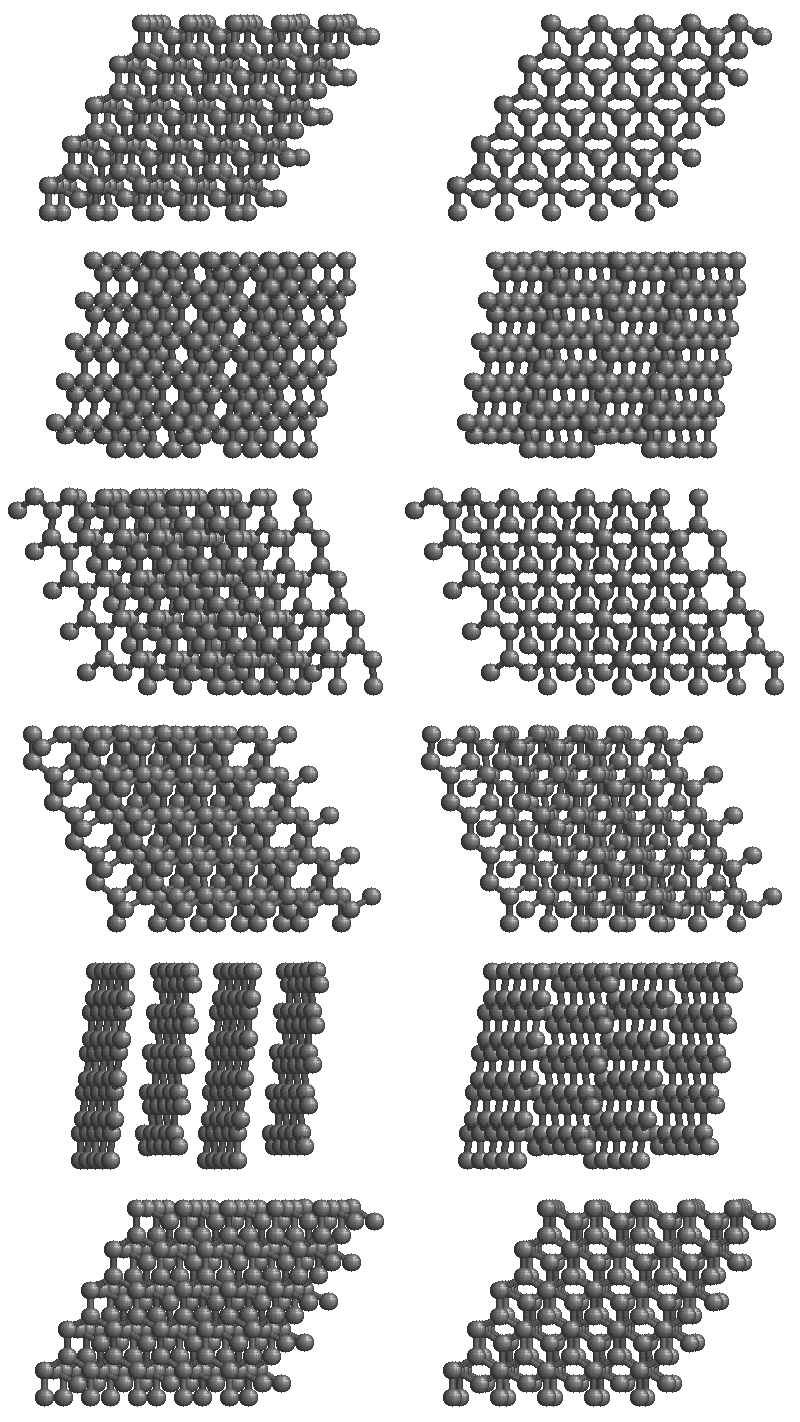
Graphite
Each carbon atom is bonded to three others by sigma bonds
These form interlocking hexagonal rings
Fourth electron on each carbon is in a p orbital
P orbitals overlap with one another to produce a cloud of delocalised electrons above and below the plane of the rings
High melting temperature due to large number of strong C-C bonds
Graphite as a lubricant
Graphite can be used as a solid lubricant as the layers slide easily over each other
Weak London forces between layers
Lubricating properties are also as a result of adsorbed gases on the surface of the carbon atoms
For this reason, graphite will not act as a lubricate in a vacuum and therefore, cannot be used in spacecraft
Graphite as an electrical conductor
Acts as a good electrical conductor as the delocalised electrons between the layers are free to move under the influence of an applied potential difference
Only conducts electrical parallel to its layers as the delocalised electrons are not free to move from one layer to the next
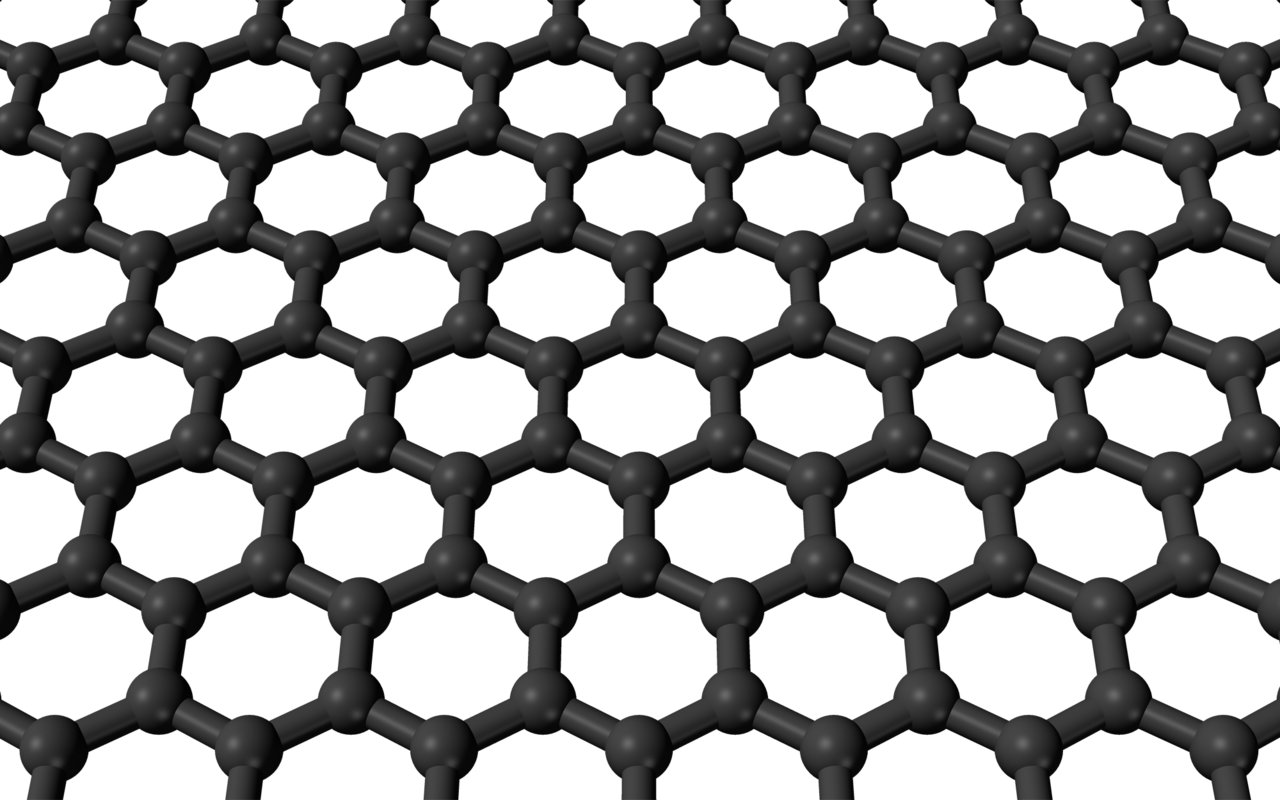
Graphene
One atom thick layer of graphite
Pure carbon in the form of a very thin sheet
Seite 4
Molecular Lattices
Molecular lattice: A crystal lattice made of molecules bonded together by intermolecular forces.
Examples: Iodine (\(I_2\)), Sulfur (\(S_8\)), White phosphorus (\(P_4\)) (Shown below)
Typical properties:
Low melting and boiling points
Only intermolecular forces need to be overcome, not intramolecular bond
Macromolecular solids have higher melting temperatures than their monomers
London forces tend to increase with increasing chain length and number of electrons
Example: Boiling point of polyethene will be much higher than ethene

Informationen
- Beschreibung
- Der Nutzer hat seine Fachbereichs-Information gelöscht. Notiz am Solid Lattices, erstellt von Gelöschter Nutzer am 21/08/2017.
- Erstellt von
- Gelöschter Nutzer · Aug 2017
- Aktualisiert
- 21 Aug 2017
- Aufrufe
- 16
- Verlauf
-
- Erstellt von Niamh Ryan · 18 Aug 2017
- Kopiert von Niamh Ryan · 21 Aug 2017
- Bewertung