
Quiz
oracle
Erstelle ein kostenloses Konto, um dieses Quiz zu beenden
Speichere deinen Fortschritt und sieh dir dein Endergebnis an.
oder mit deiner E-Mail registrieren
Schon ein Konto? Anmelden
Fragen in diesem Quiz (94)
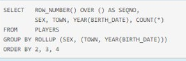
1For each combination of sex–town–year of birth, get the number of players; for each sex, get the number of players; and, finally, get the total number of players.
- ASELECT ROW_NUMBER() OVER () AS SEQNO, SEX, TOWN, YEAR(BIRTH_DATE), COUNT(*) FROM PLAYERS GROUP BY ROLLUP (SEX, (TOWN, YEAR(BIRTH_DATE))) ORDER BY 2, 3, 4
- B
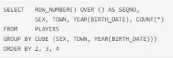
- C
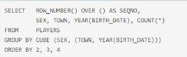
- D
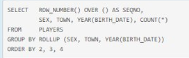
- ASELECT ROW_NUMBER() OVER () AS SEQNO, SEX, TOWN, YEAR(BIRTH_DATE), COUNT(*) FROM PLAYERS GROUP BY ROLLUP (SEX, (TOWN, YEAR(BIRTH_DATE))) ORDER BY 2, 3, 4
2Get the number of players for each combination of sex–town, for each sex and for each town, and also get the total number of players in the entire table.
- A
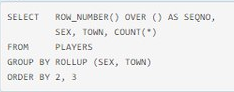
- B
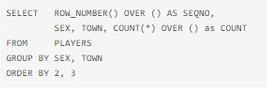
- C
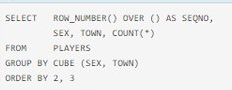
- D
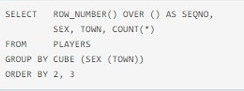
- ESELECT ROW_NUMBER() OVER () AS SEQNO, SEX, TOWN, COUNT(*) FROM PLAYERS GROUP BY CUBE (SEX, TOWN) ORDER BY 2, 3
- A
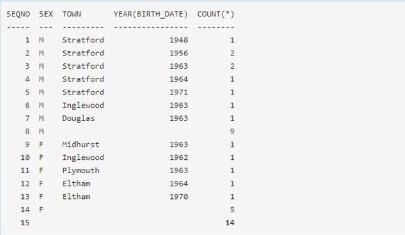
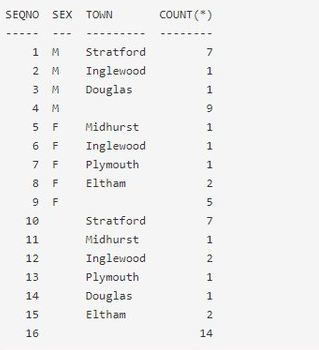
3What is the result of this code?
SELECT ROW_NUMBER() OVER () AS SEQNO, SEX, TOWN, YEAR(BIRTH_DATE), COUNT(*) FROM PLAYERS GROUP BY ROLLUP (SEX, (TOWN, YEAR(BIRTH_DATE))) ORDER BY 2, 3, 4- A
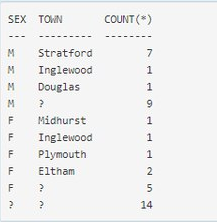
- B
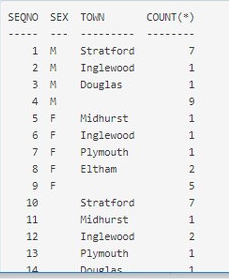
- C
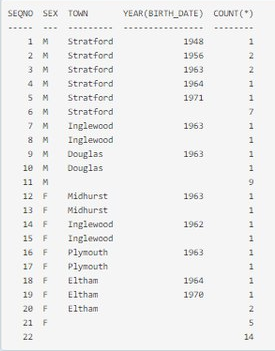
- D
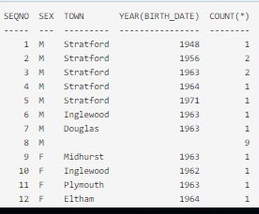
- A
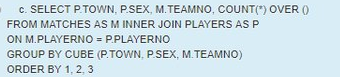
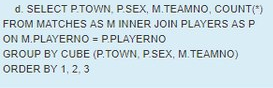
4Which query executes a CUBE on column town, sex and team number after the two tables PLAYERS and TEAMS have been joined?
- ASELECT P.TOWN, P.SEX, M.TEAMNO, COUNT(*) FROM MATCHES AS M INNER JOIN PLAYERS AS P ON M.PLAYERNO = P.PLAYERNO GROUP BY CUBE (P.TOWN, P.SEX, M.TEAMNO) ORDER BY 1, 2, 3
- B
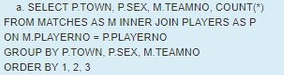
- C
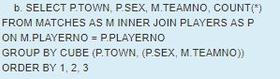
- D
- E
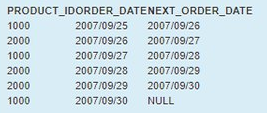
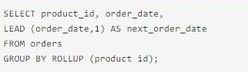
5How to get this result?
- A

- B

- C
- D

- Eselect product_id, order_date,
LEAD (order_date,1) over (ORDER BY order_date) AS next_order_date
from orders;
- A
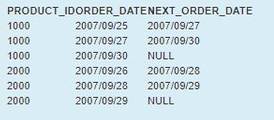
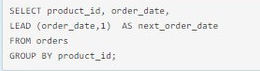
6The query which returns
- A

- B

- C
- D

- ESELECT product_id, order_date,
LEAD (order_date,1) OVER (PARTITION BY product_id ORDER BY order_date) AS next_order_date
FROM orders;
- A
7Difference between RANK and DENSE_RANK function?
- AThe rank function can cause non-consecutive rankings regradles to the values. Whereaes, the DENSE_RANK will always result in consecutive rankings
- BThe rank function can cause non-consecutive rankings if the tested values are the same. Whereaes, the DENSE_RANK will always result in consecutive rankings
- CThe dense_rank function can cause non-consecutive rankings if the tested values are the same. Whereaes, the RANK will always result in consecutive rankings
- DThe rank function can cause non-consecutive rankings if the tested values are different. Whereaes, the DENSE_RANK will always result in consecutive rankings
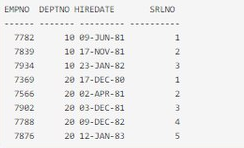
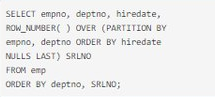
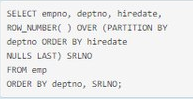
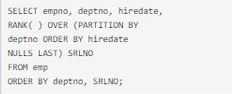
8The query which separates sets of running serial to emplyees of
- A
- B
- C
- DSELECT empno, deptno, hiredate,
ROW_NUMBER( ) OVER (PARTITION BY
deptno ORDER BY hiredate
NULLS LAST) SRLNO
FROM emp
WHERE deptno IN (10, 20)
ORDER BY deptno, SRLNO;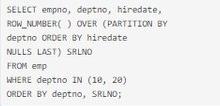
- A
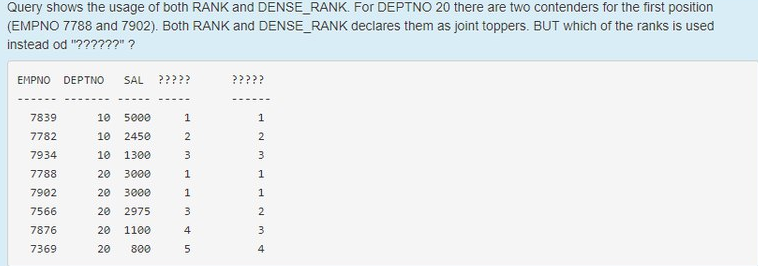
9which rank?
- A

- B

- C

- D

- A
10Use ________ to create an application, composed of a set of HTML pages, based on database objects in APEX
- AApplication Builder
- BTeam development
- CPackadged apps
- Dsql workshop
11Use the ________ to access tools for viewing and managing database objects
- ASQL workshop
- BApplication builder
- CPackaged apps
- DTeam development
12Use ______ to track new features, non-feature related tasks (or To Do tasks), bugs, and milestones in APEX
- ATeam Development
- BPackaged apps
- CSQL Workshop
- DApplication builder
13Tekserinderwi !!! Incorrect answer

- AWebsheet application
- BMobile application
- CDatabase application
14By creating _______ applications, end users can manage structured and unstructured data without developer assistance. Page sections contain unstructured data which can be edited using a WYSIWYG editor
- AWebsheet
- BMobile
- CDatabase
15_______ applications enable developers to have full control over all aspects of developmentprocess and final application functionality. With database applications, developers can directly leverage their SQL and PL/SQL programming skills.
- ADatabase
- BWebsheet
- CMobile
16______ applications enable users to build data centric applications without any SQL programming knowledge.
- AWebsheet
- BDb
- CMobile
- DPackaged
17A goal of data mining includes which of the following?
- AA. To explain some observed event or condition
- BB. To confirm that data exists
- CC. To analyze data for expected relationships
- DD. To create a new data warehouse
18A data warehouse is which of the following?
- AA. Can be updated by end users.
- BB. Contains numerous naming conventions and formats
- CC. Organized around important subject areas.
- DD. Contains only current data.
19Fact tables are which of the following?
- AA. Completely denoralized
- BB. Partially denoralized
- CC. Completely normalized
- DD. Partially normalized
20Data transformation includes which of the following?
- AA. A process to change data from a detailed level to a summary level
- BB. A process to change data from a summary level to a detailed level
- CC. Joining data from one source into various sources of data
- DD. Separating data from one source into various sources of data
21The generic two-level data warehouse architecture includes which of the following?
- AA. At least one data mart
- BB. Data that can extracted from numerous internal and external sources
- CC. Near real-time updates
- DD. All of the above
22A star schema has what type of relationship between a dimension and fact table?
- AA. Many-to-many
- BB. One-to-one
- CC. One-to-many
23A multifield transformation does which of the following?
- AA. Converts data from one field into multiple fields
- BB. Converts data from multiple fields into one field
- CC. Converts data from multiple fields into multiple fields
- DD. All of the above
24What areas of Oracle tuning have the most impact on system performance?
- AA. Logical design tuning
- BB. Physical design tuning
- CC. SGA tuning
- DD. SQL tuning
25Which of the following is not an important Oracle tuning metric?
- AA. Buffer hit ratio
- BB. Library cache hit ratio
- CC. Buffer busy waits
- DD. Full-table scans
26Which was listed as a method for making SQL re-usable? (Choose all that apply)
Please select all the correct answers.- AA. Place all SQL in stored procedures.
- BB. Replace all hard-coded variables with host variables
- CC. Place all SQL in triggers.
- DD. Remove all built-in functions from SQL.
27Which was listed as a tool to help tune Oracle SQL? (Choose all that apply)
Please select all the correct answers.- AA. TKPROF
- BC. SQL Analyzer
- CD. EXPLAIN PLAN
- DB. SQL*Loader
28Which is true about the EXPLAIN PLAN utility? (Choose all that apply)
Please select all the correct answers.- AB. It places the access path in a plan table for display.
- BA. It requires the existence of a plan table.
- CC. It must execute the SQL to determine the path.
- DD. It requires the SET PLAN command.
29Which of the following database design concepts is implemented with a self join?
- ARecursive Relationship
- BArc
- CNon-transferability
- DSupertype
30Which of the following database design concepts do you need in your tables to write Hierarchical queries?
- ARecursive Relationship
- BArc
- CSupertype
- DNon-trans
31Which SELECT statement implements a self join?
- ASELECT e.employee_id, m.manager_id
FROM employees e, employees m
WHERE m.employee_id = e.manager_id; - BSELECT e.employee_id, m.manager_id
FROM employees e, manager m
WHERE m.employee_id = e.manager_id; - CSELECT e.employee_id, m.manager_id
FROM employees e, department m
WHERE m.employee_id = e.manager_id; - DSELECT e.employee_id, m.manager_id
FROM employees e NATURAL JOIN employees m;
- ASELECT e.employee_id, m.manager_id
32_____ specifies the relationship between parent rows and child rows of the hierarchy.
- ACONNECT BY
- BSTART WITH
- CNOCYCLE
- DPRIOR
33_____ specifies the root row(s) of the hierarchy.
- ASTART WITH
- BCONNECT BY
- CNOCYCLE
- DPRIOR
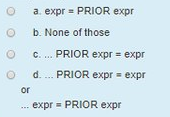
34PRIOR operator - In a hierarchical query, one expression in condition must be qualified with the PRIOR operator to refer to the parent row.
?????????????????????
- Aa
- Bb
- Cc
- Dd
35?
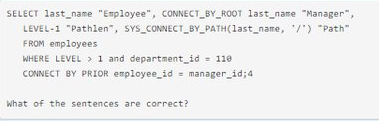
- AThe following example returns the last name of each employee in department 110, each manager above that employee in the hierarchy, the number of levels between manager and employee, and the path between the two:
- BThe following example returns the last name of each employee in department 110, each employee above that employee in the hierarchy, the number of levels between manager and employee, and the path between the two:
- CThe following example returns the last name of each employee in department 110, each manager above that manager in the hierarchy, the number of levels between manager and employee, and the path between the two:
36choose one????????????
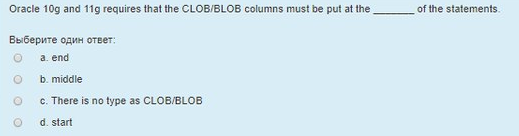
- Aa
- Bb
- Cc
- Dd
37Choose1
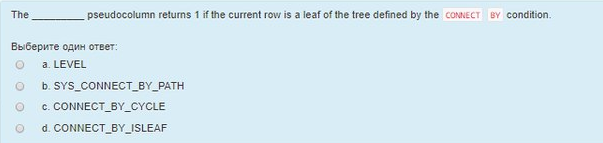
- Aa
- Bb
- Cc
- Dd
38?
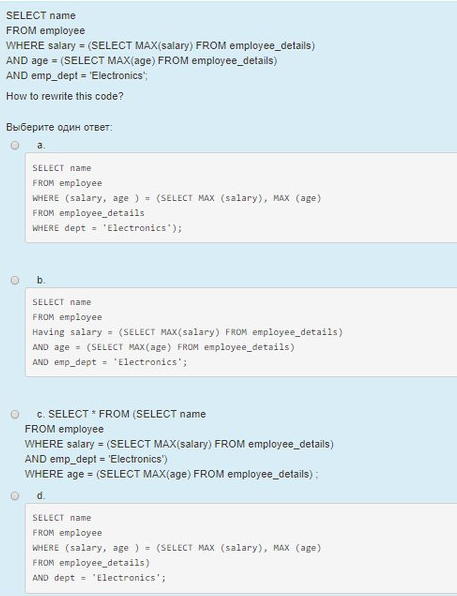
- Aa
- Bb
- Cc
- Dd
39?
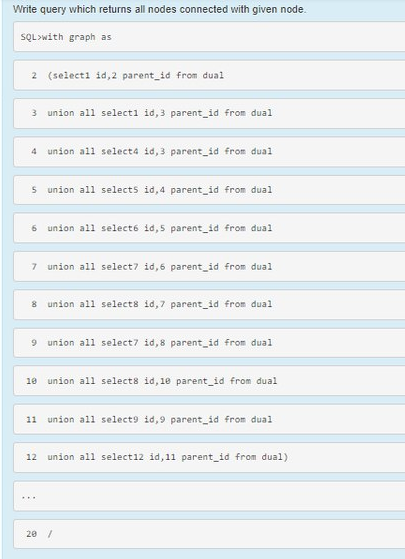
- Aa
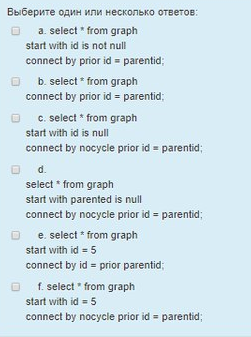
- Bb?
- Cc
- Dd
- Ee
- Ff
- Aa
40?
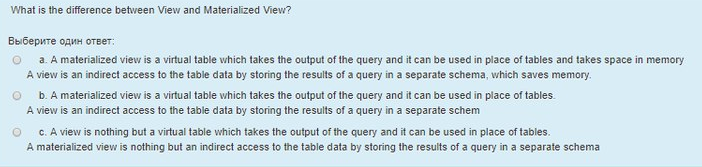
- Aa
- Bb
- Cc
41?
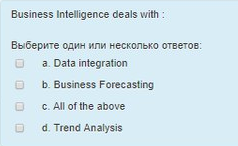
- Aa
- Bb
- Cc
- Dd
42?
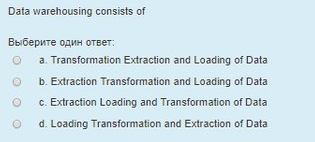
- Aa
- Bb
- Cc
- Dd
43?
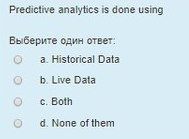
- Aa
- Bb
- Cc
- Dd
44?
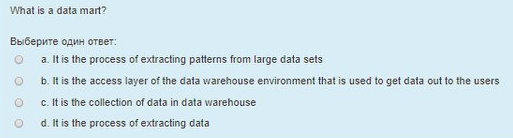
- Aa
- Bb
- Cc
- Dd
45?
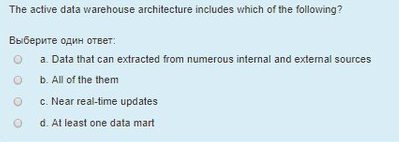
- Aa
- Bb
- Cc
- Dd
46?
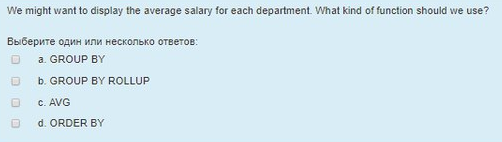
- Aa
- Bb
- Cc
- Dd
47?
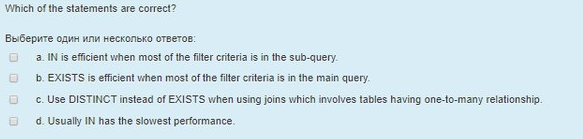
- Aa
- Bb
- Cc
- Dd
48?
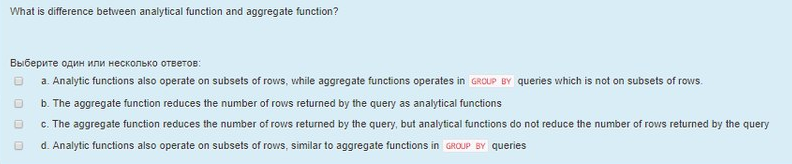
- Aa
- Bb
- Cc
- Dd
49?
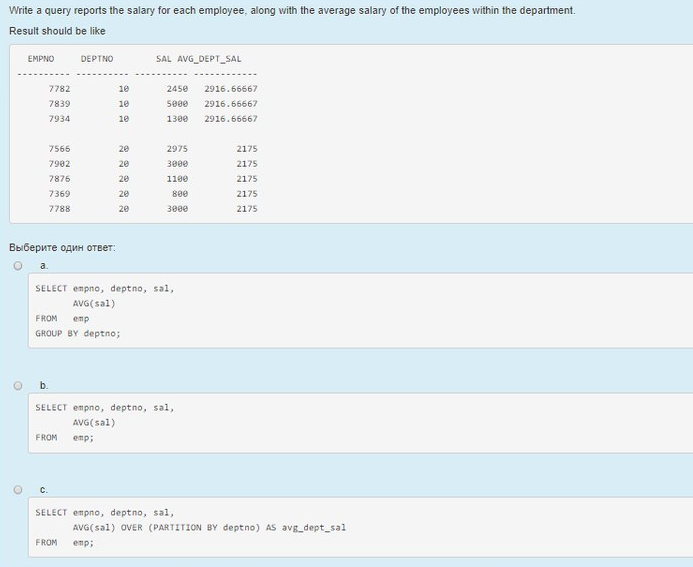
- Aa
- Bb
- Cc
- Dd
50?
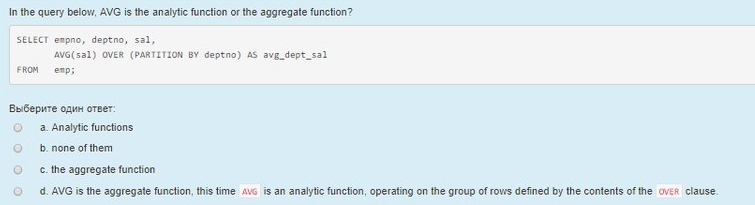
- Aa
- Bb
- Cc
- Dd
51?

- Aa
- Bb
- Cc
- Dd
52?
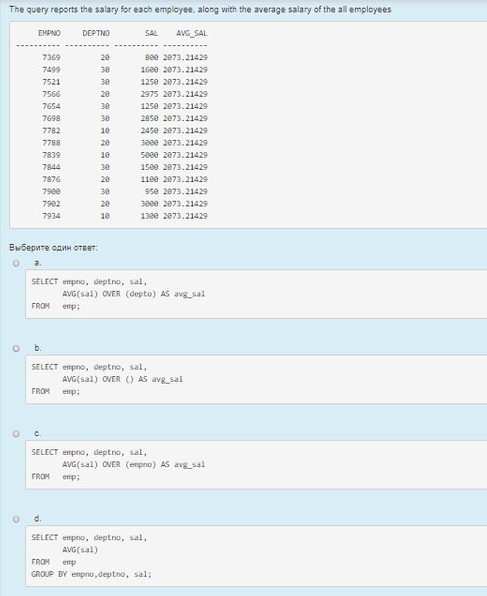
- Aa
- Bb
- Cc
- Dd
53?
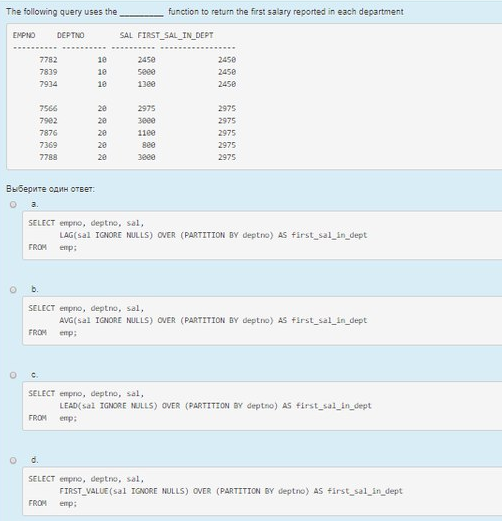
- Aa
- Bb
- Cc
- Dd
54?
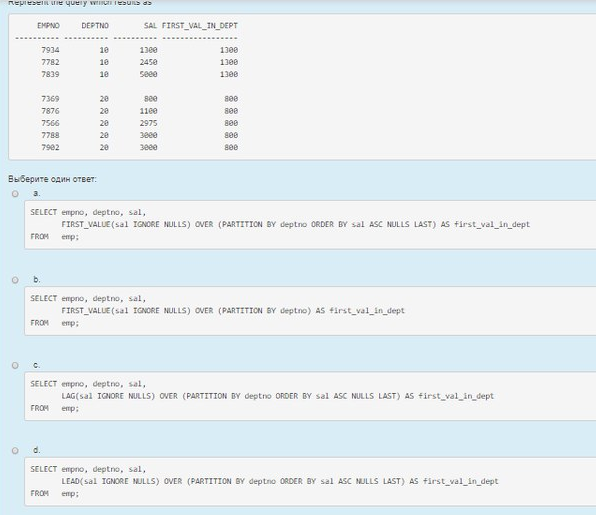
- Aa
- Bb
- Cc
- Dd
55?
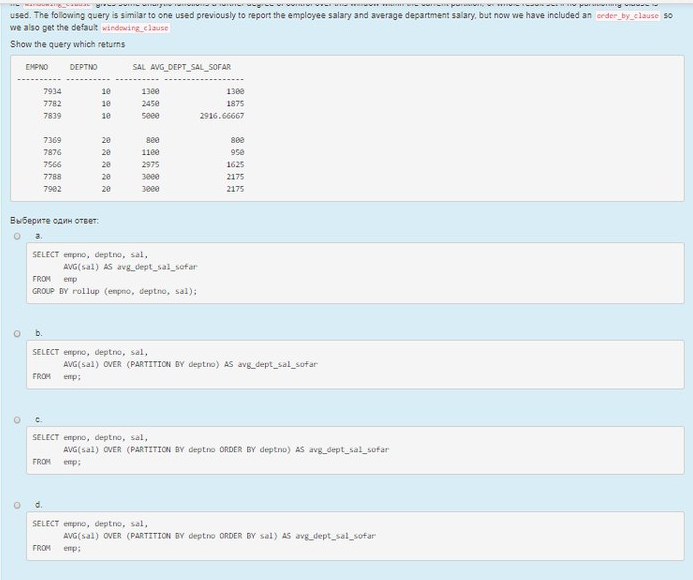
- Aa
- Bb
- Cc
- Dd
56?
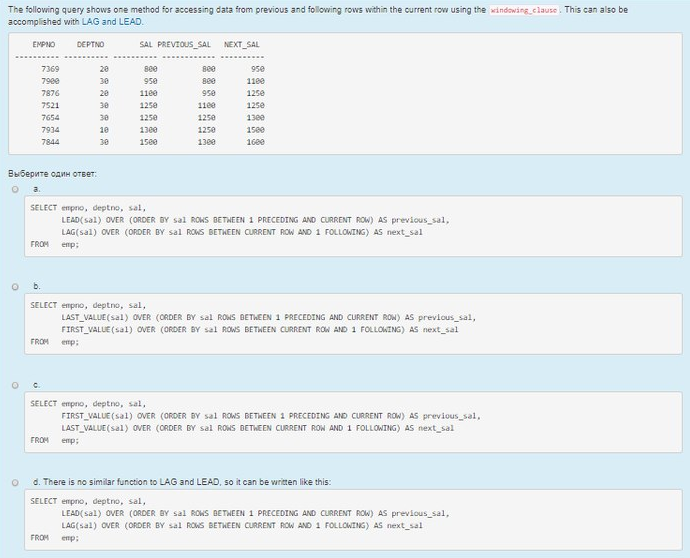
- Aa
- Bb
- Cc
- Dd
57?
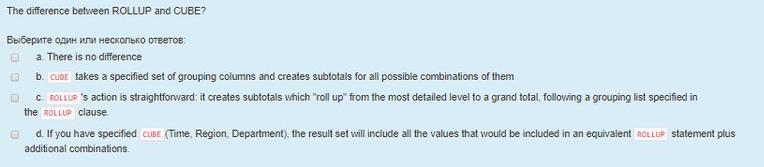
- Aa
- Bb
- Cc
- Dd
58?
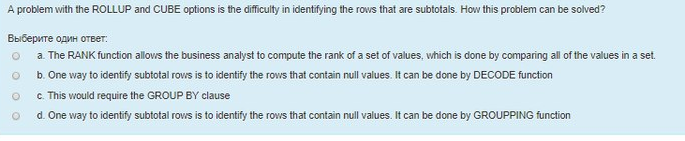
- Aa
- Bb
- Cc
- Dd
59????????????????????????????????????

- Aa
- Bb
- Cc
- Dd
60?
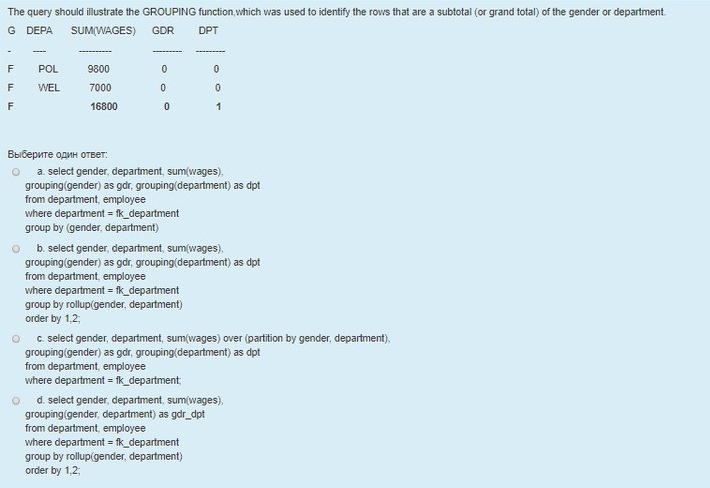
- Aa
- Bb
- Cc
- Dd
61?
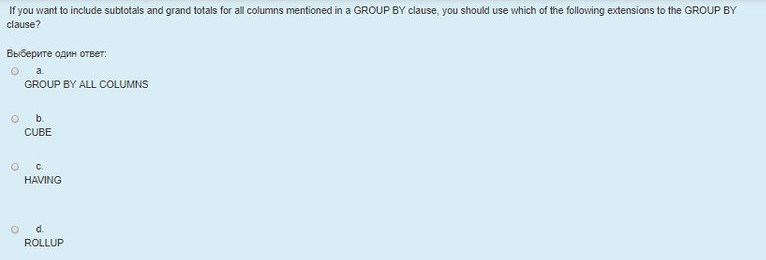
- Aa
- Bb
- Cc
- Dd
62?
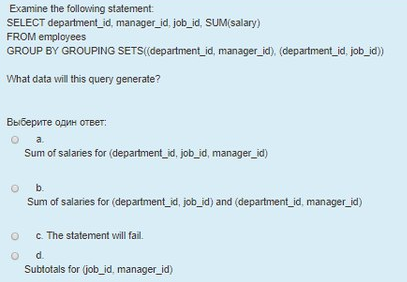
- Aa
- Bb
- Cc
- Dd
63?
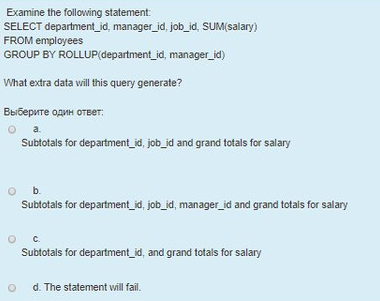
- Aa
- Bb
- Cc
- Dd
64?
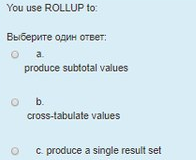
- Aa
- Bb
- Cc
- Dd
65?
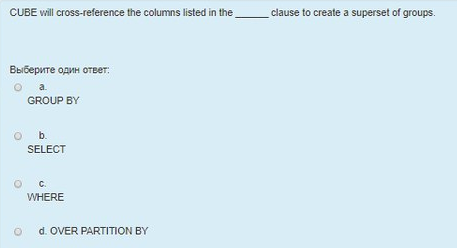
- Aa
- Bb
- Cc
- Dd
66?
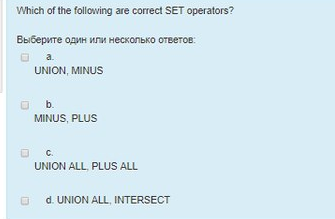
- Aa
- Bb
- Cc
- Dd
6792?
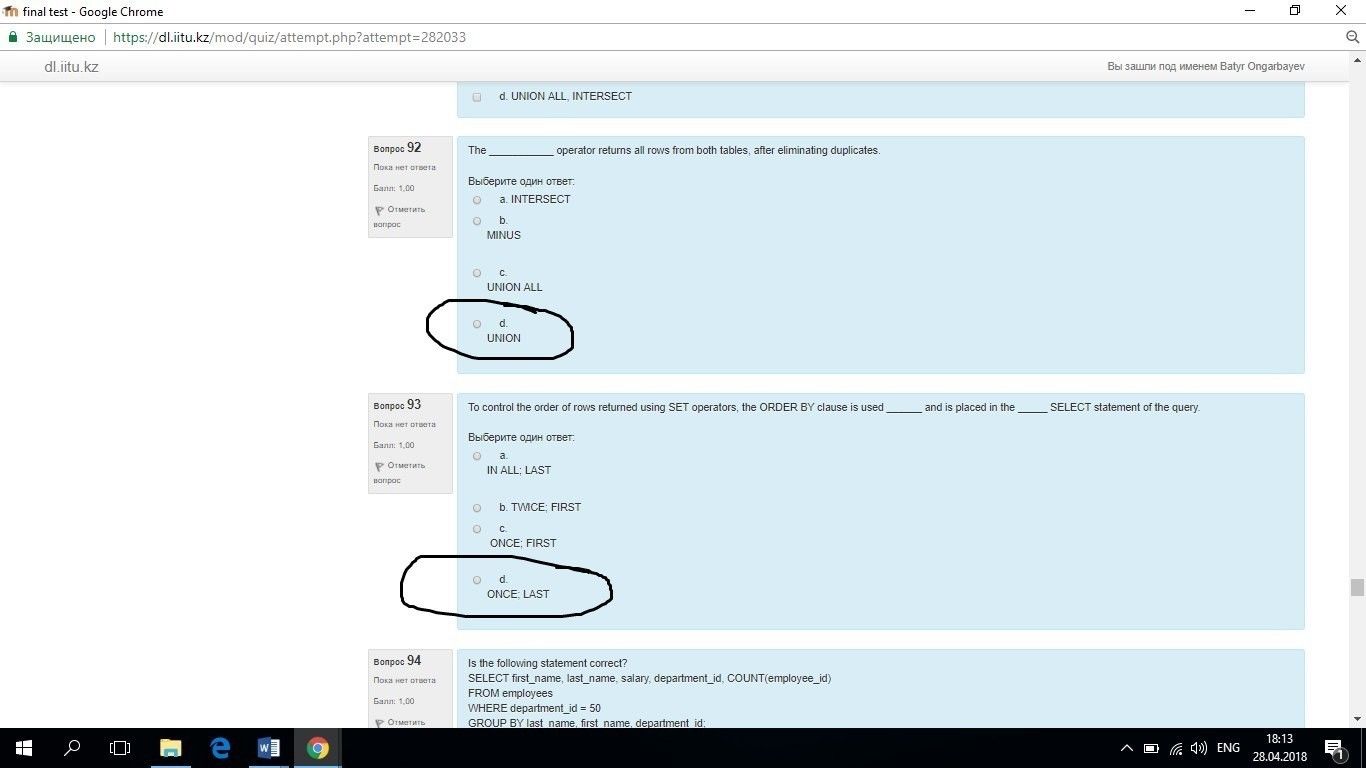
- Aa b c
- Bd
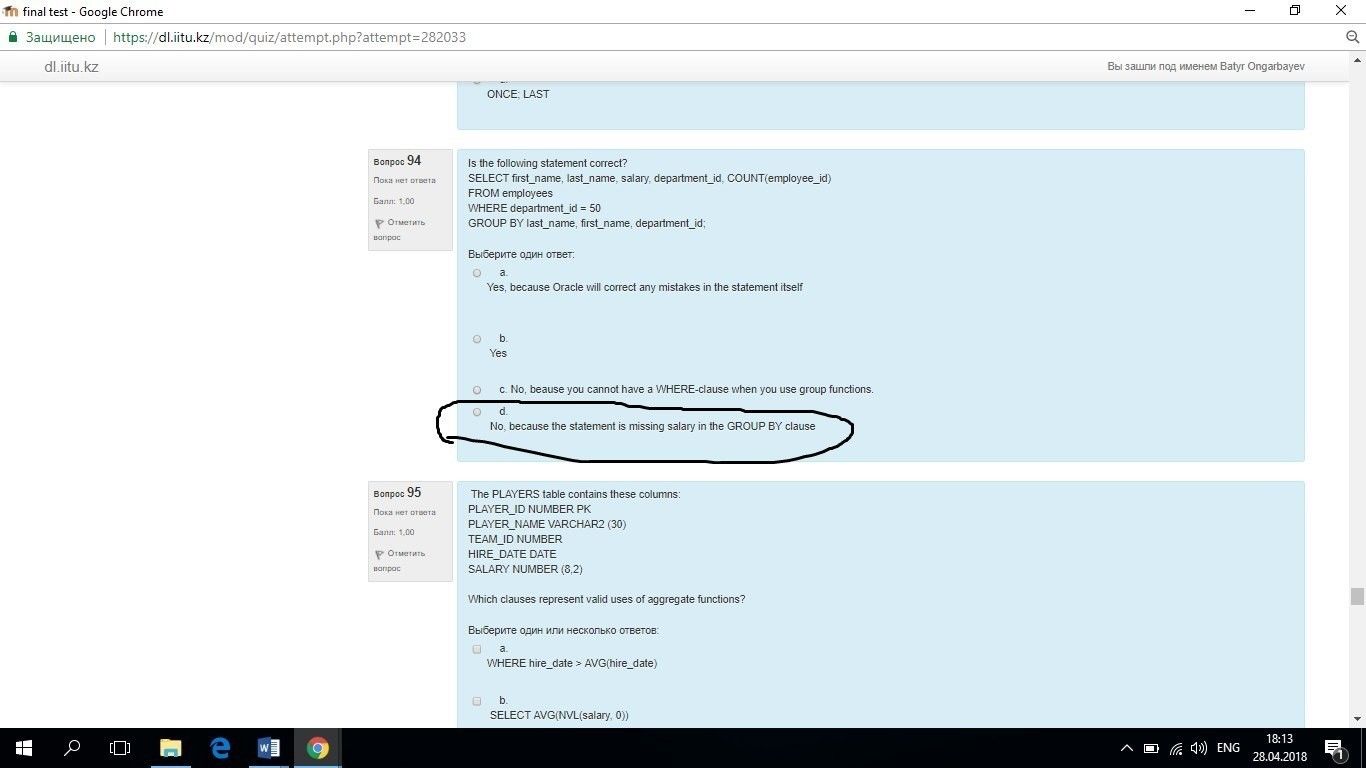
6893?
- Aa
- Bb
- Cc
- Dd
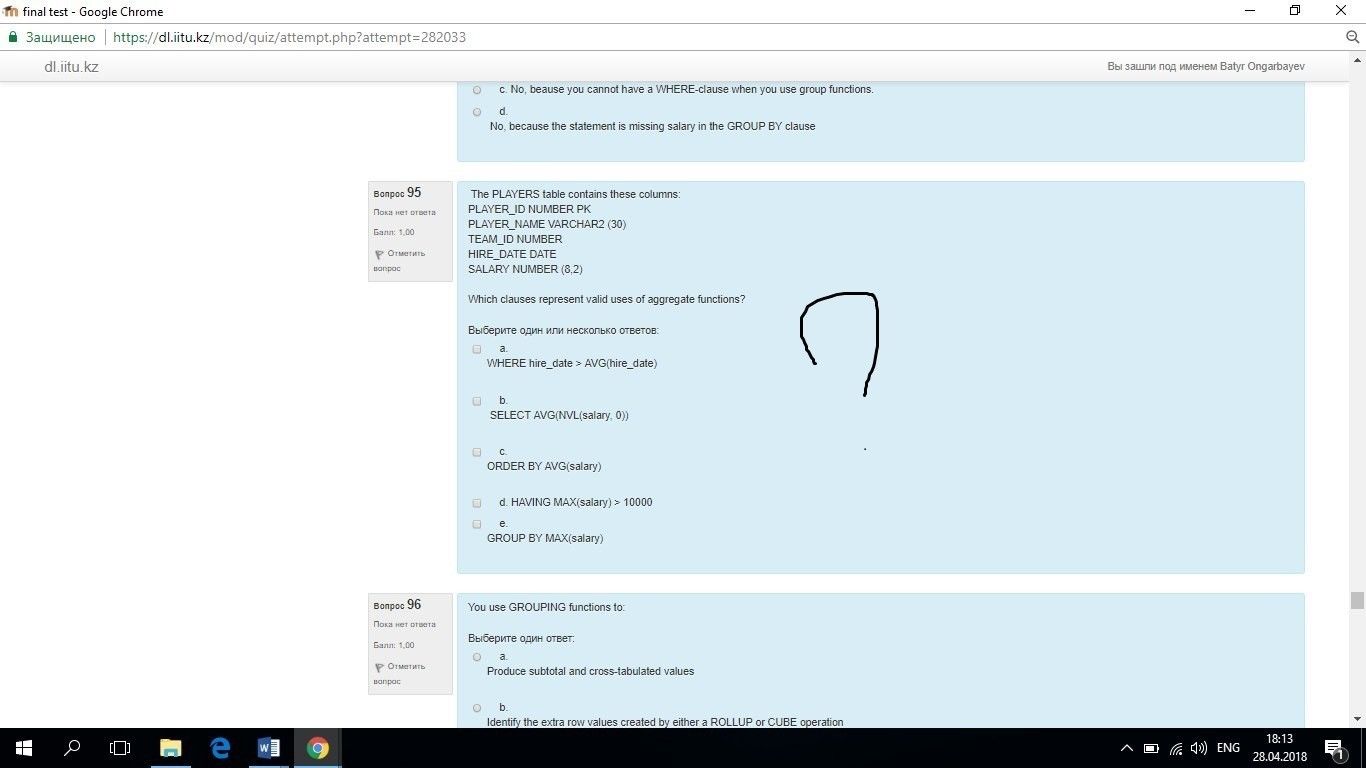
69?
- Aa
- Bb
- Cc
- Dd
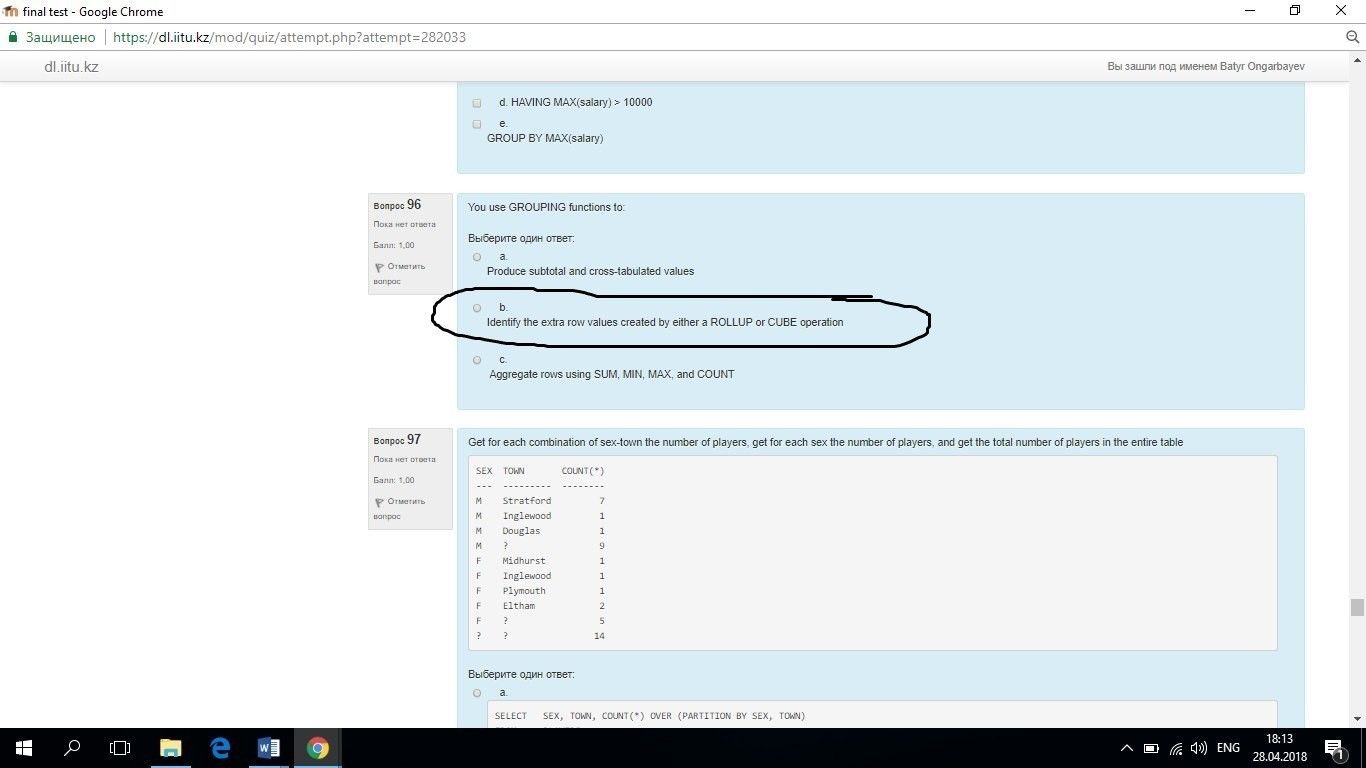
70?
- A?
- B?a
71?
- Ab
- Ba c d
72?
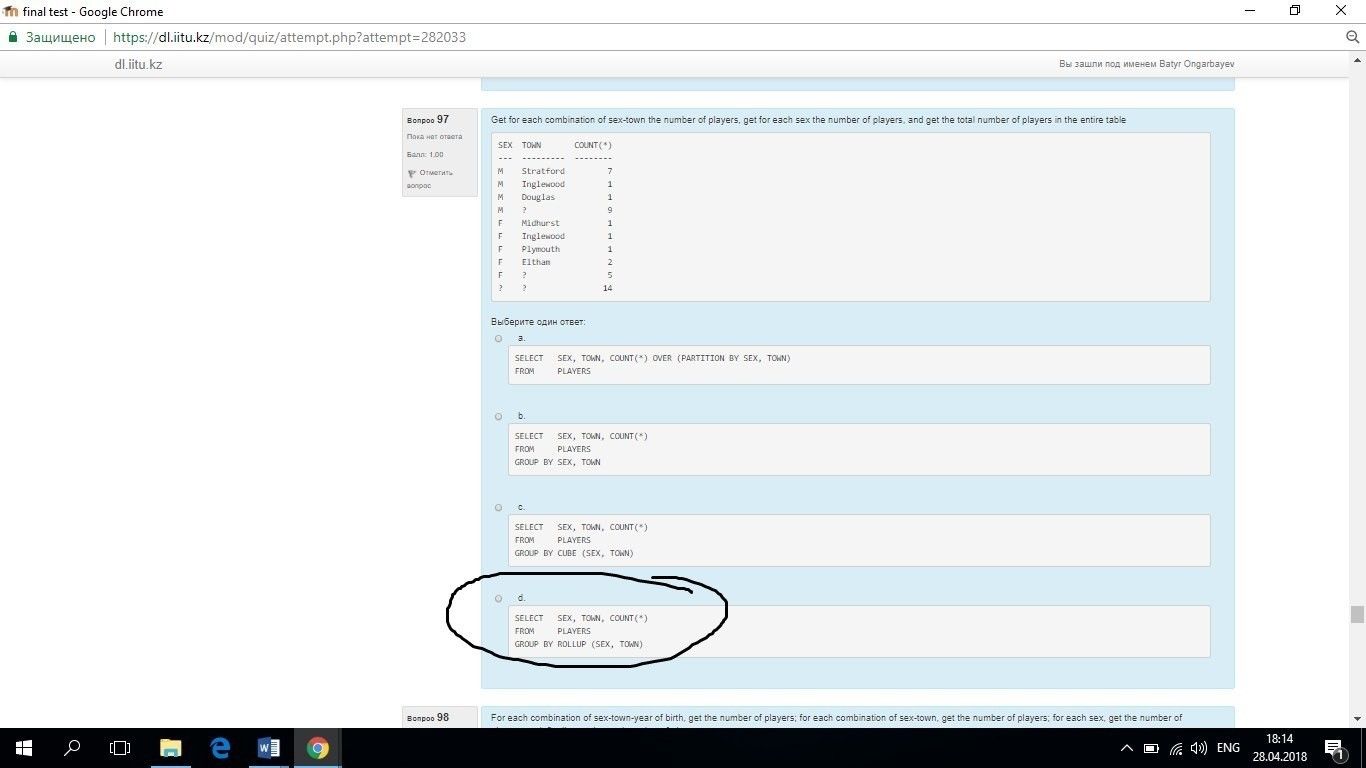
- Aa b c
- Bd
73?
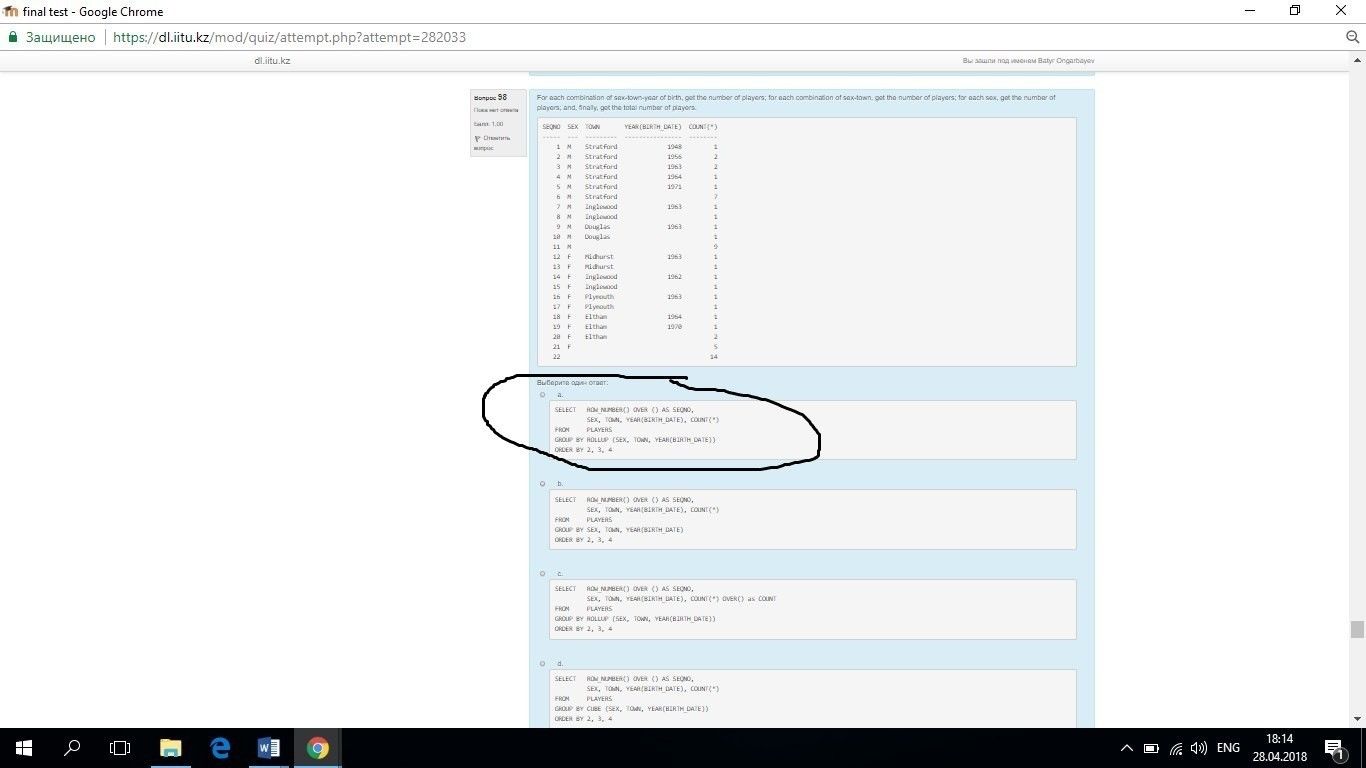
- Aa
- Bbcd
7499?
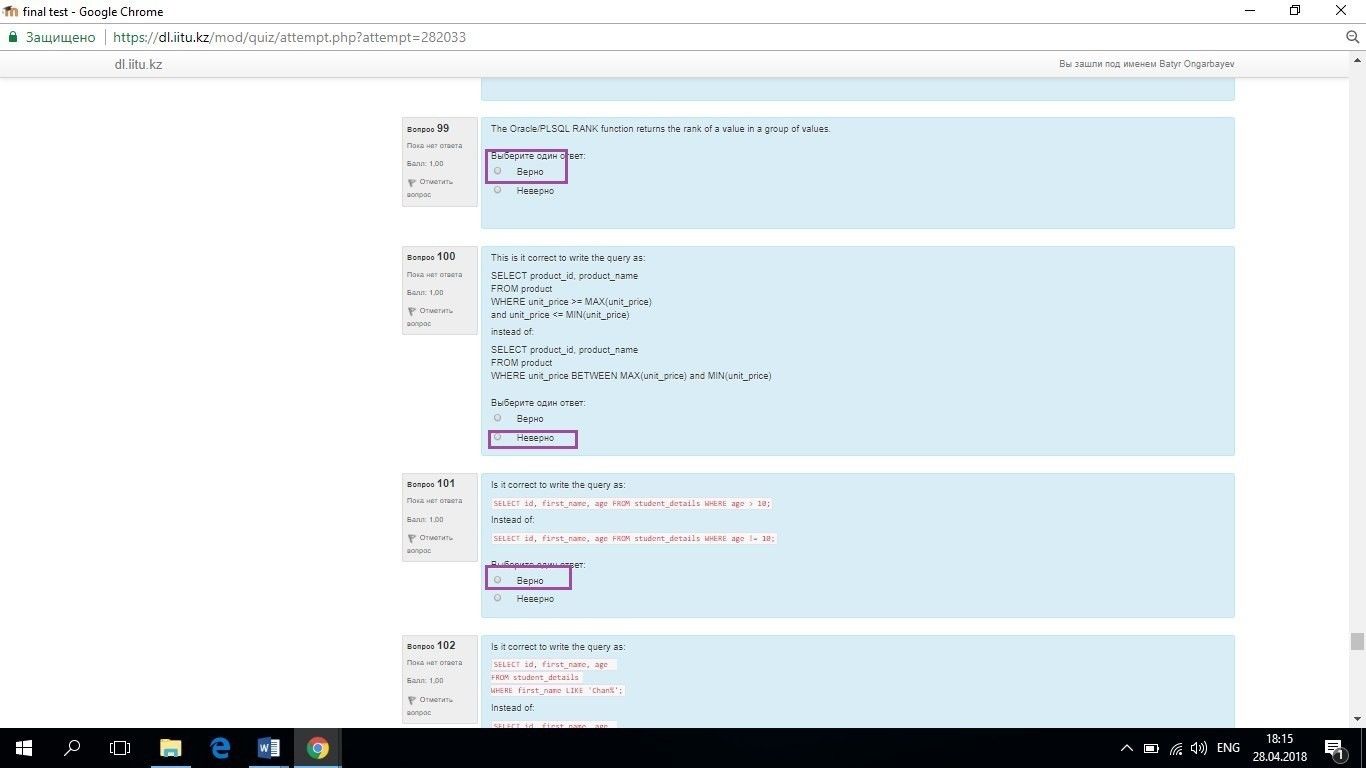
- ARichtig
- BFalsch
75100?
- ARichtig
- BFalsch
76101?
- ARichtig
- BFalsch
77102?
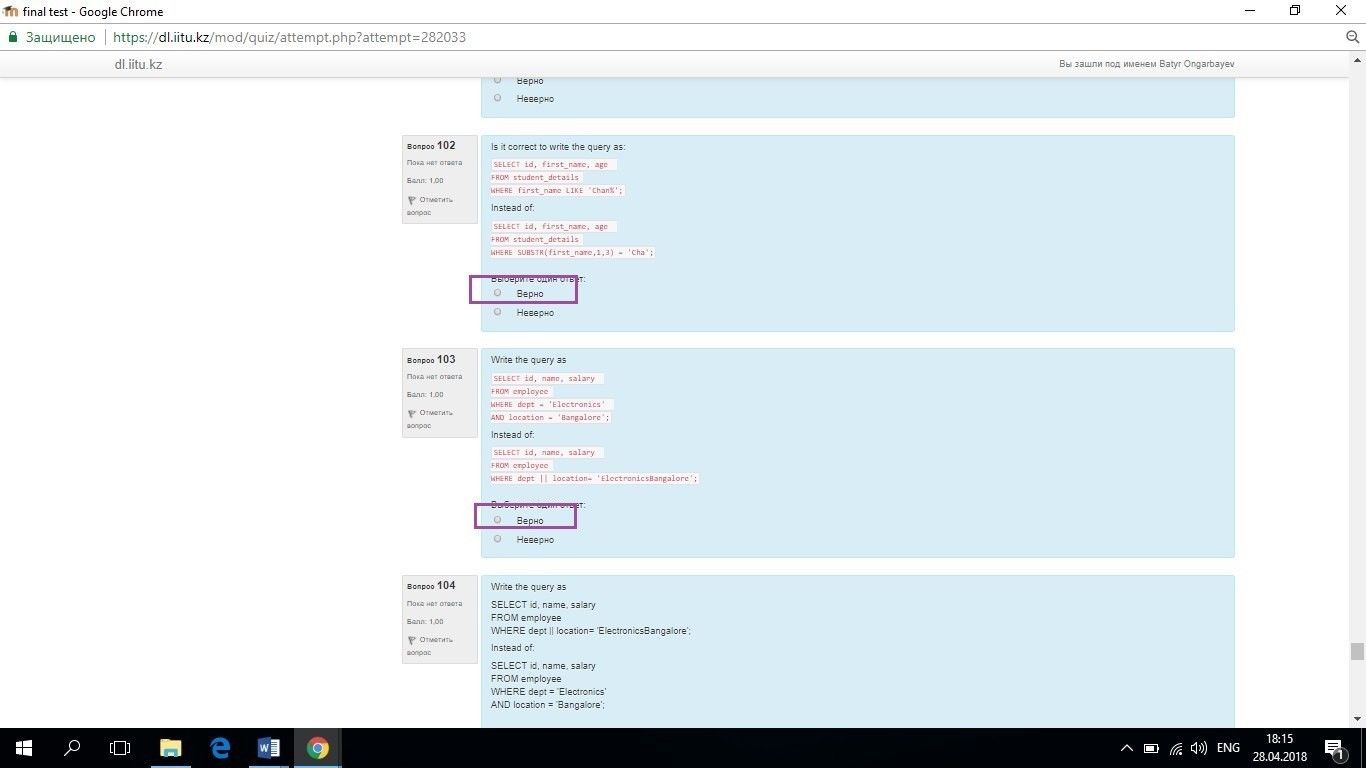
- ARichtig
- BFalsch
78103
- ARichtig
- BFalsch
79104
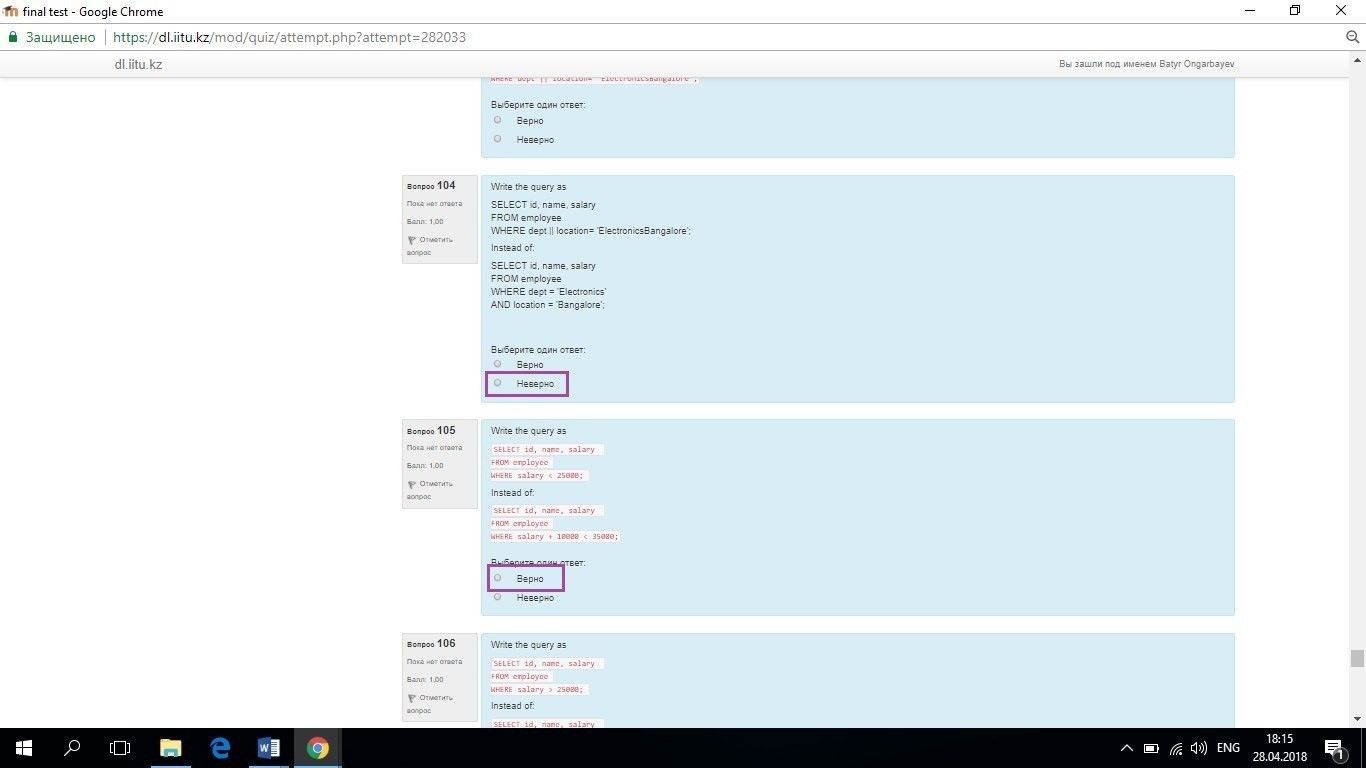
- ARichtig
- BFalsch
80105
- ARichtig
- BFalsch
81106
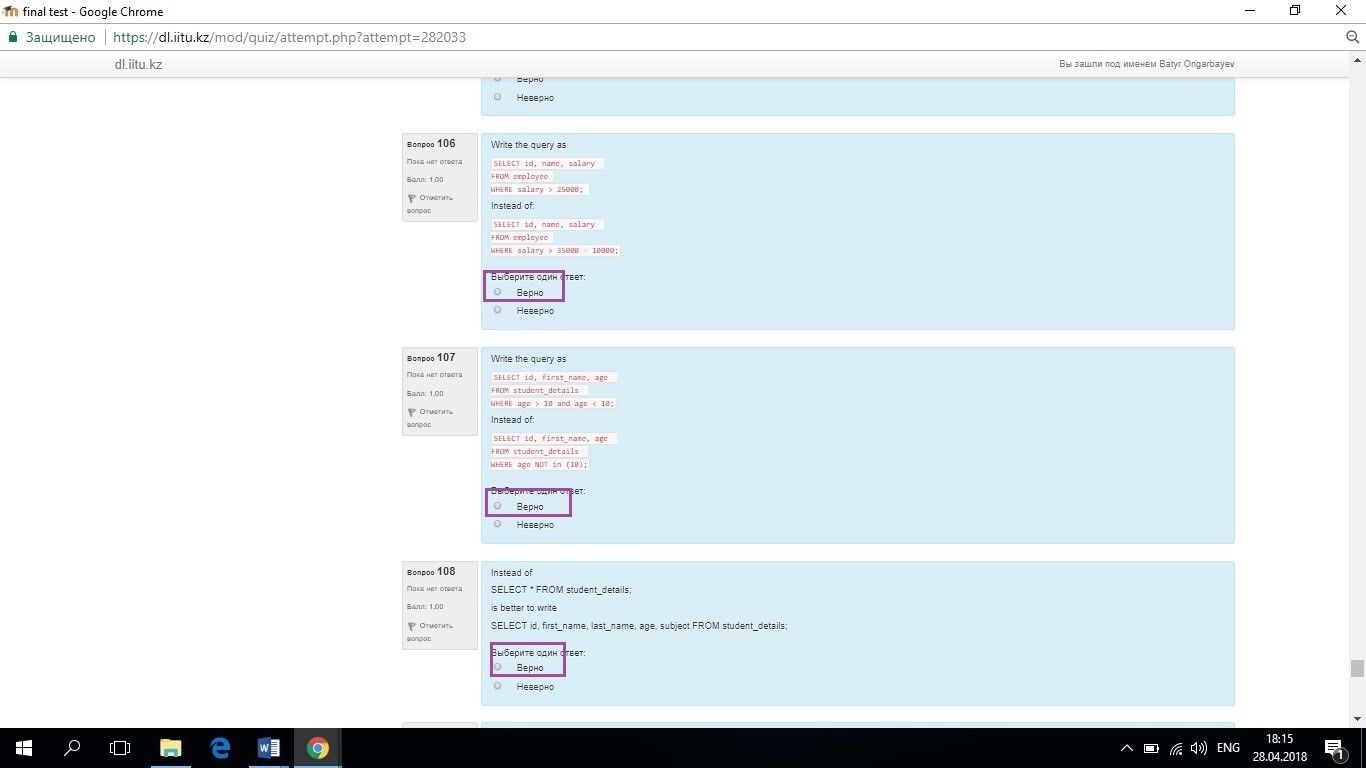
- ARichtig
- BFalsch
82107
- ARichtig
- BFalsch
83108
- ARichtig
- BFalsch
84109
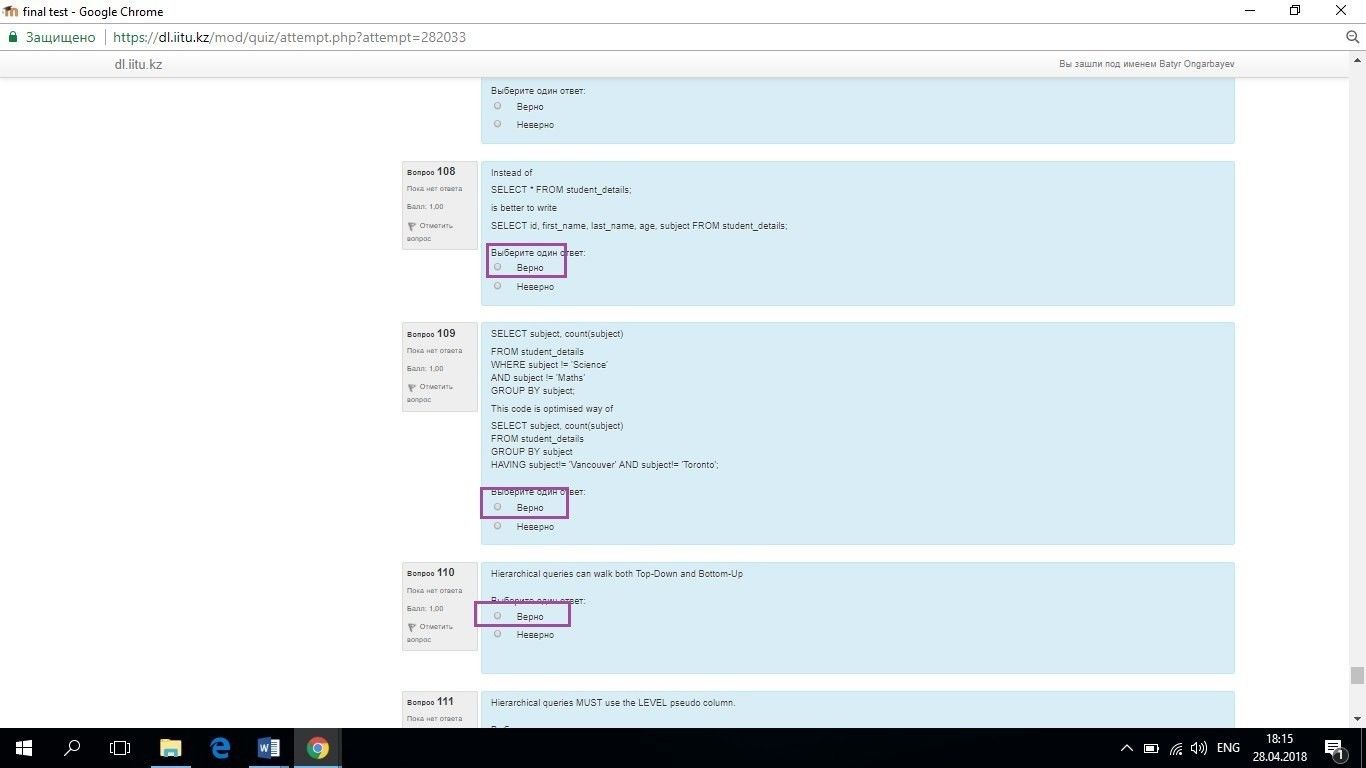
- ARichtig
- BFalsch
85110
- ARichtig
- BFalsch
86111
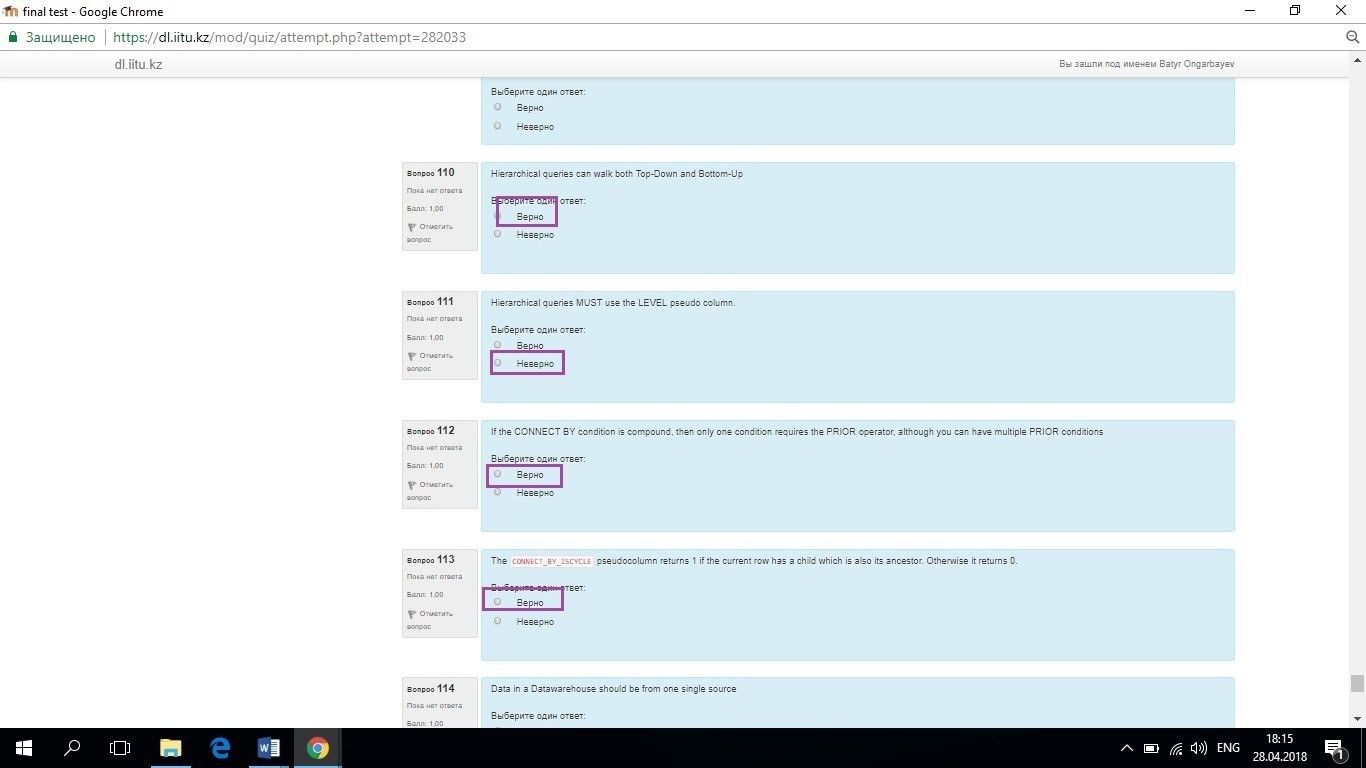
- ARichtig
- BFalsch
87112
- ARichtig
- BFalsch
88113
- ARichtig
- BFalsch
89114
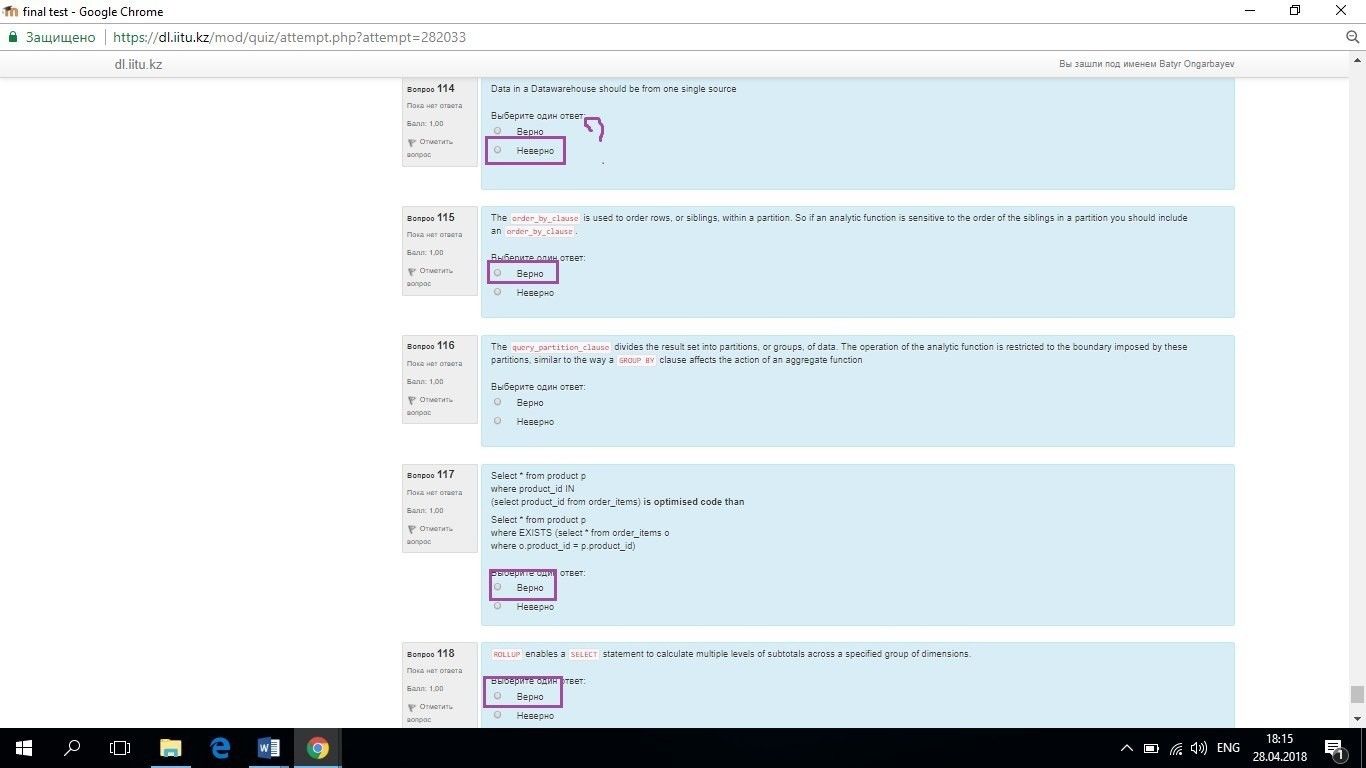
- ARichtig
- BFalsch
90115
- ARichtig
- BFalsch
91117
- ARichtig
- BFalsch
92118
- ARichtig
- BFalsch
93119
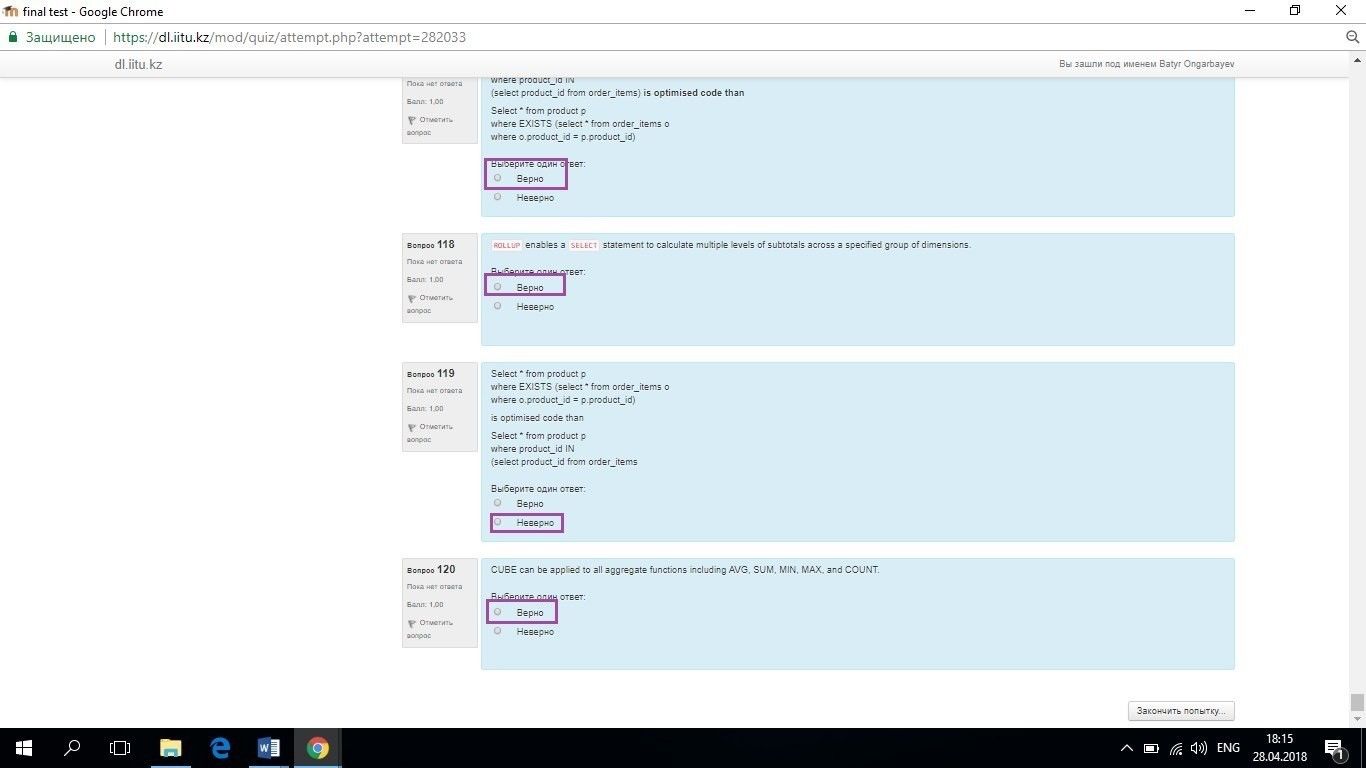
- ARichtig
- BFalsch
94120
- ARichtig
- BFalsch
Informationen
- Beschreibung
- Quiz am oracle, erstellt von Zhansaya Adyrbek am 30/05/2018.
- Autor
- Zhansaya Adyrbek
- Sprache
- English
- Aufrufe
- 7
- Bewertung
- Noch keine Bewertungen Bewerte dieses Quiz