
Quiz
1.2 Elasticity (PED)
Dieses Quiz enthält Fragetypen, die sich im gewohnten Player öffnen.
Fragen in diesem Quiz (7)
1Formula for PED: (percent change in [blank_start]quantity demanded[blank_end]) / (percent change in [blank_start]price[blank_end])
- Aquantity demanded
- Bprice
2PED is usually positive.
- ARichtig
- BFalsch
3The value of PED depends on the degree of customers' ability and willingness to pay.
- ARichtig
- BFalsch
4Label the 3 types of PED graphs below.
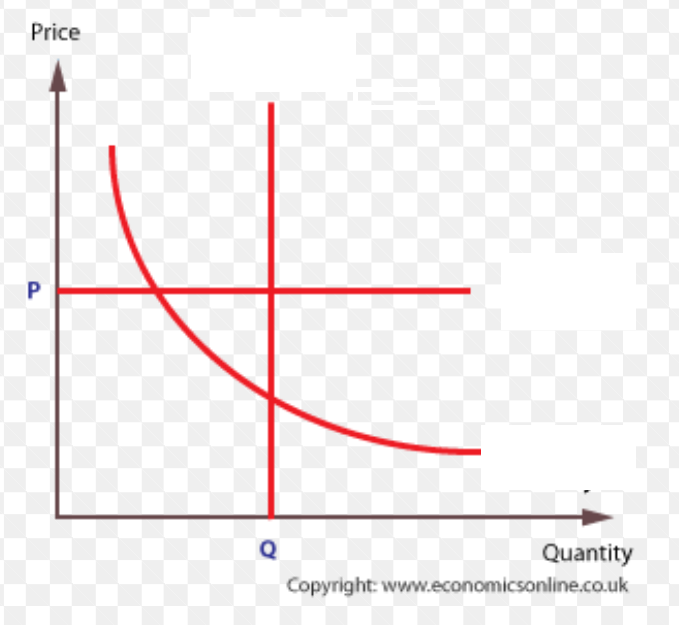
- AUnit Elastic
- BPerfectly Elastic
- CPerfectly Inelastic
5PED Values:
Unit Elastic = [blank_start]1[blank_end]
Perfectly Price Elastic = [blank_start]Infinity[blank_end]
Perfectly Price Inelastic = [blank_start]0[blank_end]
Price Inelastic = [blank_start]low[blank_end] (low or high)
Price Elastic = [blank_start]high[blank_end] (low or high)- A1
- BInfinity
- C0
- Dlow
- Ehigh
6Which are determinants of PED?
- ADegree of Substitution
- BHabits, Addiction, Tastes
- CProportion of Income
- DTime
- EAll of the Above
7Total Revenue
When price increases, total revenue [blank_start]increases[blank_end] for price inelastic goods and [blank_start]decreases[blank_end] for elastic goods.
When price decreases, total revenue [blank_start]decreases[blank_end] for price inelastic goods and [blank_start]increases[blank_end] of elastic goods.
In both cases, total revenue [blank_start]remains unchanged[blank_end] for unitary goods.- Aincreases
- Bdecreases
- Cremains unchanged
- Dincreases
- Edecreases
- Fremains unchanged
- Gincreases
- Hdecreases
- Iremains unchanged
- Jincreases
- Kdecreases
- Lremains unchanged
- Mremains unchanged
- Nincreases
- Odecreases
Informationen
- Beschreibung
- Price Elasticity
- Autor
- Hayle Short
- Sprache
- English
- Aufrufe
- 34
- Schlagwörter
- Bewertung
- Noch keine Bewertungen Bewerte dieses Quiz