
Quiz
Polygraph Examiners Exam
Dieses Quiz enthält Fragetypen, die sich im gewohnten Player öffnen.
Fragen in diesem Quiz (65)
1What are the three main parts of a polygraph system?
- AA chair, a table, and a computer
- BThe cardio-sphygmograph, the pneumograph, and the galvanograph
- CThe examiner, the client, and the examinee
2What does cardio-sphygmograph measure?
- AIt measures blood pressure and heart rate
- BIt measures respiratory rate
- CIt records the amount of perspiration produced
3Whats the function of the pneumograph?
- AIt records the amount of perspiration produced
- BIt records the heart rate and the blood pressure
- CIt measures respiratory rate
4What's the function of the galvanograph?
- AIt measures respiratory rate
- BIt records the amount of perspiration produced
- CIt records the blood pressure and heart rate
5What are the three distinct steps in the polygraph process?
- APre-polygraph interview, polygraph test, post-polygraph interview
- BInterrogation, fact gathering, polygraph
- CInterview, polygraph, interrogation
6What part of the polygraph is this?
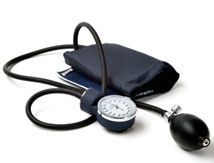
- Acardiosphygmograph
- Bpneumographs
- Cgalvanometers
7What is this a picture of?
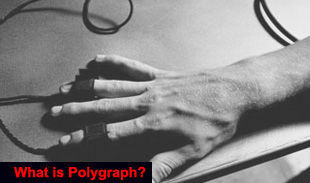
- Acardiosphygmograph
- Bpneumograph
- Cgalvanometer
8What is this an image of?
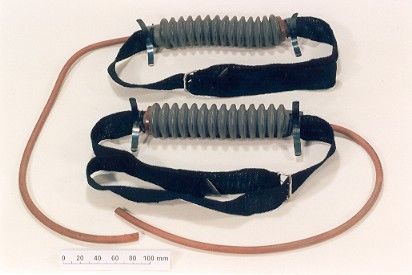
- Agalvanometer
- Bcardiosphygmograph
- Cpneumograph
9What is this an image of?
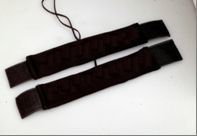
- Apneumograph
- Bgalvanograph
- Ccardiosphygmograph
10During the pre-test phase, or pre-polygraph interview, the examiner will:
*inform the examinee of the specific issue that is being investigated;
*advise the examinee of his or her constitutional rights, of their right to an attorney and of the voluntary action of submitting to a polygraph examination;
*complete the necessary documentation;
*provide the examinee with a detailed explanation of the polygraph instrumentation with its components and how these work;
*answer any questions that the examinee may have;
*obtain the examinee's version of the facts regarding the specific issue under investigation;
*formulate and review with the examinee all the questions that will be asked of him or her during the polygraph examination.- ARichtig
- BFalsch
11During the in test stage, or polygraph stage the examiner:
*will administer a minimum number of three separate tests each lasting approximately 5 minutes — and a maximum number of six tests — wherein the examinee's physiological data will be continuously collected, measured and recorded, onto polygraph charts, as he or she answers the set of questions that were formulated and reviewed during the pre-test phase.
*The examinee will have a two-minute relaxation period between each test.- ARichtig
- BFalsch
12During the post-test stage, or post-test interview, the examiner will:
*give the examinee the result of the polygraph examination. If the physiological data recorded on the charts shows reactions on the part of the examinee to the relevant questions that were asked, he or she will be given the opportunity to explain these reactions.
*will provide the client with a verbal report of the polygraph examination and its result. This will be followed, in a timely manner, by a written report containing a factual account of all the information developed during the polygraph procedure, as well as the examiner's professional opinion of the examination results based on the analysis, interpretation and evaluation of the polygraph data.- ARichtig
- BFalsch
13NDI stands for?
- ANo Data Included
- BNo Details Indicated
- CNo Deception Indicated
14NDI means the examinee was telling the truth
- ARichtig
- BFalsch
15DI stands for?
- ADeception Indicated
- BData Included
- CDidn't Inspect
16DI means that the person was lying.
- ARichtig
- BFalsch
17What does INC stand for?
- AIndicates Negative Consequences
- BInconclusive
- CI Noticed Countermeasures
18INC means that the polygraph was unable to detect whether the examinee was lying or telling the truth.
- ARichtig
- BFalsch
19What are the two types of polygraph systems? Choose two.
- AForeign
- BDomestic
- COld
- DNew
- EAnalog
- FComputerized
20The word Polygrah means many writings
- ARichtig
- BFalsch
21Polygraphs are also called truth detectors.
- ARichtig
- BFalsch
22How accurate in detecting deception is a polygraph?
- A50 to 60%
- B60 to 70%
- C70 to 80%
- D80 to 90%
- E90 to 95%
23Being nervous will affect the polygraph testing.
- ARichtig
- BFalsch
24What are countermeasures?
- AWhen the examinee tries to beat the polygraph
- BWhen the examiner lies to the examinee
- CWhen control questions are asked
25What are relevant questions?
- AQuestions pertaining to the topic under investigation.
- BQuestions designed to get a base line in the beginning of the polygraph
- CQuestions designed to trick the examinee.
26Which is an example of a relevant question?
- A"Have you ever stolen anything in your life?"
- B“Did you steal $500 from your office?”
- C"Are the lights on in this room?"
27What are control questions?
- AControl questions are the opposite of relevant questions with a purpose of making comparisons. Control questions can be compared to the relevant question asked.
- BControl questions are the questions about the specific area the examinee is being asked about.
- CControl questions trick the examinee.
28Which is an example of a control question?
- A“Have you ever stolen anything in your life?”
- B"Are the lights on in this room?"
- C“Did you steal $500 from your office?”
29What is an irrelevant question?
- AQuestions directly related to the subject of the polygraph
- BQuestions to help set a baseline during a polygraph
- CQuestions which create no impact and no relation to the focus of the investigation
30Which is an example of an irrelevant question?
- A"Have you ever stolen anything in your life?"
- B"Did you steal $500 from the cash register?"
- C"Are the lights on in this room?"
31What are are the three basic types of polygraph questioning techniques?
- AQuestion technique, interrogation technique, accusation technique
- BThe relevant/irrelevant (R/I) technique, the control question (CQT) technique, and the concealed information test
- CThe pre-employment technique, the criminal technique, and the personal technique
32The relevant/irrelevant (R/I) technique is generally used during employment hiring interviews. The premise underlying this test is that a deceptive subject has an obviously different reaction or response to the relevant questions than if irrelevant questions are asked. An innocent subject has the same kind of reaction to both types of questions.
- ARichtig
- BFalsch
33The control question (CQT) technique is the most widely used technique in criminal investigations. The technique is to make non-deceptive subjects to reflect on the truthfulness of their answers. Control questions can trace back past experiences which arouse the subject to be doubtful of the sincerity of the answers.
- ARichtig
- BFalsch
34The concealed information test, is based on a different principle than the first two tests. The test is designed to distinguish a guilty person through the information based on the crime. There are two primary types of concealed information technique. The first one is the peak-of-tension test and the other one is the guilty knowledge test. The peak-of-tension technique (POT) is composed of five to nine closed questions that are closely similar in structure. The guilty knowledge test (GKT) is about the same as the POT but uses more of open ended questions or multiple choice type.
- ARichtig
- BFalsch
35It is ok to surprise an examinee during the polygraph with an undisclosed question.
- ARichtig
- BFalsch
36 The three-position numerical evaluation scale permits a range of only one of three values that may be assigned to an analysis spot. The range is: minus one (-1), zero (0), and plus one (+1).
- ARichtig
- BFalsch
37The seven-position numerical evaluation scale permits a range of seven values that may be assigned to an analysis spot. The range is: minus three (-3), minus two (-2), minus one (-1), zero (0), plus one (+1), plus two (+2), and plus three (+3). When using the seven-position scale, a minus three (-3) is considered less than a minus two (-2) and a plus three (+3) is greater than a plus two (+2).
- ARichtig
- BFalsch
38The standard unit of measurement in a vertical chart division is one-quarter inch
- ARichtig
- BFalsch
39What is an Analysis Spot?
- AAn analysis spot refers to the specific location, or applicable relevant question on a chart where the spot analysis concept is applied.
- BThe location where the testing takes place.
- CThe places on the body where the equipment is attached.
40What is an Artifact?
- AThe wiggly lines on the polygraph paper or on the computer screen.
- BThe cause for a change in the examinee’s physiological data that is not attributable to an applied stimulus or recovery (i.e., movement, sensor slippage).
- CA high "mountain" on the chart that indicates someone is telling the truth.
41What is a Channel?
- AThe inputs on the control box of the polygraph.
- BAny one of the four sensor inputs used to monitor and record activity of the respiration, ED, and CV systems. The term channel and component are used interchangeably.
- CThe lines on the paper or screen of the polygraph.
42Homeostasis refers to a complex interactive regulatory system by which the body strives to maintain a state of internal equilibrium. Being able to recognize an examinee’s homeostatic signature, for each of the recording systems being monitored and recorded, is truly essential to effective test data analysis. Examiners often use the following terms interchangeably with homeostasis: physiological norm, pre-stimulus baseline, resting state, and tonic level.
- ARichtig
- BFalsch
43 Latency refers to the period of time between stimulus onset and response onset. Any physiological response that begins following stimulus onset is said to display response latency. Response latency, depending upon its consistency, may enable an otherwise untimely response to be evaluated. Pronounced latency may be seen in all recording channels or in just one. An effective method for assessing response latency is to look holistically at all of the physiological data collected, channel-by-channel.
- ARichtig
- BFalsch
44Question String refers to all of the questions posed to an examinee between test commencement and test termination.
- ARichtig
- BFalsch
45Response Onset Window refers to the typical time period, from stimulus onset, where we would predict a physiological response to occur in order for that response to be deemed timely.
- ARichtig
- BFalsch
46 Serial Position refers to the specific location of a question within a question string.
- ARichtig
- BFalsch
47Waveform. The term waveform and tracing are used interchangeably and refers to the particular visual representation of the physiological data that is studied for its diagnostic value.
- ARichtig
- BFalsch
48 Most people display a resting respiration rate or breathing pattern of between 12 to 18 breaths per minute
- ARichtig
- BFalsch
49The five diagnostic features pertaining to RLL are as follows: (1) apnea—blocking (suppression), (2) decrease in amplitude (suppression), (3) progressive decrease in amplitude (suppression), (4) decrease in cyclic rate, and (5) inhalation/exhalation (I/E) ratio change.
- ARichtig
- BFalsch
50The galvonic skin response waveform is a reflection of the electrical changes in human skin. Examiners are principally involved in monitoring and recording either the examinee’s skin resistance level (SRL) or skin conductance level (SCL) and
deviations from those levels that we refer to as phasic activity. This is accomplished through the passage of an electrical current across the skin and is termed an exosomatic ED measure.- ARichtig
- BFalsch
51Polygraph examiners are interested with pulmonary and systemic circulatory pathways; the heart itself, particularly the chambers and valves; cardiac conduction; cardiac muscle contraction; the cardiac cycle, specifically the segments of a heart beat; cardiac output, such as stroke volume and heart rate; and blood pressure.
- ARichtig
- BFalsch
52What are examples of countermeasures?
- AThe examinee putting a tack in their shoe.
- BThe examinee telling the truth.
- CThe examinee biting their tongue.
- DThe examinee taking sedatives to try to alter their baseline.
- EThe examinee coughing.
- FThe examinee putting antiperspirant on their fingers.
53What year was the polygraph invented?
- A1891
- B1911
- C1921
- D1961
54Someone can be forced to take a polygraph.
- ARichtig
- BFalsch
55Polygraphs are only as accurate as a flip of a coin.
- ARichtig
- BFalsch
56Polygraphs are easily fooled.
- ARichtig
- BFalsch
57Polygraphs cannot be used as evidence in court in 49 states.
- ARichtig
- BFalsch
58What is a movement sensor?
- ASensors placed around the polygraph room to measure the movement of the examinee.
- BSensors placed on the seat of the examinee's chair, on the arms of the examinee's chair, and on the floor beneath the feet of the examinee to detect the examinee's attempts at counter measures.
- CSensors placed in the examinee's clothing by the examinee in an effort to throw off the test results.
59How long does the polygraph process usually take?
- A10 minutes
- BOne hour
- CBetween two and three hours
60An examination total score of +10 indicates the examinee was telling the truth.
- ARichtig
- BFalsch
61What is a "Stimulation Test" or "Stim Test"?
- AWhen the examiner shocks the examinee to get a reaction on the waveform.
- BWhen the subject is asked to deliberately lie and then the tester reports that he was able to detect this lie.
- CWhen the examiner turns on the polygraph and the examinee sits quietly to get a baseline.
62"Think of a number between one and five. Don't tell me your number. I'm going to go through each number and I want you to answer 'no' even when I get to your number. Is your number one? Is your number two? Is your number three? Is your number four? Is your number 5?" is an example of a Stim Test.
- ARichtig
- BFalsch
63A total score of +3 or higher indicates that the examinee was telling the truth.
- ARichtig
- BFalsch
64A total score of -3 or lower indicates the examinee was lying.
- ARichtig
- BFalsch
65A total score between -3 and +3 indicate that the test was inconculsive.
- ARichtig
- BFalsch
Informationen
- Beschreibung
- This is an example of a final test for polygraph information
- Autor
- bjj.pps.ohio
- Sprache
- English
- Aufrufe
- 608
- Schlagwörter
- Bewertung
- Noch keine Bewertungen Bewerte dieses Quiz