
Quiz
2º ESO - Unit 1: The fall of the Roman Empire and the Early Middle Ages
Erstelle ein kostenloses Konto, um dieses Quiz zu beenden
Speichere deinen Fortschritt und sieh dir dein Endergebnis an.
oder mit deiner E-Mail registrieren
Schon ein Konto? Anmelden
Fragen in diesem Quiz (60)
1Chronology of the Western Roman Empire
- A476-1453
- B27 BCE-476 BCE
- C27 BCE-476
- D27 BCE-1453
2The power of the Roman emperors during the High Roman Empire was
- Aweak
- Bcentralised
- Cdemocratic
- Donly religious
3The role of the Senate during the High Roman Empire was
- Ato discuss and pass laws
- Bto kill Julius Caesar
- Cto ratify the decisions of the emperor
- Dthere was no Senate
4Roman society was divided into
- ACitizens and slaves
- BCitizens and non-citizens
- CFree people and serfs
- DPharaoh, scribes, soldiers and peasants
5The Roman Empire expanded mostly
- Aaround the Atlantic Ocean
- Baround the Mediterranean Sea
- Conly in Europe
- DEurope, Asia and America
6The main economic activities during the High Roman Empire was
- Aagriculture and livestock
- Bcraftwork and trade
- Cagriculture and craftwork
- Dagriculture and trade
7Trade during the High Roman Empire was NOT favoured by
- APax Romana
- BRoads
- CBarbarians
- DSingle currency
8Roman emperors had religious power because
- Athey appointed the gods
- Bthey appointed the Pope
- Cthe were considered divine
- Dthey had met Christ
9The crisis of the Roman Empire is considered to begin by
- Athe late 3rd century BCE
- Bthe late 3rd century
- Cthe late 5th century
- Dthe late 1st century BCE
10The Lower Roman Empire was NOT characterised by
- Ainsecurity
- Burban liife
- Cweak political power
- Dthe acceptance of Christianity
11Emperor Constantine is well-known for
- Aprosecuting the Christians
- Bbuilding the Aqueduct of Segovia
- Caccept freedom of worship
- Dmake Christianity the official religion
12One of the main reasons for the insecurity during the Lower Roman Empire was
- Athe Huns decided to live within the borders of the Roman Empire
- Bthe Roman legions attacked the Huns and failed
- Cthe Germanic peoples were pushed within the borders of the Roman Empire
- DPax Romana
13Among the consequences of the insecurity during the Lower Roman Empire we DO NOT find
- Acollapse of trade
- Bruralisation of society
- Ccentralisation of power
- Dsacking of the cities
14The emperor Theodosius I (the Great) is famous because
- Ahe established freedom of worship in the Roman Empire
- Bhe unified the Roman Empire
- Che was the Pope
- Dhe divided the Roman Empire
15The date of the division of the Roman Empire in two was
- A380
- B395
- C407
- D476
16The capital of the Eastern Roman Empire was
- AConstantinople
- BRome
- CAthens
- DCairo
17One of the causes of the mass migrations between the 3rd and 10th centuries in the Western Roman Empire was
- APolitical strength
- BGreat military power of the Romans
- CPressure from peoples with greater military power
- DAll of the above
18What Germanic peoples conquered the city of Rome and established in the Italian Peninsula?
- AVisigoths
- BOstrogoths
- CFranks
- DSaxons
19Politically speaking, the Germanic peoples were characterised by
- Acentralisation
- Bruralisation
- CConflicts in the kingdoms
- Dagriculture
20The name 'Byzantine' comes from
- AThe city Byzantine
- BThe emperor Byzantion
- CThe Greek colony Byzantion
- DThe Sporting Byzantion
21The city of Constantinople was founded as Nova Roma by
- ATheodosius the Great
- BJustinian the Great
- CConstantine the Great
- DCharles the Great (Charlemagne)
22The splendour of the Byzantines was under the emperor
- ATheodosius the Great
- BConstantine the Great
- CJustinian the Great
- DCharles the Great (Charlemagne)
23Justinian's idea as emperor of the Byzantine Empire was
- Ato live quietly and peacefully
- Bto restore the glory of the Roman Empire
- Cto grow crops and exchange them
- Dto build a new city
24Justinian tried to restore the glory of the Roman Empire mostly by
- Aspeaking his own language
- BCaesaropapism
- Cconquer former territories of the Roman Empire
- Dbuild a gigantic amphitheatre
25After Justinian the Great, the Byzantines...
- Aexpanded their territories
- Blost all their territories very quickly
- Chad a progressive growth
- Dsuffered a progressive decadence
26The fall of Constantinople, which marked the end of the Byzantine Empire, was
- Ain 1492, in the hands of the Barbarians
- Bin 1453, in the hands of the Barbarians
- Cin 1492, in the hands of the Ottoman Turks
- Din 1453, in the hands of the Ottoman Turks
27The title of emperor of the Byzantine Empire was
- APontifex Maximus
- BPatriarch of Constantinople
- CBasileus
- DStratego
28The Codex Iustinianus was
- Athe first Encyclopaedia
- Ba compilation of Byzantine novels
- Ca compilation of Roman laws
- Da compilation of Roman recipies
29The most important economic activity of the Byzantine Empire was
- Aagriculture
- Blivestock
- Ccraftwork
- Dtrade
30Trade in the Byzantine Empire was important because of the
- APax Romana
- BMare Nostrum
- CStrategic position of Constantinople
- DTheir crops
31Constantinople had a strategic position because it is between
- AEurope and Africa
- BAfrica and Asia
- CEurope and Asia
- Dthe Atlantic Ocean and the Mediterranean Sea
32Byzantine religion
- ACatholic Christianity
- BOrthodox Christianity
- CProtestant Christianity
- DPolytheism
33Name
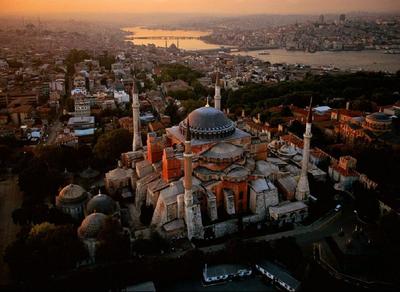
- AHagia Marks
- BHagia Sophia
- CPalatine Chapel
- DSaint Mark's Basilica
34Type of floor plan
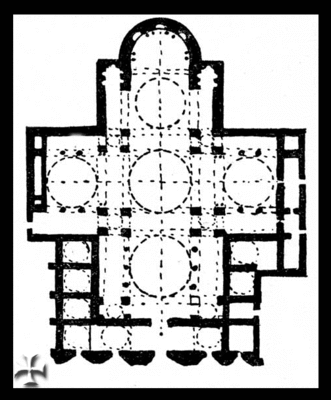
- ALatin-cross plan
- BGreek-cross plan
- CBasilica plan
- DOctogonal plan
35The most significant constructive element of the image is
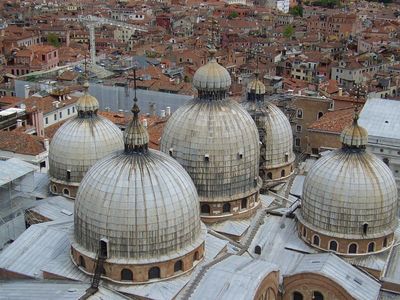
- AVaults
- BDomes
- CColumns
- DPillars
36This is
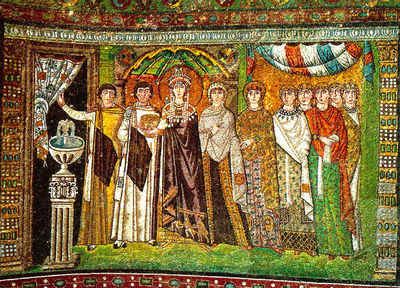
- Apainting
- Bsculpture
- Cmosaic
- Darchitecture
37The most important typology of buildings in Byzantine architecture are
- Apolitical
- Beconomic
- Creligious
- Dmilitary
38Hagia Sophia of Constantinople was ordered by
- ATheodosius the Great
- BConstantine the Great
- CJustinian the Great
- DCharles the Great (Charlemagne)
39What characteristic would you associate with Byzantine mosaics and paintings?
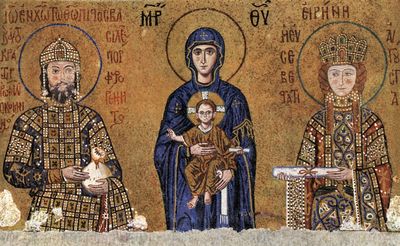
- ARealism
- BRigidity
- CHierarchical perspective
- DSchematism
40The Carolingian Empire is the continuation of the
- AFrankish kingdom
- BOstrogoth kingdom
- CVisigoth kingdom
- DByzantine Empire
41The battle between the Franks and the Visigoths which meant the end of the Visigoth Kingdom of Tolouse was
- ABattle of Poitiers, 732
- BBattle of Vouillé, 732
- CBattle of Poitiers, 507
- DBattle of Vouillé, 507
42Political power in the Frankish kingdoms was in the hands of the
- Aclergy
- Bpeasants
- Cmayors of the palace
- Darmy generals
43Who led the Franks in the battle of Poitiers?
- ACharles Martel
- BPepin the Short
- CCharlemagne
- DJustinian the Great
44The battle of Poitiers confronted the Franks against the
- ASlavs
- BLombards
- CVikings
- DMuslims
45Who started the Carolingian dynasty as leaders of the Franks?
- ACharles Martel
- BPepin the Short
- CCharlemagne
- DLouis the Pious
46What happened in the year 800?
- ACharlemagne acceded to the Frankish throne
- BCharlemagne died
- CCharlemagne was crowned emperor
- DCharlemagne was born
47Where did Charlemagne have his capital?
- AConstantinople
- BRome
- CParis
- DAachen
48Charlemagne's idea as Frankish king and Holy Roman Emperor was
- Ato control the world
- Bto discover new territories
- Cto restore the glory of the Roman Empire
- Dto become Pope
49Which of the following was NOT conquered by Charlemagne?
- ANorth-east of the Iberian Peninsula
- BModern-day France
- CGreat Britain
- DModern-day Germany
50The way Charlemagne had for having more power was
- Ato establish an allegiance with the Byzantine emperor
- Bto establish an allegiance with the Pope
- Cto fight against the Pope
- Dto fight against the Byzantine emperor
51What happened after Charlemagne's death?
- AHis children fought for the territories
- BHis son Louis inherited his territories
- CHe did not have any successors
- DHe gave his territories to the Pope
52When was the Treaty of Verdun?
- A814
- B832
- C823
- D843
53What was the consequence of the Treaty of Verdun?
- ACharlemagne's territories were kept united
- BCharlemagne's territories were divided in two parts
- CCharlemagne's territories were divided in three parts
- DCharlemagne's territories were divided in four parts
54The division of the territories in the Carolingian Empire was into
- ACounties and latifundia
- BCounties and marches
- CCountries and provinces
- DMarches and provinces
55Economy during the Carolingian Empire can be summarised as:
- Amostly rural
- Bmostly urban
- Ctrade was the most important activity
- Dthey promoted geographical explorations
56The manorial system is based on
- Aan agreement between free people
- Ban agreement between the king and the Pope
- Can agreement with the slaves
- Dthe differences between citizens and non-citizens
57In the manorial system, the emperor gave land to the nobility in exchange of
- Aland
- Btaxes
- Cloyalty
- Dchurches
58The Palatine School of Aachen was characterished by
- Athe use of Roman models
- Bthe use of Byzantine domes
- Cthe copy of French manuscripts
- Dthe construction of a market
59What type of buildings were more important in Carolingian architecture?
- APalaces and ports
- BCastles and churches
- CPalaces and markets
- DChurches and monasteries
60Name of the building
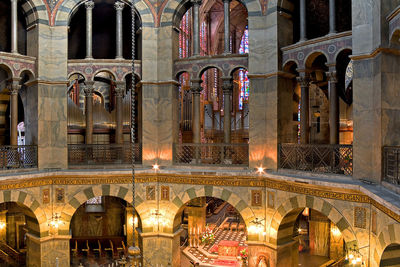
- AHagia Sophia (Constantinople - Istambul, Turkey)
- BSaint Mark's Basilica (Venice, Italy)
- CPalatine Chapel (Aachen, ermany)
- DFulda Abbey (Fulda, Germany)
Informationen
- Beschreibung
- Quiz for revising unit 1
- Autor
- Jaime Alonso
- Sprache
- Español
- Aufrufe
- 1.439
- Schlagwörter
- Bewertung
- 4,0 von 5 · 1 Bewertung Bewerte dieses Quiz