
Quiz
C170 Alternate Test
Fragen in diesem Quiz (47)
1A customer can purchase many products and a product can be purchased by many customers.
Which kind of binary relationship does this scenario describe?- AMany-to-many
- BOne-to-many
- COne-to-one binary
- DOne-to-one
2Which kind of relationship is displayed in this entity-relationship diagram?
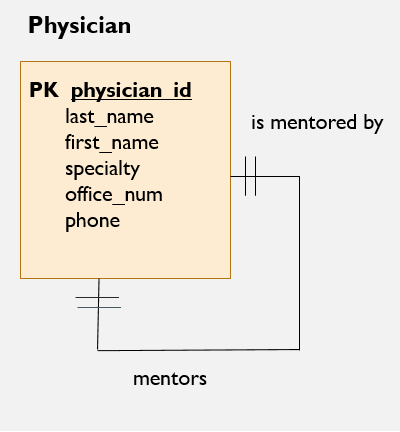
- ABinary one-to-one
- BUnary many-to-many
- CTernary one-to-one
- DBinary many-to-many
- EUnary one-to-one
- FTernary many-to-many
3Which kind of relationship is displayed in this entity-relationship diagram?
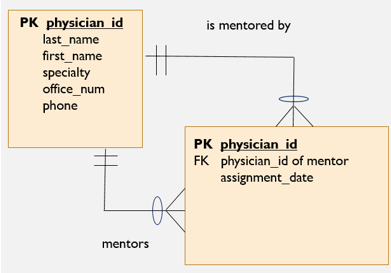
- AOne-to-one binary
- BOne-to-one unary
- CMany-to-many binary
- DMany-to-many unary
4How is this portion of the entity-relationship diagram read, from left to right?
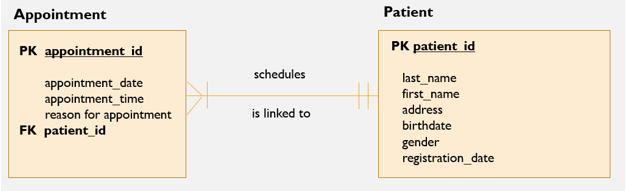
- AOnly one appointment was scheduled by one patient.
- BOne appointment was scheduled by more than one patient.
- CNo appointments were scheduled by a patient.
- DAt least one appointment is scheduled by a patient.
5Which two examples are attributes?
- AA patient ID
- BAn appointment number
- CA patient being seen at an appointment
- DAn appointment
6Which delete rule sets column values in a child table to NULL when the matching data is deleted from the parent table?
- ARestrict
- BSet-to-Null
- CCascade
- DMatching
7A patient is related to two exam records. The table follows the restrict delete rule. What happens if someone tried to delete the patient?
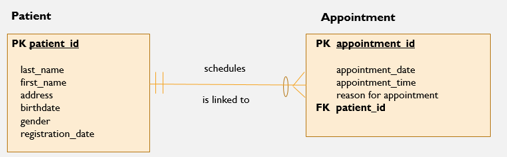
- AThe lack of a patient connected to the exam records is flagged for later.
- BThe delete occurs immediately.
- CThe delete is not allowed.
- DAnother patient is linked with the exam records.
8Which two columns are created as something other than variable-length strings in the statement above?
Choose 2 answers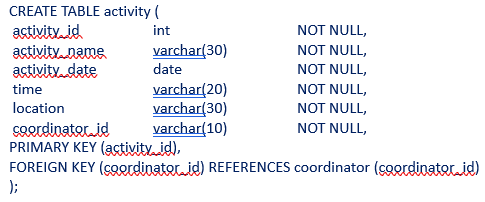
- Aactivity_id
- Bactivity_name
- Cactivity_date
- Dtime
- Elocation
- Fcoordinator_id
9The database table above has 7 different physician IDs in the first column and physician_id is the primary key of the table. There are 7 different physician names in the second column. The third column indicates which site a physician is located at. There are 3 different sites. Two of the site names are repeated 3 times.
Which action should be used to translate this data into third normal form?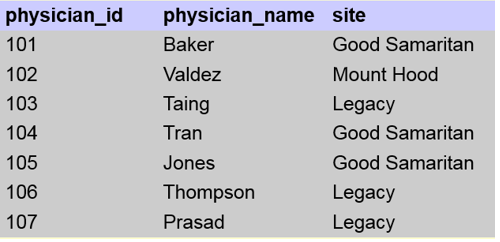
- AMove the data from the second column into the third column
- BMove the data from the third column into its own table.
- CMove the data from the third column into the first column.
- DMove the data from the first two columns into separate tables.
10A database designer is working through the normalization process. A simple primary key has been established. All of the repeating groups and multi-valued fields have been removed
In which form is this table: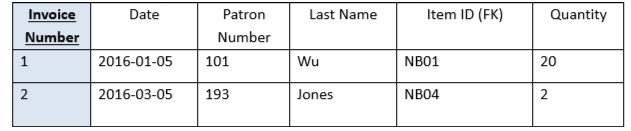
- AFirst Normal Form
- BSecond Normal Form
- CThird Normal Form
- DUnnormalized
11Two attributes in two related tables have the exact same domain of values. The attribute is a primary key (PK) in one table.
Which kind of key is the attribute in the other table?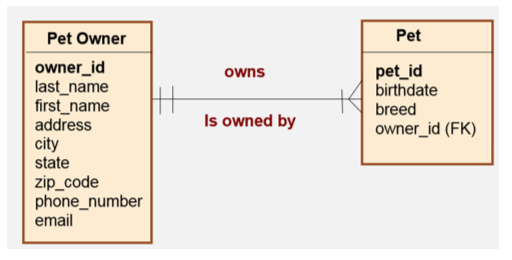
- AForeign
- BComposite
- CPrimary
- DCompound
12In this entity-relationship diagram, many instructors are shown as working at a minimum of one campus.
How is the relationship between instructors and campuses represented in the diagram?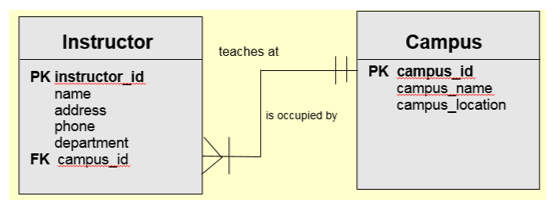
- AIt is undefined.
- BIt is linked through the instructor_id
- CIt is indicated by the tables’ adjacency.
- DIt is linked through the campus_id.
13In which two ways can data redundancy affect managing disk storage space and calculation speed?
Choose 2 answers:- AAdditional processing time is needed to update redundant data.
- BAdditional processing time is needed to find intersection data for each redundant piece of data
- CRedundant data must be processed as unary, binary, and ternary information.
- DRedundant data takes up additional disk space.
- EEvery copy of redundant data must be copied to a third record in the database
14With which command can a database administrator allow a user named Mary to query the Patient table by executing SELECT commands on it?
- AGRANT Patient TO ‘mary’@ ‘localhost’;
- BGRANT SELECT ON PATIENT TO ‘mary’@ ‘localhost’;
- CGRANT SELECT PATIENT TO ‘mary’@ ‘localhost’;
- DGRANT PATIENT ON SELECT TO ‘mary’@ ‘localhost’;
15Why does MySQL’s architecture use concurrency control?
- ATo prevent two users from viewing the same record during potential updates.
- BTo ensure that users are logged in on a local machine.
- CTo let multiple clients easily find and negotiate with each other.
- DTo prevent two users from modifying the same record at the same time.
16Which command creates a database only if it does not already exist?
- ACREATE DATABASE IF NOT EXISTS db_name;
- BIF NOT EXISTS CREATE DATABASE db_name;
- CIF NOT EXISTS db_name;
- DCREATE DATABASE IF NEW db_name;
17Refer to the given SQL statement:
SELECT item_number, item_name
FROM item
Which line should be added to the end of the statement to return the item numbers and item names for items that have an item_price of 10 dollars?- AAND item_price = 20;
- BAND item_price >= 20;
- CWHERE item_price = 20;
- DWHERE item_price >= 20;
18What does WHERE identify in a basic SQL SELECT statement?
- AThe associative entity
- BA table’s intersection data
- CThe rows to be included in the result set
- DA range of included columns
19Refer to the given SQL statement.
SELECT patient_id
FROM patient
Which line added to the end of the statement returns patient ids of at least 1000?- AWHERE patient_id >=1000;
- BWHERE patient_id => 1000;
- CWHERE patient_id = 1000+;
- DWHERE patient_id > 1000;
20Refer to the given SQL statement:
SELECT item_id, SUM(quantity)
FROM invoice
Which line, when added to the end of the statement, returns the total number of each kind of item by item_id?- ASUM item_id;
- BGROUP BY item_id;
- CCOUNT item_id;
- DORDER BY item_id;
21Which data definition language statement affects databases or objects in them?
- ANULL
- BINSERT
- CSELECT
- DALTER
22What does the DELETE statement do?
- AIt removes rows from a table.
- BIt removes columns not named in the column list.
- CIt removes views.
- DIt removes columns from a table.
23Which condition must be in effect to use the INSERT INTO … VALUES syntax for an INSERT statement?
- AThe VALUES list must contain a value for each non-null valued column in the table.
- BThe VALUES list must contain a value for each attribute/column in the table.
- CThe INSERT INTO portion of the statement must generate a LOAD DATA statement.
- DTHE INSERT INTO portion of the statement must refer to a sampdb database table.
24Which kind of data type is FLOAT in the statement?
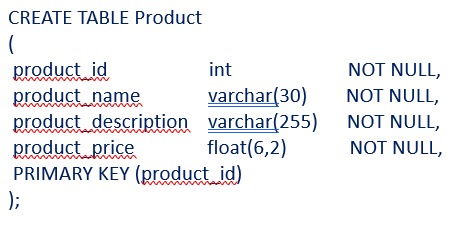
- ADecimal
- BInteger
- CData
- DString
25Which two MySQL data types can represent images or sounds?
Choose two- ATINYBLOB
- BFLOAT
- CBINARY
- DTERNARY
- EINT
- FSOUNDBLOB
26Refer to the given SQL statement.
CREATE TABLE Invoice (
invoice_id INT NOT NULL ,
date DATE NOT NULL,
customer_id INT NOT NULL,
PRIMARY KEY (invoice_id),
FOREIGN KEY (customer_id) REFERENCES Customer (customer_id)
);
In which line of the statement is the table given its name?- Acustomer_id INT NOT NULL,
- BPRIMARY KEY (invoice_id),
- CCREATE TABLE Invoice (
- DFOREIGN KEY (customer_id) REFERENCES Customer (customer_id)
27Which method creates an empty copy of a table and then populates it from the original table?
- ACREATE TABLE new_tbl_name INTO tbl_name;
INSERT INTO new_tbl_name; - BINSERT TABLE new_tbl_name SELECT tbl_name;
INSERT INTO new_tbl_name LIKE tbl_name; - CCREATE TABLE new_tbl_name LIKE tbl_name;
INSERT INTO new_tbl_name SELECT * FROM tbl_name; - DINSERT TABLE new_tbl_name LIKE tbl_name;
SELECT tbl_name;
- ACREATE TABLE new_tbl_name INTO tbl_name;
28Refer to the given MySQL syntax.
ALTER TABLE tbl_name action [, action ] … ;
What does this syntax allow?
Choose two answers:- AChanging storage space
- BChanging column data types
- CDropping indexes
- DAdding rows
29Which command eliminates a table?
- ATRUNCATE TABLE
- BDELETE TABLE
- CREMOVE TABLE
- DDROP TABLE
30Why is a view used to give controlled access to data?
- ATo limit many-to-many relationship between various entities and attributes
- BTo restrict access to persons retrieving and modifying sensitive information
- CTo move complicated security routines to subqueries
- DTo add complexity to encryption techniques
31Which data definition language statement affects databases or objects in them?
- ASELECT
- BINSERT
- CALTER
- DNULL
32Refer to the given SQL statement.
SELECT customer_id, customer_last_name, customer_first_name
FROM customer;
Which statement, when added before this statement, generates a view?- AALTER custview AS
- BWHERE VIEW custview IS
- CCREATE VIEW custview AS
- DVIEW custview
33What is the proper command to change a view?
- AALTER VIEW
- BCHANGE VIEW
- CMODIFY VIEW
- DUPDATE VIEW
34DROP VIEW patient_view;
What happens as a result of the execution of this statement to the patient table on which patient_view is based?- AUnauthorized access to the view is restricted
- BThe view is discarded
- CThe data is discarded
- DThe patient table data is discarded
35Which optional clause added to a GRANT statement enables the account to give its own privileges to other uses?
- ATO
- BWITH GRANT OPTION
- CREQUIRE
- DFOR
36When a patient is deleted from the patient table, all corresponding rows from the patient in the exam table are automatically deleted as well.
What is this referential integrity technique called?- ACascaded delete
- BForeign key constraint
- CReferential delete
- DDynamic update
37Which clause should be added to the end to make the invoice_id attribute the primary key within a CREATE TABLE statement?
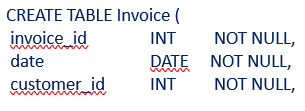
- APRIMARY KEY (invoice_id));
- BPRIMARY KEY = (invoice_id));
- C(PRIMARY KEY): invoice_id;
- D(PRIMARY KEY) = (invoice_id));
38Which statement should be used to establish a foreign key on customer_id?
- AFOREIGN KEY (customer_id) (index_columns)
- BFOREIGN KEY (customer_id) REFERENCES customer (customer_id)
- CFOREIGN KEY [table_name](customer_id)
- DFOREIGN KEY = (customer_id) REFERENCES customer (customer_id)
39Which ALTER TABLE statement adds a foreign key constraint to a child table?
- AALTER TABLE child
ADD FOREIGN KEY (parent_id) ON DELETE CASCADE; - BALTER TABLE child
ADD FOREIGN KEY WHERE parent (parent_id) ON DELETE CASCADE; - CALTER TABLE child
ADD FOREIGN KEY (parent_id) REFERENCES parent (parent_id) ON DELETE CASCADE; - DALTER TABLE child
ADD FOREIGN KEY (parent_id) WHERE parent (parent_id) ON DELETE CASCADE;
- AALTER TABLE child
40The database administrator has been tasked with implementing an index to speed up the retrieval of data based on the V_STATE values. The database is using the InnoDB engine.
What is the correct syntax to create an index to be built on the V_STATE field based on the database information?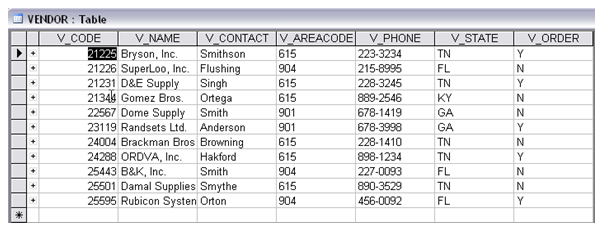
- AALTER TABLE ‘Vendor’ ADD UNIQUE INDEX ‘state_index (‘V_STATE’);
- BALTER TABLE Vendor ADD INDEX ‘state_index’ (‘V_STATE’);
- CCREATE UNIQUE INDEX state_index ON Vendo (V_STATE) USING HASH;
- DCREATE INDEX state_index USING HASH ON Vendor (V_STATE);
41Which clause when added to the end of the statement creates and index on the customer_id field?
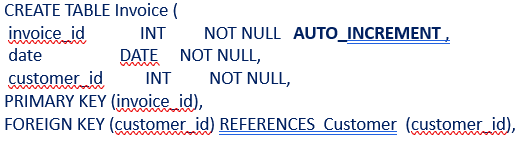
- AINDEX custid_index (customer_id));
- BINDEX = (customer_id);
- CINDEX = (customer_id));
- DSET INDEX custid_index (customer_id));
42Which syntax is the correct way to use the DROP INDEX command to drop a primary key from a table?
- ADROP INDEX ‘PRIMARY’ ON tbl_name;
- BDROP INDEX WHERE PRIMARY KEY = ON tbl_name;
- CDROP INDEX ‘PRIMARY KEY’ ON tbl_name;
- DDROP INDEX PRIMARY KEY tbl_name;
43A database administrator tried to delete a row in a parent table, but the delete fails because a row in another table depends on that row.
Which referential-integrity rule is in effect?- AThe set-to-null delete rule
- BThe restrict rule
- CThe default delete rule
- DThe cascade delete rule
44Refer to the given MySQL statement.
INSERT INTO Invoice VALUES (10217, ‘2018-08-01’, 55527), (10218, ‘2018-08-01’, 44436);
Describe what the parentheses denote.- AThe row values for two individual columns
- BThe attributes that are changeable
- CThe column values for two individual rows
- DThe data to be duplicated.
45Which statement deletes all rows from the invoice table?
- ADELETE FROM Invoice WHERE invoice_id = *;
- BDELETE FROM Invoice;
- CDELETE FROM Invoice WHERE invoice_id == *;
- DDELETE ALL FROM Invoice;
46Refer to the given SQL statement.
SELECT table1.*, table2.* FROM table1 LEFT JOIN table2 ON table1.column_name = table2.column_name;- AIt selects only the rows in Table 1 that are the same as Table 2
- BIt selects the rows in both Tables that have numerical data that is left-aligned.
- CIt selects the rows in Table 1 numbered the same as Table 2.
- DIt selects all of the rows in Table 1 (regardless of if there is a match in Table 2) and the matching rows in Table 2.
47Refer to the given SQL Statement.
1. SELECT invoice_id
2. FROM Invoice
3. WHERE customer_id =
4. FROM customer
5. WHERE customer_id = 55547);
What is missing from the subquery at the beginning of Line 4?- A(SUBQUERY = customer_id
- B(FIND customer_id
- C(SELECT customer_id
- D(SUBQUERY customer_id
Informationen
- Beschreibung
- Alternate practice test for C170 WGU
- Autor
- Craig Willey
- Sprache
- English
- Aufrufe
- 100
- Schlagwörter
- Bewertung
- Noch keine Bewertungen Bewerte dieses Quiz