
Quiz
CNS Infections, URT Infections, Pneumonia, Bacteremia, Intra-abdominal infections
Dieses Quiz enthält Fragetypen, die sich im gewohnten Player öffnen.
Fragen in diesem Quiz (72)
1According to the IDSA meningitis guidelines, short-term dexamethasone is indicated for use in patients with suspected meningitis, yet not all physicians follow this practice.
What is possible reasoning why some physicians are hesitant to use dexamethasone?- AIt is difficult to time the administration of dexamethasone with concurrent antibiotics. Dexamethasone should be given after antibiotics are started
- BSteroids decrease inflammation and can potentially limit the ability of antibiotic to reach the CNS
- CAntibiotics are sufficient on their own; dexamethasone has not shown to be beneficial to patients with meningitis
- DShort term dexamethasone use can cause leukocytosis, thereby putting the patient at increased risk for a more serious infection
2Which organism(s) is/are a common cause of community acquired bacterial meningitis in patients over 50 years old? Select all that apply.
- AListeria monocytogenes
- BHaemophilus pneumoniae
- CStreptococcus pneumoniae
- DStreptococcus agalactiae
3Which of the following patients with meningitis would be an appropriate candidate for adjunctive steroid treatment if started with or prior to the first dose of antibiotics?
- AA patient who is 37 years old and has N. meningitidis
- BA patient who is 3 years old and has H. influenzae type B
- CA patient who is 3 years old and has N. meningitidis
- DA patient who is 24 years old and has H. influenzae type B
4Which of the following antibiotics has an increased risk of myelosupression ?
- ACeftriaxone
- BLinezolid
- CMeropenem
- DAmpicillin
5If present in a patient with meningitis, which of the following risk factors increases a patient's risk for Staphylococcus aureus meningitis?
- ADecreased humoral immunity
- BLiving in close quarters
- CPregnancy
- DPresence of a foreign body
6A 52 year old male is diagnosed with bacterial meningitis. Which of the following is the most appropriate empiric therapy regimen for the patient?
- AVancomycin + ceftriaxone
- BVancomycin + ampicillin + ceftriaxone
- CAcyclovir
- DAmpicillin/sulbactam
765 year old female presents to the ED with a temperature of 102.5°F. A lumbar puncture is performed and is indicative of bacterial meningitis. The patient needs to be intubated and sent to the ICU. 48 hours later, her CSF cultures result showing Listeria monocytogenes. What is your recommendation regarding prophylaxis against Listeria monocytogenes?
- ANo prophylaxis required for close contacts
- BListeria monocytogenes immune globulin
- CCiprofloxacin for all close contacts
- DRifampin for the physician who intubated the patient
8Which of the following empiric therapy regimens is appropriate for a 44 year old with community acquired meningitis, assuming NKA and good renal function?
- AVancomycin plus ampicillin plus cefotaxime
- BVancomycin plus ampicillin
- CVancomycin plus ceftriaxone
- DVancomycin plus cefazolin
9JM is an 18 day old neonate who is suspected to have bacterial meningitis. What empiric antimicrobial therapy would be most appropriate?
- Avancomycin and ceftriaxone
- Bvancomycin and cefazolin
- Cvancomycin, ampicillin and ceftriaxone
- Dampicillin and cefotaxime
10The above Gram negative coffee bean shaped diplococci are:
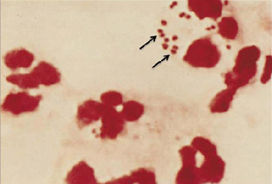
- AHaemophilus influenzae
- BNeisseria meningitidis
- CStreptococcus pneumoniae
- DListeria monocytogenes
11Which of the following organisms is a pathogen commonly associated with neonates (<1 month old) presenting with meningitis?
- AL. monocytogenes
- BN. meningitidis
- CH. influenzae
- DS. pneumoniae
12Which of the following organisms are implicated in healthcare associated meningitis/ventriculitis?
- AStaphylococcus aureus
- BListeria monocytogenes
- CHerpes simplex virus
- DStreptococcus agalactiae
13A 12 day old male neonate presents to the ED with suspected meningitis. The patient was born at 38 weeks, 2 days by spontaneous vaginal delivery. His mother received appropriate prenatal care including a Group B Streptococcus screen at 36 weeks which was positive.
Which organism is likely to cause this patient's infection due to his mother's colonization status (full genus and species)? [blank_start]Streptococcus agalactiae[blank_end]- AStreptococcus agalactiae
14LP is a 25 year old man with meningitis. He was started on vancomycin and ceftriaxone. On day 3 of therapy his CSF culture results come back positive for Streptococcus pneumoniae. Dexamethasone an appropriate adjunct treatment to add at this point?
- ARichtig
- BFalsch
15A patient is admitted for an infected VP shunt. They have an elevated temperature (101.9 degrees F), altered mental status and leukocytosis. The medical team wants to treat for suspected ventriculitis/healthcare associated meningitis.
Which of the of the following is the most appropriate empiric antibiotic regimen for this patient?- AAcyclovir
- BMeropenem + vancomycin
- CVancomycin + ceftriaxone + ampicillin
- DLinezolid + piperacillin/tazobactam
16Which is one of the common bacterial pathogens causing acute otitis media?
- APseudomonas aeruginosa
- BMoraxella catarrhalis
- CStaphylococcus aureus
- DMycoplasma pneumoniae
17You work at a community pharmacy and have a collaborative practice agreement with a physician which allows you to perform screening for GAS pharyngitis with rapid antigen detection test (RADT). You perform a RADT on a fifteen year old patient with complaints of a very sore throat for 2 days. The GAS RADT comes back positive. What does this mean?
- AThe patient should be sent to the physician for anti-streptococcal antibody titers
- BThe patient should be sent to the physician for a GAS culture swab to be performed
- CThe patient should be prescribed cephalexin
- DThe patient should be prescribed ciprofloxacin
- EThe patient should be prescribed amoxicillin
18You work in an outpatient clinic. Dr. Herring, one of the medical residents, asks you for advice on what antibiotic is best for her 3-year old patient. Dr. Herring tells you the patient has had a fever and otalgia for 2 days and has been very irritable. Dr. Herring performed an otoscopic exam and confirmed that the child has acute otitis media (AOM). The child’s past medical history is significant for asthma and this is the child’s second episode of AOM, with the last being 12 months ago. The child experienced an anaphylactic reaction when treated with amoxicillin for the first AOM episode. What is the most appropriate medication for this child’s AOM?
- AAzithromycin
- BCefdinir
- CAugmentin
- DBactrim
19If a patient is diagnosed with bronchitis and pertussis infection is confirmed which antibiotic class would be recommended?
- APenicillin
- BAminoglycoside
- CFluoroquinolone
- DMacrolide
20If a 36 year old has a RADT performed for GAS pharyngitis and it comes back negative a throat culture should be performed next.
- ARichtig
- BFalsch
21A 23 year old patient comes to your community pharmacy counter for advice. She states that she has been experiencing pressure behind her cheeks and forehead for 12 days without improvement. She has been unable to blow her nose and states that “everything feels stuck in my head.” Two days ago she also developed a sore throat. She is afebrile. Which of the patient’s symptoms are associated with increased likelihood for bacterial rhinosinusitis and not a viral infection? Select all that apply
- ASore Throat
- BAfebrile
- CLack of improvement in symptoms
- DNasal congestion
- ESymptoms lasting >10 days
22Which of the following patients should be treated for acute bronchitis?
- AA patient diagnosed with pertussis
- BA patient who injects IV drugs
- CA patient with diabetes
- DA patient with green, thick mucous
23Which of the following antibiotics would be the most appropriate to recommend for acute bacterial rhinosinusitis in a patient with NKA and good renal function?
- AAugmentin
- BZithromax
- CVibramycin
- DBactrim
24DM is a 25 year old woman who is presenting to Urgent Care for body aches, chills, and a fever of 100.5 F. She reports she has been sick for 4 days and is tired of it. She woke up today with a sore throat, nasal congestion and feels slightly tired. Respiratory viral panel negative. What is the most appropriate treatment recommendation for DM?
- AOseltamivir
- BSupportive care only
- CAmantadine
- DBaloxavir
25TRUE or FALSE: Most upper respiratory tract infections are caused by the following bacteria: Streptococcus pneumoniae.
- ARichtig
- BFalsch
26Which of the following is recommended first line for treatment of streptococcal pharyngitis in an outpatient?
- APenicillin VK
- BRocephin
- CCleocin
- DPenicillin G
27Which of the following is the most reasonable next step in the management of an 8 year old patient, with a sore throat and a negative RADT?
- APrescribe azithromycin
- BAdmit to hospital
- CObtain a treat culture
- DProvide supportive care only
28A 5 year old with AOM has severe allergy to penicillins and is prescribed azithromycin. What would the duration of treatment with azithromycin?
- A5 days
- B10 days
- C7 days
- D3 days
29You are a community pharmacist. A 33 year old transgender woman presents to your pharmacy counter. She reports she has been coughing for a week and now she has started to coughing up some 'stuff'. She has also had a mild fever (99.8 F) and she gets headaches after coughing spells. She is not sure whether she should go to urgent care or what they might be able to do for her. What do you recommend to this patient?
- AGo to urgent care - they will be able to give you albuterol which will help your breathing
- BDon't go to urgent care, coughs usually resolve within 10 days, so you should be feeling better soon.
- CDon't go to urgent care, try some ibuprofen or acetaminophen for your headache
- DGo to urgent care- they should prescribe you an antibiotic to get rid of your cough
30A 50 year old male presents to the ED with fever of unknown origin. PMH includes bioprosthetic valve replacement 2 months ago. A TEE is done and confirms vegetations on his prosthetic valve. Blood cultures are done prior to starting antibiotic therapy. Which of the following is an appropriate empiric therapy regimen to start while awaiting blood culture results?
- AVancomycin and ceftriaxone
- BVancomycin and daptomycin
- CVancomycin, gentamicin and rifampin
- DVancomycin and gentamicin
31You have a patient being treated for infective endocarditis with a native valve and their blood cultures are positive for Staphylococcus aureus with resistance to oxacillin.
Which of the following is/are true statement (s) regarding this patient's culture result? Select all that apply.- AThis patient is infected with methicillin resistant Staphylococcus aureus (MRSA)
- BAppropriate definitive treatment includes either vancomycin or daptomycin
- CThis patient is infected with methicillin susceptible Staphylococcus aureus (MSSA)
- DAppropriate definitive treatment includes either nafcillin or cefazolin
32Which of the following blood culture results is more likely to represent a TRUE infection. Select all that apply.
- A2 out of 4 bottles positive for Coagulase negative Staphylococci in a febrile patient with a prosthetic hip joint
- B1 out of 4 bottles positive for Viridans group streptococcus in an asymptomatic patient
- C1 out of 4 bottles positive for Micrococcus spp in a patient admitted with a heart attack
- D1 out of 4 bottles positive for Pseudomonas aeruginosa for a patient admitted with pyelonephritis
33A 24 yo female presents to the ED with complaints of general malaise, weight loss, cough, night sweats and weakness. She has a history of infective endocarditis approximately 1 year ago and left against medical advice without receiving a full course of treatment. She admits to using heroin intravenously every couple of days. She is diagnosed with infective endocarditis. What is the MOST LIKELY pathogen causing this patient's infection?
- AStreptococcus gallolyticus
- BEnterococcus faecium
- CKingella kingae
- DStaphylococcus aureus
34A patient is started on ampicillin and gentamicin for native valve Enterococcal IE. Which of the following would be the most relevant monitoring parameter to assess the efficacy of the antibiotic regimen?
- ARepeat blood cultures
- BSerum creatinine
- CCPK
- DGentamicin serum concentrations
35Which of the following patients is IE prophylaxis indicated in prior to their dental appointment?
- A56 year old with hypertension having routine dental radiographs completed
- B27 year old healthy patient with no significant PMH having a dental cleaning
- C18 year old with diabetes type 1 having braces tightened
- D86 year old with prosthetic valve in the mitral position having a root canal done
36A patient is diagnosed with prosthetic infective endocarditis and they were started empiric treatment with vancomycin + gentamicin + rifampin due to their poor status.
After two days, the patient continues to worsen and their blood cultures are growing Enterococcus faecium: resistant to vancomycin, penicillin and aminoglycosides.
Which of the following is the most appropriate definitive therapy recommendation?- ADiscontinue current antibiotics and begin daptomycin
- BAdd daptomycin to current therapy
- CDiscontinue current antibiotics and begin ampicillin + gentamicin
- DContinue on current antibiotics
37JW a 67 year old male in the ICU for fever, lethargy and tachycardia. His cardiologist completed a tricuspid valve replacement due to regurgitation about 3 weeks ago. Blood cultures are drawn and the patient is started on empiric therapy with vancomycin, gentamicin and rifampin. The patient has NKA and good renal function
48 hours later, the blood culture is finalized with the following results: Enterococcus faecalis susceptible to penicillin and gentamicin.
Which of the following would be the most appropriate definitive therapy recommendation?- ADiscontinue rifampin and gentamicin
- BContinue current therapy
- CChange therapy to penicillin
- DChange therapy to ampicillin + gentamicin
38Which of the following is appropriate to monitor for daptomycin toxicity?
- ASerotonin syndrome
- BTrough 30 min prior to a dose at steady state
- CAUC at steady state
- DCPK levels
39A patient presents to the hospital for fever and altered mental status. PMH includes chronic malnutrition treated with TPN. Blood cultures are drawn and are growing yeast in all bottles of both sets.
What is the most appropriate assessment and treatment recommendation for this patient?- AThis culture likely represents contamination and therefore does not require treatment at this time
- BThis culture likely represents a true infection and the patient should be started on vancomycin
- CThis culture likely represents a true infection and the patient should be started on micafungin
- DThis culture likely represents a true infection and therefore does not require treatment at this time
40A 37 year old patient with history of IVDU was started on vancomycin and gentamicin for suspected native valve IE. Today, the patient's blood cultures are growing Methicillin susceptible Staphylococcus aureus in all bottles of 2 sets. Which of the following is the most appropriate definitive therapy for this patient
- ADiscontinue vancomycin and gentamicin. Start nafcillin
- BAdd rifampin to current therapy of vancomycin and gentamicin
- CDiscontinue vancomycin and gentamicin. Start daptomycin
- DDiscontinue gentamicin, continue vancomycin
41A patient presents to the hospital for back pain after slipping on ice. They are otherwise healthy, without any acute signs or symptoms of infection. Per standing ED orders, they have blood cultures drawn that are positive with 2/4 bottles (1 bottle in each set) for Coagulase negative Staphylococcus spp.
What is the most appropriate assessment and treatment recommendation for this patient?- AThis culture likely represents contamination and therefore does not require treatment at this time
- BThis culture likely represents a true infection and the patient should be started on vancomycin
42Which adverse reaction would be appropriate to mention to a patient starting therapy on rifampin?
- APhotosensitivity
- BTendon rupture
- COtotoxicity
- DOrange discoloration of urine
43JM is a 59 year old female with chronic renal failure and T2DM. She has an unknown vaccination history. Which of the following pneumococcal vaccine recommendations would be appropriate to give this patient?
- A1 dose PPSV23 followed by 1 dose PCV15
- B1 dose PCV20 followed by 1 dose PCV15
- C1 dose PCV15 followed by 1 dose PPSV23
- D1 dose PCV15 followed by 1 dose PCV20
44A patient is admitted to the hospital with pneumonia. They have not received any previous antibiotics or been admitted to the hospital for the past year. They have NKA and no comorbid conditions. Which of the following best classifies this patient's pneumonia?
- AHospital acquired
- BVentilator associated
- CCommunity acquired
- DHealthcare associated
45A patient is diagnosed with CAP. They have blood and sputum cultures that reveal the following organism on Gram stain: 3+ Gram negative rod.
Which of the following is the most likely organism that is causing this patient's infection (based on the Gram stain information provided)?- APseudomonas aeruginosa
- BStreptococcus pneumoniae
- CAcinetobacter baumannii
- DHaemophilus influenzae
46Which of the following antibiotics has been most commonly associated with photosensitivity?
- AZyvox (Linezolid)
- BDoxycycline
- CCeftriaxone
- DAugmentin
47At patient presents to the ED with severe CAP and they are admitted to the ICU. Which of the following is the most appropriate empiric therapy regimen to start for this patient?
- ACeftriaxone + moxifloxacin
- BAmoxicillin/clavulanate + vancomycin
- CLinezolid + piperacillin/tazobactam
- DDoxcycline
48HB is a 55 year old male who developed a cough after being admitted to the hospital 3 days ago for an abscess in his foot. Today, his doctor diagnosed him with pneumonia. How would you classify this patient's PNA?
- AVentilator associated pneumonia
- BHospital acquired pneumonia
- CCommunity acquired bacterial pneumonia
49Which of the following organisms are considered atypical CAP organisms? Select all that apply.
- AChlamydophila pneumoniae
- BLegionella spp
- CHaemophilus influenzae
- DStreptococcus pneumoniae
50RW developed hospital acquired pneumonia after being admitted to the hospital for a fractured femur. Despite prophylactic antibiotics during his surgery to repair the bone, he developed septic shock and now requires ventilator support. Which antibiotics are the most appropriate for empiric treatment of this patient?
- AAmikacin and linezolid
- BPiperacillin/tazobactam, tobramycin and vancomycin
- CDoripenem and vancomycin
- DCeftriaxone and azithromycin
51Which of the following organisms are commonly associated with community acquired pneumonia? Select all that apply.
- ARhinovirus
- BS. pneumoniae
- CInfluenza
- DStaphylococcus aureus
52Which of the following antibiotics has a Black Box Warning for an increased risk of tendonitis and tendon rupture?
- AVancomycin
- BAzithromycin
- CLevofloxacin
- DCeftaroline
53PB is a 70 year old male who would like a recommendation on which pneumococcal vaccine to get. He has not received any pneumococcal vaccines in the past. Which of the following would be appropriate recommendations to give PB? Select all that apply.
- A1 dose PPSV23 followed by 1 dose PCV20
- B1 dose PCV20
- C1 dose PCV15 followed by 1 dose PPSV23
- D1 dose PCV15
54HB was put on moxifloxacin for community acquired bacterial pneumonia. Which side effect would be important to warn the patient about before going home?
- AOtotoxicity
- BHigher incidence of acute interstitial nephritis
- CIncreasing seizure threshold
- DCNS effects
55Which of the following is a risk factor for MRSA specifically in HAP/VAP?
- APrior IV antibiotic use within 90 days
- B5 or more days of hospitalization prior to the occurrence of VAP
- CAcute renal replacement therapy prior to VAP onset
- DSeptic shock
56Identify which organism is associated with HAP/VAP infections.
- AMycoplasma pneumoniae
- BStreptococcus pneumoniae
- CPseudomonas aeruginosa
- DRhinovirus
57PM is a 50 year old female with NKA who was recently re-admitted to the hospital. She was admitted 2 months ago and received IV vancomycin for a bloodstream infection. 3 days after the current admission, she begins to develop signs and symptoms of pneumonia. Which of the following empiric therapy regimens would be appropriate for this patient?
- AMeropenem, cefepime, and vancomycin
- BPiperacillin/tazobactam, gentamicin, and levofloxacin
- CMeropenem, ciprofloxacin and aztreonam
- DCefepime, levofloxacin, and vancomycin
58JM is a 96 year old male who is admitted is admitted for a severely perforated colon. He is diagnosed with high risk/severity community acquired intra-abdominal infection.
Which of the following would be the most appropriate empiric antimicrobial treatment for this patient's infection?- AAmpicillin
- BCefoxitin
- CPip-tazo
- DMoxifloxacin
59Which of the following treatment regimens would be most appropriate for a patient with NKA who is diagnosed with fulminant CDI?
- AFidaxomicin 200 mg twice daily X 10 days
- BVancomycin 500 mg four times daily PO
- CMetronidazole 500 mg three times daily PO X 10 – 14 days
- DBezlotoxumab 10 mg/kg IV once
60Which of the following lab values taken from a patient with C. difficile infection meets the clinical criteria for non-severe classification of the disease?
- AWBC > 15,000 cells/mL and Scr < 1.5 mg/dL
- BWBC < 15,000 cells/mL and Scr > 1.5 mg/dL
- CWBC > 15,000 cells/mL and Scr > 1.5 mg/dL
- DWBC < 15,000 cells/mL and Scr < 1.5 mg/dL
61Clostridiodes difficile is __________________(fill in the blank, select all that apply)
- ASpore-forming
- BAnaerobic
- CCocci
- DBacilli
- EGram positive
- FGram negative
- GAerobic
62An 85 year female is admitted to the hospital with LLQ pain, anorexia, fever and hemtochezia. She has a PMH positive for rheumatoid arthritis for which she takes weekly methotrexate. She is diagnosed with acute diverticulitis. Which of the following is the most appropriate classification of her intra-abdominal infection?
- AMild/moderate community acquired
- BHealthcare associated
- CHigh risk/severity community acquired
63TF was admitted 2 days ago for localized abdominal tenderness and elevated CRP. He was diagnosed with a perforated appendix.
Which of the following is the most appropriate classification for this patient's intra-abdominal infection?- AMild/moderate community acquired
- BHigh risk/severity community acquired
- CHealthcare associated
64A patient (NKA) is admitted to the hospital for a perforated appendix and will have surgery performed immediately. Which of the following would be an appropriate empiric therapy recommendation for this patient?
- ACefoxitin
- BNitrofurantoin
- CDoxycycline
- DNafcillin
65A patient is admitted for suspected intra-abdominal infection. An exploratory surgery is performed. The patient received a partial dissection of their small intestine including an anastomosis. Two days after the surgery, the patient developed fever, elevated WBC and increasing abdominal pain. Blood cultures were drawn and the patient was started empirically on imipenem/cilastatin. Two days later, their blood cultures are positive with the following organisms:
1. Bacteroides fragilis 4/4 bottles, both sets positive, susceptible to all antibiotics tested
2. Enterococcus faecalis 4/4 bottles, both sets positive, susceptible to all antibiotics tested
Which of the following would be the most appropriate definitive therapy for this patient?- AAdd vancomycin to imipenem/cilastatin
- BAdd gentamicin to imipenem/cilastatin
- CDiscontinue imipenem/cilastatin and start ampicillin/sulbactam
- DNo modification to current imipenem/cilastatin therapy needed
66A patient is started to imipenem/cilastatin for a healthcare associated intra-abdominal infection. Which of the following would be the most appropriate monitoring parameter for this patient?
- ACPK
- BLFTs
- CEEG
- DRenal Function
67A patient is diagnosed with a high risk community acquired intra-abdominal infection. They have a history of QTc prolongation and are on additional agents which may prolong the QTC. Which of the following empiric treatment options would be the most important to AVOID in this patient due to the risk of QTc prolongation?
- APip-tazo
- BCefepime
- CMeropenem
- DCiprofloxacin
68Which of the following antibiotics are commonly associated with CDI? Select all that apply.
- ATMP/SMX
- BAzithromycin
- CLevofloxacin
- DClindamycin
69Which of the following is a Gram positive bacteria that is likely to be an implicating organism in a community acquired high risk intra-abdominal infection?
- AProteus spp
- BStreptococcus spp
- CBacteroides spp
- DEnterobacter spp
70AB is a 16 year old male with NKA who is diagnosed with perforated appendicitis. Which of the following empiric treatment options would be the most appropriate for this patient?
- APiperacillin/tazobactam + metronidazole
- BCeftazidime + metronidazole
- CErtapenem + metronidazole
- DCefazolin + metronidazole
71JM is a 96 year old male who is admitted for a severely perforated colon. He is diagnosed with high risk/severity community acquired intra-abdominal infection.
Which of the following would be the most appropriate empiric antimicrobial treatment for this patient's infection?- ACefoxitin
- BAmpicillin
- CPip-tazo
- DMoxifloxacin
72JM was admitted to the hospital 3 days ago for an intra-abdominal infection from a perforated colon. Blood cultures are growing a Gram negative rod.
Which of the following organisms is likely to have caused his intra-abdominal infection?- AEnterococcus spp
- BStreptococcus spp
- CClostridioides spp
- DBacteroides spp
Informationen
- Beschreibung
- Pharmacotherapy IV Quiz am CNS Infections, URT Infections, Pneumonia, Bacteremia, Intra-abdominal infections, erstellt von Celena Wilson am 12/09/2022.
- Autor
- Celena Wilson
- Sprache
- English
- Aufrufe
- 8
- Verlauf
- Erstellt am 12 Sep 2022 · aktualisiert am 19 Sep 2022
- Schlagwörter
- Bewertung
- Noch keine Bewertungen Bewerte dieses Quiz