
Lesson 6: Slides
Folien in diesem Satz (11)
-
LESSON 6: FIRST STATE GOVERNMENTS
-
1776 - POST-DEC. OF INDEPENDENCE
- In 1776, the British government in the colonies came to an end. The colonies were now free and independent states. They were free to rule themselves. To do so, each state had to set up a new government.
- At that time, most Americans did not think of themselves as one nation. They were loyal to their states.
- Some people believed that the states should be united.
- They needed a way to control trade among the states
- They also needed a way to manage conflicts that might arise among the states. A national government could help do these things.
-
- The people in the states put into practice the ideas and beliefs they shared about the government.
- The purpose of government is to protect a person’s rights to life, liberty, and property.
- All power comes from the people.
- The people give some of their power to the government.
- The people elect members of the government to represent them.
- The constitution limits the power of people in the government.
- The constitution is a higher law. This means that lawmakers cannot make laws that violate the constitution. It also means that all people in government must obey the constitution.
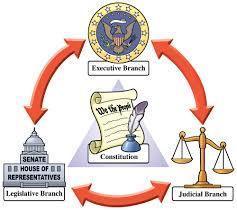
- One way to limit power is by separation of powers. This means that power is divided among three branches. The three branches are the legislative, the executive, and the judicial.
-
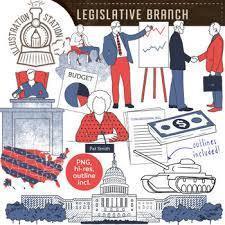
- It made the laws. The people elected representatives to make the laws.
- People believed that it was the safest branch in which to place most of the power.
- It was the branch closest to the people.
- Therefore, it was most likely to protect the rights of citizens.
-
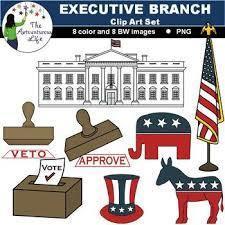
- Carries out and enforced the laws.
- The state executive was the governor.
- People believed that they should not trust the governor with too much power.
- It was not so easy for the people to control the governor.
- Once elected, a governor did not need to be close to the people.
-
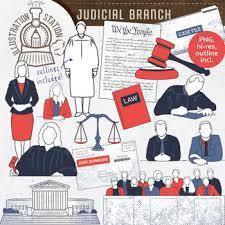
- Decides what the laws mean.
- This branch settled conflicts.
- It decided what to do with people who did not follow the law.
- The people did not want to give the judicial branch too much power.
-
- The state constitutions also set up a system of checks and balances.
- The three branches checked, or stopped, each other when necessary.
- In this way, they kept each branch from gaining too much power.
-
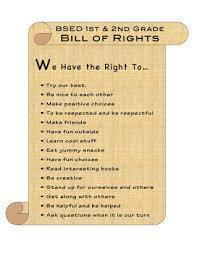
- A bill of rights is a list of the rights of citizens. It was usually the first part of a state’s constitution.
- The right to:
- vote in free and frequent elections
- freedom of speech and of the press
- representation on tax matters
- have a lawyer if accused of a crime
- trial by jury
- protection from illegal search and seizure
- protection from cruel and unusual punishment.
-
STATE CONSTITUTION LIMITATIONS
- Some state constitutions did not allow the state to keep a militia in time of peace.
- A militia is a group of citizens who receive military training.
- Most of the state constitutions also did not allow the state to force people to let soldiers live in their houses.
-
What did the Massachusetts Constitution say about education?
- The Massachusetts Constitution was adopted in 1780. Many people think it was the best of the state constitutions. Ideas found in the Massachusetts Constitution were used in writing the United States Constitution.
- The Massachusetts Constitution also had something the others did not have. It said that each town must provide free public education to all children. It also said that all children must attend school.
- Work with three or four other students. Discuss the questions that follow. Then compare the answers of your group with those of your classmates.
-
- Why do you think Massachusetts required each town to pay for the education of its children?
- Should all children be required to attend school?
- Should people who do not have children be required to pay taxes to support schools?
- Most states now have laws about school attendance. What do the laws of your state require?
- Do you think other laws about schools are needed? Why are they needed?
Informationen
- Beschreibung
- Der Nutzer hat seine Fachbereichs-Information gelöscht. Folienset am Lesson 6: Slides, erstellt von Gelöschter Nutzer am 22/09/2020.
- Erstellt von
- Gelöschter Nutzer
- Aufrufe
- 37
- Verlauf
-
- Erstellt von David Schenaker · 21 Sep 2020
- Kopiert von David Schenaker · 22 Sep 2020
- Bewertung